
NAD+ is important to cellular biology, but the phrase “important for cells” does not establish that an NAD+ product slows human aging. Healthy aging is ultimately about outcomes people can experience: maintaining function, managing disease, staying connected, and preserving independence.
Research on NAD-related compounds is active and includes promising biological findings alongside important unanswered questions. To understand it, separate the molecule, delivery route, study population, and measured outcome. That approach makes it possible to be interested in the science without treating every favorable laboratory result as a longevity benefit.
Start with what NAD+ does
Nicotinamide adenine dinucleotide exists in related forms, including NAD+ and NADH. The pair participates in reactions that transfer electrons during metabolism. NAD+ also serves as a substrate for enzymes involved in other cellular processes.
These roles help explain why researchers study NAD metabolism. They do not show that adding NAD+ through a nasal spray or injection improves every process that involves it. Cells regulate synthesis, use, recycling, and distribution in complex ways.
NAD+ is not a peptide, and “NAD support” is a broad marketing category. The exact compound and preparation need to be identified before a claim can be evaluated.
Distinguish the molecule from its precursors
NR, NMN, niacin, and nicotinamide are related to NAD metabolism but are different substances. Their absorption, processing, studied doses, and adverse-effect profiles cannot be treated as identical.
The NIH Office of Dietary Supplements’ niacin review explains the nutritional role of vitamin B3 forms. Preventing a nutrient deficiency is a different question from whether an additional product extends healthy life in a person whose nutritional needs are already met.
Likewise, oral precursor studies do not validate a compounded nasal formulation. The NAD, NMN, and NR comparison describes these distinctions in more detail without proposing dose conversions between products.

Ask what “healthy aging” means in the claim
A meaningful aging outcome might involve mobility, daily function, disease events, or quality of life over a relevant period. A change in an isolated blood marker answers a narrower question.
Marketing sometimes moves between these levels without explaining the transition. A study may show a biochemical response, while the surrounding description promises rejuvenation or extra years of healthy life. That larger conclusion requires additional evidence.
When reading a claim, finish the sentence: “People like me who used this exact intervention were shown to experience…” If the available answer ends at a laboratory measurement, keep the conclusion at that level.
Read the oral NR research precisely
A 2018 randomized crossover study in 24 completers examined oral NR over two six-week periods. It documented NAD-related changes, including measurements in peripheral blood mononuclear cells. Those cells are a particular sample, not a direct measurement of every organ.
The study supports investigation of oral NR biology in humans. It does not establish that nasal NAD+ increases brain NAD, prevents dementia, or extends lifespan. Nor can a small short study rule out every long-term concern.
Population, preparation, and endpoint are all part of the result. Removing those details may make a headline simpler while making its meaning substantially less accurate.
Put NMN findings in their population
A 2021 NMN trial studied 25 postmenopausal women with prediabetes and overweight or obesity over ten weeks. The reported improvement in muscle insulin sensitivity was a specific metabolic finding in a selected group.
It was not proof of weight loss, universal metabolic improvement, or benefit from another NAD-related formulation. A result in that population should not automatically be assigned to younger adults, men, people without prediabetes, or users of nasal NAD+.
The useful question is whether a later study reproduces a relevant outcome with an intervention and population that match the intended use. Biological plausibility can guide that research; it cannot substitute for it.
Look for function as well as chemistry
The NICE trial in peripheral artery disease included 90 participants and evaluated oral NR over six months with walking-related outcomes. Function is especially relevant because it connects an intervention to something people do.
Even a favorable functional finding remains condition-specific. People with peripheral artery disease have a different clinical problem from a healthy adult seeking an anti-aging nasal spray. The intervention was oral NR, not intranasal NAD+.
This is a useful example of the kind of outcome that makes research more clinically informative. It also shows why a result can be meaningful without establishing a broad longevity claim.

Include findings that do not meet the primary goal
A 2025 study of NR alongside exercise enrolled 54 adults, with 49 completing the study. Its primary comparison for daytime systolic blood pressure was not significant. Favorable secondary patterns do not turn that primary result into a confirmed success.
Researchers often measure several outcomes. The primary endpoint is usually selected in advance to define the main question. Secondary findings may generate hypotheses, but they need to be interpreted with that context.
A balanced overview should include these limits, not select only the measurements that moved in a favorable direction. Otherwise, readers may see a stronger and more uniform evidence base than actually exists.
Keep nasal and injectable evidence separate
The registered nasal combination pilot includes other interventions and had no posted results in the reviewed record. Animal nasal studies can explore mechanisms, but they do not establish human healthy-aging benefits.
For injected NAD+, a small 2019 IV study examined metabolite behavior during an infusion. It did not show longer life or durable improvements in everyday function. A route that bypasses digestion is not thereby proven to produce better aging outcomes.
The nasal evidence guide and injection guide review their respective evidence. Neither route should inherit the findings of an oral precursor simply because all relate to NAD biology.
Understand the limits of a biomarker target
A biomarker can be useful without being a validated treatment target. To justify a target, clinicians need evidence about the measurement and whether changing it improves an outcome that matters.
An age-associated difference does not necessarily mean that restoring a younger-looking number will restore younger function. The relationship may involve several biological processes, and the test may capture only one part of them.
The NAD testing article covers sample types, assay differences, and interpretation. Before purchasing a test, ask what decision its result would change and what evidence connects that decision to health benefit.
Give established care its own place
The National Institute on Aging’s healthy-aging overview emphasizes physical activity, nutrition, sleep, social connection, and ongoing health care. These areas address multiple contributors to independence and well-being.
A prescription product should be considered within that broader picture. For someone with untreated sleep apnea, poorly controlled blood pressure, or a medication causing fatigue, the next useful step may involve evaluating that problem directly.
This does not require a perfect lifestyle before discussing treatment. It requires an honest account of which problems have strong, relevant options and which proposed interventions still have uncertain clinical value.
Make activity goals appropriate to the person
The CDC’s adult activity guidance includes aerobic movement and muscle-strengthening activity. The appropriate starting point depends on current capacity, medical conditions, and limitations, and activity can be accumulated in manageable amounts.
For an individual, a functional goal might be walking a familiar route more comfortably or managing household tasks with less difficulty. Such goals offer a concrete way to discuss progress with the care team.
People with exertion-related symptom worsening, including some people with Long COVID, need an individualized approach. Generic encouragement to push harder can be inappropriate. Changes in activity should fit the clinical situation.
Compare benefit, burden, and uncertainty
A decision about an NAD-related product includes more than whether a mechanism sounds plausible. Consider the strength of evidence for the desired outcome, product quality, adverse effects, handling demands, cost, and the time taken away from other care.
For example, a person may prefer a convenient nasal route, but convenience does not establish effectiveness. Another may value a measurable laboratory response, while the clinician still needs to explain whether it changes the treatment decision.
The most useful comparison is between realistic options for the actual concern. Avoid comparing a product’s best hypothetical outcome with doing nothing about a treatable problem.
Use a five-question research filter
| Question | Why it matters |
|---|---|
| What was given? | NAD+, NR, NMN, and other compounds differ |
| How was it delivered? | Oral, nasal, and injection findings are not interchangeable |
| Who was studied? | A selected patient group may not resemble the reader |
| What changed? | A marker, symptom, and functional outcome answer different questions |
| How certain is it? | Size, controls, duration, and replication affect confidence |
Bring those questions to a provider discussion about NAD+ Nasal. Healthy aging is a long-term clinical and personal goal. Current NAD research can inform the conversation, but it does not justify a guaranteed rejuvenation claim.
Explore NAD+ Nasal
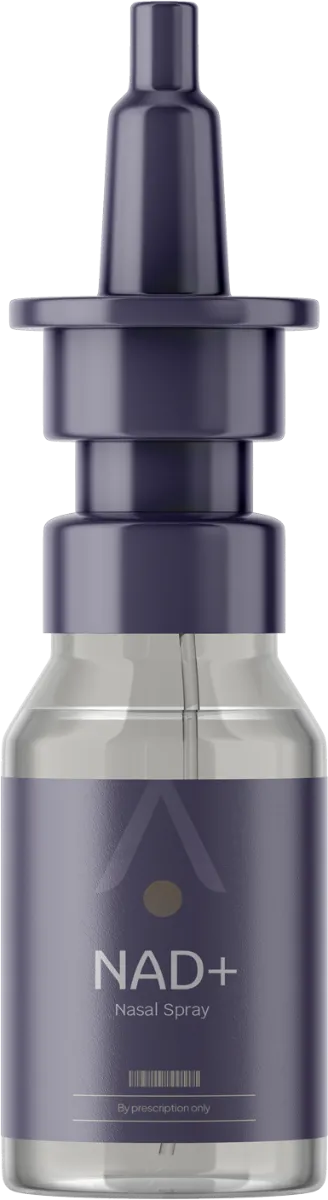
CoreAge Rx lists NAD+ Nasal as a provider-guided compounded nasal spray. The pharmacy’s formulation and pump instructions determine how it is used. Research on oral precursors, IV infusions, or animals does not establish identical benefits from this spray. Review the current NAD+ Nasal page and bring a complete medication and supplement list to the provider discussion.
Related reading
- NAD+ Nasal Spray: How to Understand the Evidence
- Does NAD+ Nasal Spray Reach the Brain? What Research Shows
- CoreAge Rx NAD+ Nasal: A Product and Evidence Guide
- NAD+ injections versus oral NMN and NR
Educational information; your prescription and clinician’s instructions guide individual care. Product details and linked sources checked September 15, 2026. Studies of another preparation or delivery route do not establish identical results for a finished compounded product. Photographs are illustrative and do not show treatment outcomes.