Vitamin C can have a role in mature-skin care, but the ingredient name alone does not tell you how a product will perform. The chemical form, concentration, vehicle, packaging, and stability all matter. A formula should be evaluated for a specific goal, such as a defined pigment or texture concern, rather than as a universal requirement for every mature face.
If the skin is mainly dry or irritated, a suitable moisturizer and gentler routine may deserve attention before another active. If vitamin C is part of a prescription combination, the other ingredients and the dispensed directions remain central to use and suitability.
Vitamin C is not one standardized skin product
Topical preparations may use L-ascorbic acid or a derivative with different properties. The review of topical vitamin C discusses formulation issues affecting stability and delivery. Two products with vitamin C on the front label can therefore differ substantially.
Ask which form is present and whether the concentration is disclosed. A percentage helps identify one aspect of the product, but does not establish its pH, delivery, tolerance, or clinical result by itself.
Do not assume a derivative behaves identically to L-ascorbic acid or that a higher percentage is automatically better. Evidence should be tied to the tested preparation rather than transferred through the ingredient name alone.
Define the goal before choosing a formula
Possible concerns include uneven pigmentation, dull-looking surface texture, or fine lines. These are different outcomes, and each can have several causes. A cream’s immediate moisturizing finish can also make the skin look brighter without demonstrating a specific vitamin C effect.
For mature skin, dryness and sensitivity may be especially important to the choice. A product that theoretically addresses tone may be a poor practical fit if it repeatedly burns or makes the routine difficult to maintain.
The menopausal skin-care guide explains how to prioritize comfort and diagnosis. A new or changing spot should be assessed before it is treated as ordinary uneven tone.
Understand the evidence without expanding the claim
The review of vitamin C and skin health discusses biological roles and topical research. The literature includes different preparations and outcomes, so it should not be read as proof that every serum reverses skin aging or replaces other treatment.
Antioxidant activity is one part of the discussion. A laboratory effect related to oxidative stress is not the same as a measured cosmetic result in a clinical trial. Nor does it establish sunscreen protection for the finished product.
Ask whether a claim concerns the ingredient’s mechanism, a clinical study, or the exact formula you are considering. That simple distinction makes the evidence easier to interpret.
Read the label as a whole
| Detail | Useful question |
|---|---|
| Vitamin C form | Is the actual ingredient identified? |
| Concentration | Is the amount disclosed, and what does the product evidence use? |
| Vehicle | Is it a serum, cream, or prescription combination? |
| Other actives | Do they add treatment roles or irritation considerations? |
| Packaging and storage | What conditions and dates apply to this preparation? |
| Directions | Where and when should this finished product be used? |
If a detail is missing, mark it as unknown rather than substituting information from another brand. A bottle’s color, texture, or price does not fill a gap in formulation evidence.
Keep stability separate from appearance
Vitamin C preparations can have stability challenges, which is one reason formulation and packaging matter. Follow the product’s storage instructions and keep it in the supplied container. Do not assume refrigeration helps every formula.
If the product changes unexpectedly in color, smell, texture, or dispensing, contact the manufacturer or pharmacy. Appearance alone cannot confirm that an active remains at its intended level, and a lack of visible change does not prove stability either.
Do not add vitamin C powder to another cream or mix separate products in a storage jar. That changes the preparation and is not equivalent to a formulated combination with its own directions.
Support dry skin without overcomplicating care
A gentle cleanser and suitable moisturizer can provide a useful baseline. The AAD’s mature-skin guidance emphasizes comfort-focused care. A serum should not automatically replace a cream when the skin needs more moisture retention.
Review acids, retinoids, scrubs, and masks before adding vitamin C. Several actives can create cumulative irritation even when each has an individual rationale. A shorter routine may be easier to evaluate.
The menopause dry-skin routine provides a practical framework. If the skin remains itchy, painful, or inflamed, ask whether another condition needs assessment before introducing more treatment.

Introduce one useful change
Keep other optional products stable when possible and record the start date. Follow the label or prescription for amount, frequency, and area. Do not assume every vitamin C product belongs in the same morning-serum sequence.
Track comfort after application and during ordinary cleansing. Persistent burning or a rash should not be dismissed as proof that the formula is potent. A product does not need to sting to have a useful role.
Stop a newly introduced product that causes a marked reaction and seek advice. Severe facial swelling or breathing difficulty requires urgent medical care. A familiar vitamin name does not guarantee universal tolerance.
Vitamin C and retinoids need a product-specific plan
Some formulas deliberately combine vitamin C with a retinoid; other routines use separate products. These are different preparations and exposures. A generic compatibility chart cannot resolve every combination.
If you use tretinoin, provide the exact vitamin C product name and form when available. Ask whether it adds a distinct purpose and how the products should be coordinated. Do not add a separate serum automatically when the prescription already includes vitamin C.
The tretinoin combination guide and copper-peptide layering guide explain why ingredient identity, stability, and tolerance are separate questions.
Where Time Out fits
Time Out lists vitamin C 5%, estriol 0.3%, and hydrolyzed hyaluronic acid 0.5%. The public summary does not identify the precise vitamin C form. Ask the pharmacy for that detail if needed for comparison or compatibility.
Time Out is not simply a vitamin C moisturizer. Estriol is an estrogen and adds a separate medical suitability and evidence discussion. The FDA’s menopause information states that estriol-containing drugs are not FDA-approved.
The Time Out ingredients guide and estriol safety questions explain why all components must be considered together. A supporting vitamin does not remove the hormone-related considerations.
Sunscreen remains necessary for its own role
Vitamin C does not replace a labeled sunscreen. The AAD recommends broad-spectrum SPF 30 or higher, supported by clothing and shade. A product’s antioxidant language is not a tested SPF claim.
Choose a sunscreen that feels comfortable and fits your skin tone and daily activities. If layering pills, review optional steps and textures rather than mixing the products together or scrubbing the surface.
For melasma or other relevant pigment concerns, a tinted formula with iron oxide may be worth discussing. The dark-spot sunscreen guide explains the difference between ultraviolet and visible-light considerations.
Track the intended outcome fairly
Use comparable photographs without filters if appearance is the goal. Keep lighting, distance, expression, and skin preparation similar. Record changes in moisturizer, sunscreen, or other treatments that may influence the result.
Separate surface comfort, overall finish, and the specific patch or line being followed. A brighter-looking face immediately after cream is not the same as a clear change in a defined area of pigment over time.
At follow-up, ask whether the benefit is meaningful and whether the product adds enough to justify the step. If the result is unclear, review the diagnosis and formula rather than automatically escalating concentration.
Know when another assessment is more useful
Persistent rash, painful dryness, an unusual new pigment pattern, or a changing lesion deserves evaluation. A product selected for mature skin should not become a reason to treat every new finding as ordinary aging.
Discuss pregnancy, breastfeeding, allergies, other prescriptions, and recent procedures before using an active combination. If a prescription contains tretinoin or estriol, follow the additional medical guidance for those ingredients.
Let the formula earn its place
Vitamin C can be a reasonable option for a defined skin-care goal, with evidence that depends on the preparation. The best decision considers the actual form, the whole routine, and the skin’s tolerance.
For mature skin, maintain a comfortable foundation and add only steps with a clear purpose. For Time Out, evaluate the full hormone-containing combination rather than letting vitamin C’s familiar name stand in for a complete product review.
Explore Time Out™
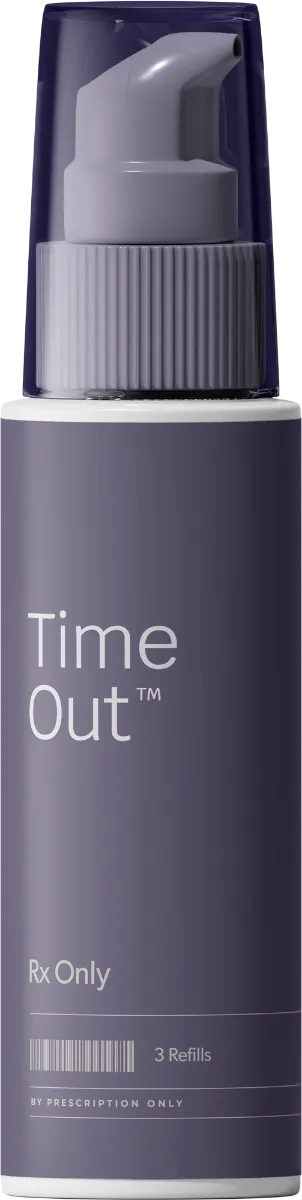
Time Out lists estriol 0.3%, vitamin C 5%, and hydrolyzed hyaluronic acid 0.5%. Estriol is an estrogen, so suitability and use require individual medical review. A facial formulation is not interchangeable with menopause hormone therapy or vaginal estrogen. Review the current Time Out™ page and bring your existing skin-care products to the provider discussion.
Related reading
- Menopausal Skin Care: Dryness, Firmness, and Treatment Questions
- Hyaluronic Acid for Mature Skin: Hydration and Fine-Line Appearance
- Time Out Ingredients: Estriol, Vitamin C, and Hydrolyzed Hyaluronic Acid
- A Practical Dry-Skin Routine During Menopause
- Tretinoin versus retinol: choosing a routine
Educational information; your prescription and clinician’s instructions guide individual care. Product details and linked sources checked September 15, 2026. Ingredient research does not establish identical results for a finished compounded formula. Photographs are illustrative and do not show treatment outcomes.