Clostridium butyricum is a bacterial species used in some probiotic preparations and studied for digestive and other outcomes. Its inclusion on a label does not, by itself, establish a particular strain, a clinical benefit, or suitability for every person.
Species names are only the beginning
Microbial products need more specific identification to be compared with many studies. A strain designation, amount, preparation, and intended outcome help determine whether the research is relevant. The NIH probiotic guidance explains why the effect of one preparation should not be assigned to all products listing the same species.
The name “butyricum” is also not a quantitative statement about how much butyrate a person will produce after taking a capsule. A proposed biological pathway is different from a measured clinical result.
Read benefits and safety together
Research on a bacterial preparation should be reviewed for both outcomes and adverse events. Studies in a particular patient population do not necessarily answer whether a supplement is useful for a healthy adult or for someone on a GLP-1 medicine.
Likewise, being sold for gut health does not mean a product is risk-free. NCCIH’s safety overview explains that serious illness and weakened immune function can change the risk discussion for probiotics.

What a hospital report tells us
A 2024 study published in CDC’s Emerging Infectious Diseases journal described bloodstream infections linked by genetic analysis to probiotic-derived C. butyricum in hospitalized patients, most of whom had compromised immune systems.
That report does not establish the infection rate among ordinary supplement users, and it should not be presented as a finding about CoreAge Rx’s product. It does show why clinicians should review use carefully in higher-risk patients. Do not apply a percentage from a selected hospital population to everyone taking supplements.
What GLP-1 Support discloses
CoreAge Rx’s page lists Clostridium butyricum alongside Akkermansia muciniphila and Bifidobacterium infantis. The reviewed public material does not identify a strain or CFU amount, so it cannot be assumed to contain the exact strain used in a particular trial or hospital report.
Ask for the current label and strain information. The front image’s 36 mg proprietary-blend statement measures weight, not the number of viable microorganisms or the amount of any one species.
Who should discuss use first?
People who are immunocompromised, seriously ill, recently hospitalized, or have a central venous catheter should bring bacterial supplements to their care team’s attention before use. Fever, severe abdominal symptoms, or a significant change in health should be evaluated rather than treated as a normal adjustment.
For a practical product review, read how to interpret strains and CFUs and the GLP-1 Support ingredient guide. Specific information is what allows a balanced discussion of both potential use and risk.
Keep the organism, strain, and product distinct
Clostridium butyricum identifies a species. A strain designation adds more specific identity, while a finished product includes the preparation, amount, other ingredients, and handling instructions. Each level contributes information that the broader name alone cannot provide.
This distinction matters for both benefits and safety. A study of one strain does not establish an identical result from every product listing the species. A report involving a particular preparation also should not be described as a finding about an unrelated commercial blend without evidence.
The NIH probiotic guidance explains why organism specificity is central to a useful comparison. Start by identifying what was actually studied before deciding how closely it relates to the bottle under consideration.

A proposed butyrate pathway is not a measured personal outcome
The species name and biological discussions may lead readers to expect a particular amount of butyrate production after taking a capsule. The label name does not quantify that outcome. A proposed pathway is a reason for research, not a measurement of what will happen in each person’s gut.
If a product claim focuses on butyrate, ask whether the relevant outcome was measured in people using the actual preparation and amount. Then ask whether the measured change translated into a clinical benefit. A laboratory or mechanistic finding does not answer every health question.
This helps keep the discussion precise. It is possible to describe why researchers are interested in an organism without promising that a commercial capsule produces a specific metabolite increase or symptom result.
Read a clinical study according to its population
Research in people with a particular digestive condition may not directly answer whether a healthy adult benefits from daily use. Research in hospitalized patients may not describe the same baseline risks as use in the general community. Population differences are part of the evidence, not background details to omit.
Look for the strain, amount, duration, other treatments, and outcome. Also review adverse events and the study’s limitations. A benefit claim should not be evaluated separately from the circumstances in which the product was used.
If the question concerns someone taking a GLP-1 medicine, do not assume evidence from another patient group establishes prevention or treatment of medication-related symptoms. That is a separate clinical claim requiring suitable evidence.
Interpret the hospital infection report carefully
The 2024 report in CDC’s Emerging Infectious Diseases journal described bloodstream infections genetically linked to probiotic-derived C. butyricum in hospitalized patients, most of whom had compromised immune systems. That finding is relevant to clinical caution in higher-risk situations.
It does not establish the infection rate among ordinary supplement users. The hospital population was selected and clinically different, so a percentage from that setting should not be applied to everyone. The report also does not identify CoreAge Rx’s product as the product involved.
The original report supports a balanced conclusion: bacterial supplements deserve careful review in vulnerable patients, while the evidence should not be exaggerated into a claim about every user or every brand. Both the safety signal and its limits belong in the explanation.
Identify situations that need care-team review
People who are seriously ill, immunocompromised, recently hospitalized, or have a central venous catheter should discuss bacterial supplements with the team managing their care. The decision may depend on details that a general product page does not capture.
Bring the exact bottle or complete label, the intended serving, and the reason for use. Include other supplements and recent medicines. A statement that a product is “for gut health” is too broad for a meaningful clinical review.
New fever, severe abdominal symptoms, or a significant change in health should not be explained away as a normal adjustment to microbes. Seek appropriate assessment and tell the clinician about the supplement exposure. NCCIH’s safety overview provides broader context for these population differences.
Apply the review to GLP-1 Support
CoreAge Rx’s reviewed product page lists Clostridium butyricum with Akkermansia muciniphila, Bifidobacterium infantis, inulin, and resistant starch. It does not disclose the C. butyricum strain or CFU amount, so it cannot be assumed identical to a particular research preparation.
The 36 mg front-label blend statement measures total blend weight as presented; it is not a disclosed amount of this species alone or a viable count. The daily capsule and refrigeration instructions help with handling, but they do not resolve the missing identity and quantity details.
Ask for those details if you or your clinician need to compare the product with a study. The complete ingredient guide gathers the information currently available without filling the gaps through inference.
Use a balanced comparison worksheet
| Question | What an accurate answer needs |
|---|---|
| Does research support my intended outcome? | A suitable human study with the relevant preparation |
| Is this the same strain? | A disclosed identifier that can be compared |
| Is the amount comparable? | Appropriate quantity information |
| Do the safety findings apply to my situation? | Attention to health status and study population |
| Was this exact commercial product involved? | Direct evidence, not a shared species name |
| Can I follow the handling instructions? | A practical storage and use plan |
The worksheet leaves room for uncertainty without turning it into either reassurance or alarm. That is the appropriate role of a general evidence guide.
Frequently asked questions
Does the hospital report prove GLP-1 Support causes bloodstream infections?
No. The cited report is not a finding about CoreAge Rx’s product. It supports careful review of bacterial supplements in higher-risk patients, while its product and population limits must be preserved.
Does the species name tell me how much butyrate I will produce?
No. A name or proposed mechanism is not a quantitative personal outcome. Such a claim would require appropriate measurement and evidence for the preparation and use being discussed.
Can I assume all strains have the same benefits?
No. Strain, preparation, amount, and clinical context matter. Ask for the identity needed to compare the product with relevant research.
Is a healthy person guaranteed to have no risk?
No general article can provide that guarantee. Risk differs by product and circumstances, and new symptoms still deserve attention. Use clear label information and individualized advice when relevant.
Explore GLP-1 Support™
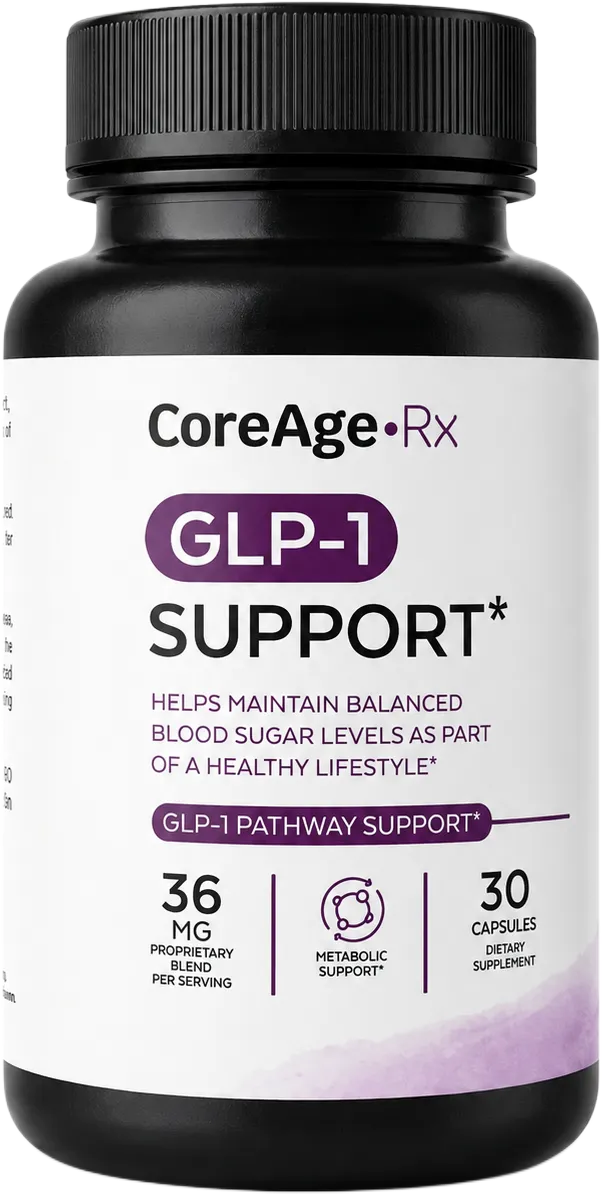
CoreAge Rx GLP-1 Support combines the three listed bacterial species with chicory inulin and potato resistant starch. It is a dietary supplement; it does not replace a GLP-1 prescription. See the current GLP-1 Support™ page and check the bottle you receive before use.
Related reading
- GLP-1 Support Supplements: Ingredients, Evidence, and Expectations
- How to Read a Probiotic Label: Strains, CFUs, and Storage
- Probiotics and Bloating: What to Watch After Starting
- How fiber supplements differ from probiotic products
Educational information, not individualized medical advice. Product information and linked research checked September 15, 2026. Ingredient research does not establish identical effects for a finished supplement.