
Some probiotics require refrigeration and others are designed for room-temperature storage. Follow the exact product’s label, including any change after opening. Refrigerated storage is not a universal measure of quality, and room-temperature stability should not be assumed without instructions.
Why conditions matter
For live microbial products, viable amounts can change over time and with handling. The NIH probiotic guidance recommends checking storage conditions and looking for quantity information supported through the expiration date.
A CFU count at manufacture is not necessarily the count at the end of the product’s life. Likewise, a blend weight in milligrams does not establish viability. Our label-reading guide explains those measurements.
GLP-1 Support’s published instruction
CoreAge Rx’s page says to refrigerate GLP-1 Support after opening. Build that requirement into the routine before opening the bottle. Check the current package for any additional temperature, moisture, or handling instructions.
The public information reviewed does not provide a validated time-and-temperature allowance for every travel situation. Do not invent a rule that the product is safe after a specific number of hours in a hot bag or car. Ask the manufacturer when conditions are uncertain.

A practical storage checklist
- Keep the original label and expiration information accessible.
- Close the container after removing the directed serving.
- Protect it from moisture and contamination.
- Follow the stated refrigeration or room-temperature instructions.
- Keep it out of children’s reach.
- Ask before using a product with a damaged seal or uncertain storage history.
Do not freeze a product unless the manufacturer explicitly directs that method. Colder is not automatically better for every formulation or package.
Travel requires a plan
Before a trip, ask about the product’s specific requirements and whether your transport method can maintain them. A travel cooler is only useful if it supports the relevant instructions; the presence of an ice pack alone does not verify the temperature inside.
Keep the bottle identifiable and avoid leaving it in prolonged heat. If maintaining storage becomes impractical, discuss the routine rather than guessing at stability or compensating later with extra servings.
Appearance cannot answer everything
A capsule looking or smelling normal does not confirm its viable microorganism count. Conversely, a quality concern should be taken to the manufacturer with the lot and expiration details. FDA supplement guidance explains the importance of product information and reporting problems.
For a daily cue that includes refrigeration, read when to take probiotics. The GLP-1 Support ingredient guide gathers the rest of the disclosed formula so storage is evaluated alongside identity, amount, and purpose.
Storage requirements belong to the exact formulation
Some microbial products require refrigeration, while others are formulated and labeled for different storage conditions. The category probiotic does not determine one universal rule. Read the instructions for the actual product before and after opening.
This matters because readers may assume that refrigeration always proves greater potency or that shelf storage always means the product is less useful. Neither conclusion follows from the storage category alone. The preparation, packaging, evidence, and quantity information need separate evaluation.
For CoreAge Rx GLP-1 Support, the reviewed public page specifically says to refrigerate after opening. That instruction should be incorporated into the routine rather than replaced by general advice about other probiotics.

Separate the printed date from the handling conditions
An expiration date should be interpreted alongside the storage directions. A product being within its printed date does not answer every question about prolonged heat exposure, moisture, or other handling outside the intended conditions.
Likewise, the appearance of a capsule does not provide a viable-organism count. A product can look normal while a quality question remains unresolved. If an unusual exposure occurred, ask the manufacturer about the specific product, lot, duration, and conditions.
The NIH probiotic guidance explains why quantity through the usable life and storage information matter. The relevant question is what the product claim is intended to cover, not whether the bottle still looks familiar.
Build refrigeration into an ordinary daily cue
If the product is appropriate for you, choose a daily event that naturally gives access to its storage location and a glass of water. Retrieve the bottle, take the label-directed serving, and return it promptly according to the instructions.
Avoid leaving the bottle out all day as a reminder if refrigeration is required after opening. A note or calendar reminder can provide the cue while the product remains stored as directed. Keep the container securely closed and follow any other handling instructions on the current bottle.
The reviewed GLP-1 Support routine is one capsule daily with 8 oz water, with or without food. Pairing it with a meal can be convenient, but storage and serving instructions remain separate parts of the routine.
Ask focused questions before traveling
Travel can create uncertainty about time outside refrigeration, temperature control, and access to appropriate storage. Ask the manufacturer for guidance that applies to the exact product and trip conditions. Do not invent a universal number of safe hours at room temperature.
If a cooling method is suggested, clarify how the product should be protected from conditions the manufacturer does not recommend. The aim is to follow the product’s requirements, not simply to make the package as cold as possible without guidance.
If reliable storage cannot be maintained, discuss whether carrying the optional supplement is practical. Prescribed medicines and essential travel needs deserve priority. A missed supplement routine does not justify using a product after uncertain handling without clarification.
Keep original information available
The original bottle preserves the product identity, directions, expiration information, and lot. These details are useful when asking about a storage event or comparing the bottle with the product page. A photograph is a helpful backup when the label is difficult to read.
An unmarked pill organizer or container may make the routine harder to evaluate, especially if several products look similar. Before repackaging, ask whether the product has relevant handling or packaging requirements. Do not assume every capsule can be stored the same way.
If the current bottle’s directions differ from an older online description, contact the manufacturer to clarify. Use the information for the actual item rather than averaging conflicting instructions.
Use a storage-event record when something goes wrong
| Detail | What to record |
|---|---|
| Product and lot | Identifies the specific item |
| Opened or unopened | The instructions may differ |
| Approximate duration | How long the event lasted |
| Conditions | Room, vehicle, luggage, or another setting |
| Packaging | Original bottle or another container |
| Visible changes | Useful observations without assuming they prove suitability |
| Manufacturer response | Guidance for that actual exposure |
This record makes a support question concrete. “It got warm” leaves more uncertainty than a clear description of where the bottle was and for approximately how long. Do not use a normal appearance as a substitute for the manufacturer’s assessment.
Do not confuse handling with evidence of benefit
Following refrigeration instructions supports intended use, but it does not establish that the product has demonstrated a particular clinical effect. A storage requirement and a health-outcome claim are different types of information.
GLP-1 Support’s reviewed page provides refrigeration guidance while leaving strain IDs and CFUs undisclosed in the public material. Keeping the bottle cold does not fill those missing label details. The strain-and-CFU article explains the separate evidence questions.
Similarly, a product labeled for another storage method should be evaluated according to its own specifications and evidence. The goal is correct handling of the chosen product, not choosing a winner based on the refrigerator alone.
Frequently asked questions
Do all probiotics need to be refrigerated?
No single rule applies to every formulation. Follow the exact product’s directions. The reviewed GLP-1 Support page specifically instructs refrigeration after opening.
How long can GLP-1 Support stay out of the refrigerator?
The reviewed material does not establish a universal allowable interval for every condition. Ask the manufacturer about the actual exposure and current bottle. Do not infer an answer from another brand’s guidance.
Can I tell whether the microbes are viable by looking at a capsule?
Appearance does not provide a viable count or answer every quality question. If handling is uncertain, use product-specific manufacturer guidance rather than relying only on smell, color, or texture.
Does an unexpired date guarantee suitability after heat exposure?
The date should be read with the intended storage conditions. An unusual exposure may require clarification even when the printed date has not passed. Keep the lot and exposure details available.
Should I freeze the bottle for travel?
Do not invent a storage method that the current instructions do not specify. Ask the manufacturer about an appropriate travel plan and follow its guidance for the exact formulation.
Explore GLP-1 Support™
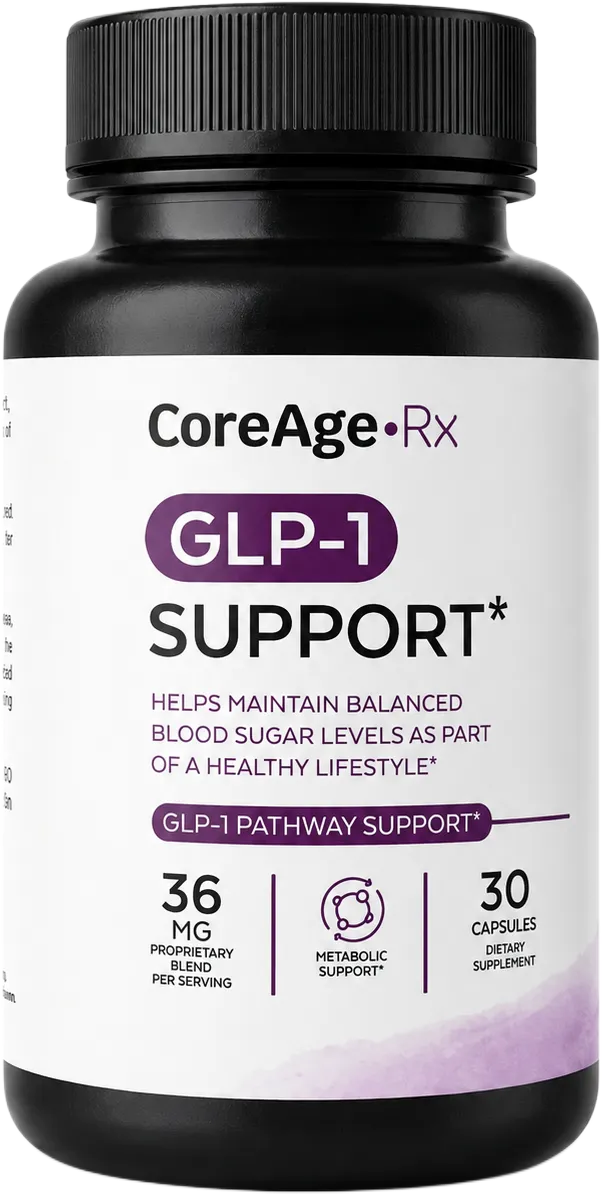
CoreAge Rx GLP-1 Support combines the three listed bacterial species with chicory inulin and potato resistant starch. It is a dietary supplement; it does not replace a GLP-1 prescription. See the current GLP-1 Support™ page and check the bottle you receive before use.
Related reading
- GLP-1 Support Supplements: Ingredients, Evidence, and Expectations
- How to Read a Probiotic Label: Strains, CFUs, and Storage
- When Should You Take a Probiotic?
- How fiber supplements differ from probiotic products
Educational information, not individualized medical advice. Product information and linked research checked September 15, 2026. Ingredient research does not establish identical effects for a finished supplement.