
Copper peptides and retinoids often appear in the same conversation about smoother, firmer-looking skin. They are different ingredient groups with different evidence, formulation issues, and treatment roles. Choosing between them starts with the concern you want to address and the strength of evidence you need, rather than a claim that one ingredient is universally better.
For example, acne prevention, fine-line improvement, and relief of dryness are different goals. A product that feels comfortable can be valuable, but comfort alone does not show that it can take over the job of a prescription acne medication. Likewise, a well-studied active is not automatically the right choice for an irritated face.
First, understand the names
Retinoids are a family of vitamin A-related compounds. Retinol is one member commonly found in nonprescription skin care. Tretinoin is a prescription retinoid, also called retinoic acid. Products within the family differ, so “retinoid” does not identify a single strength or formulation.
Copper peptides are peptides that bind copper. GHK-Cu is the example most often discussed in skin research. A label saying copper peptide does not necessarily disclose the precise peptide identity. Confirm it if you want to compare a product with a particular study.
These names also describe ingredients rather than complete products. The same active can be delivered in different cream bases, concentrations, and packaging. Product performance includes the formula’s stability and how well your skin tolerates repeated use.
How the evidence differs
Tretinoin has randomized clinical evidence for photoaged skin. A two-year trial compared a specific 0.05% emollient cream with its vehicle and found greater improvement in several measures of photodamage. That finding supports tretinoin’s role while remaining specific to the studied formulation and participants.
Copper-peptide research includes laboratory findings and smaller cosmetic studies. The topical GHK review points to gaps in clinical evidence and challenges with skin delivery. It does not establish that an arbitrary copper-peptide cream produces the same outcomes as tretinoin.
This distinction is especially important when a marketing chart ranks ingredients by a single impressive number. A cell-culture collagen measurement, an instrument reading from a small study, and a long-term randomized trial are not interchangeable measures. They answer different questions.

Match the comparison to your goal
| Goal | Retinoid discussion | Copper-peptide discussion |
|---|---|---|
| Comedonal acne | Established topical retinoids may be part of treatment. | Do not assume an equivalent acne-treatment role. |
| Fine lines and uneven texture | Tretinoin has clinical photoaging evidence. | Clinical evidence is more limited and formula-dependent. |
| Surface dryness | Irritation can complicate use; moisturizer matters. | The cream base may support comfort, depending on the formula. |
| Persistent redness or rash | A diagnosis should guide whether a retinoid is appropriate. | A peptide label does not establish rash treatment or universal tolerance. |
| Post-procedure care | Timing depends on the procedure and clinician’s plan. | Permission is still needed before adding a routine cream. |
Use the table to organize a consultation, not to self-select a prescription. If your main concern is painful acne or scarring, the treatment decision is different from choosing a pleasant moisturizer for occasional tightness.
Tolerance is part of effectiveness
A treatment can only be evaluated fairly if the routine is tolerable enough to follow. Retinoids can cause dryness, peeling, and irritation. The AAD’s retinoid guidance discusses gradual introduction and moisturizer, while emphasizing that some skin conditions require a different approach.
Copper-peptide products can also irritate. A formula may contain ingredients unrelated to the peptide that affect tolerance. “Gentle” on a product page is not a guarantee, and a lack of visible peeling does not show that a product is inactive.
Keep the comparison practical: what happened when you used the actual product according to its instructions? Did discomfort interfere with sleep or ordinary cleansing? Did you stop repeatedly? Those observations can guide a change in the plan more reliably than assuming your skin should tolerate what another person uses.
Can they be used in the same routine?
Sometimes a clinician may include both, but there is no universal layering schedule for every pair of products. Review the precise formulas and the rest of the regimen. Other acids, acne treatments, fragrance, and cleansing habits may be more relevant to irritation than the peptide-retinoid pairing alone.
Ask whether the products should be used on different occasions, whether one should be introduced first, and what to do if symptoms develop. Avoid inventing a minute-by-minute waiting rule. If the pharmacist has formulation-specific instructions, those take priority over a generic online chart.
Do not mix products together in your palm or transfer them into a shared container to create a homemade combination. That changes the way each supplied product is used and can make the amount applied unclear. An intentionally compounded formula is a separate preparation with its own directions.
How Bounce Back and Smooth Move fit the comparison
CoreAge Rx’s Bounce Back lists copper peptide 2%. Smooth Move lists tretinoin, niacinamide, and vitamin C. The current Smooth Move page does not disclose an individual concentration for each active in its ingredient summary.
Those facts support a product conversation, but not a claim that the products have been tested against each other. Ask the provider which concern each would address, whether either is appropriate for you, and whether there is any reason to use both. More products should mean a clearer purpose, not simply more steps.
For a deeper look at Smooth Move’s main active, read the tretinoin fine-line guide. For Bounce Back, the ingredient and evidence guide separates disclosed product information from broader copper-peptide research.
Compare timelines without promising a deadline
Immediate softness after cream is a different observation from a change in long-standing wrinkles. Moisturizing effects can influence appearance early, while clinical studies of structural changes generally assess outcomes over longer periods. Do not use an overnight photograph to rank the two ingredient groups.
Tretinoin’s patient information describes gradual results and potentially several months before fine-line improvement becomes noticeable. Copper-peptide evidence does not establish one reliable timeline across products. A useful review date comes from the treatment plan and your goal, not a countdown copied from an advertisement.
Take comparable photographs if appearance matters to you, and separately track comfort and adherence. If you add sunscreen and improve moisturizing at the same time, acknowledge those changes when judging results. The entire routine may be helping even when you cannot identify one ingredient as the cause.
Avoid the stronger-is-better trap
Percentages cannot be compared across unrelated ingredients. Copper peptide 2% is not forty times the strength of tretinoin 0.05%. The substances have different chemistry, biological activity, and dosing conventions. Even two retinoid percentages can be misleading when the compounds or vehicles differ.
The same caution applies to adding an extra retinol because a tretinoin formula seems slow. That can increase irritation without providing a sensible treatment plan. Tell the prescriber about all products with vitamin A-related ingredients, including eye creams and night creams that you may not think of as medications.
A sustainable regimen may be simpler than the one on your bathroom shelf. Evaluate whether each step addresses a defined concern, duplicates another product, or makes the main treatment harder to use.
Situations that change the decision
Retinoids should not be used during pregnancy according to AAD guidance. Discuss pregnancy plans and breastfeeding before starting or continuing a prescription routine. Do not assume copper peptides are a validated pregnancy substitute merely because they are a different ingredient group; the full formula still needs review.
Active dermatitis, sunburn, an unexplained rash, and recent procedures also require individualized advice. Stop a new product that causes marked swelling, blistering, or a spreading rash and contact a clinician. Severe allergic symptoms need urgent care.
Make the final choice concrete
Bring a short list: your main concern, the products already used, prior reactions, relevant medical history, and the result you would consider worthwhile. Ask the clinician to explain why the proposed option fits that goal and what would justify changing it.
The comparison becomes much easier when the question is specific. “Which treatment has the best evidence for my fine lines and can fit my sensitive-skin routine?” is more useful than “Which ingredient wins?” A good plan links evidence, tolerance, and a follow-up decision you can understand.
Explore Bounce Back™
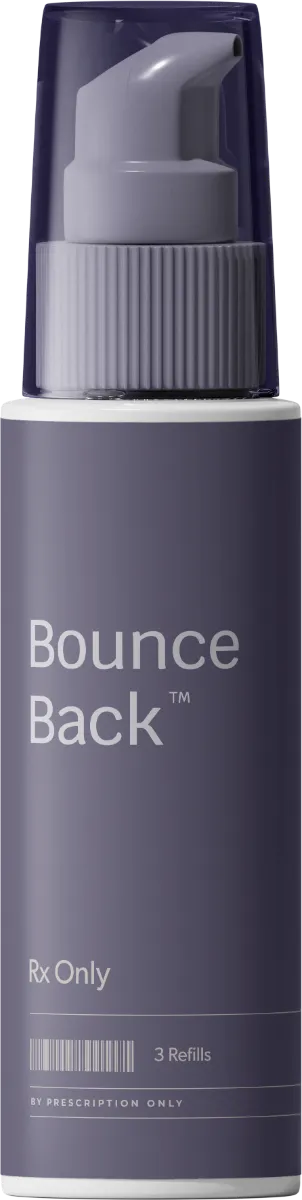
Bounce Back lists copper peptide 2%. Confirm the precise peptide identity, complete formulation, and directions with the dispensing pharmacy and prescribing provider. Review the current Bounce Back™ page and bring your existing skin-care products to the provider discussion.
Related reading
- Copper Peptides for Skin: Evidence, Uses, and Routine Basics
- Copper Peptides and Vitamin C: How to Review a Layering Routine
- Can Copper Peptide Cream Improve Skin Firmness?
- Bounce Back Copper Peptide Cream: A Product and Evidence Guide
- Tretinoin for fine lines: evidence and daily care
Educational information; your prescription and clinician’s instructions guide individual care. Product details and linked sources checked September 15, 2026. Ingredient research does not establish identical results for a finished compounded formula. Photographs are illustrative and do not show treatment outcomes.