Tretinoin and retinol belong to the retinoid family, but they are not interchangeable products. Tretinoin is prescription retinoic acid; retinol is commonly used in nonprescription cosmetics and undergoes conversion within skin before acting as retinoic acid. The distinction affects how products are discussed, but the complete formulation and your tolerance still matter.
Choosing between them starts with the concern: acne, fine lines, texture, or uneven tone. It should also account for prior reactions, medical history, other actives, and the effort you are willing to put into a routine. The best choice is not automatically the bottle with the highest percentage.
Retinoid is the family name
The AAD’s retinoid guide describes a broad group of vitamin A-related ingredients and medications. Retinol is one member, while tretinoin, adapalene, and other compounds have their own properties and uses.
This matters because a product called a retinoid cream may contain something different from the one discussed in a study. Write down the exact ingredient and strength when available. Do not assume every over-the-counter retinoid is retinol or that every prescription has the same instructions.
Product type also matters. A serum, lotion, cream, and encapsulated preparation can differ in handling and tolerance. The ingredient name is the beginning of the comparison, not the whole answer.
How the evidence differs
Tretinoin has a substantial clinical literature for acne and photoaging. A systematic review of topical tretinoin trials discusses photoaging outcomes and local irritation. Its evidence should still be tied to the tested preparations and outcomes rather than treated as a guarantee for every compounded combination.
Retinol appears in many cosmetic formulations, with variation in concentration, stability, and accompanying ingredients. Evidence for one finished product cannot automatically be transferred to another. A label that does not disclose the amount creates an additional comparison limit.
Ask whether a recommendation is based on the ingredient generally or on the exact finished formula. That distinction is especially useful when an advertisement presents a cosmetic product as equivalent to prescription treatment without a direct comparison.
Percentages are not directly interchangeable
A higher retinol percentage is not a simple numerical equivalent of a lower tretinoin percentage. The compounds differ, and the skin’s conversion process and product formulation complicate the comparison. Do not use an online conversion chart as a prescription guide.
Even two products containing the same active may differ in vehicle and tolerance. A preparation that was comfortable in one routine may behave differently when combined with acids or applied to irritated skin.
| Detail | Tretinoin discussion | Retinol discussion |
|---|---|---|
| Access | Prescription treatment | Commonly sold in cosmetics |
| Identity | Retinoic acid | A vitamin A form requiring conversion in skin |
| Evidence | Clinical literature for defined treatment outcomes | Varies across products and studies |
| Directions | Dispensed prescription and clinician’s plan | Product label and individual suitability |
| Tolerance | Irritation can limit use | Irritation remains possible; gentler is not guaranteed |
Let the main concern guide the choice
For acne, a clinician may prefer an established acne retinoid rather than a cosmetic retinol selected mainly for anti-aging marketing. The acne pattern, severity, and other treatment needs influence the decision.
For fine lines or texture, the discussion includes the strength of evidence, realistic limits, and whether your skin can tolerate the plan. A modest cosmetic goal may not require the most intensive option, while a stronger evidence preference may lead to a prescription discussion.
The tretinoin fine-line guide and acne-versus-photoaging guide separate those goals. A diagnosis is especially useful when redness, itching, or unusual bumps may not be ordinary acne or aging.
Tolerance is not determined by the category alone
Retinol is often described as gentler, but an individual cosmetic can still cause significant irritation. Tretinoin can also be difficult to tolerate, particularly when the routine includes other drying or exfoliating exposures. The actual formula and use pattern matter.
Review cleanser, acids, benzoyl peroxide, scrubs, masks, and other vitamin A products. A night cream or eye product may contain retinol even if you do not think of it as a treatment. Adding a prescription on top can create duplication.
If a previous retinoid caused problems, describe what happened and how it was used. A reaction after several new products began together tells a different story from repeated intolerance to one clearly identified preparation.
Switching should simplify the plan
If the clinician recommends moving from retinol to tretinoin, ask which existing products should stop, which can remain, and how the new prescription is introduced. Do not automatically alternate old and new products or apply both to make the transition faster.
Confirm the amount, frequency, area, and moisturizer placement. Follow the dispensed directions rather than treating a previous cosmetic schedule as the template for the prescription.
The starting tretinoin guide provides a practical framework. A written plan helps prevent uncertainty from turning into either excessive application or repeated unscheduled pauses.
Results should be compared over a meaningful period
Immediate softness from a cream can change the appearance of fine lines without showing the longer-term effect of its active. Compare the same area in consistent light and record the time relative to cleansing and moisturizer.
MedlinePlus’s tretinoin information describes gradual results and potentially several months before fine-line improvement is noticeable. A cosmetic retinol product should be judged according to its own evidence and realistic expectations, not assumed to follow an identical timetable.
Do not use more product because another person reported a quicker result. The goal, preparation, baseline skin, and surrounding routine may all differ. The timeline guide explains useful ways to track progress.
Moisturizer and sunscreen remain important with either option
A suitable moisturizer can help keep the routine comfortable. Ask where it belongs relative to the treatment and avoid mixing products together unless the directions call for that use. The layering guide explains the practical questions.
The AAD sunscreen guidance recommends broad-spectrum SPF 30 or higher with appropriate clothing and shade. Retinoids do not replace protection, and a treatment’s anti-aging language is not a reason to accept additional ultraviolet exposure.
Choose supporting products that fit your skin and daily routine. If sunscreen pills or stings, discuss the specific formula and layers rather than removing the protection step without a replacement plan.
Where Smooth Move fits
Smooth Move lists tretinoin, niacinamide, and vitamin C. It is a prescription combination, not a retinol cosmetic. Its public ingredient summary does not disclose the individual strengths or vitamin C form.
Ask the pharmacy for those details if you are comparing the prescription with a previous product or with clinical research. Supporting ingredients do not establish that the formula is equivalent to another preparation or free of irritation.
The Smooth Move ingredients guide explains the combination. Review any separate retinol product before using it alongside the prescription.
Situations that need a different discussion
The AAD advises against retinoids during pregnancy. Discuss pregnancy plans and breastfeeding before starting or continuing either a cosmetic or prescription retinoid routine. A nonprescription label does not remove the need for that review.
Active eczema, significant irritation, sunburn, and recent procedures can also change the plan. Stop a newly introduced product that causes a marked rash, swelling, blistering, or persistent burning and obtain advice. Severe allergic symptoms require urgent care.
Do not apply to excluded areas or share a prescription. A new or changing lesion should be assessed rather than treated as another anti-aging concern.
Choose the option you can evaluate clearly
When comparing cost, use the actual prescribed or labeled use pattern rather than the bottle price alone. Ask how refills and follow-up are handled, and whether a separate cosmetic duplicates an ingredient already in the plan. Avoid buying several alternatives before deciding which single product you are evaluating; otherwise, both the spending and the skin response become harder to track.
Ask what benefit is expected, how long the assessment should take, and what would justify continuing or changing the product. Include cost, routine complexity, and tolerance in that decision.
Tretinoin and retinol are related but distinct options. A clear goal, an accurately identified formula, and a practical schedule make the comparison more useful than a universal claim about which ingredient is strongest. The right plan is one whose purpose and limits you understand.
Explore Smooth Move™
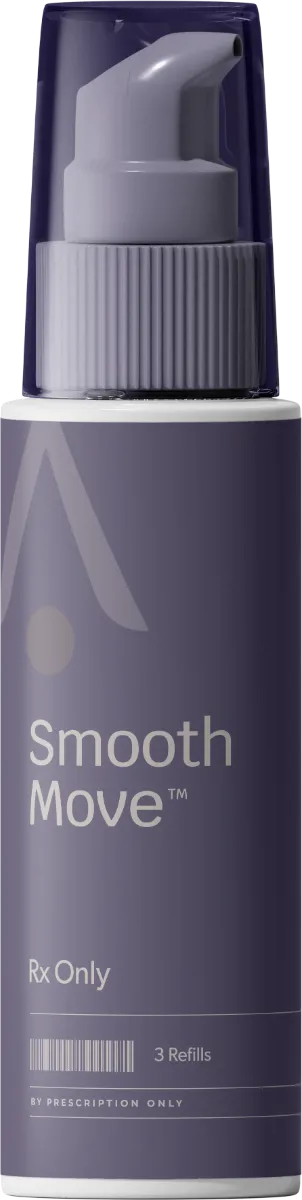
Smooth Move lists tretinoin, niacinamide, and vitamin C. The public ingredient summary does not disclose the individual strengths or vitamin C form. Follow your prescription and review other active products with your prescriber. Review the current Smooth Move™ page and bring your existing skin-care products to the provider discussion.
Related reading
- Tretinoin for Fine Lines: Evidence, Expectations, and Daily Care
- Starting Tretinoin: Build a Routine Around Your Prescription
- Tretinoin for Acne vs. Photoaging: Different Goals, Different Timelines
- Smooth Move Ingredients: Tretinoin, Niacinamide, and Vitamin C
- A gentle skin barrier recovery routine
Educational information; your prescription and clinician’s instructions guide individual care. Product details and linked sources checked September 15, 2026. Ingredient research does not establish identical results for a finished compounded formula. Photographs are illustrative and do not show treatment outcomes.