A skin barrier recovery routine should make your skin easier to care for, not add another demanding sequence of products. When washing stings, makeup catches on flakes, or a familiar moisturizer suddenly burns, the most useful first step is to look at symptoms and recent exposures. A complicated routine can obscure the reason your skin is uncomfortable.
This guide focuses on gentle care, a clear product history, and knowing when home adjustments are insufficient. Persistent irritation, a spreading rash, or symptoms after a procedure need individualized advice. The phrase barrier recovery does not identify the cause of every facial problem.
Recognize what needs attention
Dryness can look like roughness, scaling, or small flakes. Irritation can bring burning, redness, or tenderness. Itching may be prominent in some forms of dermatitis. These features can overlap, and the same appearance can arise from different conditions.
Notice where the problem occurs. Is it limited to the areas where an active is applied? Does it involve the eyelids, around the mouth, or the hairline? Did it begin after a new product, unusually frequent cleansing, sun exposure, or a treatment procedure?
Describe these observations without deciding that your barrier is permanently damaged. A specific history helps a clinician assess the problem. Dramatic labels can make the situation feel more frightening while adding little useful information about what actually changed.
Step one: make an inventory
List everything that touches the affected area over a typical week. Include cleanser, makeup remover, sunscreen, prescription products, exfoliating acids, retinoids, spot treatments, masks, and shaving products. Add occasional products, since a weekly peel can matter even if it is absent from the daily routine.
For each item, record how often you use it and whether its use changed recently. A familiar product used more often is still a new exposure pattern. Applying an active to a larger area or under another thick layer can also alter the experience.
Bring this list to your prescriber if a medication is involved. It provides a basis for deciding which products are essential, which are optional, and which need a closer look. Do not assume the newest bottle is necessarily the only contributor.
Step two: reduce avoidable friction and harsh cleansing
The AAD’s dry-skin guidance supports short exposure to warm water, gentle cleansing, and fragrance-free skin care. Avoid scrubbing an uncomfortable face in an effort to remove flakes. Cleansing brushes, rough cloths, and abrasive masks can add friction when the surface already feels sensitive.
Use enough cleansing to remove the substances that need removal, such as makeup or sunscreen, without repeatedly washing until the skin feels squeaky. That stripped feeling is not a necessary sign of cleanliness. Pat dry with a soft towel instead of rubbing vigorously.
Also consider ordinary habits. Very hot shower water running over the face, repeated wiping during exercise, or shaving over irritated areas may complicate recovery. Small changes to these exposures can make the routine more comfortable without introducing another active ingredient.
Step three: choose a moisturizer you tolerate
Moisturizers differ in texture and ingredients. Humectants help attract water, emollients smooth the surface, and occlusive ingredients help reduce water loss. Many products combine these functions. The best choice is a formula that fits your skin and remains comfortable with repeated use.
The AAD’s moisturizer guide explains why creams and ointments can be useful for dry skin. Acne-prone skin and individual preferences also matter. A very rich texture is not automatically required for every face, and an expensive barrier label does not guarantee a better match.
If even a simple moisturizer produces substantial burning, seek advice. Repeatedly switching among many new products can make the cause harder to identify. Keep packaging and ingredient information so the clinician can review what you have already tried.
Step four: review active treatments with the prescriber
Retinoids, exfoliating acids, acne medications, and pigmentation treatments can all require adjustments when irritation develops. The correct decision depends on the medication, the severity of symptoms, and the condition being treated. Contact the prescriber rather than inventing a long-term stop-and-start schedule.
Stop a newly introduced product that causes a marked reaction and obtain advice before trying it again. Do not treat severe burning as evidence that a product is working. Likewise, applying more moisturizer does not necessarily make an otherwise inappropriate combination suitable.
Once the skin is comfortable, ask how and when essential treatments should be resumed. A written plan can specify the order of reintroduction and the symptoms that should prompt contact. It is easier to follow than trying to remember several informal suggestions.
A practical routine discussion
| Part of the day | Aim | Question to resolve |
|---|---|---|
| Morning cleansing | Remove what is needed without added irritation | Is my current cleanser comfortable? |
| Moisturizing | Improve comfort and reduce dryness | Which texture suits my skin and treatment plan? |
| Daytime protection | Limit ultraviolet exposure | Can I use this sunscreen consistently? |
| Evening cleansing | Remove sunscreen and makeup gently | Am I overdoing repeated cleansing or rubbing? |
| Prescription step | Treat the diagnosed concern | Does the prescriber want a temporary adjustment? |
This is a framework, not a universal prescription. Some people need a different cleansing pattern or a specific treatment for dermatitis. The point is to give every step a reason and remove steps that only add uncertainty.
Keep sunscreen in the conversation
Choose broad-spectrum SPF 30 or higher and follow the sunscreen label, along with shade and protective clothing. The AAD sunscreen guidance can help you understand the label. If application stings, discuss a suitable alternative rather than assuming all sunscreens will feel the same.
Pilling can also make a routine difficult. It may reflect the combination of products, amounts, and application rather than a need to scrub the skin more. Simplifying optional layers can help you identify what is happening without mixing sunscreen into another cream.
Do not assume a recovery cream protects against ultraviolet exposure. Unless a product is labeled and tested as a sunscreen, it should not be assigned that role.
Does a copper-peptide cream belong in recovery care?
It may be worth discussing after the cause of discomfort and the basic routine are clear. Copper-peptide research does not establish a universal treatment for facial irritation. A cream’s moisturizing base may contribute to comfort, while the active ingredient’s specific contribution remains harder to determine.
Bounce Back is a provider-guided copper-peptide formula. Ask whether it fits your current skin condition and whether it should accompany a separate moisturizer. Do not apply it to open areas or a recent procedure site without explicit instructions from the treating clinician.
The copper peptides and barrier guide explains the evidence distinction. If your skin is repeatedly reactive, the sensitive-skin guide can help you organize a useful product and symptom history.
Track recovery through ordinary activities
Useful signs of improvement include more comfortable cleansing, less persistent tightness, and fewer new areas of flaking. Keep those observations separate from cosmetic goals such as firmness or pigmentation. It is possible for comfort to improve before the appearance fully settles.
Write short notes at consistent times instead of inspecting the skin repeatedly under magnification. Record any new products, unusual sun exposure, or missed prescribed steps. Photographs taken in consistent light can support the history when visible changes occur.
There is no single recovery timeline for every irritated face. A minor exposure and an untreated inflammatory condition are different situations. If progress stalls or symptoms return repeatedly, reassess the cause with a clinician rather than extending a self-described repair phase indefinitely.
Know when to seek care
Persistent rash, painful cracks, repeated eyelid irritation, or itching that disturbs sleep deserves evaluation. Increasing warmth, pain, swelling, pus, or rapidly spreading redness requires prompt advice. Severe facial swelling, hives with breathing difficulty, or other signs of a serious allergic reaction needs urgent medical attention.
After laser treatment, microneedling, a peel, or surgery, follow the procedure-specific plan. The acceptable products and timing depend on what was done and how the skin is healing. A general recovery article cannot replace those instructions.
Rebuild deliberately
When the skin is ready for additional treatment, return to the original goal. You may not need every previous serum, mask, and exfoliant. Ask which products have the clearest purpose and how to introduce them without recreating the same irritation pattern.
A good recovery routine leaves you with fewer unanswered questions. You know what each product does, which symptoms deserve attention, and whom to contact if the problem returns. That clarity is a useful result even before you decide whether another active belongs on the shelf.
Explore Bounce Back™
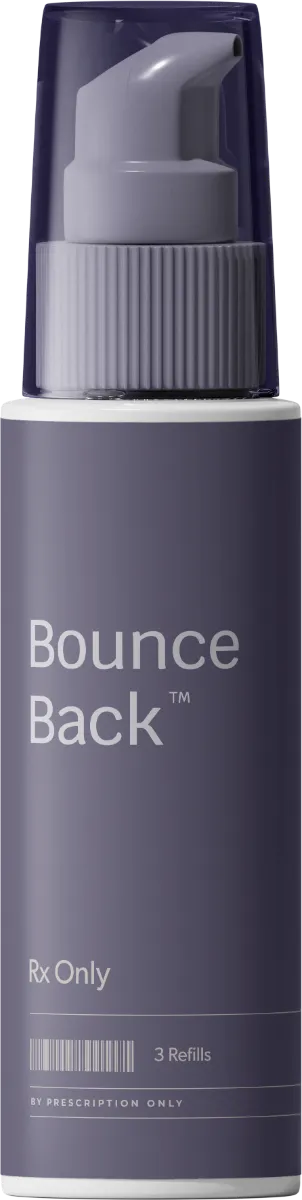
Bounce Back lists copper peptide 2%. Confirm the precise peptide identity, complete formulation, and directions with the dispensing pharmacy and prescribing provider. Review the current Bounce Back™ page and bring your existing skin-care products to the provider discussion.
Related reading
- Copper Peptides for Skin: Evidence, Uses, and Routine Basics
- Copper Peptides and the Skin Barrier: What to Know
- Copper Peptides for Sensitive Skin: Tolerance and Product Questions
- Copper Peptides After Skin Procedures: Ask Before Applying
- Tretinoin for fine lines: evidence and daily care
Educational information; your prescription and clinician’s instructions guide individual care. Product details and linked sources checked September 15, 2026. Ingredient research does not establish identical results for a finished compounded formula. Photographs are illustrative and do not show treatment outcomes.