Copper peptides may sound like a gentle option for sensitive skin, but tolerance depends on the complete product and the reason your skin is sensitive. A cream that feels comfortable to one person can sting another person’s irritated face. The right starting point is your history, symptoms, and current routine.
Before adding a copper-peptide product, decide what you want it to accomplish. Relief from dryness, cosmetic texture improvement, and treatment of a recurring rash are different goals. A peptide cream should not become a substitute for diagnosing persistent inflammation simply because the word repair appears in its description.
Sensitive skin is a description, not a single diagnosis
People use sensitive to describe burning, itching, easy redness, dryness, or reactions to particular products. Those experiences can arise for different reasons. Some people have a diagnosed condition such as eczema or rosacea; others notice temporary intolerance after overusing exfoliants or changing several products.
The pattern matters. Immediate stinging after application, delayed itchy patches, and flushing with heat do not necessarily have the same cause. Write down what happens instead of assuming that every uncomfortable reaction is an allergy or a damaged barrier.
If symptoms persist, a clinician can help distinguish possible causes. This matters because a plan for ordinary dryness may be insufficient for contact dermatitis, and a routine aimed at acne can aggravate an already irritated face.
Why the whole ingredient list matters
The featured active is only one part of a formula. A cream also needs ingredients that affect texture, preservation, spreadability, and stability. Any relevant sensitivity has to be considered against the complete list, including inactive ingredients.
The concentration of copper peptide cannot tell you whether the base will suit you. A rich texture may feel comforting but still contain an ingredient you do not tolerate. A lightweight serum may have fewer oils but a different solvent system. Neither category guarantees better tolerance.
Ask the pharmacy for the full formula information needed to review known allergies. If a past reaction was linked to a specific ingredient, use its name rather than saying you react to all creams. If the cause was never established, explain that uncertainty accurately.

What research can and cannot say about gentleness
GHK-Cu has been investigated in laboratory and cosmetic research, but the review of topical GHK evidence identifies important clinical and formulation gaps. That literature does not establish that all copper-peptide products are appropriate for every sensitive-skin condition.
Participants in a small cosmetic study may differ from someone with active facial eczema, a recent allergic reaction, or several prescription topicals. A study’s tolerability findings apply to its tested preparation and circumstances. They do not eliminate the need to evaluate a different finished product.
This is also why “natural” is not a reliable safety category. A molecule’s presence in the body, or an ingredient’s natural origin, does not predict how a particular topical preparation will behave on irritated skin.
Prepare a useful sensitivity history
Make a list of the products you currently use, including occasional masks, spot treatments, makeup, and shaving products. Record how often you use them and which areas they touch. Include hair products if they contact the forehead or cheeks.
Next, list previous reactions. Note the product name, symptoms, timing, and whether a clinician diagnosed an allergy. Photographs of the label and rash can help, but an imperfect record is still useful. Avoid deliberately reapplying a product that caused a significant reaction just to gather more evidence.
Finally, record treatments that have been comfortable. That gives the clinician a practical starting point. A tolerated cleanser and moisturizer can anchor the routine while the need for another active is considered.
A simpler routine creates clearer information
The AAD’s dry-skin recommendations include gentle, fragrance-free products and avoiding harsh washing. These basic measures can support comfort while you seek advice about persistent symptoms. They do not diagnose or treat every cause of sensitive skin.
Avoid treating dryness with repeated exfoliation because flakes look untidy. Scrubbing an uncomfortable surface can add another source of irritation. Likewise, a long sequence of soothing products can become difficult to troubleshoot when each brings its own ingredients.
Ask which optional steps can be removed and how prescription treatments should be handled. If the goal is to assess one new cream, changing fewer other variables makes the result easier to understand.
Small-area use and allergy testing are different
A clinician or product instruction may recommend trying a new cosmetic on a limited area before broader use. Follow any specific advice for the product. An informal home trial is not the same as medical patch testing, which uses a structured process to investigate contact allergy.
Tolerating a small area once does not guarantee tolerance with repeated application to the whole face. The eyelids, areas around the mouth, and recently irritated sites can behave differently. Do not use a successful spot application as permission to extend a prescription to areas not included in the directions.
If you have a history of serious reactions, ask before experimenting. A clinician may want to establish the cause or review the formula before any trial. There is no need to prove that a reaction can happen twice.
Introducing Bounce Back with a clear plan
Bounce Back lists copper peptide 2% and is presented as a provider-guided topical. Confirm the intended goal, amount, frequency, and application area on your prescription. Ask whether the full formulation suits your known sensitivities.
Discuss whether it should accompany or replace a moisturizer step. If another active is already prescribed, get instructions for the combination instead of automatically adding the cream to every treatment night. Keep the container so you can refer to its exact directions and beyond-use date.
Our Bounce Back ingredients guide can help organize those questions. For symptoms that began after a complicated routine, the skin barrier recovery guide focuses on identifying unnecessary irritation.
Track comfort as carefully as appearance
Use a simple daily note during an introduction period. Record whether the skin feels comfortable during cleansing, after the new product, and the next morning. Describe the symptom and its duration without assigning a cause prematurely.
| What you notice | Helpful detail to record | Why it is useful |
|---|---|---|
| Stinging | When it starts and how long it lasts | Separates brief sensation from persistent discomfort |
| Itching | Location and whether it disrupts sleep | Helps characterize the reaction |
| Redness or color change | Whether it is spreading or recurring | Shows the pattern over time |
| Flaking | New versus pre-existing areas | Helps assess the overall routine |
| Improvement | Comfort and appearance separately | Avoids overlooking symptoms because photographs look smoother |
You do not need a complicated score or special device. A short, consistent record is enough to support a useful conversation. If symptoms are significant, contact the clinician rather than waiting for a scheduled review.
What should prompt stopping the new product?
Persistent burning, a spreading rash, swelling, blistering, or painful skin should not be pushed through as an adjustment phase. Stop the newly introduced product and seek advice. Hives with facial swelling or breathing difficulty requires urgent medical care.
Do not cover a reaction with several additional active creams. That can make the problem harder to assess. Ask what simple care is appropriate while waiting for evaluation, especially if the face has open areas or the eyes are involved.
Recurring discomfort also deserves review even when it never becomes dramatic. A treatment that repeatedly makes ordinary cleansing painful may not be a workable choice in its present form or schedule.
Sun protection for a reactive routine
Choose a sunscreen you tolerate and support it with shade and protective clothing. The AAD’s sunscreen guidance recommends broad-spectrum SPF 30 or higher. If a previously comfortable sunscreen begins to sting, include that change in the symptom history.
Do not assume that a copper-peptide cream provides sun protection. Ingredient research involving oxidative stress does not establish a finished product’s SPF. Each step should have a clear role, and the sunscreen should be used according to its own label.
Make the next decision about your skin, not the trend
At follow-up, review whether the cream met its intended goal and whether the routine stayed comfortable. Ask if a different vehicle, a simpler moisturizer, or evaluation for a specific condition would be more useful than continuing to add products.
Sensitive skin does not require giving up all treatment options. It does require a plan that respects your history and makes reactions easy to recognize. Copper peptides can be discussed within that plan, with the same attention to evidence, formulation, and tolerance as any other active ingredient.
Explore Bounce Back™
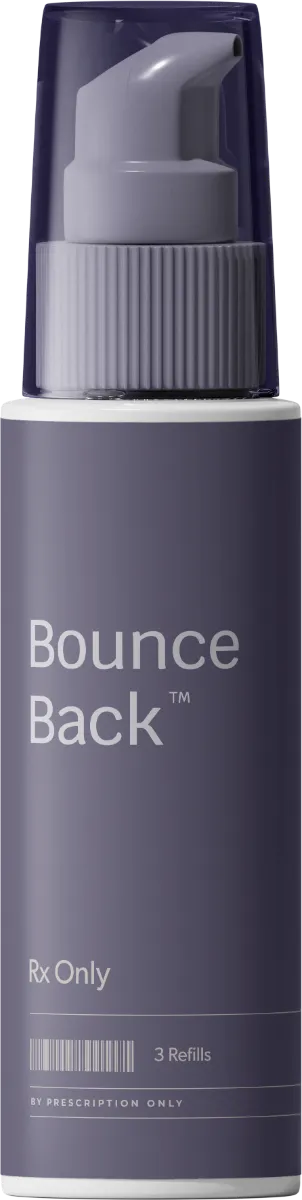
Bounce Back lists copper peptide 2%. Confirm the precise peptide identity, complete formulation, and directions with the dispensing pharmacy and prescribing provider. Review the current Bounce Back™ page and bring your existing skin-care products to the provider discussion.
Related reading
- Copper Peptides for Skin: Evidence, Uses, and Routine Basics
- Copper Peptides and the Skin Barrier: What to Know
- A Skin Barrier Recovery Routine: Gentle Care and When to Get Help
- Bounce Back Copper Peptide Cream: A Product and Evidence Guide
- Tretinoin for fine lines: evidence and daily care
Educational information; your prescription and clinician’s instructions guide individual care. Product details and linked sources checked September 15, 2026. Ingredient research does not establish identical results for a finished compounded formula. Photographs are illustrative and do not show treatment outcomes.