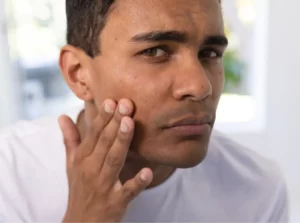
Copper peptides are often marketed with the language of repair, but a skin barrier problem deserves a more precise discussion. Tightness after washing, persistent stinging, and rough patches can have different causes. Adding another active ingredient before understanding the problem may make the routine harder to tolerate and harder to troubleshoot.
The practical question is whether a copper-peptide cream has a useful role alongside basic barrier care for your skin. It is not possible to diagnose a damaged barrier or confirm its recovery from a product’s name. Start with symptoms, recent routine changes, and the condition of the skin itself.
What the skin barrier does
The outermost layer of skin helps limit water loss and reduces exposure to outside irritants. Skin cells, surrounding lipids, and water-binding substances work together. This layer is often compared with a wall, but it is living tissue that changes with environment, inflammation, cleansing, and treatment.
When the surface is dry or irritated, you may notice flaking, a tight feeling, or discomfort when applying products that previously felt fine. These observations are useful, but they are not specific to one condition. Eczema, contact allergy, rosacea, overuse of exfoliants, and other problems can overlap in appearance.
That is why “barrier repair” should describe a goal, not serve as a diagnosis. A clinician may need to look at the pattern, ask about exposures, and review treatment history before deciding what will help.
How copper peptides entered the discussion
Research involving GHK-Cu has explored skin-cell activity and tissue remodeling. Some laboratory findings relate to proteins and pathways involved in repair. The GHK-Cu literature review provides background, while a review of topical GHK delivery discusses limitations in clinical evidence and penetration through skin.
These are reasons to study the ingredient, not proof that any copper-peptide cream will resolve a facial rash. A moisturizer can improve surface comfort through its vehicle even when the contribution of a specific active ingredient has not been isolated. Without a comparison against the same cream base, those effects can be difficult to separate.
Bounce Back’s public page lists copper peptide 2%. The exact peptide identity and the full dispensed formula should be confirmed with the pharmacy if you are trying to match it to a study. The percentage alone does not measure how well the barrier will recover.
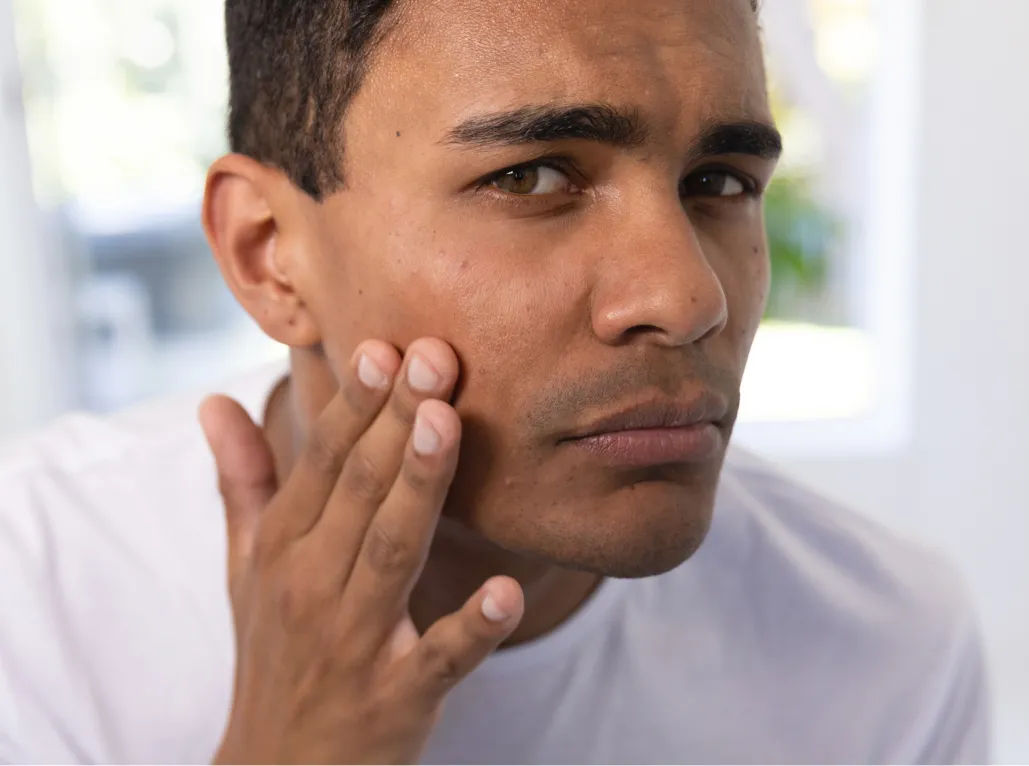
Look backward before adding something new
Build a short timeline of what changed before the symptoms began. Include products that do not look like “treatments”: cleansing balms, makeup removers, fragrance, shaving products, hair products that touch the face, and a new sunscreen. A routine can become irritating even when no single product was intended to be strong.
Also note how you are using each item. A cleanser used several times daily has a different exposure pattern from the same cleanser used once. An acid toner followed by an exfoliating mask adds to the overall routine. Rubbing with a washcloth can matter when the skin is already uncomfortable.
Bring the actual labels or clear photographs to a consultation. “A hydrating serum” tells a clinician less than its ingredient list, frequency, and date of introduction. Keep the timeline factual; you do not need to identify the culprit yourself before asking for help.
Build a quieter baseline
For uncomplicated dryness, a gentle cleanser and a tolerated moisturizer provide a practical starting point. The AAD’s dry-skin guidance emphasizes warm rather than hot water, fragrance-free products, and cream or ointment textures when more moisture retention is needed. Persistent or severe symptoms warrant assessment rather than repeated product experiments.
Think about friction as well as ingredients. Patting skin dry is gentler than vigorous rubbing. Scrubs and cleansing brushes can be difficult to tolerate during an irritated period. A clean, soft towel and a shorter routine may be more helpful than another mask labeled restorative.
Prescription treatments need individual handling. Contact the prescriber about how to manage an irritating regimen; do not guess which medication is essential or how long it should be interrupted. If a newly applied product produces a marked reaction, stop that product and seek advice before trying it again.

Distinguish three kinds of improvement
| Observation | What it may tell you | What it cannot establish by itself |
|---|---|---|
| Skin feels softer after cream | The surface is more comfortable or moisturized. | That a specific peptide repaired deeper tissue. |
| Fewer episodes of stinging | The routine may be better tolerated. | That every cause of inflammation has resolved. |
| Less visible flaking over time | Dryness or irritation may be improving. | That a persistent underlying condition needs no treatment. |
Track each outcome separately. If the skin looks less flaky but is becoming more painful, the picture is mixed. If the face is comfortable but the texture still bothers you, it may be time to reassess the cosmetic goal after the irritation has settled.
The same distinction helps prevent unnecessary escalation. A cream does not need to sting to be useful, and more visible peeling does not demonstrate faster repair. Comfort is a legitimate part of evaluating a daily product.
Where a copper-peptide cream may fit
If a provider recommends Bounce Back, confirm whether it replaces a moisturizer step or accompanies one. Ask about application to dry versus damp skin, the intended facial area, and the prescribed frequency. Use those directions instead of borrowing a routine from a different copper-peptide serum.
Avoid adding it simultaneously with a new cleanser, acid, and retinoid. A single planned change produces more interpretable information. The goal is not to create a formal experiment at home; it is to avoid so many moving parts that neither you nor the clinician can understand the result.
For a broader discussion of ingredient roles, see the copper-peptide guide. If the immediate issue is discomfort, the barrier recovery routine focuses on simplifying care and recognizing when professional assessment is needed.
Keep sun protection practical
Sun protection remains relevant while you work on comfort. Choose a sunscreen your skin tolerates, along with shade and protective clothing. If every sunscreen suddenly burns, report that change rather than cycling through a long list of new actives in search of a fix.
The AAD recommends broad-spectrum SPF 30 or higher. The vehicle matters here too: a formula that pills, feels unpleasant, or leaves a finish you dislike can be hard to use consistently. Discuss options that fit your skin and routine rather than assuming that all products with the same filters feel identical.
Copper peptides do not supply a tested SPF merely because laboratory research discusses responses to ultraviolet exposure. A treatment cream and a labeled sunscreen serve different purposes in the routine.
A useful record for follow-up
Write down the location of symptoms, when they occur, and how long they last. “My cheeks sting for twenty minutes after this evening product” is more helpful than “my barrier is destroyed.” Note itching, scaling, warmth, swelling, and whether the problem is spreading.
Photographs can document a changing rash, but do not delay care while trying to capture the perfect image. Avoid filters and take pictures in ordinary, consistent light. Include the date and whether the skin was freshly washed or covered with product.
At follow-up, ask what findings would support restarting an active, whether the same formulation should be used, and how to recognize a recurrence. A plan should include what to do when symptoms return, not only what to apply when everything is comfortable.
When a barrier-focused routine is not enough
Seek evaluation for persistent redness, repeated flares, cracks that are not healing, or symptoms interfering with sleep. Increasing pain, warmth, pus, rapidly spreading redness, or eye involvement deserve prompt attention. Marked swelling, hives, or breathing difficulty requires urgent care.
Recent laser treatment, microneedling, a peel, or surgery changes the decision. A product appropriate for intact skin may be unsuitable during recovery. Follow the treating clinician’s aftercare plan and obtain approval before adding copper peptides or other cosmetics.
The most useful barrier routine is one you understand and tolerate. It should reduce unnecessary irritation, support comfort, and leave room for the right diagnosis when symptoms persist. A copper-peptide cream may be one part of that conversation; it should not carry the entire burden of explaining or treating every skin change.
Explore Bounce Back™
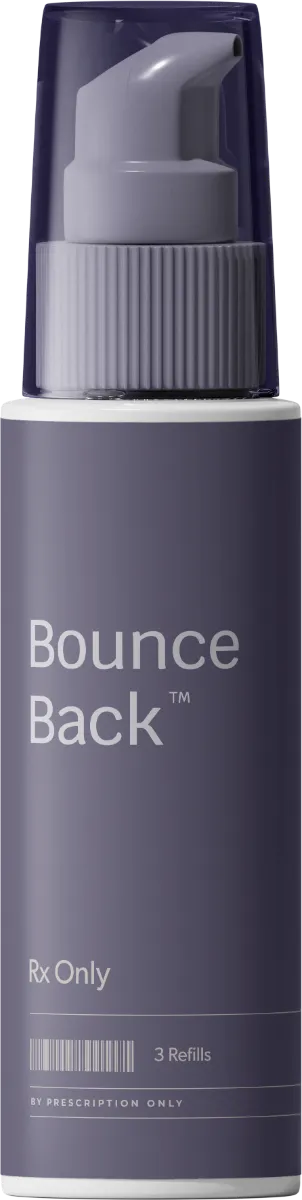
Bounce Back lists copper peptide 2%. Confirm the precise peptide identity, complete formulation, and directions with the dispensing pharmacy and prescribing provider. Review the current Bounce Back™ page and bring your existing skin-care products to the provider discussion.
Related reading
- Copper Peptides for Skin: Evidence, Uses, and Routine Basics
- A Skin Barrier Recovery Routine: Gentle Care and When to Get Help
- Copper Peptides for Sensitive Skin: Tolerance and Product Questions
- Tretinoin for fine lines: evidence and daily care
Educational information; your prescription and clinician’s instructions guide individual care. Product details and linked sources checked September 15, 2026. Ingredient research does not establish identical results for a finished compounded formula. Photographs are illustrative and do not show treatment outcomes.