Alcohol deserves an individual conversation when you take Ozempic or another GLP-1 medicine. The relevant questions include your health conditions, other medicines, food intake, symptoms, and drinking pattern. There is no universal drink allowance or injection-timing workaround that makes alcohol safe for everyone.
Some people also ask whether semaglutide reduces alcohol cravings. Early human research is promising for certain outcomes, but it does not establish that every GLP-1 medicine treats alcohol use disorder or that taking Ozempic makes drinking risk-free.
Start with the actual medicine and reason for treatment
Ozempic contains semaglutide and has labeled uses in adults with type 2 diabetes, including specified cardiovascular and kidney-risk indications. Wegovy also contains semaglutide, but its presentations and approved uses differ. Mounjaro and Zepbound contain tirzepatide. A general statement about “a GLP-1” should not replace the name of the product you take. Ozempic prescribing information, Wegovy prescribing information.
Tell your clinician whether you have diabetes, use insulin or a sulfonylurea, have a history of pancreatitis or liver disease, or experience significant digestive symptoms. Include other prescriptions and supplements. Those details can matter more than whether an online article lists alcohol as a direct drug interaction.
Our semaglutide questions guide and tirzepatide questions guide explain why product and indication distinctions are useful. A service offering semaglutide does not imply that every formulation has the same approval or instructions as Ozempic.
Alcohol, food intake, and low blood glucose
NIDDK explains that alcohol can make it harder for the body to keep blood glucose steady, particularly when someone has not eaten enough. Alcohol can also make early low-glucose symptoms harder to recognize. Insulin and some other diabetes medicines increase the importance of a personal prevention and treatment plan. NIDDK hypoglycemia guidance.
Ozempic’s label warns that the risk of hypoglycemia increases when it is used with insulin or an insulin secretagogue, such as a sulfonylurea. This does not mean every person taking Ozempic has the same risk, and it does not supply a safe drinking quantity. Ozempic safety information.
If you have diabetes, discuss food, glucose monitoring, and symptom response with your care team before deciding whether to drink. Follow your existing low-glucose plan. Do not independently omit medicine, take an extra dose, or change insulin because of a general article.
Severe confusion, loss of consciousness, seizures, or inability to treat yourself requires emergency help. A person who cannot safely swallow should not be given food or drink by mouth. The right emergency action should follow their established plan and local emergency services.
Digestive symptoms can make the decision different
GLP-1 treatment can involve nausea, vomiting, diarrhea, constipation, or abdominal discomfort. If you already have persistent symptoms or are eating and drinking poorly, adding alcohol creates a different practical situation from having no symptoms and normal intake.
Alcohol has its own health effects. NIAAA describes gastrointestinal irritation and reflux-related concerns and explains that alcohol misuse can damage the liver and pancreas. Those risks do not disappear because appetite is reduced or weight is changing. NIAAA alcohol effects information.
If you cannot keep fluids down or feel significantly unwell, discuss the symptoms with your prescribing team. Do not treat alcohol as a way to increase appetite or a reason to push through vomiting. Persistent symptoms deserve assessment rather than a homemade medication schedule.
Our semaglutide first-month guide covers early treatment questions, while the balanced meals guide can help organize practical eating concerns. Neither replaces medical assessment of severe symptoms.
Pancreatitis and severe abdominal pain
Ozempic’s label warns about acute pancreatitis. Persistent or severe abdominal pain, sometimes spreading to the back and occurring with or without vomiting, needs prompt assessment. The label directs stopping treatment if pancreatitis is suspected and obtaining appropriate care. Alcohol misuse is also a recognized cause of pancreatic harm. Ozempic prescribing information, NIAAA pancreas information.
This overlap does not let you diagnose the cause of pain at home. It does mean that severe pain should not be dismissed as a routine hangover or expected appetite effect. Tell the clinician about your medicine, recent doses, alcohol intake, and other symptoms.
For more on symptom assessment, see the right-sided abdominal pain guide. Different locations and accompanying symptoms can require different evaluation; a blog cannot identify the cause from a short description.

Can changing injection timing make alcohol safer?
Do not rely on a claim that drinking a certain number of hours before or after an injection prevents problems. A weekly medicine does not disappear between doses. Timing also does not remove alcohol’s effects on glucose, nutrition, the pancreas, or other conditions.
The label’s administration and missed-dose rules serve a prescribing purpose; they are not an alcohol workaround. Use the instructions for your actual product and ask your prescriber about any proposed schedule change. Do not skip a dose for a social event and then take extra medicine afterward.
If your concern is a trip or event, plan the treatment discussion in advance. Our medication travel guide separates schedule planning from storage and security questions. Event planning should still reflect your individual health needs.
What did the semaglutide alcohol trial find?
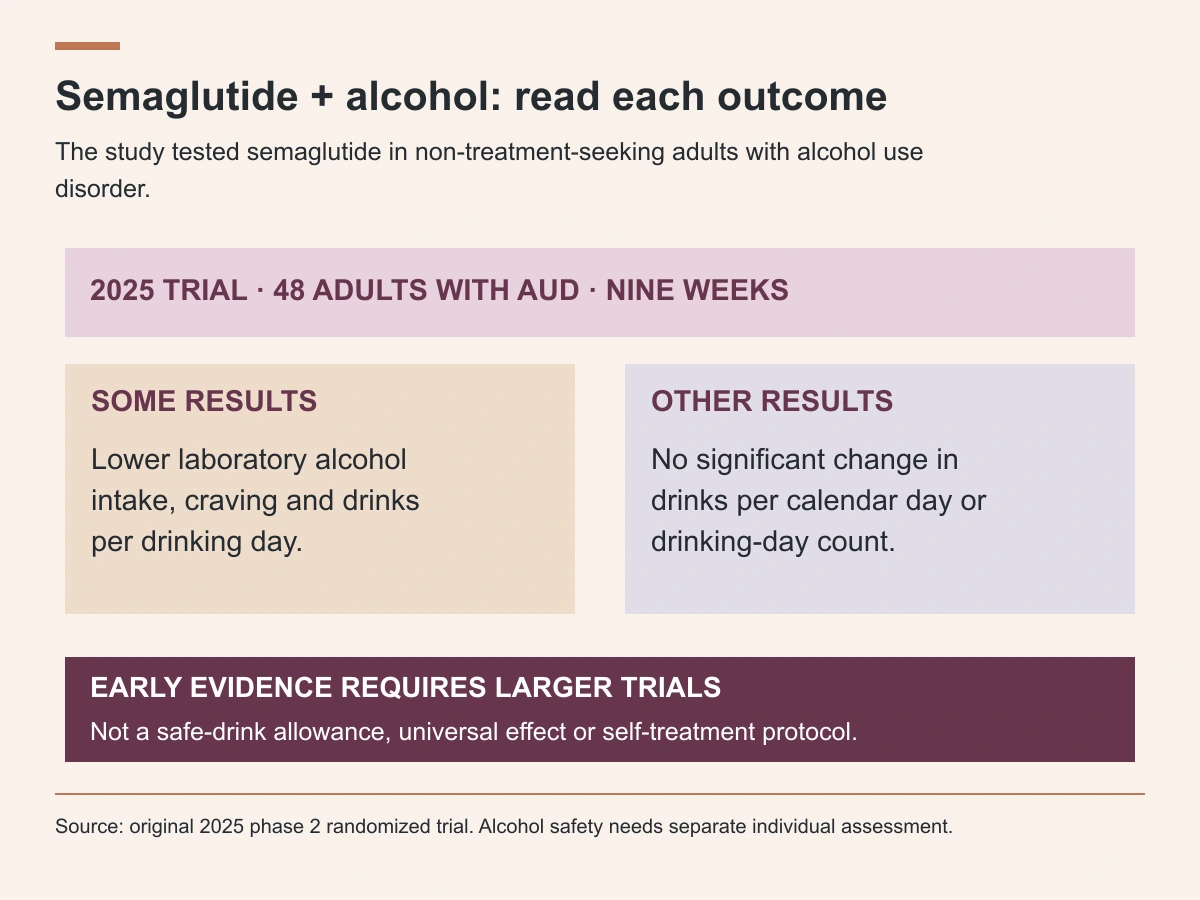
A 2025 phase 2 randomized trial enrolled 48 adults with alcohol use disorder who were not seeking treatment. It lasted nine weeks. Semaglutide reduced alcohol consumed in a laboratory task and reduced some weekly measures, including drinks per drinking day and craving. It did not significantly change average drinks per calendar day or the number of drinking days. Original semaglutide alcohol-use trial.
The small sample and short duration limit what can be concluded. Participants, research conditions, and measured endpoints differ from an ordinary prescribing visit. The investigators called for larger trials. The tested research schedule is not a self-treatment protocol for alcohol use disorder.
A favorable result in one measure cannot be converted into “everyone stops drinking.” It also cannot be transferred directly to tirzepatide, a different dose, or a person without alcohol use disorder. Personal reports of reduced interest in alcohol may be meaningful to the individual, but they are not a substitute for controlled evidence.
| Research question | What the reviewed trial contributes | What remains unestablished by that trial |
|---|---|---|
| Can semaglutide affect craving? | A reduction in measured craving in this sample | A guaranteed response for every patient |
| Did every drinking measure improve? | Some measures favored semaglutide | Average drinks per calendar day and drinking-day count did not significantly change |
| Is it proven long-term AUD treatment? | Early phase 2 evidence | Long-term effectiveness and safety in broader populations |
| Does the result apply to tirzepatide? | The trial tested semaglutide | A tirzepatide treatment conclusion |
| Does treatment make drinking safe? | That was not established | Protection from alcohol-related harm |
Craving changes should be discussed, not self-prescribed
If you notice less interest in alcohol, tell your clinician. Describe the change in actual drinking, cravings, and function rather than assuming that treatment has resolved every alcohol-related concern. If the change is useful, your care team can help you understand it in the context of the broader plan.
If cravings remain troublesome or alcohol is affecting health, work, relationships, or safety, seek a specific assessment. NIAAA describes evidence-based care for alcohol use disorder, including behavioral treatment and approved medicines. A weight-management prescription should not replace that care. NIAAA alcohol use disorder information.
People who drink heavily over time may need medical help when stopping. NIAAA warns that withdrawal can be dangerous and potentially life-threatening. Do not advise yourself or someone else to abruptly stop without appropriate assessment when dependence may be present.
Does alcohol affect weight-management results?
Consider the complete pattern rather than assigning a fixed effect to one drink. Alcoholic drinks and mixers can contribute energy, and drinking may change what you eat or how consistently you follow a routine. That does not permit a precise prediction of pounds lost or gained from a general article.
If you track intake, include the actual beverage and amount rather than only counting the meal. If tracking is not useful for you, discuss the practical pattern: frequency, circumstances, food intake, symptoms, and how drinking affects the next day.
The calorie intake guide and food noise and hunger guide offer different ways to explore those concerns. The Zepbound and alcohol guide addresses the named tirzepatide product separately.

Questions for your prescribing visit
If you also need pain or fever treatment, the Tylenol and Ozempic checklist covers ingredient overlap, liver and alcohol questions, and the importance of the actual product label.
Bring a clear account of your usual drinking and any recent change. Your clinician can provide better advice when they know what actually happens, rather than hearing only “social drinking.” Ask:
- Do my diagnoses or other medicines make alcohol particularly concerning?
- What should I do if I have low-glucose symptoms or poor intake?
- Which symptoms require urgent medical assessment?
- Should I seek a separate alcohol-use assessment?
- How will we review treatment if nausea or nutrition problems persist?
CoreAge Rx’s semaglutide service information and tirzepatide service information describe prescription care pathways. They do not establish an alcohol allowance or an approved alcohol-use-disorder indication.
Frequently asked questions
Can I drink alcohol on Ozempic?
A general article cannot clear it for you. Discuss your drinking pattern, diagnoses, other medicines, glucose risks, and symptoms with the prescribing clinician. No universal number of drinks is supplied here.
Is wine safer than beer or spirits?
The beverage type does not remove alcohol-related risk. Serving sizes, alcohol content, mixers, health conditions, and the overall pattern differ. Do not treat one category as a medication-safe option by default.
Should I move my injection to another day?
Do not use an injection schedule as an unverified alcohol workaround. Ask your prescriber about treatment changes and follow the named product’s instructions. Skipping or adding doses can create a separate problem.
Does semaglutide treat alcohol use disorder?
The reviewed trial provides early evidence for some outcomes and calls for larger research. It does not establish a universal treatment plan or justify self-prescribing. Seek appropriate alcohol-use care when needed.
What if I suddenly stop wanting alcohol?
Report the change and any accompanying symptoms to your clinician. If you have been drinking heavily, discuss withdrawal safety before abrupt cessation. Reduced craving does not answer every medical question.
Can alcohol make nausea or low-glucose concerns more complicated?
Yes, the overall situation may become harder to manage, especially with poor intake or other diabetes medicines. Use your established care plan and seek assessment for severe or persistent symptoms.
Educational information for adults; individual treatment decisions require a qualified clinician. Sources reviewed October 2, 2026. Original AI-generated article images depict fictional people and objects, not patient outcomes. Other editorial images are illustrative. Graphics summarize the cited sources.
Additional evidence and study details
- Semaglutide and Alcohol Use: What the 2025 and 2026 Randomized Trials Found. Compare the 2025 injectable and 2026 oral randomized alcohol trials, including positive signals, null endpoints, and treatment boundaries.