
Water supports normal body functions and can make a weight-management routine easier when it replaces a drink that regularly contributes calories. It does not melt fat or replace the need for food. Distilled water is water processed through a particular treatment method; that method does not establish an extra weight-loss benefit.
This guide covers plain water, distilled water, other daily beverages and practical hydration questions. It expands the established water-and-drinks article so you can find these related answers in one place. If you have a prescribed fluid limit or a medical hydration plan, that individualized guidance takes priority over a general drinking routine.
What does water do in the body?
CDC describes water’s roles in temperature regulation, cushioning joints, protecting sensitive tissues and waste removal. Getting enough helps prevent dehydration. These functions matter whether or not you are trying to change your weight. CDC water and healthier-drinks guidance.
Hydration is therefore a basic health need, not a technique for producing a temporarily lower scale reading. A drink adds fluid to your body at that moment. Sweating changes fluid balance. Neither observation tells you how much body fat has changed.
Our water weight versus fat-loss guide explains why short-term weight changes need context. Trying to manipulate the scale by withholding fluid, forcing sweating or drinking excessively can distract from the eating and activity pattern you are actually trying to improve.
Can replacing a sugary drink help?
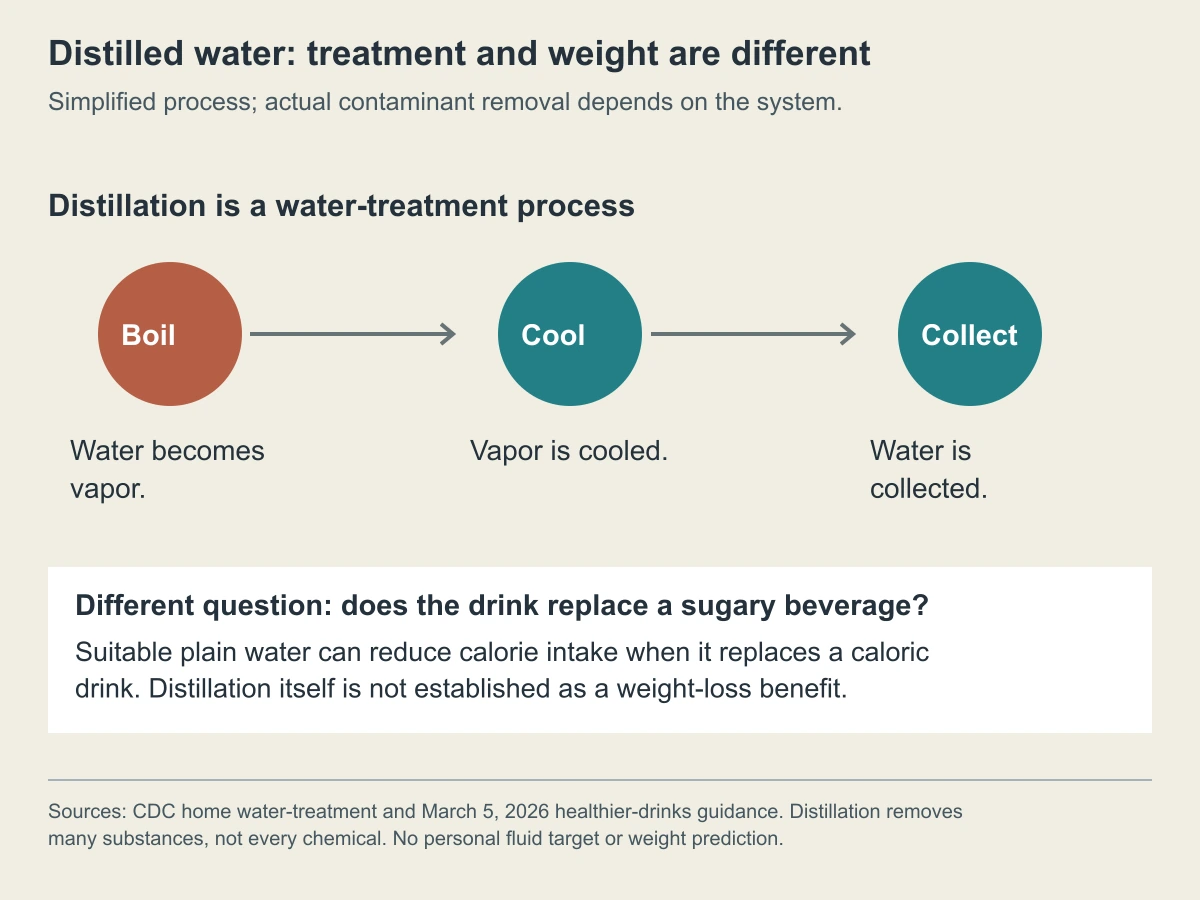
Plain water has no calories. CDC notes that replacing sugary drinks with water can reduce calorie intake. The important word is replacing: the result depends on what you were drinking before and what you consume afterward. It does not imply a fixed amount of weight loss from each bottle. CDC healthier-drinks guidance.
Start with one recurring occasion. Perhaps you usually order a large sweetened drink with lunch, or your coffee routine includes additions you no longer enjoy enough to justify. Water, unsweetened tea or a smaller serving may be a workable change. Choose something you can maintain comfortably rather than a challenge that requires constant effort.
You can still enjoy a favorite drink occasionally. An overall routine can accommodate preferences; one beverage does not determine the success of a week. The calorie-intake guide discusses how intake and needs fit together without turning every food or drink into a moral judgment.
What is distilled water?
Distillation systems boil water and collect it after it cools. CDC explains that this process leaves behind many germs and chemicals, including minerals such as calcium and magnesium. It is one type of water treatment, alongside filtration, reverse osmosis and other systems. CDC home water-treatment information.
Distillation does not remove every possible chemical. CDC identifies limitations involving some substances that evaporate easily. Equipment also needs appropriate care; treatment should not be treated as a permanent guarantee against later contamination.
The useful question is whether a drinking-water source is suitable and whether a treatment system addresses the actual concern. A treatment method’s name does not tell you that it is the best choice for every household. Water testing, local advice and the system’s specifications matter more than a generic purity claim.
Does distilled water help with weight loss more than other plain water?
The reviewed CDC sources explain hydration, beverage substitution and water treatment. They do not establish distillation as a fat-loss treatment or show that drinking distilled water produces more weight loss than other suitable plain drinking water. Removing minerals during processing is not evidence of a new metabolism effect.
If distilled drinking water replaces a caloric drink, the useful change is the beverage substitution. You should not attribute that possible reduction in calorie intake to the distillation process. Suitable plain tap or bottled water can serve the same practical role in a drinking routine.
Be cautious about claims that a particular water flushes fat, removes dietary calories or resets the body. A water-treatment claim and a weight-management claim require different evidence. Paying more for a special water does not establish that it will produce a different weight result.
What about the minerals removed by distillation?
Distillation can remove calcium and magnesium from water, but that fact alone does not determine whether your overall diet is nutritionally adequate. Food, other beverages, medical needs and the actual drinking-water source all contribute to the discussion. It is not a reason to start mineral supplements automatically.
If you follow a medical nutrition plan, discuss fluid and mineral questions with the clinician or dietitian who knows your circumstances. NIDDK explains that kidney-disease nutrition may require individualized decisions about fluids and nutrients. A general claim that everyone needs extra minerals—or that everyone should remove them—does not account for those differences. NIDDK kidney-disease nutrition guidance.
For most routine purchasing decisions, focus first on water intended for drinking, safe storage and whether you enjoy it enough to use it consistently. Do not use water sold for another purpose simply because its label includes the word “distilled.” Follow the actual product directions.

If you encounter a vegetable-water recipe, our guide to eggplant water and weight-loss claims explains why whole-vegetable nutrient data do not establish the contents or effects of a strained infusion.
For a named example, our guide to Hint still and sparkling water questions compares manufacturer ingredients, practical substitution, carbonation, and individual fluid needs.
Plain, distilled, sparkling or flavored: compare the actual drink
| Drink or description | Useful question | What the description does not prove |
|---|---|---|
| Plain drinking water | Is it a suitable, accessible drinking-water source? | A particular amount will cause a fixed weight loss. |
| Distilled drinking water | Does this treatment address an actual water-quality need? | Distillation adds a special fat-burning effect. |
| Unsweetened sparkling water | Are there ingredients or symptoms relevant to me? | Bubbles make it a detox product. |
| Flavored water | What does the ingredient list and label show? | “Water” in the name means there are no additions. |
| Sports or energy drink | What is its purpose, serving size and contents? | Every ordinary day requires it for hydration. |
CDC lists plain coffee or tea, sparkling water and other low-calorie drinks among possible choices. Nutrient-containing beverages can also fit an eating pattern. The right comparison is the actual drink and the need it meets, rather than a ranking based only on names. CDC drink options.
There is no universal bottle count
Water needs vary with activity, climate, age, pregnancy or breastfeeding and other circumstances. Foods and beverages also contribute fluid. CDC notes that hot conditions, physical activity, fever, vomiting and diarrhea can increase water needs. That does not give everyone the same daily target. CDC hydration guidance.
A fixed online rule can be especially unsuitable if your clinician has prescribed a fluid limit. Ask for an individualized plan when a health condition, medication, persistent symptom or unusual activity makes the amount unclear. More fluid is not automatically better.
The practical goal is to make appropriate hydration accessible. Keep a drink where you can use it, plan for periods without a safe water source, and consider bathroom access. Reminders cannot solve every workplace, travel or caregiving barrier.
Our guide to tonic water, quinine and sugar questions distinguishes beverage flavoring from prescription quinine and explains why regular, light and diet labels need separate checks.
Read labels using the amount you drink
Our guide to dandelion tea evidence and safety questions separates a beverage preference from unverified weight-loss claims and reviews blends, concentrated preparations, timing and medication questions.
For a named energy-drink example, our guide to CELSIUS caffeine and weight-loss research compares manufacturer product-line caffeine amounts and keeps small short-term studies separate from lasting weight-loss promises.
Serving size and servings per container help explain a packaged drink’s nutrition. All the listed amounts apply to the stated serving. If you drink more than one serving, the total differs from the first number you notice. FDA also explains that a labeled serving is not a personal recommendation about how much to consume. FDA Nutrition Facts guidance.
For a few ordinary days, notice sweetened coffee or tea, soda, juice drinks, shakes and alcohol as well as water. This is a way to understand the pattern, not an instruction to track every sip indefinitely. You might discover one repeatable change, or realize that access to fluid is the bigger issue.
Marketing descriptions such as “natural,” “wellness” or “energy” do not replace the ingredient list. Compare relevant information, such as added sugars or sodium, in similar amounts. Choose a drink for its actual contents and purpose.
Our guide to grapefruit nutrition, weight studies and medicine interactions distinguishes whole fruit from juice or supplements and explains why an exact medication check comes before a grapefruit routine.
Hunger should not always be answered with water
Hunger and thirst can occur in the same day. That does not mean every hunger signal is really thirst. If you have delayed meals or eaten too little, a large glass of water does not provide the nutrition you missed.
Consider the time since your last meal, what it contained, and when you can next eat. Our persistent-hunger guide covers meal adequacy and other questions that may need assessment. A sustainable routine should allow both nourishment and hydration.
Using water to repeatedly suppress hunger can make an eating plan harder to maintain. The balanced-meals guide offers a more useful starting point: put together foods that meet the meal’s needs, then include a suitable drink alongside them.
What if you take a GLP-1 medicine?
Changes in appetite or gastrointestinal symptoms can make eating and drinking more difficult during treatment. Report persistent vomiting, diarrhea, inability to keep fluids down or worsening symptoms to the care team promptly. The current semaglutide labeling addresses kidney injury associated with dehydration from gastrointestinal reactions. Ozempic injection safety information.
Do not treat a general hydration article as instructions to increase a medicine’s dose, add supplements or override a clinical fluid plan. Ask about the symptoms and the exact prescription. The semaglutide questions guide and tirzepatide questions guide cover related treatment questions.
CoreAge Rx’s semaglutide service page describes assessment-based compounded care for eligible adults. A water choice is a supportive daily decision, not a substitute for clinical assessment or a way to establish the safety of a prescription. Compounded products do not have the same FDA approval status as branded medicines. FDA compounded GLP-1 information.

For a practical labeled comparison, see sweet tea versus soda. It compares identified bottles and calculated equal volumes, then considers refills, home recipes, added sugar and caffeine.
Build a routine around one practical change
Identify the problem before choosing the solution. If you often forget to drink at work, access and a meal-time reminder may help. If a particular beverage supplies calories you would rather use elsewhere, try replacing or resizing that beverage. If you are concerned about water contamination, consult local water information and choose treatment for the actual contaminant.
These are separate needs. Buying distilled water does not solve missed meals, and a bottle reminder does not solve an unsafe water source. A focused change is easier to evaluate because you know what it is meant to accomplish.
Common questions
Our comparison of lime versus lemon water for weight loss distinguishes whole-fruit nutrients, a prepared beverage, added sweeteners and acid exposure. Neither citrus ingredient establishes a fat-loss advantage.
Is lemon water better for fat loss?
Adding lemon may make water more enjoyable, but it does not establish targeted fat loss. The cucumber and lemon water article explains related claims and practical drink choices.
Can cantaloupe contribute fluid?
Foods with high water content can contribute to total fluid intake, according to CDC. They also provide food nutrients and should not simply replace all drinking water. The cantaloupe guide discusses portions and how fruit fits a meal.
Does a lower morning weight prove I drank the right amount?
No. A single scale reading cannot identify fluid adequacy or fat change. Use your health needs and clinical guidance for hydration, and view weight trends in a broader context.
What should I change first?
Choose one clear need: suitable drinking water, easier access, or a beverage substitution you can maintain. Keep food, symptoms and any medical fluid instructions in view. A practical routine is more useful than a promise attached to a special type of water.
Educational information for adults; individual treatment decisions require a qualified clinician. Sources reviewed September 30, 2026. Original AI-generated article images depict fictional people and objects, not patient outcomes. Other editorial images are illustrative. Graphics summarize the cited sources.