Foods and fiber supplements can both contribute to a fiber plan, but they are not identical. Foods supply a mix of fibers and other nutrients within meals. A supplement supplies a particular ingredient or blend, sometimes with a more clearly measured amount and sometimes with important disclosure limits.
Start with the meals you already eat
Look for a manageable addition: oats at breakfast, beans in a familiar dish, fruit as a snack, or a vegetable you enjoy at dinner. The NIDDK nutrition guide lists food sources and recommends increasing intake gradually.
You do not need to rebuild every meal at once. A repeatable change is easier to assess than a sudden high-fiber overhaul that feels uncomfortable or requires foods you dislike.
What foods provide beyond fiber
Foods bring texture, water, energy, and nutrients in combinations that a single ingredient cannot reproduce. The review of dietary fiber and supplements explains why benefits associated with fiber-rich foods should not automatically be assigned to isolated supplements.
For example, replacing a meal with capsules does not replace the protein or energy from that meal. A supplement can be an addition, while ordinary food still carries most of the nutritional plan.

When a supplement may be considered
A clinician or dietitian may suggest a specific fiber when intake is difficult to improve or when there is an appropriate digestive goal. In that case, the ingredient, disclosed amount, directions, and response should be clear.
| Question | Why it helps |
|---|---|
| What gap or symptom are we addressing? | Defines the purpose |
| Which fiber is appropriate? | Avoids treating all types as identical |
| How much is actually disclosed? | Allows an honest comparison |
| What water and medicine instructions apply? | Makes daily use practical |
| When should we reassess? | Prevents indefinite escalation without benefit |
Where Full House fits in this comparison
Full House’s pictured label lists a 1,525 mg proprietary blend per two capsules. Its ingredients include konjac root extract, psyllium, glucomannan, and apple cider vinegar powder. The total blend is not a stated dietary-fiber amount.
If you are tracking a daily fiber target, do not count the entire blend as confirmed fiber grams. The capsules-versus-powder guide explains why this matters. Check the current bottle and ask for additional information if you need a precise nutrient contribution.
Build a plan you can evaluate
Estimate your current food intake, add manageable choices gradually, and use a supplement only with a clear reason and appropriate directions. For general targets, read how much fiber per day. For persistent constipation or significant symptoms, seek clinical advice rather than assuming the answer is always more fiber from any source.
Start with the meal pattern you can sustain
Food-based fiber planning works best when it begins with foods you already use. A familiar soup, sandwich, breakfast, or grain dish may offer an easier place to add a fiber-containing ingredient than an entirely new menu.
Write down a few typical meals and identify where fruits, vegetables, legumes, whole grains, nuts, or seeds fit according to your needs and preferences. You do not need every category at every meal. The aim is a varied pattern that can be repeated.
If the main barrier is time, consider preparation shortcuts or convenient food forms. If the barrier is low appetite, symptoms, cost, or a medical restriction, the plan may need more individual attention. A supplement should be considered in relation to that actual barrier rather than as an automatic replacement for food planning.

Compare the full contribution of foods
Foods provide more than isolated fiber grams. They also contribute other nutrients, water in many cases, texture, and the structure of a meal. A capsule does not reproduce all of those features even when it contains a useful fiber ingredient.
This does not make supplements inherently unnecessary. It explains why a product chosen for a specific purpose should not be credited with replacing the whole contribution of foods. The food-fiber evidence review discusses differences between fiber in foods and supplements.
When evaluating a meal, identify the actual foods and portions. When evaluating a supplement, identify the ingredient, amount, and directions. Keeping both descriptions accurate makes it easier to see where they can complement each other and where a gap remains.
Use a simple day-of-eating example
Imagine breakfast rarely includes a fiber-containing food, lunch is a rushed sandwich, and dinner usually contains vegetables. A practical first step might be adding a tolerated fruit or whole-grain option at breakfast, or including a familiar legume in a lunch or dinner dish.
The specific choice depends on preferences and tolerance. The example is intended to show how one repeatable change can fit into an existing pattern. It is not a fixed menu or a promise that a particular food resolves a symptom.
A supplement can then be evaluated against the remaining need. If the goal is a measured intake gap, look for a clearly disclosed dietary-fiber amount. If the goal is symptom management, ask a clinician about the appropriate ingredient and plan.
Understand when a supplement comparison becomes useful
A person may have difficulty meeting a food goal despite practical changes, or a clinician may recommend a particular fiber for a defined purpose. In those situations, a supplement discussion can be focused and measurable.
Ask what the product is intended to add and how the result will be reviewed. A supplement for a bowel plan should not simply be taken indefinitely at increasing amounts when symptoms persist. A supplement used to close an intake gap should provide information that allows the gap to be assessed honestly.
Convenience, cost, and tolerance matter after the purpose is clear. A product that is easy to take but does not disclose the relevant amount may still leave an important comparison unresolved. Keep that limitation visible rather than treating convenience as a substitute for information.
Use Full House as an example of accurate accounting
The reviewed Full House panel lists a 1,525 mg proprietary blend per two capsules. It identifies konjac root extract, psyllium husk powder, glucomannan, and apple cider vinegar powder, but not the individual amounts or a dietary-fiber total.
Therefore, do not add 1.525 g of confirmed dietary fiber to a food record based on that blend weight. The conversion from milligrams to grams is correct arithmetic, but the description remains a total formulation amount.
This distinction matters when comparing Full House with a food label or a product explicitly listing dietary-fiber grams. The capsules-versus-powder guide explains how to keep the comparison accurate across formats.
Plan water and medicine timing alongside the supplement
Food planning and supplement preparation have different practical details. A swelling-fiber product may require a specific amount of water and a review of oral-medicine timing. Full House’s reviewed directions specify an 8 oz glass with its two-capsule serving.
If swallowing is difficult or fluids are restricted, ask whether the product is suitable before use. If medicines have food or timing instructions, bring the complete label to a pharmacist. Do not create a schedule by moving prescribed treatment around an optional product without advice.
The water article and medicine-timing article turn those issues into practical questions. They should be part of the decision before the first serving, not details added after a problem appears.
Reassess both comfort and the original goal
If food changes and a supplement begin together, record the main changes so symptoms can be interpreted. Gradual food-fiber increases can be easier to assess, while a fixed capsule blend should still follow its own directions.
At the review point, ask whether the intended gap or symptom is actually being addressed. Also ask whether the routine remains comfortable and whether foods are being displaced. A product that makes meals harder to eat may create a new problem even if it seems convenient.
Persistent constipation, significant pain, vomiting, or other concerning changes need clinical review. Do not assume that choosing food or choosing a supplement automatically makes every symptom a simple fiber issue.
Frequently asked questions
Can a fiber supplement replace vegetables and legumes?
It should not be treated as a complete replacement for their broader food contribution. Supplements may serve a defined purpose, while foods continue to provide varied fibers, nutrients, and meal structure.
Is food always enough for every situation?
Not necessarily. A clinician or dietitian may identify a reason for a particular supplement or another approach. The useful decision depends on the goal, actual intake, symptoms, and medical context rather than a universal rule.
Should I add food fiber and a supplement at the same time?
A large bundle of changes can be harder to interpret. Consider a gradual, clear plan and follow product directions. Seek individualized guidance when symptoms or treatment make the decision more complex.
How should I record Full House in a fiber log?
Record the product and labeled serving, noting that the reviewed panel provides blend weight rather than dietary-fiber grams. Do not turn the blend total into a confirmed nutrient amount. Ask your clinician or dietitian how to handle that uncertainty when precise tracking matters.
Explore Full House™
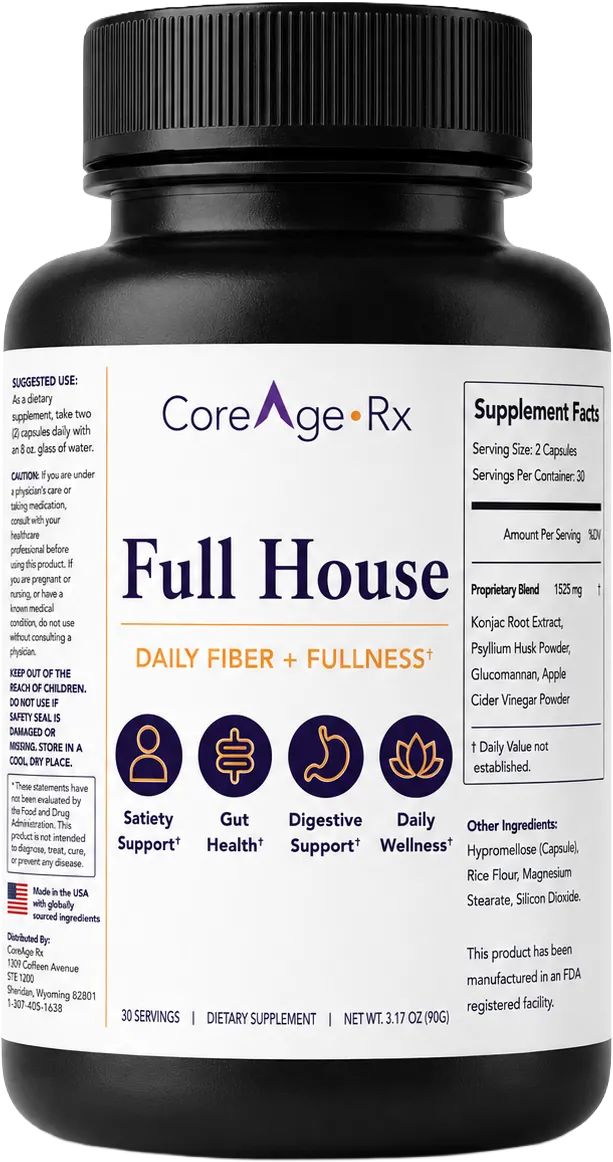
Full House combines konjac root extract, psyllium husk powder, glucomannan, and apple cider vinegar powder in a 1,525 mg proprietary blend per two capsules. See the current Full House™ page and check the bottle you receive before use.
Related reading
- Fiber Supplements: Types, Labels, and How to Choose
- Soluble vs. Insoluble Fiber: Why Both Matter
- How Much Fiber Do You Need Per Day?
- Constipation while taking a GLP-1 medication
Educational information, not individualized medical advice. Product information and linked research checked September 15, 2026. Ingredient research does not establish identical effects for a finished supplement.