
Constipation can occur during treatment with GLP-1 medicines and tirzepatide, including Wegovy and Zepbound. It may involve hard stools, straining, a sense of incomplete emptying, or bowel movements that are less frequent than usual. The right response depends on the whole symptom pattern, not simply the number of days since the last bowel movement.
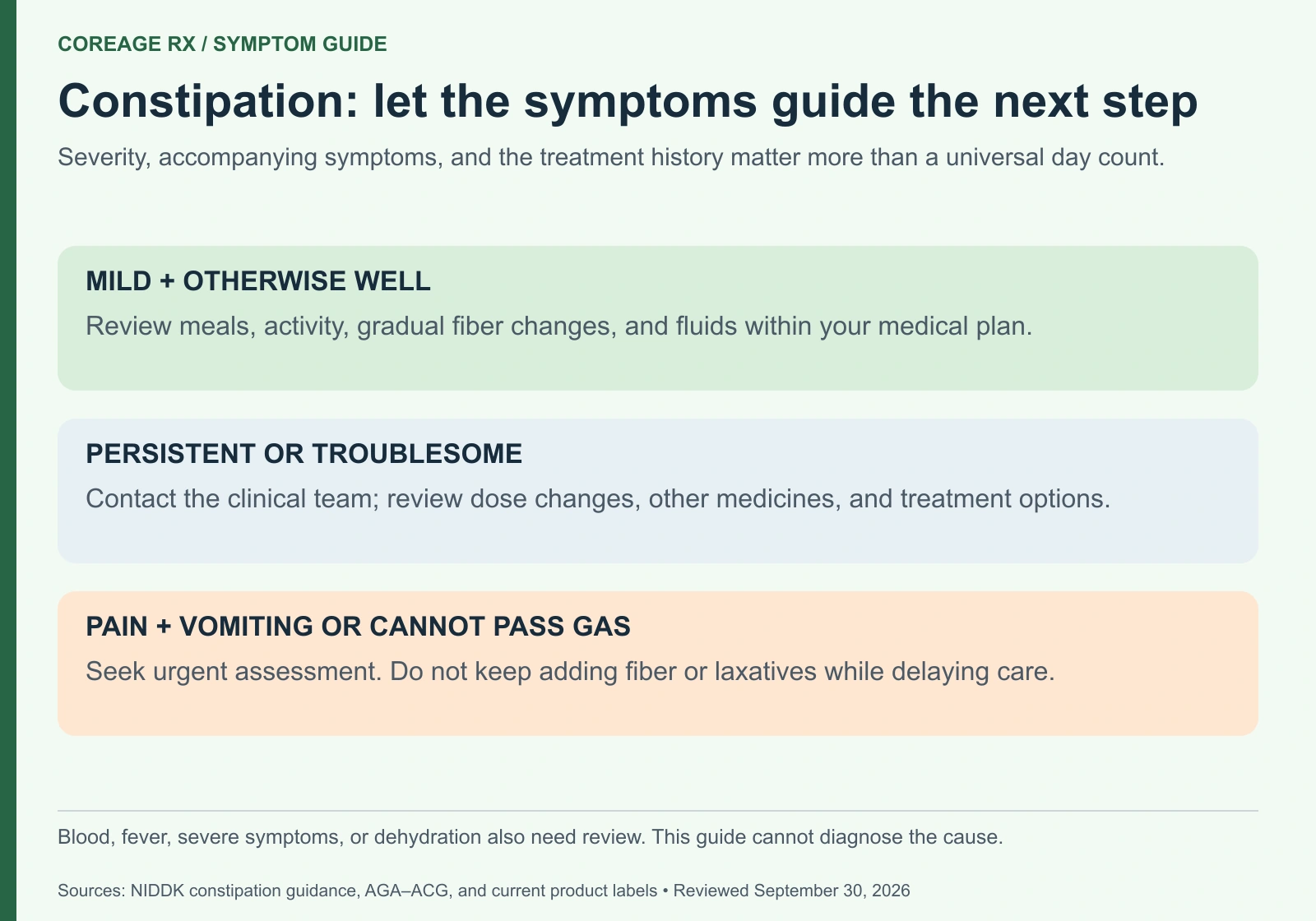
If constipation comes with persistent abdominal pain, vomiting, inability to pass gas, blood in the stool, or other concerning symptoms, seek medical advice promptly. Those situations need assessment before adding more fiber or laxatives. NIDDK constipation symptoms
How can you tell whether you are constipated?
NIDDK describes constipation as potentially including fewer than three bowel movements a week, hard or lumpy stools, difficult or painful passage, or a feeling that stool has not completely passed. People do not all have the same normal schedule. Constipation symptoms
A change in frequency can matter, especially when accompanied by discomfort or straining. However, one missed usual bowel movement does not by itself establish a serious problem, and passing a small amount of stool does not rule out a continuing concern when pain or other symptoms are present.
Describe stool consistency, effort, discomfort, and the change from your usual pattern. Those details help the clinician distinguish a manageable change from something that needs a different evaluation.
Do Zepbound and Wegovy cause constipation?
Constipation is a reported adverse reaction in both products’ prescribing information. In Zepbound’s pooled adult weight-management trials, it was reported by 17%, 14%, and 11% of participants assigned to 5, 10, and 15 mg, respectively, compared with 5% receiving placebo. The label’s category includes hard stools. Zepbound trial data
These figures do not show that increasing the dose will relieve constipation. They are group-level observations from trials with defined treatment schedules, not a self-adjustment strategy. They also should not be used to compare products without considering the different studies and populations.
Wegovy likewise lists constipation among common adverse reactions. The formulation and population matter when interpreting its tables; injection and tablet findings should not be combined into a single personal prediction. Wegovy prescribing information
Our Zepbound side-effects guide provides a wider overview of symptoms to discuss.
Why might bowel habits change during treatment?
These medicines affect digestive physiology and can change appetite and food intake. Tirzepatide and semaglutide also delay stomach emptying, but that does not fully explain every person’s constipation or mean the whole digestive tract behaves identically.
Other contributors may include less fiber or fluid, changes in activity or routine, other medicines, and underlying medical conditions. NIDDK lists several possible causes and notes that more than one factor may be involved. NIDDK causes of constipation
Bring a full medication and supplement list to the review. Iron, some pain medicines, and other treatments can contribute to constipation. If several things changed at once, identifying them may be more useful than assuming the GLP-1 medicine is the only cause.
What should you record before contacting the care team?
If a glutathione product was added around the same time, our glutathione and constipation review explains how to identify the formulation, review the full timeline and discuss other contributors.
Keep the record brief and practical:
- The medicine, current prescription, injection date, and recent dose changes.
- Your usual bowel pattern and what is different now.
- Whether stools are hard, difficult to pass, or incomplete.
- Abdominal pain, swelling, nausea, vomiting, bleeding, or difficulty passing gas.
- Changes in meals, drinking, movement, medicines, and supplements.
- Any fiber products or laxatives already tried and what happened.
You do not need to delay asking for help until the record is complete. A few clear observations can help the clinician decide what to do next, particularly when an increase or another injection is approaching.

What can help when symptoms are mild?
For uncomplicated constipation, the starting discussion often includes food, fluid, activity, and a regular bathroom routine. NIDDK describes these measures, while also advising a clinician’s review when symptoms do not improve with self-care. NIDDK treatment guidance
Review fiber gradually
Consider whether appetite changes have displaced fiber-containing foods. Fruits, vegetables, legumes, and whole grains can fit into an individualized eating plan. Increase fiber gradually rather than suddenly adding a large amount, which can make bloating uncomfortable.
A fiber supplement is not automatically the right first step for every symptom pattern. Ask about it if food intake is limited or if you have significant pain, swallowing problems, fluid restrictions, or uncertainty about the cause of the constipation.
Match fluids to your needs
Adequate liquid helps fiber work, but there is no appropriate large-volume target for everyone. Kidney disease, heart conditions, and other circumstances may affect the amount or type of fluid you should use. Follow any prescribed fluid limit and ask how to adapt constipation care within it. Food and fluid measures
Keep movement and bathroom opportunities realistic
Regular activity can be part of a constipation plan. Choose movement you can safely repeat, rather than treating intense exercise as a rescue treatment. Allow time to use the bathroom and avoid repeatedly ignoring the urge to go. Some people find a consistent opportunity after a meal helpful.
Our Zepbound meal-planning guide and tirzepatide protein guide can help keep overall nutrition in view when portions become smaller.
If you are considering a tea, our review of Smooth Move senna tea and weight-loss claims identifies the original blend, short-term constipation purpose, medicine-review questions and why a bowel response does not establish fat loss.
Which laxative should you take?
The best choice depends on the symptoms, other medicines, medical history, and what has already been tried. A pharmacist or prescriber can help distinguish a fiber product, an osmotic laxative that retains water in stool, a stimulant, and a prescription treatment. They are not all interchangeable.
The joint AGA–ACG guideline recommends polyethylene glycol for adults with chronic idiopathic constipation and discusses several other options. That guideline addresses a defined chronic condition; it is not a trial establishing one universal regimen for constipation caused by every GLP-1 product. AGA–ACG guideline summary
Use such evidence as a basis for a clinical conversation, not a reason to combine products or create a daily escalating regimen yourself. Ask how long to use a recommended product, what response to expect, and when a lack of improvement should lead to reassessment.
Do not repeatedly add laxatives to cover up worsening pain, vomiting, or marked abdominal swelling. NIDDK advises medical assessment for persistent symptoms and warning signs. NIDDK symptoms and treatment
Should the GLP-1 dose change?
Contact the prescribing team when constipation persists, disrupts daily life, or is accompanied by other troublesome digestive symptoms. Report it before a planned increase. The clinician can review tolerability, other causes, and whether the treatment schedule or supportive care should change.
Zepbound dosing decisions consider both response and tolerability. Wegovy also has product-specific escalation and missed-dose instructions. Neither label provides one self-directed adjustment for every person reporting constipation. Zepbound label, Wegovy label
Do not take extra doses, shorten the interval, switch products, or restart after a long gap based on a generic article. The tirzepatide restart guide and semaglutide missed-dose guide explain why the product and interruption matter.
When does constipation need urgent assessment?
NIDDK advises seeing a doctor right away when constipation accompanies rectal bleeding, blood in the stool, constant abdominal pain, inability to pass gas, vomiting, fever, lower-back pain, or unintentional weight loss. NIDDK warning signs
Severe or rapidly worsening symptoms may require urgent or emergency care. Do not wait for an arbitrary three-day or seven-day threshold if significant pain, vomiting, or inability to pass gas is developing.
Zepbound’s postmarketing information includes reports of intestinal obstruction and severe constipation, including fecal impaction. Reports received after marketing cannot reliably establish how often an event occurs or prove that the medicine caused each event, but they reinforce the importance of taking significant symptoms seriously. Zepbound postmarketing information
Also seek prompt help for severe persistent abdominal pain that may extend to the back, especially with vomiting, because pancreatitis is a separate medication warning. Do not assume that every abdominal symptom is ordinary constipation.

What if you alternate between constipation and diarrhea?
Describe both patterns to the clinician. Consider the timing of medicines, supplements, laxatives, and dietary changes. Alternating symptoms should not automatically trigger another over-the-counter product without reviewing what is already being used.
Our Zepbound diarrhea guide covers hydration and other warning signs. Recurrent symptoms that interfere with eating or drinking need a treatment review even if the pattern changes from one week to another.
If diarrhea occurs after taking a laxative, mention the product, amount, timing, and how long it was used. That information helps separate a treatment effect from another condition requiring assessment.
A bowel movement can change the scale reading without measuring a change in body fat. Our bowel movements and weight guide separates stool mass, hydration and fat loss, and explains why laxatives or cleanses are not a weight-management strategy.
Common questions
Does eating less mean I no longer need regular bowel movements?
Smaller meals may change stool volume, but hard stools, painful straining, incomplete emptying, or concerning symptoms still deserve attention. Judge the whole pattern rather than dismissing discomfort because appetite is lower.
Do probiotics fix GLP-1 constipation?
There is no basis here for promising that a probiotic reliably fixes constipation caused by these medicines. Supplements can add cost and another variable. Discuss persistent symptoms and established treatment options before buying a product on the strength of a broad “gut health” claim.
What should follow-up look like?
You should know whom to contact, when to reassess, and what symptoms need faster attention. If reviewing CoreAge Rx semaglutide care or tirzepatide care, ask how ongoing tolerability questions are handled and confirm the exact prescribed preparation. Effective care includes bowel comfort, adequate nutrition, and timely review of adverse effects.
Educational information for adults; individual treatment decisions require a qualified clinician. Sources reviewed September 30, 2026. Original AI-generated article images depict fictional people and objects, not patient outcomes. Other editorial images are illustrative. Graphics summarize the cited sources.