
Diarrhea is a common Zepbound side effect, especially while treatment is being started or the dose is increasing. There is no reliable promise that an episode will end in a particular number of hours. The useful questions are how often it is happening, whether you can replace lost fluid, and whether other symptoms suggest a problem that needs medical attention.
This guide explains what the trials actually measured, why duration varies, and what to discuss before your next dose. Severe abdominal pain, blood in the stool, fainting, or signs of significant dehydration need prompt assessment; they should not be dismissed as routine adjustment to medication.
How common is diarrhea with Zepbound?
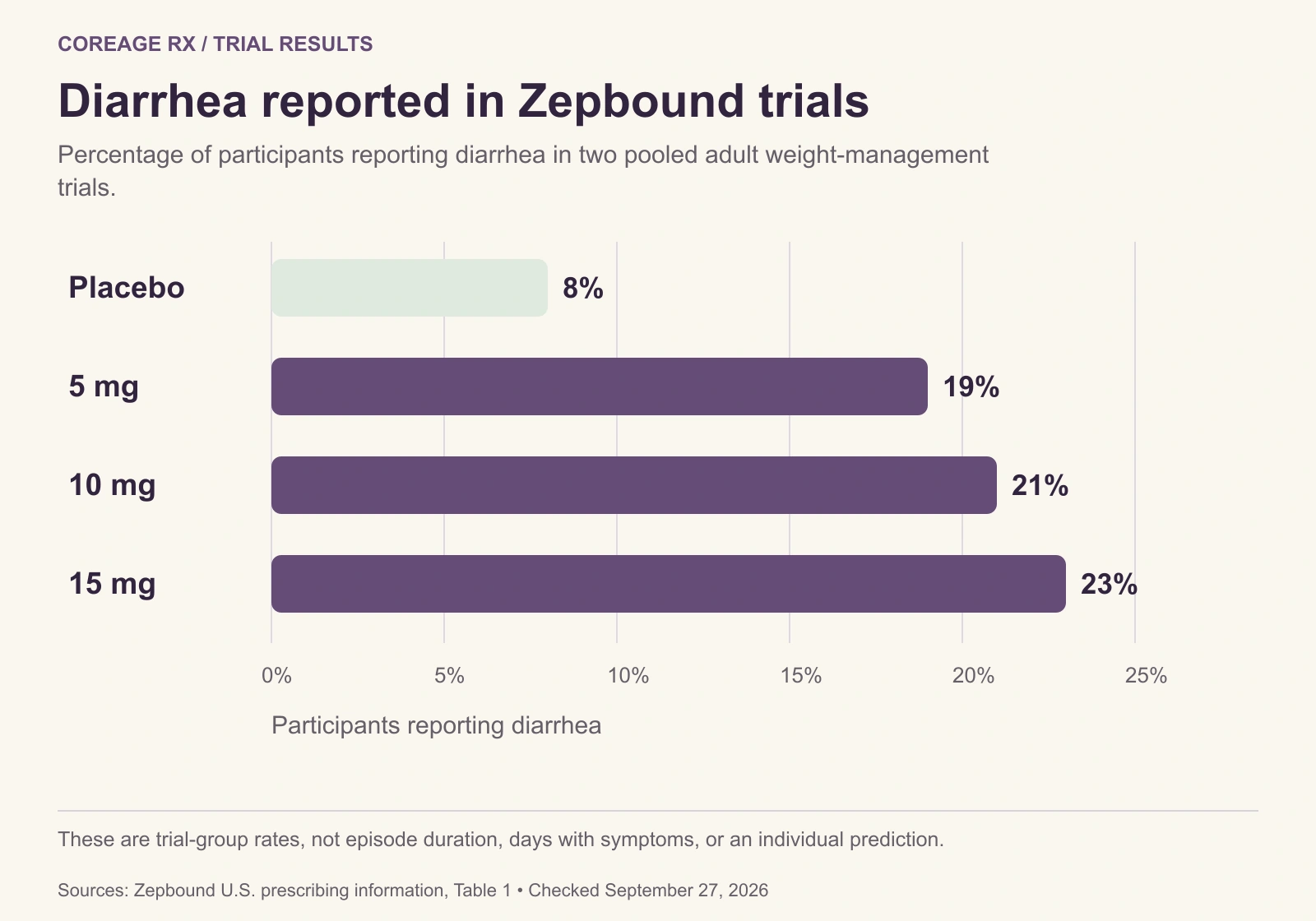
In the two pooled adult weight-management trials summarized in the current prescribing information, diarrhea occurred in 19% of participants assigned to 5 mg, 21% assigned to 10 mg, and 23% assigned to 15 mg, compared with 8% receiving placebo. Those figures describe the proportion reporting diarrhea during the studies. They do not mean that participants had diarrhea on that percentage of days. Zepbound prescribing information
| Trial treatment group | Participants reporting diarrhea |
|---|---|
| Placebo | 8% |
| Zepbound 5 mg | 19% |
| Zepbound 10 mg | 21% |
| Zepbound 15 mg | 23% |
These are group results from specific trials, not a forecast for an individual or a reason to choose a dose without a prescriber. Participants reached treatment doses through a planned escalation schedule. The label reports that most nausea, vomiting, and diarrhea events occurred during dose escalation and became less frequent over time.
For the wider safety picture, see our Zepbound side-effects guide. Diarrhea is only one possible digestive symptom, and the best response depends on the whole symptom pattern.
How long does Zepbound diarrhea last?
The prescribing information does not establish a universal duration for a diarrhea episode. “It always lasts two days” or “it will be gone after your fourth injection” is more precise than the evidence allows.
There are also two different timelines to consider:
- An individual episode: when loose stools started, how many occurred, and whether the frequency is improving.
- A recurring treatment pattern: whether diarrhea returns after each injection or dose increase, interferes with eating, or continues between doses.
An episode that is mild and improving is different from repeated watery stools with dizziness. Improvement seen across a trial does not make prolonged symptoms safe to ignore in one person.
NIDDK advises adults to contact a doctor right away for diarrhea lasting more than two days, six or more loose stools a day, high fever, or other concerning symptoms. Seek help sooner for dehydration, severe pain, blood, or black tarry stool. The two-day threshold is not an instruction to wait when you are getting worse. NIDDK diarrhea symptoms
Why can a drug that slows stomach emptying cause diarrhea?
Zepbound contains tirzepatide, which activates GIP and GLP-1 receptors. Its effects include changes in appetite, food intake, and glucose regulation. It also delays gastric emptying; the label states that this effect is greatest after the first dose and diminishes over time. Zepbound prescribing information
“Slower stomach emptying” describes movement from the stomach. It does not mean every part of the digestive tract will slow in the same way or that constipation is the only possible bowel change. Diarrhea and constipation are both reported adverse reactions.
The timing may make medication a plausible contributor, but it does not identify the cause by itself. A stomach infection, another medicine, a food intolerance, or a preexisting digestive condition may need consideration. Mention recent antibiotics, supplements, travel, sick contacts, and major food changes when you contact your clinician. NIDDK describes several possible causes of acute and persistent diarrhea. NIDDK diarrhea symptoms
What can you do while arranging advice?
Replace fluid and electrolytes
Diarrhea can cause loss of both water and electrolytes. NIDDK recommends replacing those losses with appropriate fluids, which may include oral rehydration solutions. Small, manageable amounts may be easier to tolerate when you also feel nauseated. NIDDK diarrhea treatment
People with diabetes, kidney disease, other health conditions, or a prescribed fluid limit should ask which solution and amount are appropriate. A generic “drink several liters” instruction can be unsuitable. If you cannot keep fluids down, feel faint, or are urinating much less, seek medical help rather than continuing a home hydration experiment.
Eat according to tolerance
You do not generally need to keep fasting until bowel movements become normal. NIDDK notes that most people can return to their usual diet as appetite returns. Choose foods you can tolerate and record anything that repeatedly worsens symptoms. A short period of simpler meals should not become an unnecessarily restrictive long-term diet. NIDDK diarrhea treatment
Our Zepbound meal-planning guide provides broader food-planning context. During an active illness, hydration and adequate nourishment take priority over making the scale move faster.
Keep a short symptom record
Record the injection date, prescribed dose, last dose increase, stool frequency, vomiting, temperature, and whether you can drink and urinate normally. Include the names of other medicines and supplements. A clinician can use this information to decide whether medication tolerance, infection, or another cause needs investigation.
The record can be simple: “Dose increased Monday; four watery stools Tuesday; no blood; drinking normally; symptoms continuing Wednesday.” You do not need a complicated app or a perfect account of every meal.

Can you take Imodium or another diarrhea medicine?
Some adults with acute diarrhea can use over-the-counter loperamide or bismuth subsalicylate, but the right choice depends on symptoms, other medicines, and medical history. NIDDK notes that clinicians generally advise against these treatments when diarrhea comes with blood in the stool or fever. NIDDK diarrhea treatment
Ask a pharmacist or prescriber before adding a product, particularly if symptoms are recurring or you have other health conditions. An antidiarrheal should not become a way to conceal a persistent problem while continuing dose increases.
Probiotics are not an established fix for Zepbound-related diarrhea. NIDDK notes continuing uncertainty about probiotics for treating or preventing diarrhea. A supplement can add expense and another variable without resolving the underlying issue.
Should you delay the next injection or lower the dose?
Contact the prescribing team for an individualized plan before your next dose when symptoms are persistent, significant, or interfering with drinking and eating. The Zepbound label directs clinicians to consider treatment response and tolerability when selecting a maintenance dose. It does not provide one self-treatment adjustment for everyone with diarrhea. Zepbound prescribing information
Do not take an extra injection, shorten the interval, or copy someone else’s dose change. If you missed a dose while seeking advice, use your product’s current instructions and ask the prescriber how to resume. Our Zepbound dosage guide explains the schedule, but it cannot determine whether continuing is appropriate during an active illness.
If you also use insulin or a sulfonylurea, reduced food intake can complicate glucose management. Ask what glucose monitoring and sick-day instructions apply to you. A medication list is particularly important when gastrointestinal symptoms and diabetes treatment overlap.
When is diarrhea more urgent?
Seek prompt medical assessment for severe or worsening symptoms, including:
- Much less urine, pronounced dizziness, fainting, or inability to keep fluids down.
- Red blood, black tarry stool, or pus in the stool.
- Severe abdominal or rectal pain, high fever, or frequent vomiting.
- Six or more loose stools in a day, or diarrhea lasting more than two days in an adult.
These warning signs come from NIDDK’s diarrhea guidance. Severe symptoms may require urgent or emergency care. NIDDK diarrhea symptoms
Zepbound also carries warnings about acute kidney injury due to volume depletion and acute pancreatitis. Persistent severe abdominal pain, which may radiate to the back and may occur with or without vomiting, needs immediate medical attention. The medication guide instructs patients to stop Zepbound and contact a healthcare provider right away for symptoms suggesting pancreatitis. Zepbound prescribing information
Does diarrhea mean Zepbound is working better?
No. Diarrhea is an adverse effect, not a treatment target. A sudden fall on the scale during diarrhea may reflect lost fluid rather than a meaningful change in body fat. Deliberately accepting dehydration to accelerate weight loss can undermine health and treatment continuity.
Track progress over time using the plan agreed with your clinician. Our guide to water weight and body fat explains why short-term scale movement needs context.

Is compounded tirzepatide diarrhea the same issue?
Compounded tirzepatide may raise overlapping symptom questions, but it is not Zepbound and does not inherit the brand’s approval or exact device instructions. Compounded products are not FDA approved, and differences in concentration, measurement, ingredients, and product quality can create additional concerns. FDA compounding information
If symptoms follow a new vial, concentration, pharmacy, or measurement instruction, tell the prescriber and dispensing pharmacist. FDA has received reports involving dosing errors and doses beyond approved labeling for compounded GLP-1 products. FDA GLP-1 safety concerns
Read our compounded tirzepatide side-effects guide for those additional questions. If reviewing CoreAge Rx’s tirzepatide service, discuss suitability and product details with the clinical team; a different service is not a guaranteed solution to gastrointestinal intolerance.
Questions to bring to your next check-in
Ask whether the pattern fits a medication effect, whether another cause needs testing, what to do before the next dose, and what symptoms should trigger urgent care. Also ask how to manage food, fluids, and any glucose-lowering medicines while symptoms continue.
A useful treatment plan should make those next steps clear. The goal is tolerable, sustainable care with adequate hydration and nutrition, rather than enduring an unspecified number of days of diarrhea.
Educational information for adults; individual treatment decisions require a qualified clinician. Sources checked September 27, 2026. Original AI-generated article illustrations depict fictional people and objects, not patient outcomes. Other editorial images are illustrative. Graphics summarize the cited sources.