
Zepbound’s common side effects include nausea, diarrhea, vomiting, constipation, abdominal discomfort, indigestion, injection-site reactions, fatigue, burping, hair loss, and reflux. Digestive symptoms are often most noticeable during dose escalation. The important question is whether a symptom is mild and manageable, needs a prescriber review, or requires urgent care.
Zepbound contains tirzepatide. It is approved for weight management in eligible adults and for moderate to severe obstructive sleep apnea in adults with obesity. This article discusses the branded U.S. product, using the prescribing information revised in August 2026. A compounded tirzepatide preparation is not FDA-approved Zepbound.
How often did side effects occur in trials?
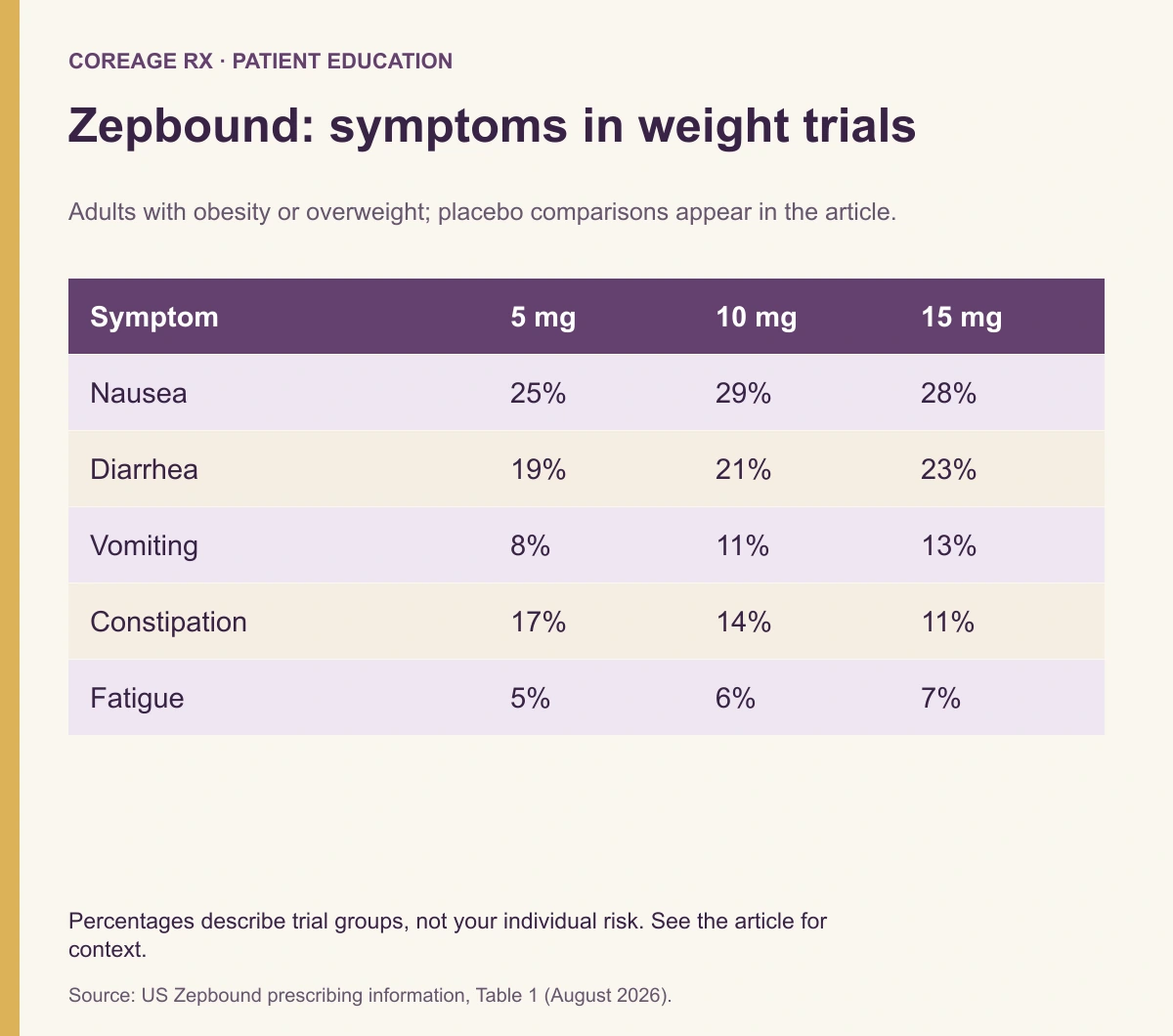
The following results come from two pooled weight-management trials in adults with obesity or overweight. The placebo group included 958 participants; the 5, 10, and 15 mg groups included 630, 948, and 941 participants, respectively.
| Reported reaction | Placebo | Zepbound 5 mg | Zepbound 10 mg | Zepbound 15 mg |
|---|---|---|---|---|
| Nausea | 8% | 25% | 29% | 28% |
| Diarrhea | 8% | 19% | 21% | 23% |
| Vomiting | 2% | 8% | 11% | 13% |
| Constipation | 5% | 17% | 14% | 11% |
| Abdominal pain | 5% | 9% | 9% | 10% |
| Injection-site reactions | 2% | 6% | 8% | 8% |
| Fatigue | 3% | 5% | 6% | 7% |
| Hair loss | 1% | 5% | 4% | 5% |
These percentages describe trial groups, not a guarantee about your experience. The pattern is not a simple rule that every symptom increases at every higher dose. The studies also do not support comparing percentages directly with a trial of another medicine in a different population. Source: Zepbound label, Table 1.
Why the first weeks and dose increases can feel different
Tirzepatide acts at both GIP and GLP-1 receptors and affects appetite, glucose regulation, and gastric emptying. Appetite and meal tolerance can change as the treatment is introduced. The label uses a gradual dose-escalation schedule to reduce gastrointestinal adverse reactions.
Most nausea, vomiting, and diarrhea events in the pooled weight-management trials occurred during escalation and decreased over time. That does not mean every person must simply tolerate symptoms until they disappear. A care team can review meal patterns, the timing of symptoms, hydration, other medicines, and whether a planned increase is appropriate.
The Zepbound dosage chart explains the difference between the starting dose and maintenance options. Our first month on tirzepatide guide focuses on day-to-day observations worth bringing to follow-up.
Making meals easier to tolerate
When symptoms are mild, try smaller meals, a slower pace, and stopping before you feel uncomfortably full. Large or very fatty meals can be harder to tolerate. Keep fluid intake in view, especially if your usual routine has changed because you are eating less.
Do not make the meal plan so restrictive that you struggle to meet basic needs. If nausea leads to repeated skipped meals or a very limited range of foods, ask for help. A registered dietitian can suggest portions, textures, and food choices that fit your preferences and symptoms. The joint nutrition advisory for GLP-1 treatment emphasizes individualized support, adequate nutrients, and attention to muscle and bone health.
Our Zepbound meal plan, tirzepatide protein and muscle guide, and balanced-meal guide provide related reading. They are starting points for a workable routine rather than a requirement to follow an inflexible menu.
Constipation and diarrhea need different conversations
For constipation, describe how long it has been since your usual bowel pattern, whether you are straining, and whether there is pain or bloating. A sudden jump in fiber can worsen discomfort for some people. Review food, fluids, activity, and medicines before adding multiple products.
Our GLP-1 constipation guide and fiber supplement guide explain those choices. Severe constipation with vomiting, a swollen abdomen, or inability to pass gas needs urgent evaluation rather than another supplement.
For diarrhea, duration and fluid losses matter. Contact the clinician for persistent or substantial diarrhea, and seek prompt care for dehydration, blood in the stool, fever, or severe pain. If symptoms begin after a new supplement, a restaurant meal, or another medication, mention that too. Not every gastrointestinal symptom during treatment is necessarily caused by Zepbound.

Fatigue, dizziness, and eating too little
Our guide to how long Zepbound fatigue lasts reviews the label’s grouped fatigue rates, explains why those percentages do not give a recovery timetable, and suggests useful details for a symptom review.
Fatigue was reported in the trials, but it can also have other causes. Low food intake, inadequate fluids, sleep problems, anemia, low glucose, and changes in blood pressure can produce overlapping symptoms. The label reports hypotension, including episodes associated with gastrointestinal adverse effects and dehydration.
A useful review looks beyond whether the number on the scale is falling. Can you manage normal activities? Are you feeling lightheaded when standing? Have blood-pressure medicines or diabetes medicines been reviewed as health measures change? Are meals providing enough protein and energy?
Do not add an “energy” product or increase caffeine as the default response to unexplained weakness. Our supplements during GLP-1 treatment guide explains how to connect a supplement to a real need.
Warning signs that should not wait
Seek emergency help for trouble breathing, swelling of the tongue or throat, collapse, or other signs of a severe allergic reaction. Stop Zepbound and obtain medical assistance.
Severe, persistent abdominal pain—with or without vomiting, and sometimes radiating to the back—can signal pancreatitis. Seek urgent assessment and do not take another dose until the clinician advises you. Upper abdominal pain with fever, jaundice, or pale stools can suggest a gallbladder problem and also needs prompt evaluation.
Repeated vomiting, inability to keep fluids down, very little urine, or significant dizziness can indicate dehydration. The label warns about acute kidney injury from volume depletion. Severe symptoms require urgent care, even if you have no known kidney disease.
New or worsening vision symptoms need prompt assessment, particularly in someone with diabetic retinopathy. Severe low blood sugar can cause confusion, seizures, or unconsciousness and requires emergency help. These warnings come from the Zepbound prescribing information; the list is not exhaustive.
Blood sugar and other medicines
Zepbound can increase the risk of hypoglycemia, particularly when combined with insulin or an insulin secretagogue such as a sulfonylurea. Your care team may need to adjust those medicines and give you a monitoring and treatment plan.
Tell the prescriber about all medicines and supplements, including oral drugs whose absorption may be important. Zepbound delays gastric emptying. Its label also advises against combining it with another tirzepatide-containing product or a GLP-1 receptor agonist. A “stack” of medicines promoted online can create risks that were not part of your prescription.
If you are switching from semaglutide, read our semaglutide-to-tirzepatide switching guide and obtain a specific transition plan.
Birth control, pregnancy, and procedures
Oral contraception: The label advises switching to a nonoral contraceptive method or adding a barrier method for four weeks after starting Zepbound and for four weeks after each dose increase. It is a planned precaution, even when you feel well. Read tirzepatide and birth control.
Pregnancy: Discontinue Zepbound when pregnancy is recognized and contact the prescribing clinician. Weight-loss treatment and pregnancy require a different care plan.
Anesthesia or deep sedation: Tell the procedural team that you take Zepbound. Include the dose, last administration date, recent increases, and digestive symptoms. Aspiration has been reported with GLP-1 medicines during anesthesia or deep sedation. The team should provide instructions tailored to the procedure and your circumstances.

What about hair loss and skin changes?
Hair loss was reported in the weight-management trials. The label states that these events were associated with weight reduction. That does not establish the cause in an individual person. Nutritional intake, recent illness, thyroid disease, other medicines, and the type of hair loss may need review.
Avoid assuming that a high-dose vitamin or a “hair growth” supplement is automatically the solution. A dermatologist can distinguish increased shedding from other conditions. Our Mounjaro and hair-loss article covers related tirzepatide questions, and the Ozempic Face guide discusses appearance changes during weight loss without assuming that every medicine has an identical effect.
Frequently asked questions
Does everyone get nausea?
No. Nausea affected a portion of trial participants, not everyone. Having no nausea is not evidence that the treatment is failing.
Do side effects mean I should increase more slowly?
They are a reason to contact the prescriber before the next planned increase. The clinician should determine the schedule and whether the current treatment remains suitable. Do not create a new interval or dose by splitting pens or measuring unprescribed amounts.
Is the thyroid warning the same as saying Zepbound causes cancer in humans?
No. Tirzepatide caused thyroid C-cell tumors in rats; the human relevance is unknown. Zepbound is contraindicated with a personal or family history of medullary thyroid carcinoma or MEN2. Discuss the exact family and personal history with the clinician.
Can I use this safety information for compounded tirzepatide?
Some ingredient-related concerns may overlap, but compounded products add distinct quality, labeling, and measurement issues. They have not undergone FDA approval. FDA’s current guidance explains why an approved product’s evidence cannot simply be transferred to a compounded preparation.
If you are comparing care, CoreAge Rx’s tirzepatide page can help you identify questions for the team. Confirm the specific preparation, pharmacy, follow-up process, and who to contact when symptoms occur.
Educational information for adults; individual treatment decisions require a qualified clinician. Sources checked September 26, 2026. Original AI-generated article illustrations depict fictional people and objects, not patient outcomes. Other editorial images are illustrative. Graphics summarize the cited sources.