
Neither lime water nor lemon water has an established advantage as a fat-burning drink in the sources reviewed here. Both can add flavor to water, and an unsweetened version may be useful if it replaces a drink with added sugar. The relevant difference is the finished beverage and your overall routine, rather than a special slimming property of one citrus fruit.
Choose the flavor you enjoy and tolerate, while considering additions, reflux symptoms, and dental exposure to acid. This guide compares actual fruit nutrition, explains why it does not describe every water glass, and answers common questions about morning drinks and weight loss.
Are lime and lemon water nutritionally identical?
The fruits are different, but database values for whole fruit are not measurements of diluted citrus water. A glass made with a slice, a squeeze of juice, a large juice portion, or sweetener can have a different composition.
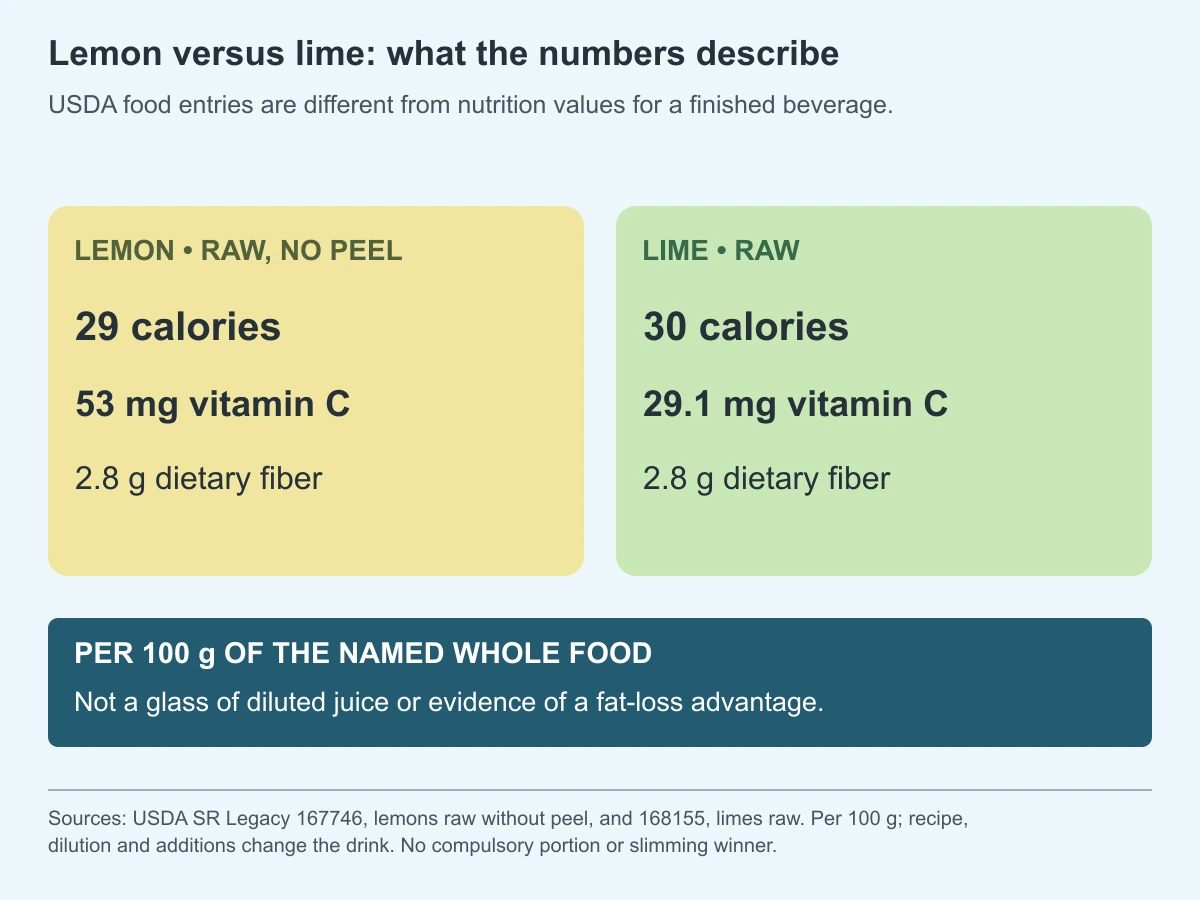
The USDA raw lemon record concerns lemons without peel. The USDA raw lime record concerns raw limes. Their values provide a clear food comparison when the preparation and amount are identified.
| USDA food entry, per 100 g | Energy | Dietary fiber | Vitamin C |
|---|---|---|---|
| Lemons, raw, without peel | 29 calories | 2.8 g | 53 mg |
| Limes, raw | 30 calories | 2.8 g | 29.1 mg |
These are whole-food entries, not prescribed portions and not the values for a glass of lemon or lime water. The comparison does not establish a weight-loss advantage. A vitamin difference in fruit is a different outcome from sustained change in body fat.
If you are using a bottled juice or packaged drink, read its own label. The FDA’s Nutrition Facts guidance explains serving sizes and nutrient information. A flavor name is not enough to determine what is in the finished product.
Does juice in water supply the same fiber as the fruit?
Do not assign the whole-fruit fiber value to a strained or diluted drink. The amount of plant material consumed differs, and water with a slice is not the same preparation as eating the fruit represented in a database entry.
This distinction matters when a recipe claims that citrus water provides a substantial fiber serving. Ask where that value came from and whether it describes the actual beverage. An image of fruit next to a glass does not establish its nutrient contents.
Our food fiber versus supplements guide discusses actual food and label measurements. If fiber is the goal, evaluate foods and any supplement directly rather than relying on an unmeasured flavor infusion.
Lemon and lime can still be useful culinary ingredients. Flavor, enjoyment, and variety are legitimate reasons to use them without attaching a nutrient claim that the finished drink cannot support.
How could either drink fit a weight-management routine?
Consider what the drink replaces. Unsweetened citrus water instead of a regularly consumed sweetened beverage can change the overall eating and drinking pattern. Adding a second drink without changing anything else is a different situation.
The NIDDK’s weight-management program guidance emphasizes a practical eating and drinking plan, appropriate activity, support, and maintenance. It does not identify one citrus flavor as the deciding factor in successful weight management.
Ask whether your beverage choice is repeatable and enjoyable. A routine that depends on drinking something you dislike several times a day may be difficult to maintain. Ordinary water is also an option; it does not need a sour ingredient to be a useful drink.
Our water and drinks guide explains beverage choices in more detail. The goal is to evaluate actual intake and habits, rather than rename the same drink as a detox treatment.
What changes when sugar, honey, syrup, or juice is added?
Additions change the preparation. A drink with lemon and substantial sugar is lemonade, and a lime-flavored sweetened beverage is different from water with a little citrus. Neither should be described as nutritionally identical to plain water.
“Natural” does not remove the contribution of a sweetener. Check the amount added, the final recipe, and the portion consumed. Packaged flavor mixes may also contain ingredients that are not obvious from a picture of a lemon or lime on the front.
Use the label’s serving size and added-sugar information when relevant. If one scoop prepares several servings or you use more than the stated amount, the finished drink differs from the label’s example. You do not need to judge it as forbidden; you need an accurate comparison.
Our cucumber and lemon water guide addresses a related flavored-water question. Adding another plant ingredient can change flavor, but it does not automatically establish a slimming effect.
Does warm lemon water work better than cold lime water?
The reviewed sources do not establish a warm-versus-cold citrus-water advantage for fat loss. Temperature and flavor can affect personal preference, but they should not be presented as a validated metabolic treatment.
The same limit applies to drinking before breakfast, before bed, or at a prescribed time. A timed ritual is not evidence that the body burns more fat because one citrus fruit was consumed at that hour.
If a drink helps you maintain an ordinary routine, that practical role can be described honestly. It is separate from a claim that warming the water, adding more juice, or drinking it on an empty stomach improves a clinical weight outcome.
Our water-before-bed guide discusses another timing question. Use timing to support comfort and daily needs, rather than as a replacement for a broader care plan.

Do citrus drinks detox the body?
Ask what “detox” means in the claim. A credible statement should identify the substance or outcome, the exact preparation, and how it was measured in people. A general promise to cleanse or flush fat is not the same as evidence.
The NCCIH detox review describes limited, often poor-quality research on detox approaches and the risks of restrictive plans, laxatives, and excessive fluid intake. It does not validate a compulsory citrus-water schedule for weight management.
A short-term change on the scale can reflect water balance or digestive contents rather than body-fat loss. Our water weight versus fat-loss guide explains why a bathroom change or a single weigh-in does not prove a drink burned fat.
Do not replace adequate meals with a water-only or citrus-only routine. A flavored drink can be an ordinary preference while nutrition and treatment decisions remain grounded in the actual goals and health history.
Which is better if you have reflux?
Tolerance is individual. The NIDDK’s GERD nutrition guidance identifies acidic foods, including citrus, among foods that may trigger symptoms in some people. It recommends discussing the foods or drinks that appear to worsen your own symptoms.
Lime should not be assumed to solve a reflux problem caused by lemon, or vice versa. Both are citrus ingredients. The amount used, the finished drink, and your symptom pattern matter more than a universal ranking.
Describe burning, regurgitation, pain, or recurring discomfort to the clinician. Persistent or concerning symptoms should not be managed solely by switching the flavor of a slimming drink. If swallowing becomes difficult or symptoms are severe, obtain appropriate care.
Our tirzepatide nausea and reflux guide provides medication-related context. A reflux symptom during treatment can need review of meals, medicine, and other causes rather than another acidic drink.
What about teeth and frequent sipping?
The American Dental Association’s MouthHealthy guidance explains that dietary acids can erode tooth enamel. Lemon and lime flavorings can contribute acid to a beverage, even when no sugar is added.
The guidance advises limiting acidic drinks, avoiding holding or swishing them in the mouth, and rinsing with water after acidic foods or beverages. It also advises waiting an hour before brushing after acidic foods so saliva has time to act.
An exact pH cannot be assigned to every homemade glass without knowing the recipe. Dilution changes the preparation, but it does not make a concentrated citrus drink identical to plain water or guarantee that repeated exposure is harmless.
If you have tooth sensitivity, known erosion, or concerns about a frequent sipping routine, ask your dentist. Choose habits that work for your teeth as well as your preference, rather than assuming that a sugar-free drink has no dental considerations.
A practical way to choose
Start with the flavor you prefer in an ordinary beverage. Use clean utensils and produce, and follow safe storage practices for perishable preparations. The FDA’s food-storage guidance provides general refrigeration and room-temperature limits; it does not validate an unspecified multi-day homemade infusion recipe.
Evaluate the finished drink: what is added, how much you enjoy it, whether it replaces another beverage, and whether it causes discomfort. A small change that fits your day can be more useful than a rigid ritual based on unsupported claims.
Avoid a compulsory daily volume from a social-media recipe. Fluid needs can be individualized, particularly with some kidney or heart conditions. Ask your clinician if you have a specific fluid restriction or difficulty maintaining intake.
You can also alternate flavors or choose plain water. There is no need to declare one citrus fruit the winner in order to make a practical beverage choice.

What if you are taking semaglutide or tirzepatide?
If appetite is reduced or gastrointestinal symptoms are present, pay attention to adequate food and fluid intake. The GLP-1 nutrition advisory emphasizes nutrition assessment and support during treatment. A citrus drink should not crowd out needed meals.
Our balanced meals guide offers routine food-planning context. Persistent vomiting, inability to keep fluids down, severe pain, or marked weakness needs medical assessment rather than a new drink recipe.
CoreAge Rx’s semaglutide and tirzepatide treatment information provide separate clinical-assessment information. Ask about the exact prescription and nutrition follow-up. Neither a product page nor a citrus-water claim can establish an individual treatment outcome.
Frequently asked questions
Is lime water better than lemon water for weight loss?
The reviewed sources do not establish that advantage. Compare the finished beverage, additions, what it replaces, and your tolerance. Preference can guide the flavor without implying a fat-loss difference.
Does lemon’s higher vitamin C make it a better slimming drink?
The USDA whole-fruit entries have different vitamin C values, but that is not evidence of superior weight loss. The values also do not describe every diluted drink.
Can I use bottled juice?
Read the actual product label and consider the finished recipe. Bottled juice, sweetened drink mix, fresh fruit, and water with a slice are different preparations. The flavor name alone does not identify their nutrition.
Is either drink required first thing in the morning?
No validated compulsory morning schedule is established by these sources. Choose a routine that supports ordinary intake and comfort, while keeping weight-management decisions focused on the broader eating and care plan.
Educational information for adults; individual treatment decisions require a qualified clinician. Sources reviewed October 1, 2026. Original AI-generated article images depict fictional people and objects, not patient outcomes. Other editorial images are illustrative. Graphics summarize the cited sources.