Some people prescribed Wegovy may be able to use ibuprofen, but the answer depends on their health, other medicines, and current symptoms. A medication checker that does not flag a named direct interaction does not assess dehydration, kidney disease, stomach bleeding, or the cause of a new pain.
The most useful question is: “Is ibuprofen appropriate for me today, given this symptom and everything else I take?” Wegovy-related vomiting or diarrhea can make that question more urgent. This guide explains what to review with a pharmacist or prescriber without giving an individual pain-relief dose.
Does this advice also apply to Ozempic?
Yes, the need to review ibuprofen’s kidney, stomach, and cardiovascular risks also applies when the semaglutide prescription is Ozempic. That does not mean Ozempic and Wegovy have identical labels or indications. Tell the pharmacist the exact brand and preparation, then describe why you need pain relief and whether you are currently unwell. Ozempic prescribing information, MedlinePlus ibuprofen information
Ozempic’s current U.S. injection label includes treatment of type 2 diabetes and specific cardiovascular and kidney risk-reduction indications. A person using it may therefore already have diabetes, chronic kidney disease, cardiovascular disease, or a combination of these. Those conditions can change the NSAID discussion even when the semaglutide dose has been stable for months.
In particular, Ozempic’s kidney indication is not a guarantee of protection from every cause of kidney injury. Its label also warns about acute kidney injury associated with fluid loss from gastrointestinal symptoms. A long-term treatment benefit does not cancel the short-term risk of taking an NSAID while dehydrated. Ozempic indications and kidney warning
NIDDK explains why diabetes, kidney disease, low blood pressure, and some blood-pressure medicines deserve attention when an OTC pain medicine is being considered. Ask for a plan that covers all medicines during an illness. Do not independently stop an ACE inhibitor, ARB, diuretic, or diabetes medicine simply because it appears on a risk checklist. NIDDK kidney medication guidance
A headache after an Ozempic injection needs context
Record when the headache started, its severity, food and fluid intake, other symptoms, and any recent medicine changes. If you use insulin or a sulfonylurea, follow your established glucose-monitoring and low-glucose plan when symptoms could be related. A headache alone does not tell you whether the cause is the medicine, dehydration, low glucose, an infection, or something else.
Ibuprofen is not a substitute for treating low blood glucose, and an extra diabetes dose is not a response to an unexplained headache. Seek urgent care for a sudden severe headache, new neurological symptoms, chest symptoms, or another serious change. For persistent less severe symptoms, contact the treating team rather than repeatedly adding pain medicine.
The Ozempic, metformin, and glipizide guide explains why the entire regimen matters. A list that includes both regular and occasional medicines is more useful than checking only the two names in the article title.
Does Ozempic require a special ibuprofen timing gap?
The reviewed Ozempic injection instructions allow weekly administration with or without meals. The label also discusses delayed stomach emptying and possible effects on oral-drug absorption. It does not establish an ibuprofen spacing interval that removes kidney, bleeding, or cardiovascular risks. Ask the pharmacist about the exact oral medicine and your circumstances. Ozempic administration and interactions
Do not transfer the separate morning instructions for oral Wegovy to Ozempic injection. Conversely, if your actual medicine is an oral semaglutide preparation, identify it precisely and follow its own instructions. A brand name used casually in conversation can otherwise lead to the wrong schedule advice.
What should I say when I call the pharmacist?
A useful summary is: “I take this exact Ozempic product at this prescribed dose. I am considering this ibuprofen product for this symptom. Here is when the symptom began, whether I have vomiting or diarrhea, my relevant medical history, and everything else I take.” Have the packaging available so duplicate ingredients can be checked.
Also mention whether you need occasional relief or have been taking pain medicine repeatedly. A new need for daily ibuprofen calls for review of the underlying problem as well as the interaction question. The goal is a suitable pain plan and a clear threshold for seeking care, not simply a yes-or-no answer about combining two medicines.
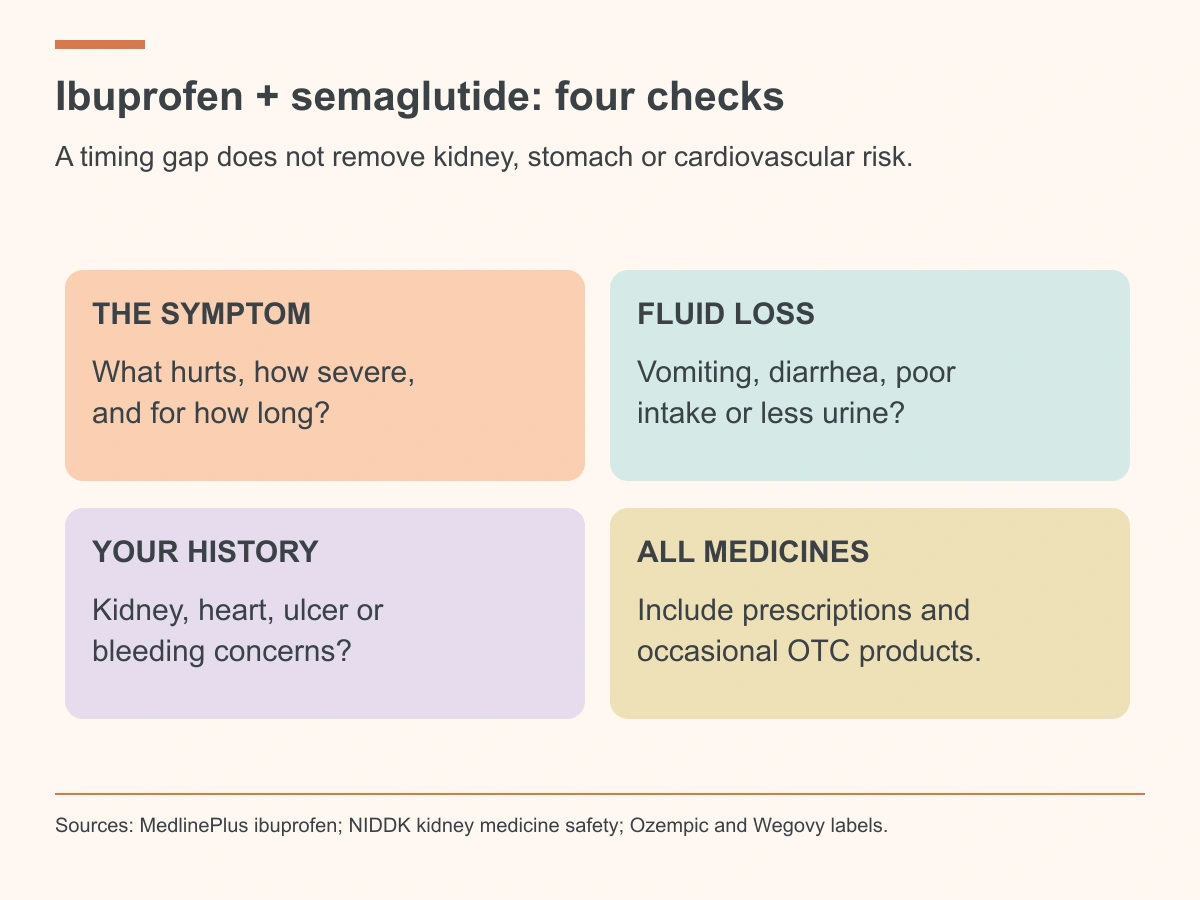
Why the combination question needs more context
Ibuprofen is a nonsteroidal anti-inflammatory drug, or NSAID. It can reduce pain, inflammation, and fever, but it also carries gastrointestinal, kidney, and cardiovascular risks. Wegovy contains semaglutide and has its own warnings, including severe gastrointestinal reactions and kidney injury associated with volume depletion. MedlinePlus ibuprofen information; Wegovy prescribing information
These warnings can matter together even without a special “ibuprofen plus Wegovy” interaction listed in the label. For example, a person who is vomiting and drinking very little has a different risk situation from someone eating and drinking normally. The symptom and the person’s condition matter alongside the drug names.
Tell the pharmacist which Wegovy formulation you use, your prescribed dose, any recent change, and why you want pain relief. Also describe the location, severity, and duration of the pain. Treating a new severe abdominal pain as an ordinary headache would miss an important clinical distinction.
Dehydration is a key reason to pause and ask
The National Institute of Diabetes and Digestive and Kidney Diseases explains that NSAIDs can cause acute kidney injury when a person is dehydrated or has low blood pressure. It highlights illness with vomiting or diarrhea as a situation in which a medication plan matters. NIDDK guidance on keeping kidneys safe
Wegovy’s label reports kidney injury associated with gastrointestinal reactions that led to dehydration. It calls for monitoring in people with reactions that could cause volume depletion, particularly during initiation and dose escalation. That does not mean every user develops kidney injury; it explains why poor intake and fluid loss should not be ignored. Wegovy kidney and gastrointestinal warnings
If you have been vomiting, have substantial diarrhea, cannot drink normally, feel faint, or are urinating much less than usual, seek prompt advice about the illness and medicine plan. Do not try to make ibuprofen safe simply by drinking a large glass of water after taking it. People with heart or kidney conditions may also have individualized fluid instructions.
The Wegovy thirst and dry-mouth guide explains related symptoms. Dry mouth alone cannot establish hydration status, and absence of thirst does not clear an NSAID for every person.
Kidney disease and other medicines change the review
Tell the clinician about kidney disease, diabetes, heart failure, blood-pressure treatment, and any previous kidney problem during illness. NIDDK discusses the importance of knowing which medicines affect kidney safety, including NSAIDs and some blood-pressure medicines. Kidney medication safety
Bring the complete list rather than trying to identify only the medicines you believe are relevant. Include diuretics, ACE inhibitors or ARBs, prescription pain medicines, and supplements. The pharmacist can assess the actual combination and the prescriber can give an illness plan where needed.
This is not an instruction to stop blood-pressure medicines, diuretics, or Wegovy yourself. Ask what to do if vomiting or diarrhea develops, who to contact, and whether the plan changes with reduced intake. Written instructions are easier to follow when you feel unwell.
Stomach upset and stomach bleeding are different
Our guide to Ozempic or Wegovy with Zoloft or Lexapro explains the antidepressant's own warnings, oral-medicine questions and why the full prescription and OTC list should be reviewed together.
Ibuprofen can cause ulcers, bleeding, or holes in the stomach or intestine. MedlinePlus explains that serious problems can occur without warning and lists factors that can increase risk, including certain other medicines and alcohol use. Taking a dose with food may reduce ordinary stomach upset; it does not remove the risk of an ulcer or bleeding. Ibuprofen important warning
Tell the pharmacist about a history of ulcers or gastrointestinal bleeding, blood thinners, aspirin, oral steroids, other NSAIDs, and antidepressants such as SSRIs or SNRIs. Do not omit an occasional medicine because you do not take it every day.
Seek urgent medical attention for vomiting blood or material that resembles coffee grounds, black tarry stools, or other possible bleeding symptoms. New severe or persistent abdominal pain also needs assessment. A person taking Wegovy should not automatically label every abdominal symptom as a routine medication effect and cover it with pain medicine.

Check the active ingredients in cold and pain products
Ibuprofen is sold under different brand names and can appear in combination products. A nighttime pain product, cold medicine, and separate pain tablet can overlap in ways that are easy to miss. Read the active-ingredient panel rather than relying on the large words on the front of the box.
MedlinePlus advises against taking nonprescription ibuprofen with another pain medicine unless a clinician directs it. Combining NSAIDs, such as ibuprofen and naproxen, is not a routine way to strengthen pain relief. Ibuprofen precautions
If you cannot identify the ingredients, bring the package or a clear photograph to the pharmacist. Ask whether any ingredient duplicates something else and whether the product is appropriate for the symptom. The ibuprofen, alcohol, and tirzepatide guide covers a related situation, but instructions for another GLP-1 medicine do not replace your Wegovy review.
Does spacing ibuprofen away from Wegovy solve the problem?
A timing gap does not remove dehydration, kidney disease, bleeding risk, or an unsuitable pain medicine. Do not invent a two-hour or four-hour rule and treat it as a safety clearance.
The exact Wegovy formulation does matter. Weekly injection can be administered under its own meal-independent instructions. Wegovy tablets have specific morning, empty-stomach instructions, including waiting at least 30 minutes before food, beverages, or other oral medicines. The label also discusses potential effects on oral medicine absorption because of delayed gastric emptying. Wegovy administration and interaction sections
A pharmacist should reconcile those instructions with the pain medicine and your other prescriptions. The tablet’s minimum waiting period is an administration requirement; it is not evidence that every oral medicine becomes suitable once the timer ends. Our Wegovy dosage guide provides formulation context.
Would acetaminophen be a better option?
A clinician or pharmacist may consider a different pain-relief option depending on the symptom and your health. Acetaminophen has a different risk profile from ibuprofen, but it is not automatically appropriate for everyone. The complete product, other medicines, liver history, and alcohol use still require review.
The Tylenol and Ozempic guide explains the importance of checking duplicate acetaminophen ingredients and the full regimen. It does not prescribe an alternative for every Wegovy user. Ask what option fits the current problem, how to follow its label, and when persistent pain should be assessed instead of repeatedly treated at home.
Nonmedicine measures may also be relevant to the cause of pain, but the cause needs to be reasonably understood. A familiar minor muscle ache and new severe upper abdominal pain should not be placed in the same self-care category.
A practical checklist before taking a dose
| Tell the pharmacist or prescriber | Why it matters |
|---|---|
| Where the pain is and when it began | The symptom may need diagnosis rather than masking |
| Vomiting, diarrhea, poor intake, or reduced urination | Fluid loss can increase kidney risk with NSAIDs |
| Kidney, heart, ulcer, or bleeding history | These can change whether ibuprofen is suitable |
| All prescriptions and occasional OTC products | Interactions and duplicate ingredients can be missed |
| Wegovy tablet or injection, dose, and recent changes | Administration instructions and symptoms need context |
| Pregnancy or pregnancy plans | Both medicines have product-specific pregnancy guidance |
MedlinePlus says ibuprofen should not be used around or after 20 weeks of pregnancy unless a doctor specifically directs it. Do not apply an ordinary OTC plan to pregnancy without checking. Ibuprofen pregnancy precautions
When should you seek urgent help?
Get urgent medical care for severe or persistent abdominal pain, repeated vomiting with inability to keep fluids down, signs of gastrointestinal bleeding, or a serious allergic reaction. Chest pain, sudden weakness or speech difficulty, or trouble breathing can be emergencies; call 911 when appropriate. These are symptom-based decisions, not reasons to wait until the next scheduled Wegovy dose. Ibuprofen warnings; Wegovy warnings
For less severe but ongoing symptoms, contact the care team before making pain medicine a daily routine. Report whether symptoms began after a Wegovy dose change or during an infection, and whether they were present before ibuprofen. Timing helps the evaluation but does not by itself prove the cause.
The semaglutide first-month guide and Wegovy water-retention guide discuss other useful observations. New swelling or rapid weight change should not be dismissed as a cosmetic issue or managed with extra pain medicine.

Frequently asked questions
Is one ibuprofen dose always safe with Wegovy?
No universal answer covers every person. A single dose still requires attention to contraindications, current dehydration, other medicines, and the symptom being treated. Ask a pharmacist when your individual risk is unclear.
Can I use ibuprofen for a headache after starting Wegovy?
Describe the headache, hydration and food intake, other symptoms, and other medicines. A headache does not automatically prove a Wegovy side effect. A new severe headache or neurological symptoms needs urgent assessment rather than routine self-treatment.
Should I skip Wegovy so I can take ibuprofen?
Do not change a prescribed schedule merely to create a gap. Ask about the cause of pain and the full plan. Skipping a dose is not a general method of removing NSAID risks.
Where can I learn more about semaglutide care?
The CoreAge Rx semaglutide page describes its assessment-based service. A service page does not clear a medicine combination; your treating clinician or pharmacist needs the actual prescriptions and current symptoms.
Sources checked for this update
Ozempic source; Wegovy source; Ibuprofen source; Kidney Safety source.
Educational information for adults; individual treatment decisions require a qualified clinician. Sources reviewed October 6, 2026. Original AI-generated article images depict fictional people and objects, not patient outcomes. Other editorial images are illustrative. Graphics summarize the cited sources.