
Zepbound and Ozempic injection contain different medicines and have different FDA-approved uses. Zepbound contains tirzepatide and is used for chronic weight management in eligible adults and for moderate to severe obstructive sleep apnea in adults with obesity. Ozempic contains semaglutide and is used for type 2 diabetes, with additional cardiovascular and kidney indications in specific adult populations.
That makes “Which is better?” an incomplete question. The useful comparison starts with the condition being treated, the evidence for that condition, and the person’s medical history. Weight change matters, but it is only one part of the decision.
Zepbound and Ozempic compared
| Feature | Zepbound | Ozempic injection |
|---|---|---|
| Active ingredient | Tirzepatide | Semaglutide |
| Receptor activity | GIP and GLP-1 | GLP-1 |
| Schedule | Once-weekly injection | Once-weekly injection |
| Weight-management indication | Adults with obesity, or overweight with at least one weight-related condition | Not approved specifically for chronic weight management |
| Other approved uses relevant to this comparison | Moderate to severe obstructive sleep apnea in adults with obesity | Type 2 diabetes; specified cardiovascular and kidney risk reduction in adults with type 2 diabetes |
| Related brand with the same ingredient | Mounjaro | Wegovy |
Sources: Zepbound prescribing information and Ozempic prescribing information. Both require an individual prescribing decision; sharing a drug class or ingredient does not make different brands interchangeable.
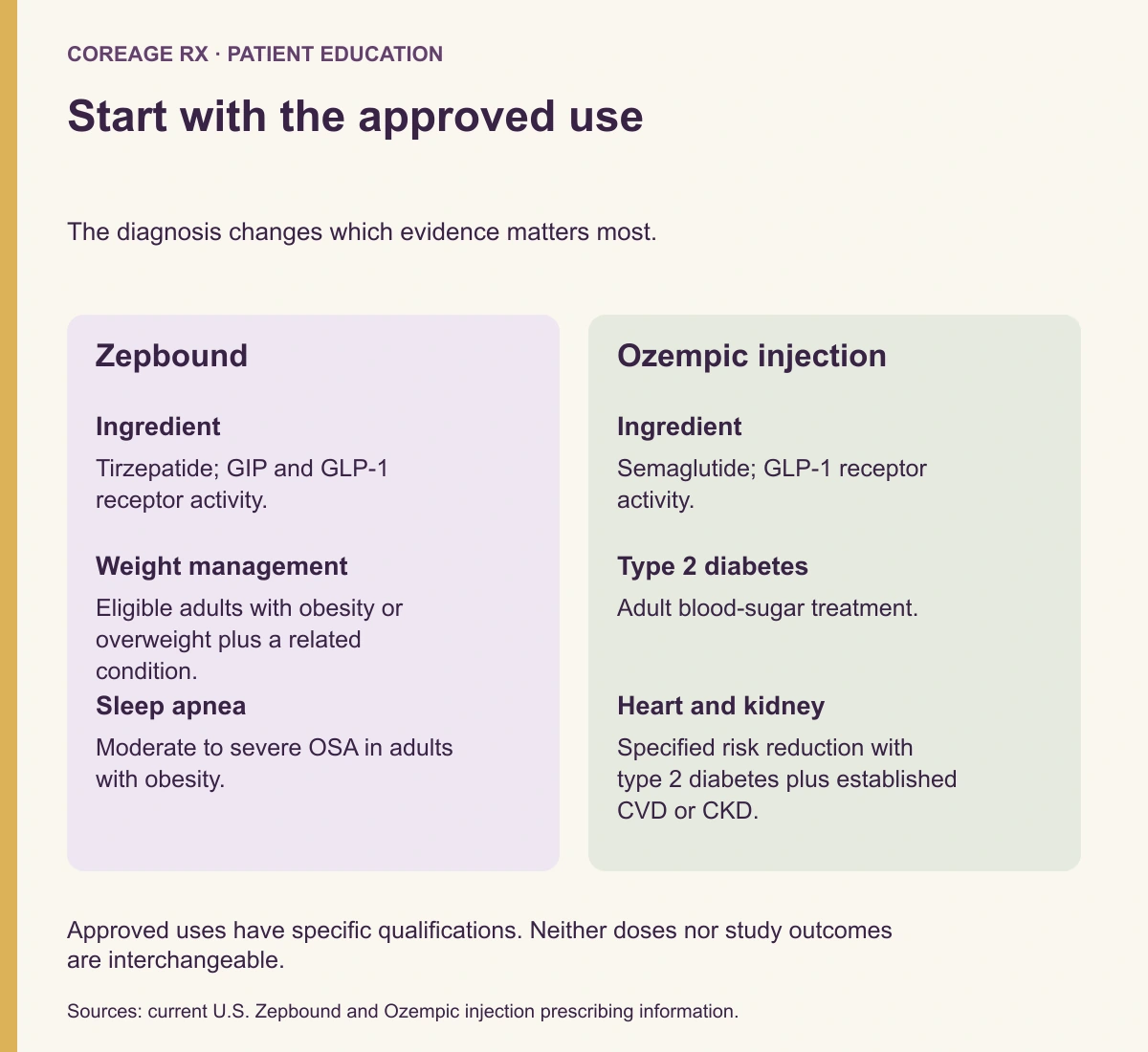
Why the brand name and diagnosis matter
A medicine’s active ingredient helps explain how it works, while its brand and formulation determine the specific labeling and administration instructions. These are related pieces of information, not substitutes for each other.
Mounjaro and Zepbound both contain tirzepatide, but their approved-use statements differ. Ozempic and Wegovy both contain semaglutide, yet their treatment purposes, available formulations, and dosing instructions also differ. Mounjaro label, Wegovy label
For example, a person seeking obesity treatment without diabetes is asking a different clinical question from a person with type 2 diabetes and chronic kidney disease. The same online ranking cannot answer both questions. Ask your clinician to name the outcome driving the recommendation before comparing expected weight change.
Our Mounjaro versus Ozempic guide focuses on the diabetes comparison. The broader GLP-1 selection guide explains how treatment goals change the options.
How do the medicines work?
Both affect hormone pathways involved in blood-sugar regulation and appetite. Tirzepatide acts at GIP and GLP-1 receptors, whereas semaglutide acts at the GLP-1 receptor. Their pharmacology helps explain why researchers study them for several outcomes, but receptor count is not a personal effectiveness score. Zepbound label, Ozempic label
You cannot conclude that a drug is automatically right for you because it acts at two receptors. Nor does one receptor imply that a treatment is insufficient. What matters is the evidence for your diagnosis, the response you actually have, the risks, and whether treatment is sustainable.
If you want a foundation before comparing brands, start with our tirzepatide questions guide or semaglutide questions guide.
Which leads to more weight loss?
Trials need to be compared with their details attached. Check the exact medicines, doses, population, duration, and way the researchers analyzed missing data or treatment discontinuation. An average from one study is not a forecast for a person starting a different product.
In particular, a study of tirzepatide against semaglutide at weight-management doses should not be casually described as a trial of every Zepbound dose against every Ozempic dose. Likewise, a study in people with diabetes does not directly predict results in people without diabetes.
Our tirzepatide versus semaglutide results guide walks through the relevant evidence and its limits. Use the results to frame expectations, then ask how your own treatment goal and tolerated dose affect the comparison.
Several practical questions are more useful than choosing a winner from a headline: Can you tolerate the planned treatment? Can you obtain it consistently? Is your nutrition adequate? Are blood sugar, sleep-related symptoms, or other health outcomes improving? Those questions remain important even when the scale changes more slowly than expected.

How do diabetes, heart disease, kidney disease, and sleep apnea change the decision?
Ozempic’s cardiovascular indication applies to adults with type 2 diabetes and established cardiovascular disease. Its kidney indication applies to adults with type 2 diabetes and chronic kidney disease and addresses specified kidney outcomes and cardiovascular death. These qualifications should remain attached to a statement about benefits. Ozempic approved uses
Zepbound’s sleep-apnea indication concerns moderate to severe obstructive sleep apnea in adults with obesity. That is more specific than snoring or feeling tired. It does not mean someone should stop positive airway pressure or another prescribed sleep-apnea treatment without a review. Zepbound approved uses
Bring the diagnoses and test results you have, rather than trying to infer eligibility from symptoms alone. For sleep apnea, that may include the sleep-study report and current treatment. For diabetes and kidney disease, it may include recent laboratory results and a complete medication list.
The clinician can then explain which evidence applies to you and how progress will be measured. A medication selected partly for a non-weight outcome should not be judged only by pounds lost.
Doses, devices, and administration are product-specific
The dose numbers are not equivalent between tirzepatide and semaglutide. A larger milligram value does not create a valid conversion from one drug to the other.
Both products have gradual initiation instructions, but the schedules and maintenance choices differ. Follow the exact prescription rather than transferring an escalation schedule from a comparison chart. Our Zepbound dosage guide and Ozempic dosage guide explain the labeled context.
Device choice also matters. Current U.S. labeling includes several Zepbound presentations, including pens and vials, and Ozempic injection presentations include multidose pens and certain prefilled syringes. Training should match the product actually dispensed, especially after a refill or presentation change. Zepbound instructions, Ozempic instructions
Before using a new device, confirm the product name, strength, prescribed amount, storage instructions, and how to administer it. If directions conflict or a package looks unfamiliar, resolve that with the pharmacist before injecting. Device familiarity from a previous prescription is not enough.
Side effects and important safety questions
Both products can cause gastrointestinal symptoms and have important precautions. Their labels address pancreatitis, gallbladder disease, severe gastrointestinal reactions, dehydration-related kidney injury, allergic reactions, and other risks. Both have boxed thyroid-tumor warnings and contraindications involving medullary thyroid carcinoma or MEN2. Zepbound safety information, Ozempic safety information
Tell the clinician about other diabetes medicines, past severe digestive problems, eye disease, pregnancy plans, and any upcoming anesthesia or sedation. These details can change the plan even if a medication appears attractive for weight management.
Zepbound has specific advice for people using oral hormonal contraceptives: use a non-oral method or add a barrier method for four weeks after starting and after each dose increase. Ozempic labeling advises discontinuation at least two months before a planned pregnancy. Discuss these issues before treatment or a transition. Zepbound reproductive guidance, Ozempic reproductive guidance
For ordinary tolerability concerns, record symptoms and contact the prescriber. Persistent severe abdominal pain, repeated vomiting, inability to keep fluids down, or signs of a serious allergic reaction warrant prompt medical attention. Our tirzepatide nausea and reflux guide explains what information helps during a review.
Can you switch between Zepbound and Ozempic?
A switch requires a prescribing plan that accounts for the reason for treatment, current dose, last injection date, symptoms, other medicines, and availability of the replacement. There is no universal milligram-equivalence chart that can supply all of that information.
Do not combine the products on your own. Zepbound labeling specifically advises against use with another tirzepatide product or a GLP-1 receptor agonist. Zepbound limitations of use
Ask for written instructions covering when the replacement begins, how it is escalated if needed, what happens to other diabetes medicines, and when follow-up occurs. Our semaglutide-to-tirzepatide switching guide can help prepare those questions.

Cost, insurance, and program comparisons
Coverage can depend on the exact brand and diagnosis. A plan may handle diabetes treatment, weight management, and another approved indication differently. A quoted cash price is also not necessarily the total cost of ongoing visits, medication, and laboratory work.
Use the Zepbound cost guide, Ozempic cost guide, and GLP-1 insurance guide to compare concrete options. Confirm current terms with the insurer, pharmacy, or program before relying on an advertised price.
CoreAge Rx offers information about its tirzepatide and semaglutide services. Ask which formulation and pharmacy product the program provides. A compounded preparation is not FDA-approved Zepbound or Ozempic, even if it uses the same named ingredient. FDA guidance on compounded GLP-1 drugs
A practical way to make the comparison
Write down the diagnosis being treated, your main goal, current medicines, recent symptoms, and realistic monthly budget. Then ask the clinician which option best connects those facts with the evidence.
You should leave the discussion understanding why the medication was selected, what improvement will be measured, how administration works, and whom to contact if problems arise. That is a more useful outcome than simply deciding that one popular brand is “stronger.”
Educational information for adults; individual treatment decisions require a qualified clinician. Sources checked September 27, 2026. Original AI-generated article illustrations depict fictional people and objects, not patient outcomes. Other editorial images are illustrative. Graphics summarize the cited sources.