Couscous can be part of a nutritious meal and a weight-management plan. It supplies carbohydrate and some protein, cooks conveniently, and pairs well with vegetables, beans, fish, poultry, or other foods you enjoy. Whether a couscous meal suits your needs depends on the type, portion, additions, and overall eating pattern.
Regular couscous is usually made from wheat semolina, so it contains gluten. Whole-wheat versions and larger pearl-style products can differ in texture and nutrition. Treat the package in your kitchen as the specific food you are preparing rather than assuming every product called couscous has identical values.
What is couscous, and is it a whole grain?
Traditional small couscous consists of granules commonly made from durum-wheat semolina. It may look like a grain, but the wheat has been processed into that form. Pearl couscous consists of larger pieces and generally takes a different cooking method and time.
The word “couscous” alone does not tell you that a product is whole grain. Look for a whole-wheat ingredient and compare the Nutrition Facts panel. A whole-wheat product can be a way to include more whole grains, but the exact fiber amount depends on the product and serving.
The current Dietary Guidelines for Americans encourage fiber-rich whole grains. That guidance does not require avoiding every refined-grain food; it provides a useful reason to consider whole-wheat options alongside the other foods in your routine. Dietary Guidelines
For a quick meal, choose a product whose texture and preparation fit your preferences. Convenience can be useful when it helps you cook a complete meal rather than repeatedly skipping food because preparation feels too demanding.
Couscous nutrition: cooked portions versus dry amounts
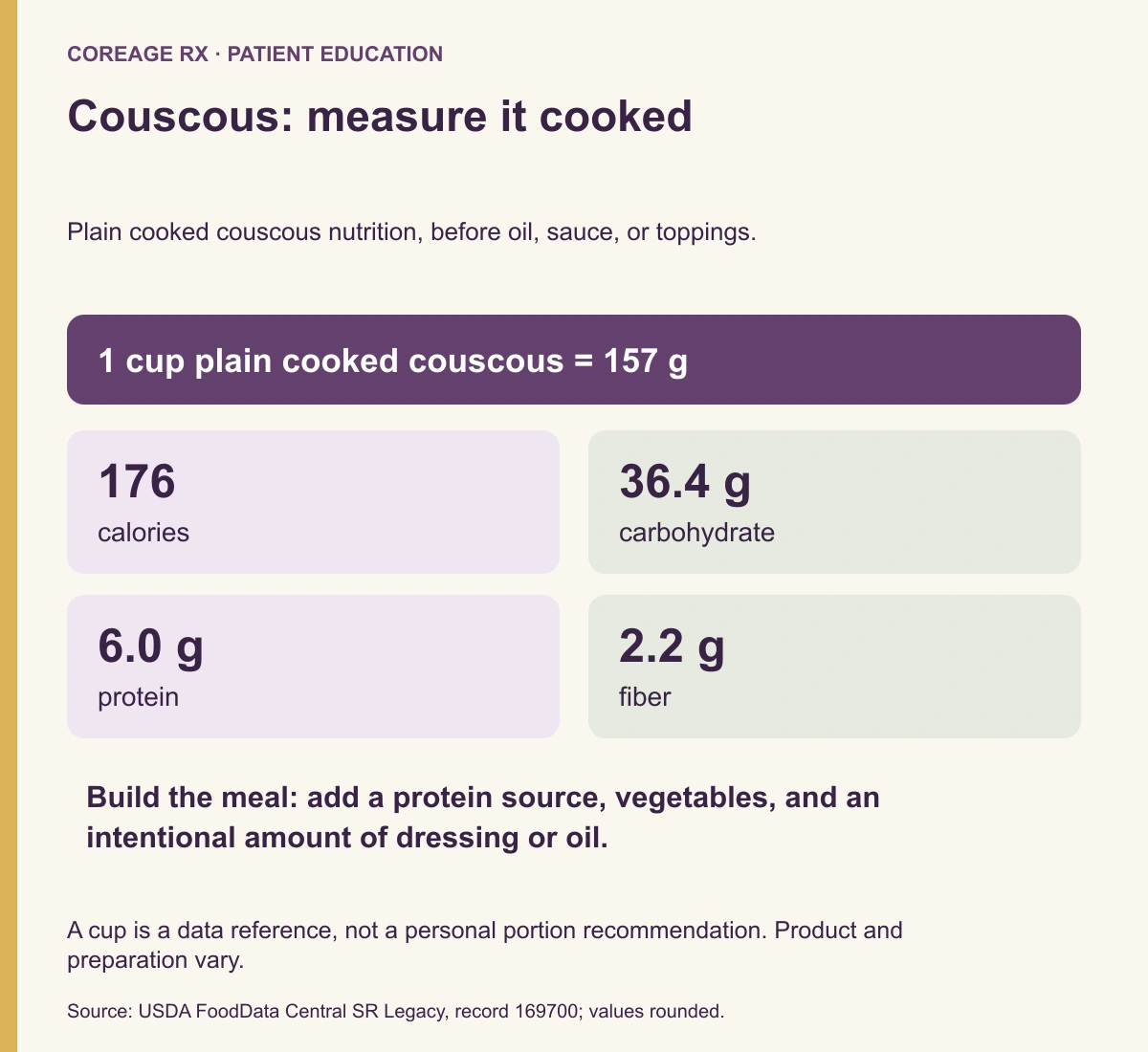
USDA’s SR Legacy record for plain cooked couscous lists a cup as 157 grams. The values below are calculated from that record and rounded. They describe plain cooked couscous, not a whole-wheat or pearl product, restaurant recipe, or bowl with oil and toppings. USDA FoodData Central downloadable data, record 169700
| Nutrient | 100 g cooked | 1 cup cooked, 157 g |
|---|---|---|
| Calories | 112 | 176 |
| Carbohydrate | 23.2 g | 36.4 g |
| Protein | 3.8 g | 6.0 g |
| Fiber | 1.4 g | 2.2 g |
| Total fat | 0.2 g | 0.3 g |
A cup here is a measurement used to describe the data, not a recommended portion for every person. Preparation and water absorption can change the weight of a cup, and the food you buy may have its own label values.
Dry and cooked couscous are particularly easy to confuse. Dry couscous absorbs water as it cooks, so 100 grams dry and 100 grams cooked do not represent the same amount of starting food. If you track intake, match the database entry to the state in which you measured it.
The package may also show nutrition for a dry serving while your bowl contains the cooked result. Read the preparation and serving information together before assuming the numbers conflict. Our macronutrient guide explains how these measurements fit a broader meal plan.
Is couscous good for weight loss?
Couscous is neither a special fat-burning food nor a food that must be eliminated to lose weight. The useful questions are how much is in the meal, what accompanies it, whether the meal is satisfying, and how it fits your overall needs.
For example, a bowl combining couscous, chickpeas, vegetables, and a measured dressing has a different nutritional profile from plain couscous with a large amount of butter. Both contain couscous, but the name of the base does not describe the complete meal.
If a portion leaves you hungry soon afterward, consider whether the meal contains enough protein, fiber, and overall food before deciding that carbohydrate is the problem. Conversely, if a very large serving makes you uncomfortably full, a different portion or balance may suit you better.
Our calorie-intake guide explains how energy needs are estimated. Use it as context, not as a reason to turn each meal into a pass-or-fail test. A practical eating pattern can include familiar foods in portions that work for you.
How does it compare with rice, quinoa, or pasta?
There is no universal ranking that makes one starch the best choice for everyone. Compare the exact foods, the same cooked weight or appropriate serving, and the full meal. White rice versus whole-wheat couscous is a different comparison from brown rice versus a refined couscous blend.
Important comparison points include fiber, protein, gluten, cost, cooking time, and taste. Quinoa or rice may be suitable alternatives for someone who needs to avoid wheat, but sauces, seasonings, and preparation can still introduce gluten. A lower calorie number in one database entry may also reflect more absorbed water rather than a dramatic health advantage.
Rather than choosing one grain-like food permanently, consider variety. You may prefer couscous for a quick side, rice for another dish, and potatoes or legumes elsewhere. Your overall intake matters more than repeatedly searching for one “cleanest” carbohydrate.

How to build a more complete couscous meal
Start with cooked couscous, then add foods that contribute different nutrients and textures. Here are three flexible combinations:
- Chickpea and vegetable bowl: couscous, chickpeas, chopped cucumber, tomato, herbs, and a modest amount of olive-oil dressing.
- Warm roasted-vegetable plate: couscous with roasted vegetables and tofu, fish, or poultry, depending on your preferences.
- Leftover lunch bowl: a portion of cooked couscous, safely stored leftover protein, vegetables, and a sauce you enjoy.
These are combinations rather than fixed calorie prescriptions. Adjust ingredients for allergies, preferences, and what is available. A portion of beans adds carbohydrate as well as protein and fiber, so a meal does not need a rigid one-food-per-category system.
Notice concentrated additions. Oil, nuts, cheese, dried fruit, and dressing can make a dish flavorful, but they change its nutrition. You do not need to exclude them; use amounts intentionally. Our guide to daily fat grams explains how fats can fit without treating them as unlimited or forbidden.
If your goal is more fiber, compare whole-wheat options and include vegetables or legumes. Our food fiber guide explains why improving the overall meal can be more useful than immediately adding a supplement.
Can you eat couscous with diabetes?
Couscous contains carbohydrate, so the amount and the rest of the meal matter when planning blood-sugar management. It should not be described as carb-free or as a treatment that lowers blood sugar on its own.
Use the portion and carbohydrate information that matches your product and preparation. If your care plan includes carbohydrate counting or glucose monitoring, discuss how couscous meals fit that plan with a clinician or dietitian. A single food’s reputation as “healthy” does not replace that individualized guidance.
Avoid assuming that adding protein or vegetables makes the carbohydrate disappear. Those additions can improve the meal’s variety and adequacy, while the couscous and any legumes or other carbohydrate-containing foods still contribute to the total.
Is couscous gluten-free?
Ordinary wheat-based couscous is not gluten-free, and whole-wheat couscous is not an exception. NIDDK lists wheat, including durum and semolina, among sources of gluten. People with celiac disease need to avoid gluten and prevent cross-contact during preparation. NIDDK celiac-disease nutrition guidance
A specially formulated gluten-free alternative may be available, but check the label and ingredients rather than relying on the shape or product name. Use appropriate preparation practices, including avoiding shared utensils or surfaces that introduce gluten.
If you suspect celiac disease, talk with your clinician about testing before starting a gluten-free diet; avoiding gluten beforehand can affect test accuracy. NIDDK also notes that avoiding gluten has not been shown to improve health or weight loss for the general population without a relevant condition. NIDDK guidance
What if you are taking a GLP-1 medicine?
A smaller appetite can make it harder to eat an adequate, varied diet. Couscous may be one manageable carbohydrate option, but a bowl of plain couscous alone should not automatically replace the other foods you need.
Consider a portion you tolerate with a protein source and vegetables or another suitable side. If appetite is very low or nausea limits meals, discuss the pattern with the care team. The joint nutritional advisory for GLP-1 treatment emphasizes attention to nutrition during weight reduction. GLP-1 nutritional advisory
Our semaglutide protein and muscle guide and tirzepatide protein and muscle guide offer questions to raise when food intake changes. There is no reason to force a large couscous portion simply because an online chart labels it healthy.
Preparing and storing it safely
Follow the package directions, because small instant couscous and pearl varieties do not necessarily use the same water ratio or cooking time. Include the nutrition from added broth, oil, butter, or sauce when evaluating the finished dish.
Refrigerate perishable leftovers promptly in shallow containers. FDA guidance advises refrigeration within two hours, or within one hour when outdoor temperatures exceed 90°F, and a refrigerator temperature of 40°F or below. Reheat leftovers to 165°F. A bowl containing cooked couscous, vegetables, and protein should not remain on the counter for the afternoon. FDA safe-food-handling guidance
The most useful takeaway
Couscous can be a convenient part of a varied eating pattern. Choose the product you enjoy, understand whether the nutrition information describes dry or cooked food, and build the meal around more than the starch alone. For weight-management planning beyond one ingredient, start with our weight-loss basics guide.
Educational information for adults; individual treatment decisions require a qualified clinician. Sources checked September 27, 2026. Original AI-generated article illustrations depict fictional people and objects, not patient outcomes. Other editorial images are illustrative. Graphics summarize the cited sources.