Macros are the three main energy-providing nutrients in food: protein, carbohydrate, and fat. Understanding them can help you make sense of meals and nutrition labels, but there is no single macro ratio that guarantees weight loss for everyone. Total intake, food quality, health conditions, activity, and whether a routine is workable all affect the decision.
You can use macro information without weighing every meal or treating an app’s target as a medical prescription. A useful starting point is to learn what the numbers mean, identify gaps in your usual meals, and choose a level of tracking that helps rather than overwhelms you.
What does each macronutrient contribute?
| Macronutrient | Common food sources | Standard energy estimate |
|---|---|---|
| Protein | Fish, poultry, eggs, dairy, tofu, beans, lentils | 4 calories per gram |
| Carbohydrate | Fruit, grains, beans, starchy vegetables, milk, many mixed foods | 4 calories per gram |
| Fat | Oils, nuts, seeds, avocado, and fat within many other foods | 9 calories per gram |
The energy factors come from the USDA Food and Nutrition Information Center. They explain basic nutrition arithmetic; food-label totals may not match a simple calculation exactly because of rounding and the way particular components are handled.
Food categories overlap. Beans contain carbohydrate and protein, yogurt may contain all three macros, and a meal made with oil adds fat even when the main ingredient is lean. Calling a food “a protein” is convenient shorthand, not a complete description of its nutrient composition.
Are macros and calories different goals?
Macros contribute calories, so the numbers are connected. However, two meals with similar calories can differ in protein, fiber, vitamins, minerals, texture, convenience, and how satisfying they feel. A calorie total alone does not describe the whole meal.
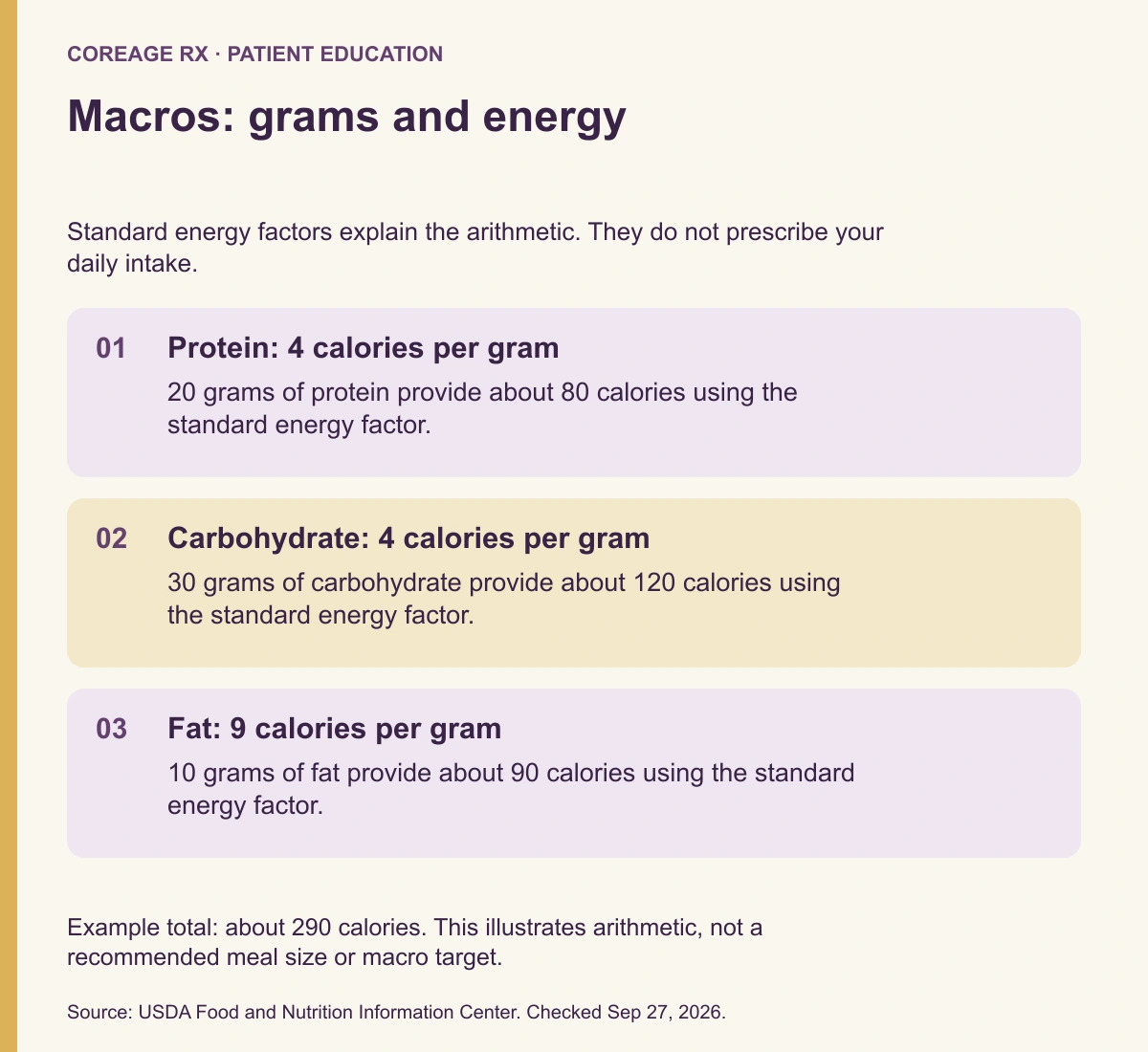
For an arithmetic example, 20 grams of protein contribute about 80 calories, 30 grams of carbohydrate about 120, and 10 grams of fat about 90. Together, those amounts provide about 290 calories using the standard factors. This is a calculation example, not a suggested meal size or a daily target.
Our calorie-intake guide explains how estimates fit into weight management. A macro plan still needs enough overall nourishment; meeting a percentage target does not make an overly restrictive intake appropriate.
Is there a proven best macro ratio?
One two-year randomized trial assigned 811 adults to four calorie-reduced diets with different fat, protein, and carbohydrate targets. The study did not find significant differences in weight loss between the main macronutrient comparisons at two years. It also observed that group-session attendance was associated with weight loss, although that association alone does not prove attendance caused the difference. Source: Sacks and colleagues’ diet trial.
The study supports flexibility within the approaches tested. It does not establish that every possible diet is equally appropriate, that food quality is irrelevant, or that a person with kidney disease or diabetes should ignore individualized advice.
A practical question is whether the eating pattern supports your health and can be sustained through workdays, travel, limited budgets, and meals with other people. A theoretically precise split has little value if it repeatedly leaves you undernourished, uncomfortable, or unable to follow the plan.
Why percentages can be misleading
A percentage describes the share of energy, not the number of grams. If total calorie intake changes, the same percentage can represent a different amount of a nutrient. That is one reason an app-generated percentage should not automatically become your protein prescription.
For example, 100 calories from protein represent 25 grams using the standard four-calorie factor. The percentage that amount represents depends on the total energy being counted. Always check whether a target is written in grams per day, grams per meal, or a percentage of calories.
USDA’s nutrition resources also explain that individual nutrient needs may differ from general reference values because of medical and health needs. Source: USDA nutrient-reference guidance. A registered dietitian can help translate those references into an eating plan that fits the person.
How much attention should protein receive?
Protein deserves attention during weight reduction, particularly when appetite is low or maintaining strength and function is a concern. However, more is not automatically better, and there is no universal target that this article can calculate from body weight alone.
A multidisciplinary advisory on nutrition during GLP-1 treatment discusses adequate protein, resistance exercise, food quality, and prevention of nutrient deficiencies together. It also notes uncertainty about which body-weight measure should be used for some protein calculations in people with obesity. Source: nutrition priorities during GLP-1 therapy.
Our semaglutide protein and muscle guide explains this in more detail. Start by noticing whether meals regularly include a protein-containing food, then ask whether your medical history, activity, or current intake calls for a more specific assessment.

Do carbohydrates have to be very low?
The word carbohydrate includes many foods with different nutritional roles. Fruit, beans, whole grains, sweetened drinks, and pastries cannot be evaluated solely by placing them in the same broad category. A macro count does not tell you everything about fiber, processing, or the overall meal.
If you have diabetes, carbohydrate planning also needs to fit glucose monitoring and the medicines you take. A major dietary change can be clinically relevant, especially when using medicines that can cause hypoglycemia. Coordinate substantial changes with the care team rather than treating a general online ratio as a replacement for the diabetes plan.
For a food-focused perspective, read our food fiber versus supplements article. Removing an entire food category to satisfy an app can create new problems if it eliminates foods that previously helped you eat a varied diet.
Our guide to rice, keto and carbohydrate labels compares cooked white and brown rice with raw cauliflower using matching USDA entries. It explains portions, total versus net carbohydrate, and why cooling rice does not erase its carbohydrate.
Does eating fat prevent weight loss?
Fat contains more calories per gram than protein or carbohydrate, but that fact alone does not make all fat-containing foods unsuitable. Nuts, oils, seeds, and other ingredients can fit different eating patterns. Amounts and the rest of the meal still matter.
It can help to notice ingredients that are easy to overlook when estimating a recipe, such as cooking oil, dressings, spreads, or toppings. This is an information-gathering step, not a reason to avoid every food containing fat or to compensate by skipping meals.
When choosing packaged foods, read the actual Nutrition Facts panel rather than assuming “low fat,” “high protein,” or another front-label phrase describes the entire product. The FDA label guide explains how serving sizes, calories, and daily values should be interpreted.
How can you build a practical meal?
Think in terms of ingredients before percentages. A meal might include a protein-containing food, a grain or starchy food, vegetables or fruit, and ingredients that make it enjoyable. Which foods and amounts fit best will depend on preferences, appetite, medical needs, and the rest of the day.
For example, a rice bowl could include tofu or fish, vegetables, and a sauce; a breakfast could include yogurt, fruit, and oats. These are flexible meal ideas, not nutritionally identical substitutions or prescribed portions. Food allergies, dietary restrictions, and cultural preferences can guide the choices.
Our protein breakfast ideas provide more examples. If cooking is difficult, the useful next step may be a simpler shopping list or an easier preparation method rather than a more complicated tracking spreadsheet.
For a breakfast example, see our guide to overnight oats labels and meal ideas. It compares a named packet with the prepared meal, explains what milk and toppings add, and covers allergy and refrigeration questions.
What if you want to track macros?
First decide what question tracking should answer. You may want to understand whether breakfast contains much protein, how a recipe changes with different ingredients, or whether the app entry matches the actual packaged food. A short, focused record can be more useful than collecting numbers without a purpose.
Check units carefully: cooked and uncooked entries, grams and ounces, serving sizes, and the number of portions in a recipe can produce very different totals. Restaurant and homemade-food estimates also contain uncertainty. Avoid treating every displayed decimal as a precise measurement.
Label serving sizes are reference amounts for the information shown, not individualized meal prescriptions. Source: FDA Nutrition Facts guidance. Use the record to identify a practical change or discuss a concern, rather than judging a day as a success or failure based on exact numerical compliance.
Can you skip tracking entirely?
Yes. Macro tracking is a tool, not a requirement for eating well. You can work on regular meals, shopping routines, food variety, and manageable preparation without recording every gram.
If tracking intensifies anxiety, rigid food rules, or urges to skip meals, stop and discuss a different approach with a qualified professional. A history of disordered eating is important context for any weight-management plan, including medication treatment. The GLP-1 nutrition advisory emphasizes assessing eating patterns and relevant psychological concerns.
An approach that you can use calmly and consistently is more useful than one that makes every meal feel like a test. Support can focus on nourishment and function as well as weight-related goals.

What changes when appetite is reduced by a GLP-1 medicine?
Lower appetite can make it harder to obtain enough food, fluid, protein, or other nutrients. It does not eliminate nutritional needs. Persistent nausea, vomiting, or difficulty eating should be reviewed as a treatment concern rather than celebrated as evidence that the medicine is working especially well.
The nutrition advisory recommends combining nutritional assessment with symptom management and activity suited to the individual. Our tirzepatide protein and muscle guide discusses why strength, function, and overall intake deserve attention alongside weight.
If reviewing CoreAge Rx semaglutide care, ask how nutrition questions and persistent symptoms are handled between appointments. A prescription and a macro calculator do not replace a workable follow-up plan.
What is the best next step?
Choose one question about your current meals that would be useful to answer. Then use a label, a brief food record, or a conversation with a dietitian to address it. You do not need to overhaul every meal at once.
For many people, the goal is a repeatable routine that provides adequate nourishment and supports health. Macro numbers can help explain that routine, but they should remain a tool within the plan—not the only measure of whether it is working.
Apply meal-planning numbers
- How many grams of fat per day? — Translate calorie percentages, read labels, and consider fat quality.
- Couscous nutrition and meal ideas — Check cooked portions, gluten, whole-wheat options, and practical food combinations.
Educational information for adults; individual treatment decisions require a qualified clinician. Sources checked September 27, 2026. Original AI-generated article illustrations depict fictional people and objects, not patient outcomes. Other editorial images are illustrative. Graphics summarize the cited sources.