
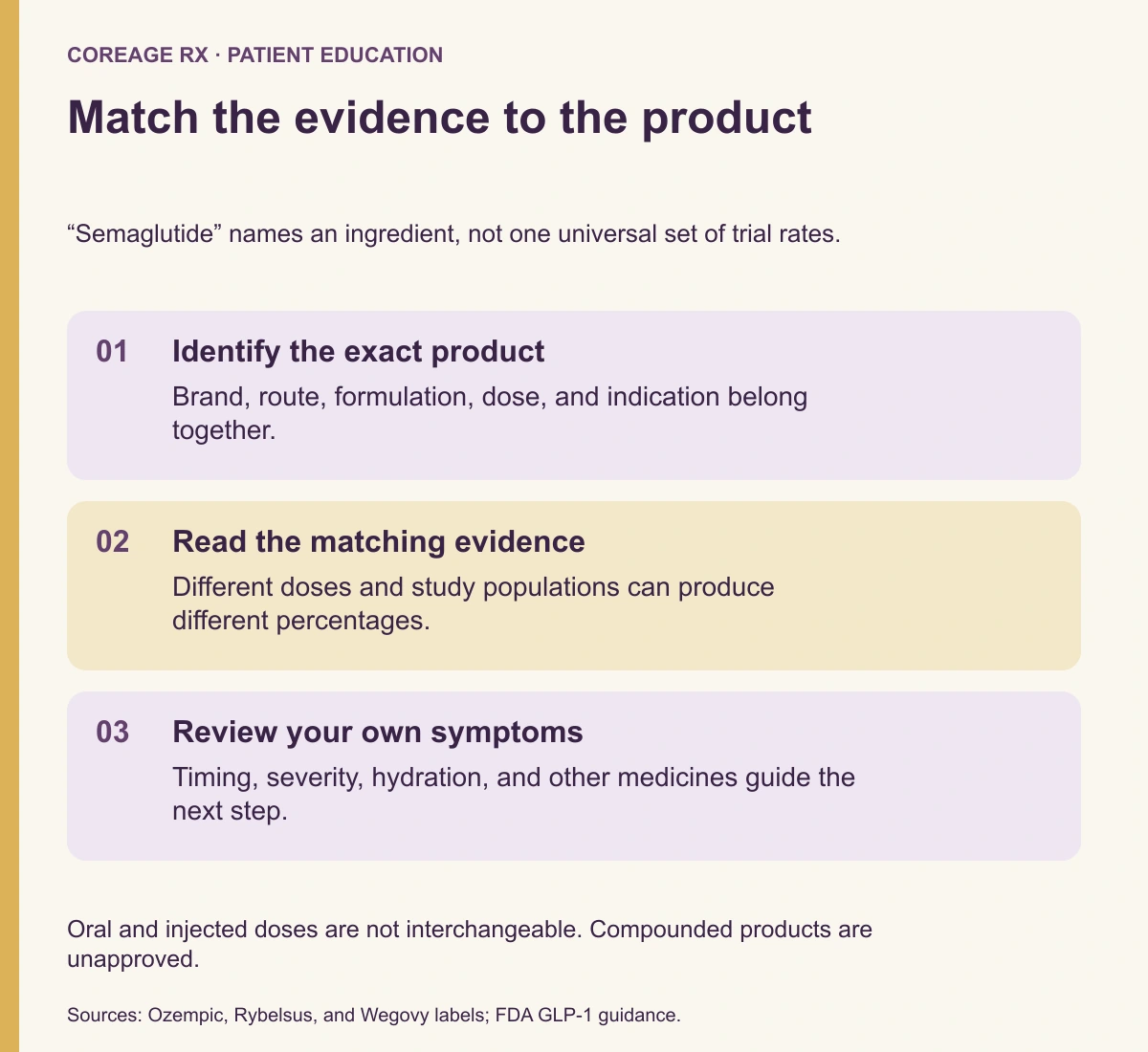
Semaglutide commonly causes digestive symptoms such as nausea, vomiting, diarrhea, abdominal pain, or constipation. But “semaglutide side effects” is not one uniform set of numbers. The brand, formulation, dose, treatment goal, and population studied all affect how the evidence should be read.
Semaglutide is an ingredient used in several approved products, including injectable and oral medicines. Compounded preparations are a separate category and have not undergone FDA approval. Start by identifying the exact product on your prescription before applying a chart or advice found online.
Why the product name matters
An ingredient name helps explain how a medicine works. The specific product label tells you its approved uses, administration instructions, dose schedule, and safety evidence. Milligrams cannot simply be transferred between a tablet and an injection.
| Product or category | What to check before comparing side effects |
|---|---|
| Ozempic injection | The injection label, device presentation, prescribed weekly dose, and diabetes-related treatment goal. |
| Ozempic tablets or Rybelsus | The oral-product label and exact tablet strength; these tablets are not interchangeable milligram for milligram. |
| Wegovy injection or tablets | The relevant formulation, indication, dose, and population in the current Wegovy label. |
| Compounded semaglutide | The dispensing pharmacy, preparation, concentration, added ingredients, and measurement instructions; branded trial rates do not establish its rates. |
The Ozempic injection label, oral semaglutide label, and Wegovy label contain different product-specific information. Our oral semaglutide versus injections guide explains the practical distinctions.
For a particular symptom, our guide to Ozempic and burping reviews label eructation findings, sulfur-odor evidence limits, swallowed-air habits and warning symptoms.
Common digestive effects and their timing
Semaglutide affects appetite and slows gastric emptying. A meal that previously felt comfortable may now feel too large. Nausea, early fullness, vomiting, constipation, or diarrhea can be especially noticeable when treatment starts or a dose rises.
Many gastrointestinal events in approved-product trials occurred during escalation. Some decreased with time. That observation is useful context, but it is not a reason to ignore persistent symptoms or continue an increase without discussing tolerability.
Our first month on semaglutide guide offers a framework for recording meals, symptoms, and questions. Keep the record brief: product, dose date, symptom, severity, and effect on eating or drinking. Mention a new supplement, illness, or other medication as well. Timing alone does not prove the cause.
Why side-effect percentages can be misleading
Suppose one website quotes a nausea percentage from an Ozempic diabetes study and another quotes a Wegovy weight-management study. Those numbers may involve different doses, participants, follow-up periods, and definitions. They cannot reliably tell you which treatment will be easier for you to tolerate.
A useful table states the exact product, dose, study population, and comparison group. A percentage without those details can create false precision. The Ozempic side-effects article includes its labeled injection-trial context; those figures should not be relabeled as the rate for every semaglutide product.
Likewise, a social-media poll counts people who chose to answer it, not necessarily a representative treatment population. It may help identify questions to ask but cannot replace controlled studies or product-specific monitoring.
Making food and fluids easier to manage
With mild symptoms, smaller portions and a slower pace can be easier to tolerate. Stop before becoming uncomfortably full, and notice whether large or rich meals consistently trigger discomfort. Avoid turning a temporary adjustment into an overly restrictive diet.
If appetite is low, choose manageable meals that still provide protein and other nutrients. The joint nutrition advisory for GLP-1 therapy emphasizes dietary quality, adequate intake, physical activity, and attention to muscle and bone health.
Our semaglutide protein and muscle guide and balanced-meal guide discuss practical planning. If nausea repeatedly prevents meals or fluids, contact the clinician; a supplement should not become a substitute for investigating the problem.
Constipation and diarrhea need different responses. Tell the care team about duration, usual bowel pattern, pain, and any products already tried. Rapidly adding large amounts of fiber can worsen discomfort in some circumstances. See constipation on GLP-1 medicines for questions to discuss before adding remedies.

When symptoms should not wait
Call emergency services for trouble breathing, swelling of the tongue or throat, collapse, or another suspected severe allergic reaction. Stop using the medicine and obtain medical help.
Severe, persistent abdominal pain, with or without vomiting and sometimes extending to the back, needs urgent evaluation for possible pancreatitis. Do not take another dose until a clinician advises you. Upper abdominal pain with fever, jaundice, or pale stools can suggest gallbladder disease.
Repeated vomiting, inability to keep fluids down, very little urine, or substantial dizziness can indicate dehydration. Semaglutide labels warn about acute kidney injury from volume depletion. Severe constipation with vomiting, abdominal swelling, or inability to pass gas also needs urgent assessment.
Sudden loss of vision or a severe new visual disturbance requires urgent evaluation. New or worsening vision symptoms should be reported promptly, especially with existing diabetic eye disease. These examples draw on semaglutide product warnings; they are not an exhaustive list of emergencies.
Blood sugar, eyesight, and other medicines
Low blood sugar becomes a greater concern when semaglutide is used with insulin or an insulin secretagogue such as a sulfonylurea. The diabetes team may need to adjust those treatments. Ask for specific monitoring instructions and a plan for low-glucose symptoms.
Severe hypoglycemia can cause confusion, seizures, or unconsciousness and requires emergency help. Do not assume dizziness is merely a routine adjustment, particularly if it occurs alongside sweating, shakiness, or changes in thinking.
The labels also address diabetic retinopathy complications. Rapid improvement in glucose control can be associated with temporary worsening of retinopathy, so established eye disease matters when planning monitoring. Our semaglutide and vision guide explains what to tell the clinician and why prompt assessment matters.
Because semaglutide delays gastric emptying, review other oral medicines, particularly those requiring close monitoring. Share the full medication list rather than only drugs taken for weight or diabetes.
Tablets have their own administration questions
Oral semaglutide instructions include how to take the tablet in relation to water, food, and other medicines. Follow the leaflet for your exact product. Taking an oral product differently from its instructions can change exposure; that is not a safe way to manage side effects.
Do not crush, split, dissolve, or adjust tablets unless the relevant instructions and prescriber specifically allow it. The current Rybelsus and Ozempic tablet label instructs patients to swallow tablets whole and says the two products are not substitutable milligram for milligram. Source: oral semaglutide prescribing information.
If a daily tablet is difficult to tolerate or does not fit your routine, discuss options with the prescriber. Do not add a weekly semaglutide injection to compensate for missed tablets.
Compounded semaglutide adds product-specific concerns
FDA has received reports of dosing errors with compounded injectable semaglutide, including some requiring hospitalization. Varying concentrations and confusion between milligrams, milliliters, and syringe markings can contribute. Get a demonstration matched to the actual vial and syringe; never copy another person’s measurement.
FDA also warns that semaglutide sodium and semaglutide acetate are different active ingredients from the semaglutide used in approved products. A similar name does not establish equivalent properties. Compounded preparations have not undergone FDA review for safety, effectiveness, or quality. Source: FDA unapproved GLP-1 guidance.
A preparation with an added vitamin is not proven to prevent nausea simply because it contains that vitamin. Ask what evidence applies to the complete mixture and why that preparation is being considered for your particular medical need.
For CoreAge Rx’s semaglutide service, ask our team to identify the exact preparation, dispensing pharmacy, follow-up arrangements, and instructions before deciding on care. Apply the same questions to every provider.

Pregnancy, thyroid history, and procedures
Semaglutide carries a boxed warning based on thyroid C-cell tumors in rodents. The human relevance is unknown. Approved products are contraindicated with a personal or family history of medullary thyroid carcinoma or MEN2. Discuss the actual thyroid diagnosis rather than assuming all thyroid conditions have the same implications.
Pregnancy plans need advance review. Semaglutide labeling advises discontinuation at least two months before a planned pregnancy because the drug remains in the body for a long time. If pregnancy occurs during treatment, contact the prescribing clinician promptly for an appropriate care plan. See semaglutide and pregnancy.
Tell the procedural team about semaglutide before anesthesia or deep sedation. Delayed stomach emptying can affect aspiration risk. Provide the product, last dose, recent increases, and digestive symptoms, and follow the team’s instructions. Our surgery and anesthesia guide covers this conversation.
Frequently asked questions
Does nausea mean semaglutide is working better?
No. Nausea is an adverse effect, not a treatment target. Benefit should be evaluated using the clinical goals, tolerability, and follow-up measures agreed with your clinician.
What if side effects begin after restarting?
Contact the prescriber and explain the length of the interruption and the dose resumed. Restart instructions vary by product and circumstances. Our missed-dose and restart guide explains why returning automatically to an old dose can be a problem.
Is fatigue always a semaglutide reaction?
No. Reduced food or fluid intake, low glucose, poor sleep, anemia, other medicines, and unrelated illness can cause fatigue. Persistent or substantial weakness warrants assessment rather than an automatic “energy” supplement.
Do I need to tolerate symptoms to keep losing weight?
No. A sustainable treatment plan should account for daily function and nutrition. The prescriber can reassess the dose schedule, other medicines, and whether the treatment remains appropriate. Bring that discussion forward when symptoms interfere with normal life.
Educational information for adults; individual treatment decisions require a qualified clinician. Sources checked September 26, 2026. Original AI-generated article illustrations depict fictional people and objects, not patient outcomes. Other editorial images are illustrative. Graphics summarize the cited sources.