
The most common side effects of Ozempic injection are nausea, vomiting, diarrhea, abdominal pain, and constipation. They often appear when treatment begins or the dose increases. Many digestive symptoms become easier to manage over time, but severe pain, repeated vomiting, dehydration, allergic symptoms, or a sudden vision change should not be dismissed as routine adjustment.
This guide focuses on the U.S. injectable product used for type 2 diabetes and its other labeled indications. Oral Ozempic has separate prescribing information; trial percentages and dosing instructions should not be carried from one formulation to another. The information below comes from the current Ozempic injection label and clinical nutrition guidance.
How common are Ozempic side effects?
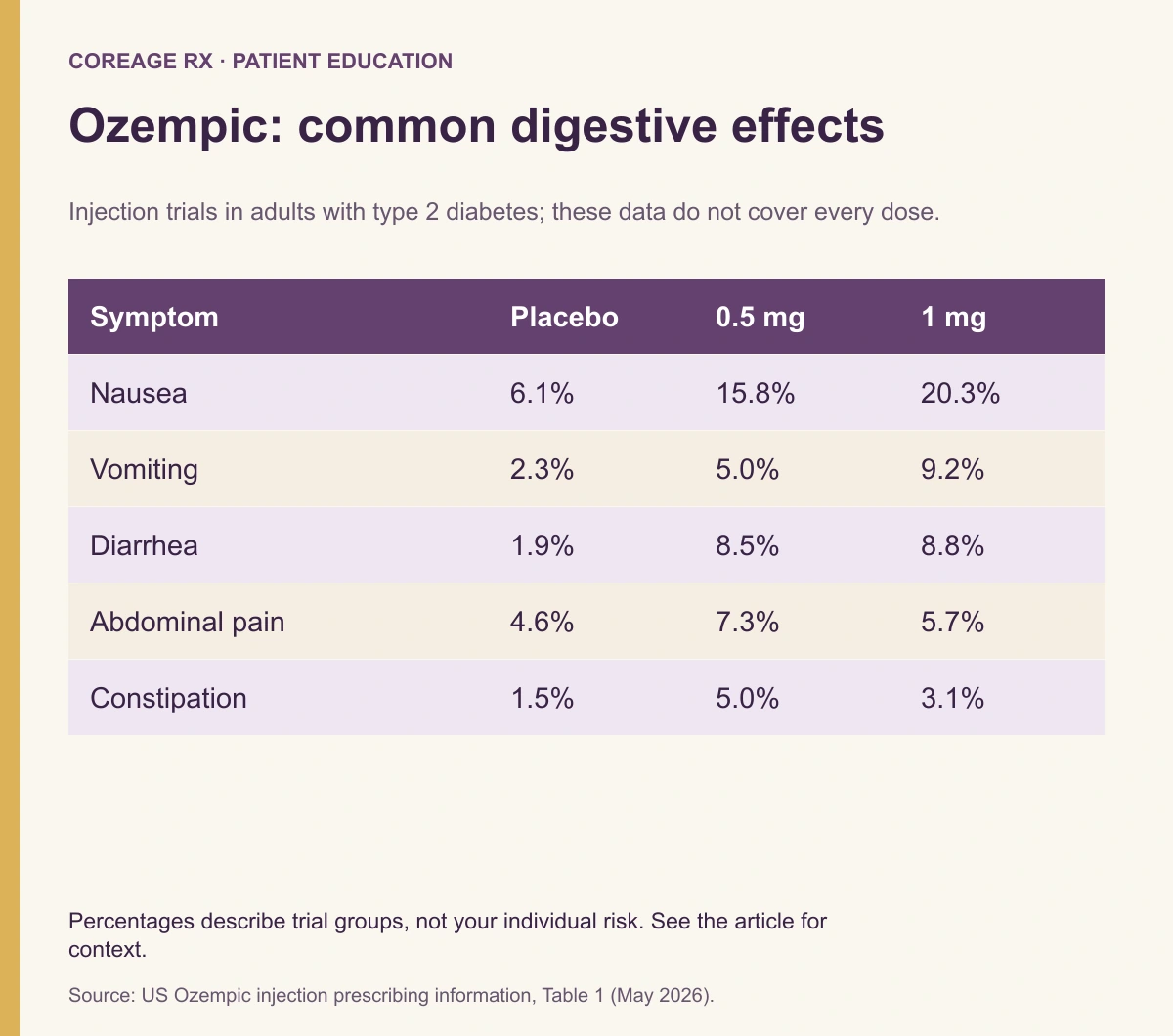
The label reports the following results from two placebo-controlled trials in adults with type 2 diabetes. These percentages describe people who reported the symptom during the trial—not the number who felt it after every injection.
| Adverse reaction | Placebo, 262 participants | Ozempic 0.5 mg, 260 participants | Ozempic 1 mg, 261 participants |
|---|---|---|---|
| Nausea | 6.1% | 15.8% | 20.3% |
| Vomiting | 2.3% | 5.0% | 9.2% |
| Diarrhea | 1.9% | 8.5% | 8.8% |
| Abdominal pain | 4.6% | 7.3% | 5.7% |
| Constipation | 1.5% | 5.0% | 3.1% |
These are not personalized predictions. They do not cover every injectable dose or the oral formulation, and they cannot establish that one brand is safer than another by comparison with a different trial. A separate study comparing 1 and 2 mg reported gastrointestinal adverse reactions in 30.8% and 34% of participants, respectively. Source: Ozempic label, section 6.1.
Why do nausea and fullness happen?
Semaglutide activates GLP-1 receptors. Among its effects, it slows gastric emptying and influences appetite. A meal that felt comfortable before treatment may feel too large afterward. Symptoms can be especially noticeable during the introduction or escalation phase.
For mild symptoms, a practical first step is to make meals smaller, eat slowly, and stop when comfortably satisfied. Very large or high-fat meals can be difficult to tolerate. Going for long periods without eating because of nausea may also make maintaining adequate nutrition harder. The joint clinical advisory on nutrition during GLP-1 treatment emphasizes meal planning, symptom support, hydration, and early contact with the care team.
The goal is not to eat as little as possible. If you are regularly skipping meals, struggling to drink, or avoiding entire food groups, tell the prescriber. Our semaglutide nausea and vomiting guide provides more focused questions, while balanced meals for weight management offers practical meal structure.
How long do side effects last?
There is no single timeline that applies to everyone. In the labeled trials, most reports of nausea, vomiting, or diarrhea occurred during dose escalation. That pattern explains why a person may feel better after settling into a dose, then notice symptoms again after an increase.
Persistent or worsening symptoms deserve a review instead of an indefinite wait. The review should consider dose timing, food intake, other medicines, hydration, infection or another illness, and whether treatment remains appropriate. Semaglutide has a long elimination half-life, so symptoms may not disappear immediately after a treatment change.
A short symptom record can help: write down the injection date, when the symptom began, meals or drinks around the episode, bowel pattern, and impact on daily activities. If glucose monitoring is part of your plan, include those results. Do not move the dose up, down, or closer together based solely on this record; use it to guide the clinical discussion.
Constipation, diarrhea, reflux, and burping
For an altered-taste concern, our guide to semaglutide and metallic taste distinguishes label reports of dysgeusia from a metallic-taste-only rate and reviews oral health, reflux, timing and care questions.
Changes in bowel habits can have several contributing factors. A lower food intake, different meal composition, less fluid, and medication effects can all matter. The right response to constipation is not necessarily to add a large amount of fiber at once. A gradual approach, enough fluid when medically appropriate, and review of other medicines is more useful.
Read constipation on GLP-1 medicines and starting a fiber supplement gradually before assuming that every product labeled “gut support” addresses the same problem. Severe constipation with marked abdominal swelling, vomiting, or inability to pass gas needs urgent assessment.
Diarrhea can lead to dehydration, especially if combined with vomiting. Contact the care team when it is substantial or persistent, or if there is blood, fever, dizziness, or reduced urination. Reflux and burping are also reported with Ozempic, but new chest pressure or shortness of breath should not be self-diagnosed as reflux.
A supplement is not required simply because you use a GLP-1 medicine. Our guide to supplements while taking GLP-1 treatment explains when a specific nutritional need may justify one.

For a separate bleeding concern, our guide to Ozempic and nosebleed questions reviews the limited label finding, first aid, warning signs and a full medication-history review.
Serious symptoms: when to get help
| Symptom or situation | Why it matters | What to do |
|---|---|---|
| Swelling of the lips, tongue, or throat; trouble breathing; collapse | Possible serious allergic reaction | Stop the medicine and seek emergency help. |
| Severe, persistent abdominal pain, sometimes extending to the back, with or without vomiting | Possible pancreatitis | Seek urgent medical assessment and do not take another dose until advised. |
| Repeated vomiting, inability to keep fluids down, very little urine, or significant dizziness | Dehydration and possible kidney injury | Obtain prompt medical care; severe symptoms require urgent care. |
| Upper abdominal pain with fever, jaundice, or pale stools | Possible gallbladder disease | Seek prompt evaluation. |
| Sudden or worsening vision changes | Eye disease or another urgent problem | Contact an eye-care professional promptly; sudden loss of vision is an emergency. |
| Confusion, seizure, or loss of consciousness with suspected low blood sugar | Severe hypoglycemia | Seek emergency help and follow the established rescue plan. |
These examples do not list every possible problem. If symptoms are severe or feel unsafe, seek care rather than waiting for an online response. The product label describes pancreatitis, kidney injury from volume depletion, severe gastrointestinal reactions, hypersensitivity, gallbladder disease, retinopathy complications, and other precautions.
Our focused guide to right-sided abdominal pain during Ozempic treatment reviews warning symptoms and gallbladder, appendix and pancreas concerns. Pain location alone cannot establish a diagnosis or rule out an urgent cause.
Does Ozempic cause low blood sugar?
Our guide to Ozempic and dizziness questions distinguishes faintness from spinning, reviews glucose and fluid-loss context, and explains when accompanying symptoms need emergency assessment.
The risk is especially relevant when Ozempic is used with insulin or an insulin-releasing medicine such as a sulfonylurea. Reduced food intake can further complicate management. The prescribing team may need to adjust those medicines and specify when to monitor glucose.
Ask for a written plan covering symptoms, when to check, how to treat a low, and when to use emergency assistance. Shakiness, sweating, weakness, or dizziness can have several causes; a glucose reading can help when monitoring is available and appropriate. Do not assume every episode is simply nausea or dehydration. Do not independently stop insulin or make a large dose change.
What does the thyroid-cancer warning mean?
Ozempic carries a boxed warning because semaglutide caused thyroid C-cell tumors in rodents. Whether it causes those tumors in humans is unknown. It is contraindicated in people with a personal or family history of medullary thyroid carcinoma, or MTC, and in people with multiple endocrine neoplasia syndrome type 2, or MEN2.
Those are specific diagnoses, not a statement that all thyroid conditions are identical. Discuss the exact history with the prescriber. Report a neck lump, persistent hoarseness, or difficulty swallowing. Our guide to who should not take Ozempic gives more context.
Vision, procedures, and pregnancy deserve separate planning
Eyes: The label warns about diabetic retinopathy complications, particularly in people with an existing history. Tell the clinician about eye disease and keep recommended eye appointments. Do not attribute sudden vision loss to an expected adjustment. Read semaglutide and vision changes.
Surgery or deep sedation: Delayed gastric emptying can matter during anesthesia. Tell every procedural team about the medicine, recent increases, and digestive symptoms. The team should provide individualized instructions; do not apply an old internet rule to every procedure. Our semaglutide and anesthesia guide explains the conversation.
Pregnancy: The injection label recommends stopping Ozempic at least two months before a planned pregnancy. Contact the clinician promptly if pregnancy occurs, because diabetes management also needs a safe plan. See semaglutide and pregnancy.

Is Ozempic Face a side effect?
“Ozempic Face” is an informal term for facial changes noticed during weight loss, such as less fullness or looser skin. It is not a diagnosis and does not mean that every person taking the medicine will develop the same appearance. Skin, age, nutrition, weight change, and other factors can contribute.
A cosmetic concern deserves respectful discussion, but it should not be confused with sudden facial swelling from an allergic reaction. Our updated Ozempic Face article explains the distinction and what skin care can realistically do.
Frequently asked questions
If I have no nausea, is the medicine working?
Absence of nausea does not mean absence of benefit. The clinician assesses the intended treatment outcomes, such as glucose control, alongside tolerance. Side effects are not a goal.
Can changing the injection site prevent symptoms?
Use approved sites and rotate them as instructed. There is no guaranteed injection location that prevents digestive symptoms. Check technique with a pharmacist if local irritation or device use is the concern.
Are compounded semaglutide side effects identical?
Do not assume identical safety or quality. Compounded drugs are not FDA approved, and concentration or measurement errors add separate risks. FDA advises using compounded GLP-1 drugs only when a patient’s medical needs cannot be met by an approved drug. Read FDA’s guidance.
What should I ask before the next dose increase?
Ask whether your symptoms, nutrition, hydration, and glucose results support proceeding. Bring an accurate list of medicines and supplements. Our Ozempic dosage chart explains the labeled schedule; the prescriber determines your plan.
For people exploring treatment, CoreAge Rx’s semaglutide information is a starting point for product and care questions. Confirm the exact preparation and its regulatory status; it should not be assumed to be branded Ozempic.
Educational information for adults; individual treatment decisions require a qualified clinician. Sources checked September 26, 2026. Original AI-generated article illustrations depict fictional people and objects, not patient outcomes. Other editorial images are illustrative. Graphics summarize the cited sources.