
Creatine research in generally healthy adults is reassuring at commonly studied amounts, but it does not make the supplement appropriate for every person with kidney disease or abnormal blood tests. Discuss your history and medicines with a clinician before starting if kidney health is a concern.
Creatine and creatinine are different
Creatine is the compound people supplement for certain exercise goals. Creatinine is a breakdown product measured in blood and used in common estimates of kidney filtration. Supplement use can complicate interpretation of a creatinine-based result.
A 2025 systematic review and meta-analysis found a modest rise in serum creatinine without a significant adverse change in glomerular filtration rate across the included studies. The authors also noted that most studies were short to moderate in duration and longer-term data were limited. That finding supports careful interpretation, not automatic dismissal of an abnormal test.
What to tell the person ordering blood work
Bring the supplement name, a label photo, the amount you take, and when you started. Mention any loading phase or recent change. Include other workout products and over-the-counter medicines in the same list.
Ask whether supplementation affects the planned tests and whether additional measures are appropriate. Your clinician may interpret multiple results together. Do not stop prescribed medication or decide that an elevated creatinine is “only creatine” on your own.

Research populations are not everyone
A study of healthy athletes cannot establish safety for someone with chronic kidney disease, dehydration, a recent acute kidney problem, or a complex medicine regimen. The broader creatine review provides context, but an individual decision still needs clinical judgment.
Pregnancy, breastfeeding, and significant medical conditions also call for specific advice. “Single ingredient” and “available without a prescription” are product descriptions, not guarantees of personal safety.
Questions for an appointment
- Do my kidney history or current results change whether I should use creatine?
- Could any of my medicines make monitoring more important?
- Which tests would you use to assess kidney function in my situation?
- Should I pause supplementation before a particular test, and for how long?
- What symptoms or changes should prompt a call?
Let the clinician answer the timing question. There is no single pause interval that should be invented for every test and every person.
Strong Suit’s role in the discussion
Its pictured label lists 5 g creatine monohydrate per scoop and advises consultation when taking medication or living with a medical condition. Show the actual bottle rather than relying only on the product name. Our dose guide can help you total intake from multiple supplements.
If you notice new swelling, reduced urination, severe illness, or a rapid unexplained change in how you feel, seek medical advice promptly. Do not use reassuring population research to self-diagnose those symptoms.

Understand why one blood-test number needs context
Creatinine is useful because clinicians can use it, together with other information, to estimate kidney filtration. But an estimate is not a direct photograph of kidney health. Factors affecting creatinine production or measurement can complicate interpretation, and supplement use is one piece of that context.
This does not make the test unhelpful. It means the person interpreting it needs an accurate history. Saying “I take creatine” is a start; providing the product, serving, start date, and any loading phase is more informative. A result can then be considered alongside previous measurements, other tests, symptoms, and the clinical situation.
Avoid two opposite conclusions: that any rise proves creatine has damaged the kidneys, or that any rise is automatically harmless because creatine is being used. Neither follows from the number alone. The appropriate interpretation belongs within a clinical assessment.
Read a safety review according to the studies it includes
A systematic review combines information from available studies, but it cannot create evidence for populations or time periods that were not adequately studied. The 2025 review cited above is reassuring in its overall findings on filtration while also identifying limits in the evidence base.
When applying such a review, ask about the participants’ baseline health, the amounts used, the duration, and the measures of kidney function. A result in generally healthy participants is relevant to that context. It should not be stretched into a guarantee for someone with chronic kidney disease, a recent acute kidney problem, or a complicated medication situation.
Also distinguish a finding of no significant adverse change in a group from a promise that no individual can have a problem. Group-level research helps inform decisions; it does not remove the need to evaluate new symptoms or abnormal results in the person in front of the clinician.
Prepare a useful supplement history
Create a list with one line per product. Include the exact name, the amount used, how often you take it, and why you started. Photograph the Supplement Facts and other-ingredients panels. If you alternate products, describe that pattern rather than reporting only the one used most recently.
Count overlapping creatine in pre-workouts or recovery blends. If an amount is not disclosed, label it as unknown. A clinician cannot assess a precise daily total from a statement such as “one scoop of each” when the scoop contents are different.
Include nonprescription medicines and recent changes. The purpose is to give the clinician a complete picture, not to decide which items are relevant on your own. A medicine used only occasionally can still be worth mentioning when kidney function is being discussed.
Questions for different starting situations
| Situation | A useful question for the clinician |
|---|---|
| No known kidney disease, considering creatine | Does my history or medication list change the decision? |
| A prior abnormal result | What did that result mean, and should it be clarified before supplementation? |
| Established kidney disease | Is this supplement appropriate for my specific condition? |
| Blood work already scheduled | Should I continue, pause, or document use in a particular way? |
| New symptoms during use | What assessment is needed, and should I stop now? |
These are starting questions, not answers that can be determined from a general article. In particular, do not invent a universal number of days to stop before testing. The appropriate plan depends on the test and clinical purpose.
Do not use hydration as a substitute for assessment
Following ordinary fluid needs and product preparation directions is different from trying to “flush out” a concerning result. Drinking excessive amounts of water does not establish that a supplement is appropriate or that an abnormal test can be ignored.
People with fluid restrictions or relevant medical conditions need individualized advice. Strong Suit’s mixing directions describe how to prepare a serving; they are not a personalized daily fluid prescription. If your clinician has given a fluid plan, bring the product into that discussion before assuming the directions fit without adjustment.
Illness with vomiting, diarrhea, or poor intake also changes the situation. Focus on the illness and seek advice when needed. Maintaining a supplement routine should not take precedence over an inability to eat or drink normally.
Keep the decision separate from marketing language
“Pure,” “natural,” and “single ingredient” describe or imply product features, but they do not answer whether a person with a particular kidney history should use the supplement. Likewise, a manufacturing claim does not establish personal safety under every health condition.
The FDA’s supplement information explains that dietary supplements are not approved in the same way as drugs before sale. A clear label is valuable because it supports an informed discussion. It does not replace that discussion when kidney health is already a concern.
For Strong Suit, the reviewed panel gives a specific ingredient amount: 5 g creatine monohydrate per scoop. Bring the current bottle so the clinician can evaluate the actual routine, including any other products, rather than relying on general assumptions about “creatine powder.”
Frequently asked questions
Can I interpret an elevated creatinine myself if I take creatine?
No. Supplement use is relevant context, but it does not establish the cause or significance of the result. Discuss it with the clinician who ordered the test and provide the amount and timing of use.
Should everyone have the same laboratory monitoring schedule?
This article cannot establish a universal schedule. Monitoring depends on health history, medicines, the reason for testing, and clinical judgment. Ask what is appropriate for your situation instead of copying another person’s schedule.
Can a normal result guarantee that future use will be safe?
No single result provides a permanent guarantee. Health circumstances and medicines can change, and new symptoms still deserve attention. Keep your supplement list current and revisit the decision when the clinical context changes.
What information is most useful at an appointment?
The actual label, daily amount, start date, any loading phase, other supplements, medicines, and relevant symptoms. A concise, accurate record is more helpful than a large collection of general reassurance from product reviews.
Explore Strong Suit™
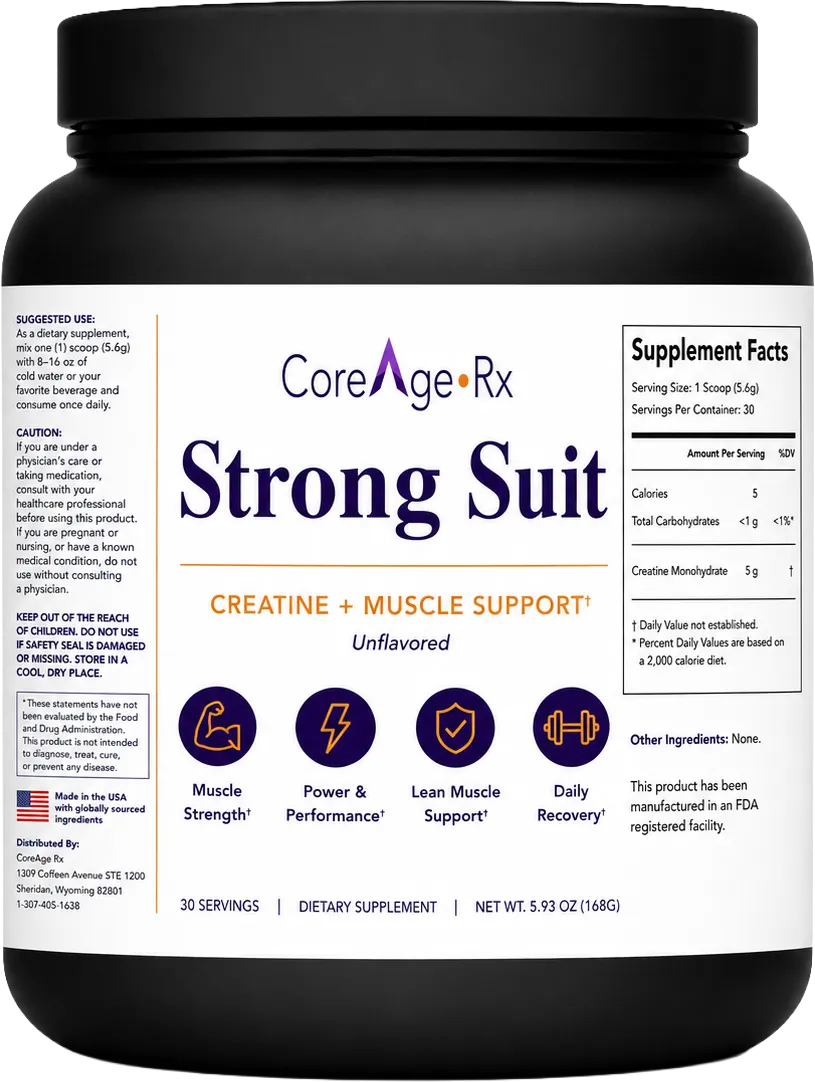
Strong Suit is CoreAge Rx’s unflavored creatine monohydrate powder. The pictured label lists 5 g creatine per scoop and 30 servings. See the current Strong Suit™ page and check the bottle you receive before use.
Related reading
- Creatine Monohydrate: Benefits, Dosing, and What to Expect
- How Much Creatine Should You Take Per Day?
- Creatine After 50: How It Fits With Strength Training
- Nutrition during GLP-1 treatment
Educational information, not individualized medical advice. Product information and linked research checked September 15, 2026. Ingredient research does not establish identical effects for a finished supplement.