
For many healthy adults using creatine for exercise, 3–5 g per day is a common maintenance range in research. That number refers to creatine, not necessarily the total weight of a flavored powder or the size of an arbitrary scoop. Your product’s directions and medical circumstances still matter.
Read the amount per serving first
Find “creatine monohydrate” on the Supplement Facts panel. Then check the amount beside it and the serving size above the panel. A scoop from another product is not interchangeable: scoops can hold different volumes, and powders can have different densities or other ingredients.
Strong Suit’s pictured label lists 5 g creatine monohydrate in one 5.6 g scoop. It directs one scoop daily. That places its labeled creatine amount within a commonly studied maintenance range. It does not mean you should add another serving on a harder training day. The NIH review summarizes the amounts used in adult studies.
Does a larger body need more?
Some studies calculate intake by body weight, while others use a fixed daily amount. Those protocols should not be turned into a universal online calculator. Training history, diet, baseline stores, tolerance, and the reason for supplementation can differ.
If you are a competitive athlete or have a clinical reason to consider a different regimen, a sports dietitian or clinician can help interpret the relevant research. For a basic routine, taking the labeled amount consistently is a better starting question than how high you can push it.

Count every source
Check pre-workouts, recovery drinks, gummies, and combination powders before adding a standalone product. For example, a drink containing 3 g and a powder providing 5 g add up to 8 g that day. This is an arithmetic example, not a recommended target.
Write down the amount per serving and how many servings you actually use. A front-of-bottle claim such as “performance blend” is not enough information to calculate creatine intake. Our supplement-selection guide walks through label comparisons.
What about loading and missed servings?
A loading phase is a separate, optional research strategy that increases stores faster. It should not become an unplanned habit of taking several full servings daily. The creatine evidence review also describes gradual increases without loading.
If you miss a day, resume the labeled routine rather than taking extra to compensate. Keep the focus on a sustainable pattern across weeks. If the usual serving repeatedly causes digestive symptoms, pause and discuss the problem rather than assuming a larger amount will work better.
A simple label check
Before the first serving, confirm the ingredient amount, serving size, other sources of creatine, and any clinician instructions. Photograph the panel so you can show it at an appointment. If kidney tests are planned, include creatine on your supplement list; the kidney-health guide explains why that information can affect interpretation.

Separate the scoop, the powder, and the active ingredient
Three measurements can appear on the same container: scoop volume, total powder weight, and creatine weight. They are not interchangeable. A scoop is a measuring tool. The grams listed in the serving size describe the total powder in that serving. The amount beside creatine monohydrate describes the ingredient you are trying to count.
This becomes especially important when comparing an unflavored powder with a flavored blend. A larger total serving can contain flavoring, carbohydrates, or other ingredients without providing more creatine. Conversely, a compact serving of a simpler product can provide the same creatine amount with less total powder. The useful comparison is the disclosed ingredient amount, rather than how large the scoop looks.
Strong Suit’s pictured panel lists a 5.6 g scoop and 5 g creatine monohydrate. Use those stated values. Do not assume that every gram of the total scoop weight is an additional gram of creatine, or substitute a teaspoon because it appears similar in size. Kitchen measures and scoops from other tubs are not a reliable way to compare products.
Work through a daily-intake example
Imagine someone uses a standalone creatine powder in the morning and a pre-workout before an afternoon session. The powder supplies 5 g creatine. The pre-workout supplies 2 g per full serving. If they use both full servings, the total is 7 g, even if each product is taken at a different time.
Now imagine the pre-workout label lists a proprietary blend without a separate creatine amount. The total cannot be calculated from that panel alone. The missing information should remain unknown; it should not be treated as zero or estimated from the blend’s name. Ask the manufacturer for the amount or choose a routine with clearer ingredient disclosure.
This example is about checking a total, not recommending a particular daily intake. A hard workout does not erase the morning serving, and a second training session does not automatically create a need for another scoop. Reviewing overlapping products often simplifies the decision more than searching for a precise body-weight formula.
| Label question | What to write down | Why it matters |
|---|---|---|
| How much creatine is in one serving? | The disclosed grams | This is the amount being compared |
| How many servings did I actually use? | Full and partial servings | The daily total depends on use |
| Does another product contain creatine? | Its amount, or “undisclosed” | Overlap can change the total |
| What does my current bottle direct? | Frequency and mixing directions | Research protocols do not replace the label |
Why research doses are not a personal prescription
A study protocol is designed for a defined population, purpose, and follow-up period. Participants may differ from you in training status, age, diet, and medical history. The fact that a study used an amount above a product’s directions does not establish that increasing your own serving would produce a better result.
The distinction is particularly useful when reading about loading. A loading protocol is an intentional short-term approach followed by maintenance; it is not a reason to keep escalating the daily amount indefinitely. If you are considering a departure from the label, discuss the complete protocol and product with a qualified professional first.
Body-weight calculations can also create a misleading sense of precision. Entering a weight into an online calculator does not account for kidney disease, medications, an undisclosed amount in another supplement, or the reason you are taking creatine. A calculation may describe research methodology without being an appropriate dosing tool for an individual reader.
Make consistency easier to measure
Choose a cue that happens whether or not you train. If breakfast varies, lunch or another regular event may be more dependable. Keep the included scoop with the original container and follow its storage directions. A simple checkmark can prevent both missed servings and accidental repeat servings.
At the end of a week, review the pattern without trying to compensate for every missed day. Returning to the usual label-directed routine is different from adding all missed servings to the next drink. Creatine stores do not behave like an unpaid bill that must be settled in one sitting.
If you share a supplement area with another person, keep each product clearly identified. Similar-looking white powders can have very different serving sizes. The goal is a routine you can repeat accurately, not a supplement station that requires constant calculations before every workout.
What to do when the usual serving is uncomfortable
Record what happened before changing the amount: the product, the actual serving, the beverage, whether you had eaten, and any other supplements used at the same time. A large multi-ingredient shake can make it difficult to identify the source of discomfort. Persistent diarrhea or abdominal pain should not be dismissed as proof that creatine is being absorbed.
Pause and seek individualized advice if symptoms continue, are severe, or interfere with eating and drinking. Do not assume that dividing, lowering, or increasing a serving is appropriate for every product or every person. The stomach-upset article discusses the difference between digestive symptoms and changes in muscle water.
Frequently asked questions
Should women automatically take less than men?
Sex alone does not turn a scoop into a personalized prescription. Research populations and protocols vary. Use the product directions and discuss individual factors with a clinician when relevant. The guide to creatine for women puts the dosing question in a broader context.
Should I take extra if I do not eat meat?
Diet can influence baseline creatine stores, but it does not justify automatically adding servings beyond the label. The relevant questions remain the disclosed dose, your goal, tolerance, and health circumstances. A sports dietitian can help interpret your overall diet and training needs.
Does a heaping scoop improve the effect?
A heaping scoop changes the amount without measuring it reliably. Follow the serving instructions on the current container. More powder is not a dependable way to obtain faster or greater training progress, and it can make intake harder to track.
Explore Strong Suit™
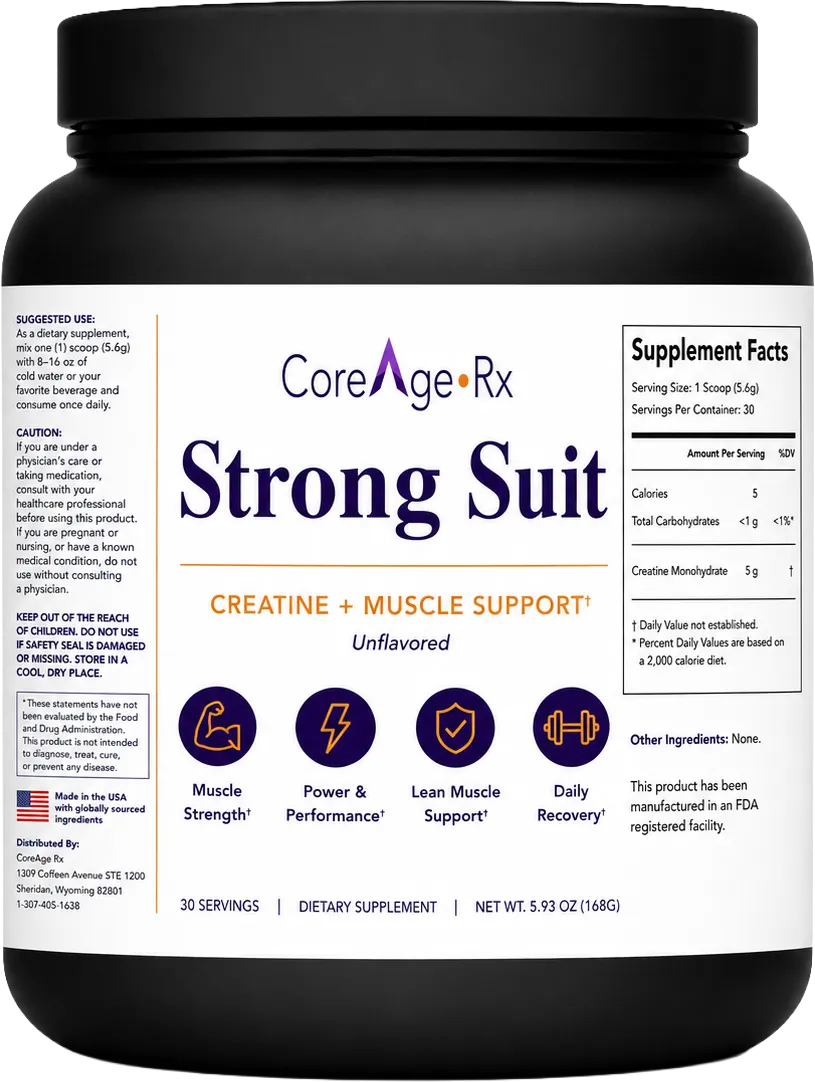
Strong Suit is CoreAge Rx’s unflavored creatine monohydrate powder. The pictured label lists 5 g creatine per scoop and 30 servings. See the current Strong Suit™ page and check the bottle you receive before use.
Related reading
- Creatine Monohydrate: Benefits, Dosing, and What to Expect
- Do You Need a Creatine Loading Phase?
- How to Mix Creatine Without Overcomplicating Your Routine
- Nutrition during GLP-1 treatment
Educational information, not individualized medical advice. Product information and linked research checked September 15, 2026. Ingredient research does not establish identical effects for a finished supplement.