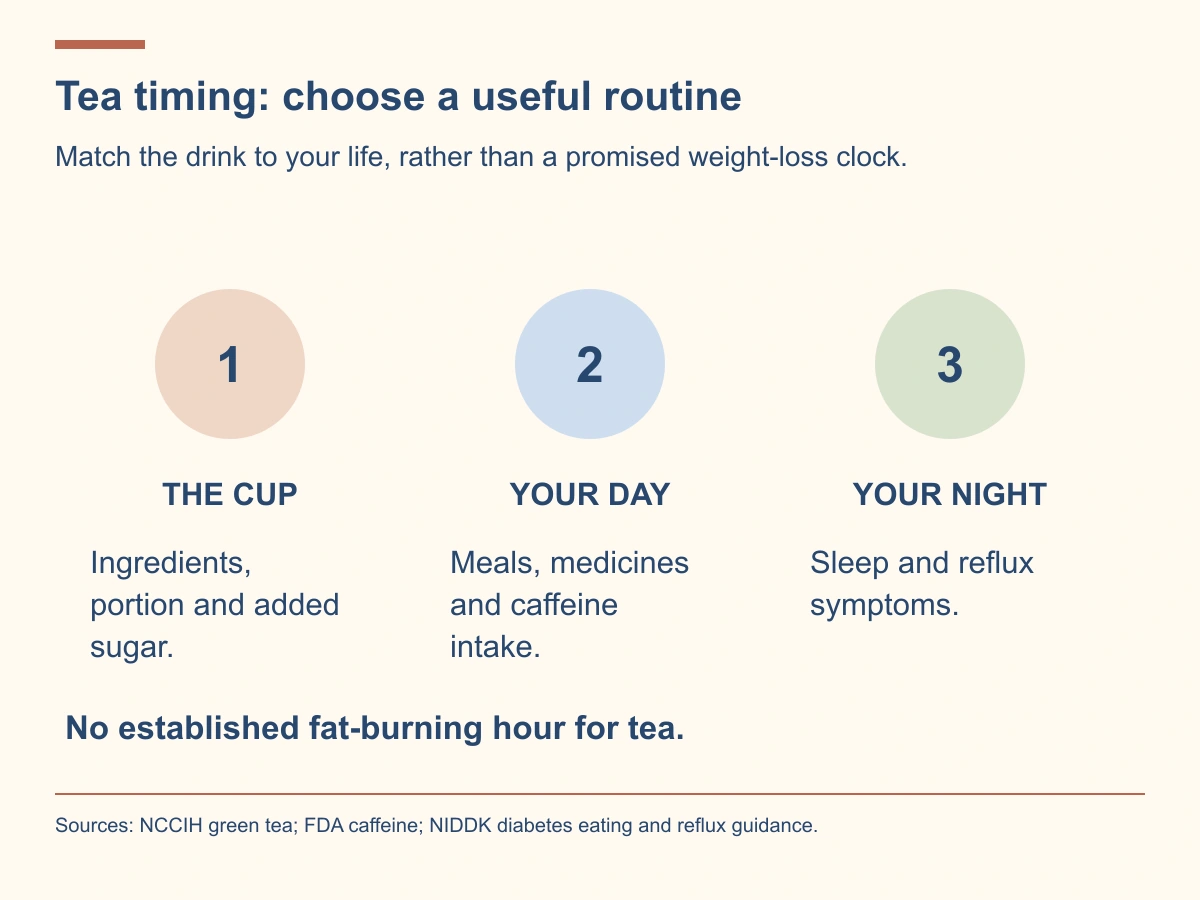
There is no established best time to drink tea that reliably produces weight loss. A useful time is one that fits your meals, sleep, medication instructions, and preferences. Unsweetened tea can be a practical drink choice, but moving a cup from the afternoon to the morning does not turn it into a weight-loss treatment.
The more helpful questions are what is in the cup, what it replaces, how much caffeine you consume, and whether the routine leaves you feeling well. This guide separates those decisions from claims about a special fat-burning window.
What tea research can and cannot tell you
Green, black, and oolong teas come from the same plant, Camellia sinensis, but their processing differs. The National Center for Complementary and Integrative Health notes that green tea catechins and caffeine may have modest effects on body weight. That does not establish a dependable amount of weight loss, an ideal drinking hour, or a reason to use concentrated extracts. Products and study conditions vary. NCCIH green tea overview
A study of an ingredient is also different from a study of your finished drink. A sweetened bottled tea, a plain brewed cup, and a capsule containing green tea extract are different products. A claim about one should not be transferred to the others. For a closer look at a common comparison, see peppermint tea versus green tea.
Think of timing as a comfort and routine decision. If tea helps you replace a frequently purchased sweet drink with an unsweetened option you enjoy, the relevant change is the beverage pattern. It is not evidence that tea taken at that hour speeds fat loss. Weight management still depends on a broader, sustainable plan.
Morning tea: a reasonable option if it suits you
Morning may be convenient because you are already preparing breakfast and are less concerned about caffeine close to bedtime. There is no requirement to drink tea immediately after waking, before breakfast, or before exercise. A rigid ritual can make a simple habit harder to maintain without adding a demonstrated benefit.
Consider the whole morning. Do you also drink coffee, use an energy product, or take a medicine with specific food or drink instructions? Count tea as part of that pattern. The FDA notes that caffeine sensitivity varies with health conditions, medicines, and the individual. More caffeine is not automatically better. FDA caffeine guidance
If an empty-stomach cup makes you nauseated or uncomfortable, there is no weight-management reason to force it. Try a different routine or discuss persistent symptoms with your clinician. Tea should not routinely replace breakfast when doing so leaves you hungry, weak, or unable to meet your nutrition needs. Our protein breakfast ideas offer ways to build a meal around foods you actually like.
Tea with meals or between meals
You do not need to choose one universally correct interval. NIDDK explains that meal timing for people with diabetes depends on factors such as medicines, activity, work schedules, and other health conditions. Your beverage routine should fit that individualized plan. NIDDK healthy living with diabetes
For example, someone who eats breakfast before an early shift may enjoy tea with it. Someone who prefers water at meals may have tea during a midmorning break. Neither arrangement establishes a superior weight-loss schedule. The practical test is whether the routine supports regular nourishment, manageable symptoms, and sleep.
Do not use tea to push through a missed meal if you take a medicine that can cause low blood glucose. Insulin and some diabetes tablets require particular attention to food intake. An unsweetened drink is not a substitute for the carbohydrates needed to treat a low reading. Follow your personal glucose plan and ask your team how meal changes affect it.
Medication instructions take priority over a tea schedule. If a prescription says to take it with plain water or on an empty stomach, do not assume tea counts as water for that instruction. A pharmacist can check the actual drug and product label. There is no single spacing rule that makes every tea and medicine combination appropriate.
Afternoon and evening: protect the sleep routine
Caffeine can interfere with sleep, and sensitivity differs. Instead of following a fixed internet cutoff, notice whether afternoon or evening tea leaves you taking longer to fall asleep, waking more often, or feeling restless. Discuss persistent sleep problems rather than relying on a stronger morning drink to compensate. FDA caffeine guidance
A practical experiment is to move your caffeinated tea earlier or choose a lower-caffeine drink later, while keeping the rest of the evening fairly consistent. Record the drink, approximate amount, and sleep experience for several days. This is a way to assess your routine, not a test of whether your body is burning more fat.
Decaffeinated tea is not necessarily caffeine-free. Herbal blends may have no traditional tea leaves, but the complete ingredient list still matters. Some blends include caffeinated ingredients or additional herbs. The decaf tea and caffeine guide explains why the word “decaf” does not mean that every serving contains none.
If you have nighttime reflux, the meal and bedtime relationship may matter more than the tea clock. NIDDK notes that people with reflux when lying down may benefit from eating meals at least three hours before lying down. That is a symptom-management strategy, not a rule that food or tea after a certain hour causes fat gain. Caffeine and mint can be triggers for some people. NIDDK reflux and eating guidance

Match the timing to the problem you want to solve
| Your situation | A useful approach | What the change does not establish |
|---|---|---|
| You buy a sweet drink every afternoon | Try an unsweetened tea you enjoy and compare the labels | A special afternoon fat-burning effect |
| Late tea seems to disturb sleep | Move caffeine earlier or try a suitable lower-caffeine option | A universal cutoff that applies to everyone |
| Tea before breakfast feels uncomfortable | Change the routine and assess persistent symptoms | A need to tolerate nausea for better results |
| You take a medicine with strict instructions | Ask the pharmacist about the exact medicine and drink | A universal tea-and-medication spacing interval |
| You have reflux near bedtime | Review triggers, meal timing, and lying down with your care team | A weight-loss deadline for eating or drinking |
The point of this comparison is to choose a change you can evaluate. If you alter the tea type, amount, sweetener, meal pattern, and bedtime all at once, it becomes harder to know what helped. Start with the part of the routine that is actually causing a problem.
The additions can matter more than the hour
If you prefer an iced drink, our guide to cold green tea and weight-loss questions compares bottled and home-prepared options, added sugar, caffeine and the limits of temperature claims.
Check the serving size and ingredients on bottled drinks. A large bottle may not match the serving used on a nutrition label, and products with similar names can have different amounts of added sugar. Milk, syrups, honey, and sweetened creamers also change the finished drink.
That does not make a sweetened tea forbidden. It means it should be counted as the drink you are actually having. If you want a less sweet version, gradual changes may be easier to maintain than choosing something you dislike and abandoning it a few days later. Our sweet tea versus soda comparison focuses on the whole beverage rather than a health halo around its name.
It can help to write a simple description: “one home-brewed cup with a small amount of milk” is more informative than “healthy tea.” If your goal is to replace a sugary drink, compare the usual purchases and the actual portions. You do not need a detox label or expensive blend to make that comparison.
Brewed tea and concentrated extracts are different
Green tea extracts can cause adverse effects and have been associated with uncommon liver injury, particularly in tablet or capsule products. NCCIH also describes medication interactions. A beverage habit should not become a reason to add a concentrated supplement without reviewing it with a qualified professional. NCCIH green tea safety information
The FDA cites 400 milligrams of caffeine a day as an amount not generally associated with negative effects for most adults. That is not a target to reach, a guarantee for every person, or an appropriate limit for every pregnancy, medical condition, or medication combination. Count all sources and ask for individualized guidance when needed. FDA caffeine guidance
Palpitations, anxiety, digestive discomfort, and disturbed sleep are reasons to reconsider caffeine intake. If you regularly consume a lot, a gradual reduction may be more comfortable. Avoid stacking tea with stimulant-heavy weight-loss products simply because the ingredients are described as natural.

Questions if you take semaglutide or tirzepatide
A tea schedule does not replace food planning or medication follow-up. If treatment reduces your appetite, review whether you are still eating enough and whether nausea or vomiting is limiting intake. An unsweetened beverage can be part of daily life without being the main strategy for managing treatment-related symptoms.
For broader care questions, CoreAge Rx semaglutide information explains its assessment-based service. Confirm the exact prescribed preparation and instructions with the care team. Choosing a medicine and choosing when to drink tea are separate decisions; neither a tea blend nor a supplement should be presented as an equivalent treatment.
Frequently asked questions
Is tea before bed better for weight loss?
There is no established bedtime tea schedule that reliably produces weight loss. Choose an evening drink based on caffeine, ingredients, comfort, and your sleep routine. A product marketed for nighttime use still needs an ingredient review.
Should I drink green tea before or after exercise?
The reviewed guidance does not establish one interval as a weight-loss strategy. Consider hydration, caffeine tolerance, medicines, and the activity itself. Tea should not be used to ignore dizziness, chest symptoms, or an inability to eat adequately.
Does adding lemon make the timing work better?
Adding flavor does not establish a fat-burning window. Lemon may make an unsweetened drink more enjoyable, but acidic ingredients can aggravate reflux for some people. Choose what suits your symptoms and preferences.
How many cups should I drink?
There is no proven cup count that guarantees weight loss. Cup size, tea type, brewing, other caffeine sources, and personal tolerance vary. Begin with the drink you enjoy and review your total intake instead of chasing a therapeutic number.
What is the simplest useful change?
Identify one beverage habit you want to improve, such as a sweet afternoon purchase or caffeine too close to sleep. Make a practical adjustment, observe how it fits your day, and keep the broader eating pattern in view. That is more actionable than searching for a perfect minute to drink tea.
Educational information for adults; individual treatment decisions require a qualified clinician. Sources reviewed October 5, 2026. Original AI-generated article images depict fictional people and objects, not patient outcomes. Other editorial images are illustrative. Graphics summarize the cited sources.