Peppermint tea and green tea can both fit into an enjoyable drinking routine, but neither should be treated as a dependable weight-loss treatment. The more useful comparison is what you want from the drink: flavor, caffeine, comfort, a replacement for a sweetened beverage, or help with a symptom that may need assessment.
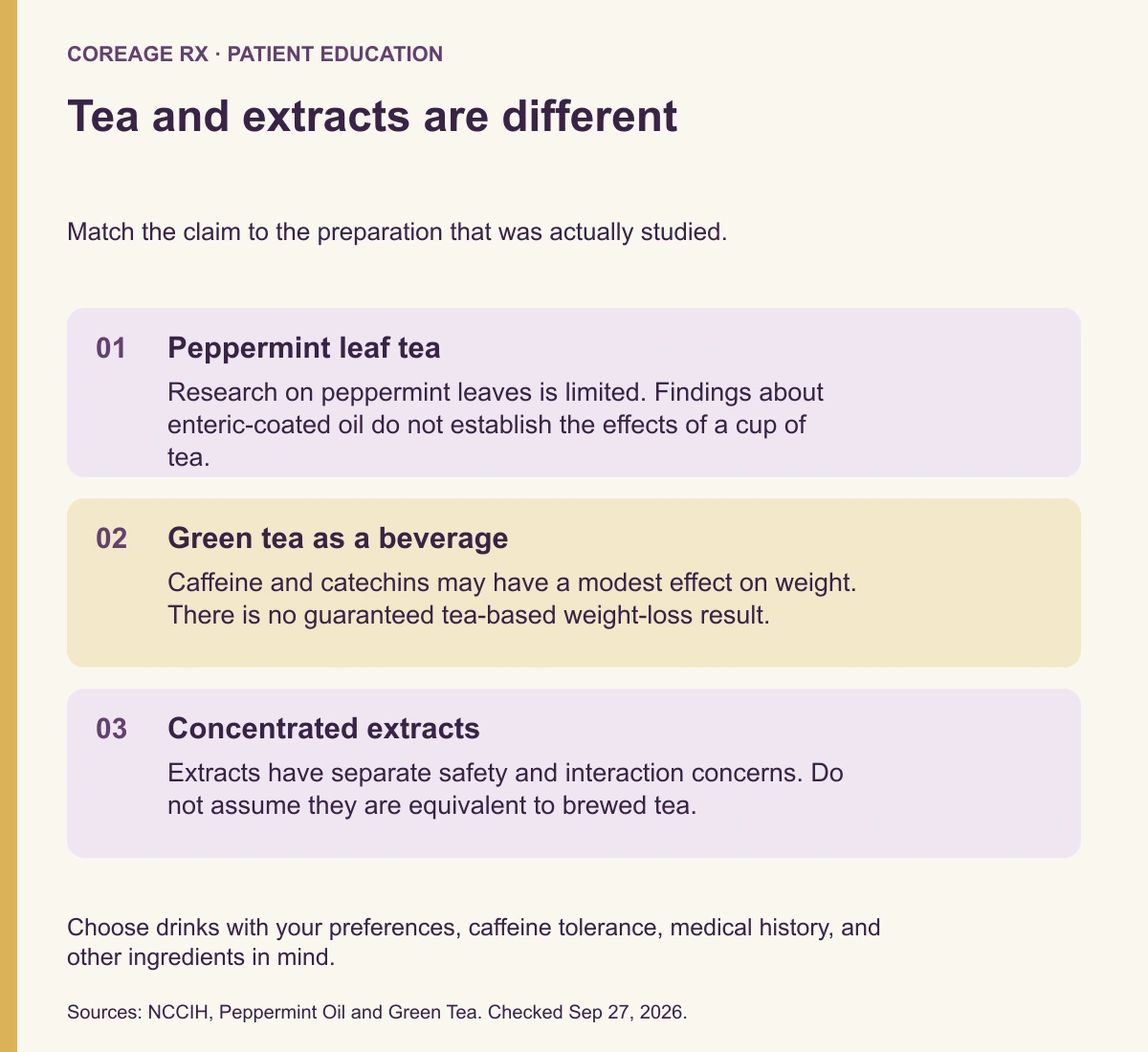
The evidence also depends on the preparation. A cup made from peppermint leaves is different from an enteric-coated peppermint-oil capsule. Brewed green tea is different from a concentrated green-tea extract. Moving a finding from one preparation to another can make an ordinary cup sound far more powerful than the research supports.
What are the main differences?
| Question | Peppermint tea | Green tea |
|---|---|---|
| What is it made from? | Peppermint leaves, often prepared as an herbal infusion | Leaves of the tea plant, Camellia sinensis |
| Does it contain caffeine? | A plain peppermint-leaf infusion is generally caffeine-free; blends need checking | Green tea contains caffeine; amounts vary by product and preparation |
| What weight-loss evidence applies? | Reliable weight-loss evidence for the tea itself is not established | Catechins and caffeine may have a modest weight effect, but products and study conditions differ |
| What is commonly confused with it? | Concentrated peppermint oil, including enteric-coated capsules | Concentrated extracts sold in tablets, capsules, or mixed supplements |
The NCCIH peppermint overview and green-tea overview explain these preparation and evidence differences. Neither supplies a universal prescription for a number of cups that will produce a particular amount of weight loss.
Does peppermint tea help with weight loss?
There is not good evidence that peppermint tea directly causes meaningful weight loss. NCCIH reports that very little research has been done on peppermint leaf and that there is insufficient evidence to establish its usefulness for a health condition.
That does not mean an enjoyable unsweetened drink has no place in daily life. It means its role should be described accurately. Choosing tea instead of a drink with added sugar can change what you consume, but that is a beverage substitution rather than proof of a special fat-burning action.
Our water and drinks guide discusses beverage choices in a broader eating pattern. A useful change is one you can maintain without treating hydration as a competition or expecting one ingredient to compensate for everything else in the diet.
What does the peppermint research actually study?
Some research supports enteric-coated peppermint-oil capsules for irritable bowel syndrome symptoms in adults. That is a specific preparation used for a specific condition. It is not a trial showing that peppermint tea produces the same result.
Similarly, studies involving peppermint aromatherapy or extracts in particular clinical settings cannot automatically establish a benefit for sipping tea after an ordinary meal. The route, concentration, outcome, and people studied matter. Source: NCCIH’s summary of peppermint research.
If a product claims that its tea “works like” a studied capsule, look for research on the actual product or preparation. A reference to the plant name alone is not enough to make the products equivalent.
Can peppermint tea settle your stomach?
Some people enjoy a warm drink when they feel uncomfortable, but that personal preference is different from establishing treatment for the cause of the symptom. Recurrent pain, bloating, nausea, or changes in bowel habits deserve a more specific discussion.
Peppermint oil can cause heartburn or worsen indigestion in some people. The evidence does not justify assuming that every peppermint preparation will improve every digestive complaint. If a drink appears to trigger symptoms, stop using that drink as a remedy and discuss the pattern with a clinician or pharmacist.
For people taking GLP-1 medicines, persistent nausea or difficulty eating should be reviewed in the context of the actual medicine and dose. Our semaglutide nausea and vomiting guide explains what information helps that conversation. Tea is not a reason to ignore significant symptoms or continue an unsuitable dose increase.
Does green tea have stronger weight-loss evidence?
Green tea has been studied more extensively than peppermint leaf. NCCIH says the catechins and caffeine in green tea and its extracts may have a modest effect on body weight, with results depending on the product and the person’s activity level.
That wording is narrower than saying any cup of green tea reliably burns a measurable amount of body fat. Products can differ in their ingredients and concentrations, and extract studies are not automatically beverage studies. Source: NCCIH green-tea evidence.
A short-term change on the scale after adding tea also does not prove that tea caused sustained fat loss. Other changes in eating, drinking, activity, illness, or fluid balance may be involved. Our weight-loss timeline guide explains why a simple before-and-after observation is not a reliable treatment forecast.

Caffeine may matter more than the weight claim
Green tea contains caffeine. The amount depends on the product, serving size, preparation, and whether other caffeinated ingredients are included. A bottled tea, a matcha drink, and a brewed cup should not be assumed to supply the same amount.
If caffeine affects your sleep, comfort, or usual routine, choose your drink with those effects in mind. Check the package and consider other caffeine sources during the day. Decaffeinated products and plain herbal infusions offer different choices, but labels and blends still matter.
Pregnancy and breastfeeding warrant a specific discussion about total caffeine intake. NCCIH notes that green tea contributes to that intake and that caffeine can pass into breast milk. A drink being plant-based does not remove the need to consider the amount and the person’s circumstances.
Green-tea extracts need a separate safety discussion
Concentrated green-tea supplements are not simply convenient cups of tea. NCCIH describes nausea, constipation, abdominal discomfort, and increased blood pressure among reported extract side effects. Uncommon liver injury has also been reported, primarily with extracts in tablet or capsule form.
Green tea and its extracts can interact with medicines. NCCIH identifies interactions involving drugs such as nadolol, atorvastatin, and raloxifene, with the preparation and amount relevant to the findings. Discuss herbal products with a clinician or pharmacist if you take medication rather than assuming a “natural” label establishes compatibility.
Our natural herbs and weight-loss guide explains why a supplement claim requires its own evidence. Do not add a concentrated extract simply because an ordinary drink seems harmless or because a product promises a faster result.
What about sweetened tea and bottled blends?
The name of the tea does not describe everything in the drink. Bottled products, cafe recipes, and powders may include sugar, sweeteners, milk, cream, juice, or other ingredients. Serving size can also differ from the amount in the entire container.
Compare the actual label and recipe. If your goal is to replace a sweetened drink, an unsweetened tea may be one option you enjoy. If you prefer a sweetened version, consider the complete drink within your usual eating pattern instead of classifying every green-tea product as automatically helpful for weight management.
The calorie-intake guide and macros guide explain how the overall pattern matters. There is no need to turn an occasional enjoyable drink into a moral judgment about food choices.
A flavored name can hide a different ingredient list. Our pomegranate green tea ingredient and evidence guide compares two actual Twinings products and separates flavoring, brewed tea, juice and concentrated extracts before discussing weight-loss claims.
If you encounter a drink marketed as a slimming recipe, our review of Costa Rican tea recipe and weight-loss claims explains why the actual ingredient list matters. It separates ordinary culinary tea, sweeteners, concentrated extracts and laxative products without inventing a proven national formula.
How much should you drink?
There is no established peppermint- or green-tea weight-loss dose that can be translated into a guaranteed cups-per-day plan. Follow the product’s preparation directions and choose an amount that fits your preferences, caffeine tolerance, medical circumstances, and overall fluid plan.
NCCIH says peppermint tea appears safe, while the long-term safety of consuming large quantities of peppermint leaf remains uncertain. Food amounts and medicinal amounts also should not be treated as equivalent during pregnancy or breastfeeding. Source: peppermint safety information.
Do not replace meals with tea, deliberately use it to suppress needed nourishment, or drink excessive amounts in pursuit of a quicker result. If appetite is already low during medication treatment, meals and adequate nutrition still need attention; see our semaglutide protein and muscle guide.

A practical way to choose between them
Choose based on the drink you enjoy and can comfortably include in your routine. Plain peppermint may suit someone seeking an herbal drink without caffeine. Green tea may suit someone who enjoys its flavor and tolerates its caffeine. Either choice can be unsweetened without needing to become a treatment claim.
If the reason for choosing tea is ongoing nausea, reflux, pain, or a concern about your weight, identify that underlying question separately. Our weight-loss basics guide provides a broader starting point than selecting a single ingredient.
Frequently asked questions
Is peppermint tea better than green tea for digestion?
There is no universal winner. Evidence for specific peppermint-oil products does not prove the same benefit for peppermint tea, and symptoms have different possible causes.
Does green tea replace weight-management medication?
No. A beverage and a prescription medicine have different evidence, purposes, and monitoring requirements. Do not change a prescribed treatment because a tea is marketed as a natural alternative.
Can I combine the two teas?
A blend changes the ingredients you consume and may still contain caffeine. Check the label and your own tolerance; combining them does not establish an extra weight-loss benefit.
Educational information for adults; individual treatment decisions require a qualified clinician. Sources checked September 27, 2026. Original AI-generated article illustrations depict fictional people and objects, not patient outcomes. Other editorial images are illustrative. Graphics summarize the cited sources.