Pomegranate green tea can be an enjoyable drink, but the name does not establish a weight-loss benefit. A tea bag flavored with pomegranate, a drink containing pomegranate juice, and a concentrated green-tea supplement are different products. Check what is actually in the cup before applying research or choosing it for a health goal.
What is pomegranate green tea?
It can mean several things: brewed green tea with fruit flavor, green tea mixed with juice, a sweetened bottled beverage, or a powder or supplement. Some products called pomegranate tea are herbal blends and contain no listed green-tea leaf at all. The front of the package often cannot answer those distinctions.
Green tea comes from Camellia sinensis. Its composition depends on the product and preparation, and it contains caffeine. Pomegranate flavor is not the same as a measured amount of fruit, juice, or a studied extract. A photo of pomegranate on a box also does not tell you how much of any particular compound the drink supplies. NCCIH green-tea guidance
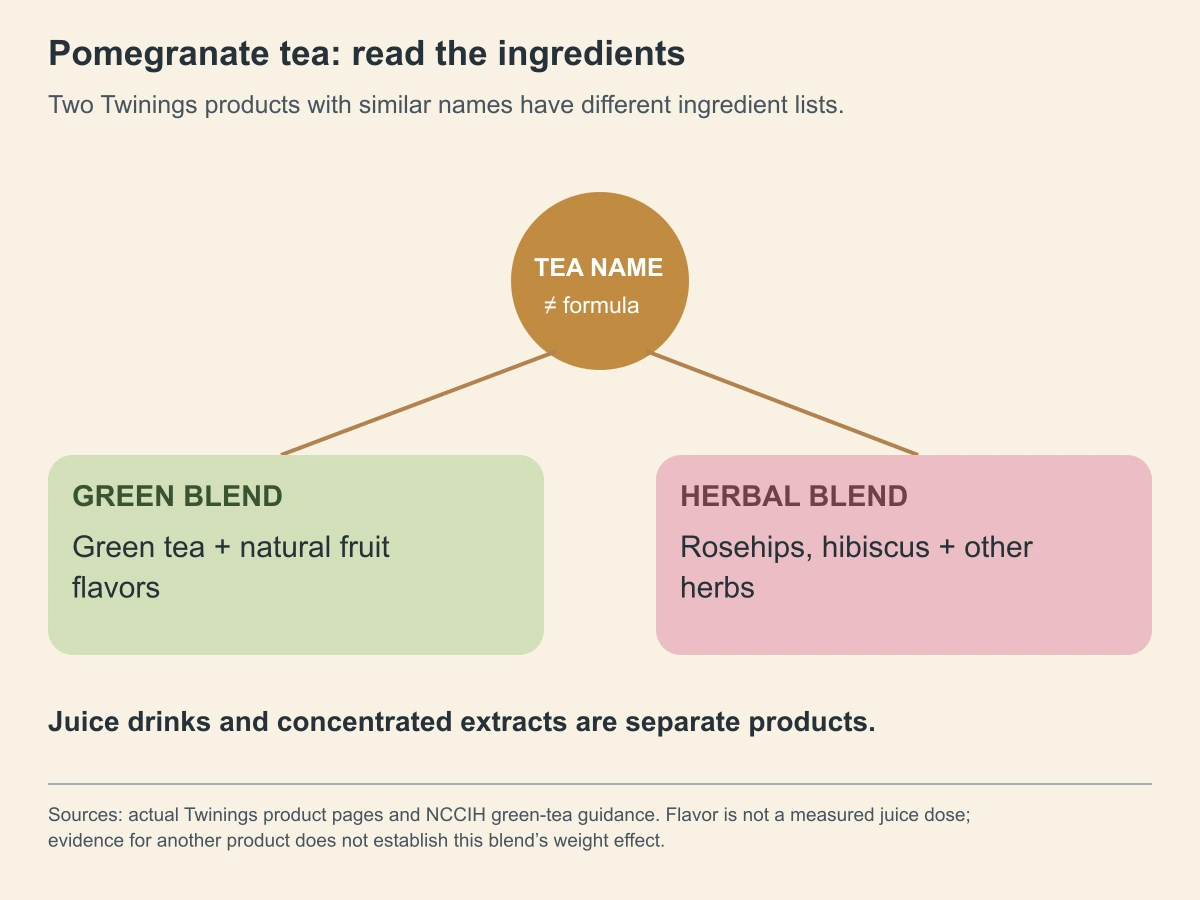
Two similarly named teas have different ingredients
The manufacturer’s Twinings Green Pomegranate, Raspberry & Strawberry page lists green tea and natural fruit flavors. The separate Twinings Pomegranate & Raspberry herbal page lists rosehips, hibiscus, natural flavors, orange leaves, apple pieces, licorice root, and roasted chicory root. These are different ingredient lists, not two names for the same green tea.
| Product type or example | What to look for | What you cannot assume |
|---|---|---|
| Twinings Green Pomegranate, Raspberry & Strawberry | Listed green tea and natural fruit flavors | A measured serving of pomegranate juice or a clinical weight-loss dose |
| Twinings Pomegranate & Raspberry herbal blend | Rosehips, hibiscus, flavors, and other listed herbs | The same ingredients or caffeine profile as a green-tea blend |
| Green tea mixed with pomegranate juice | Juice quantity and the finished recipe | The nutrition of plain brewed tea |
| Sweetened bottled tea | Serving size, added sugar, ingredients, and caffeine information | That the word “tea” means low energy or no sweetener |
| Green-tea extract supplement | Concentration, other ingredients, and warnings | The safety profile of an ordinary brewed cup |
The named ingredient examples were checked on October 1, 2026. Read your own package because products can change. Sources: Twinings green blend, Twinings herbal blend.
Does green tea help with weight loss?
NCCIH says the catechins and caffeine in green tea and its extracts may have a modest effect on body weight, with effects varying by composition and the individual’s physical activity. That is a limited statement about a broad range of studied products, not a promise that a named flavored tea produces a meaningful result for you. NCCIH evidence summary
The sources reviewed for this article do not establish a specific weight-loss result for the named Twinings pomegranate green-tea blend. Its ingredient list identifies what is sold; it does not provide a clinical trial showing that the finished drink reduces body fat.
If a headline describes catechins, a laboratory pathway, or an extract trial, ask whether the evidence concerns the beverage you are actually drinking. The ingredient, amount, preparation, population, and measured outcome all matter. Similar words on a package do not make different products equivalent.
What does the pomegranate add?
In a flavored tea, it may primarily add a flavor and aroma that you enjoy. That can be a perfectly good reason to choose it. You do not need to turn a pleasant drink into a treatment claim.
If you add juice or fruit yourself, you have made a different recipe. The amount used affects the finished drink, including its nutrition. A study of pomegranate juice or a particular extract cannot be transferred automatically to a tea with natural pomegranate flavor.
The Twinings green blend’s page does not identify a standardized pomegranate-polyphenol amount or a measured juice serving. Avoid inventing one from the product name. Likewise, the herbal blend’s apple pieces and other plant ingredients do not establish a clinical fat-loss effect for that finished blend. Green-blend ingredients, Herbal-blend ingredients
Could replacing another drink be useful?
Yes, an unsweetened drink may be useful if it replaces a drink that contributes more energy and fits your preferences. The relevant change is the overall pattern, not a special fat-burning property of pomegranate tea. Adding the tea without changing anything else does not create the same situation.
Think about the beverage you currently drink, any additions, and whether the swap is comfortable and sustainable. If you add honey, sugar, syrups, juice, or other ingredients, include them when considering the finished drink. A tea bag’s name cannot describe those additions.
Our calorie intake guide explains the role and limits of energy estimates. NIDDK’s nutrition guidance also considers drinks within the broader eating and activity plan rather than promoting one special beverage. NIDDK nutrition guidance
Brewed tea and extracts have different safety questions
NCCIH reports no safety concerns for green tea consumed as a beverage by adults, while noting that it contains caffeine. That general summary is not an individual clearance for every person, ingredient combination, or amount. Your other medicines, symptoms, and health circumstances still matter.
Concentrated green-tea supplements are a different category. NCCIH lists possible effects including nausea, abdominal discomfort, constipation, and increased blood pressure, and reports uncommon liver injury primarily associated with extracts in tablets or capsules. More concentrated is not automatically more effective or more suitable. NCCIH safety information
Do not use the reassuring beverage summary to approve an extract marketed for rapid weight loss. Read all ingredients in combination supplements, and discuss them with a clinician or pharmacist. A multi-ingredient product creates additional questions that research on green tea alone cannot answer.
Caffeine, sleep, and your routine
If caffeine makes you feel jittery or disrupts sleep, consider the amount and timing of all caffeinated drinks you use, not just the tea. Coffee, energy drinks, other teas, and some supplements can contribute. A fruity flavor does not make green tea caffeine-free.
A herbal alternative may be a different option, but check the specific package’s caffeine information and ingredients. “Herbal” is not a universal safety statement, and the Twinings herbal example includes several plants beyond pomegranate flavor.
During pregnancy or breastfeeding, caffeine and supplement choices deserve individualized advice. NCCIH discusses these concerns and recommends reviewing them with a healthcare professional. Do not assume that a beverage marketed as natural has no relevant considerations. NCCIH green-tea guidance
Medicines and herbal ingredients
NCCIH describes interactions involving green tea or its extracts and medicines including nadolol, atorvastatin, and raloxifene, under the conditions of the cited studies. Those findings do not establish that every ordinary cup causes a clinically important interaction, but they are a reason to review regular use or concentrated products with a pharmacist when relevant.
Bring the actual package or ingredient list. “Pomegranate tea” may omit the fact that the product contains green tea, licorice root, another herb, or a supplement mixture. The specific formula matters more than the category name. NCCIH interaction discussion
If you notice symptoms after starting a new drink or supplement, describe the timing and amount, other medicines, and what changed. Do not assume the beverage is the cause, but do not dismiss the possibility simply because it is sold as tea.
Pomegranate tea during GLP-1 treatment
An enjoyable drink can be part of your routine during semaglutide or tirzepatide treatment. It should not displace needed food or become a response to persistent nausea, diarrhea, or dehydration. A lower appetite makes it especially important to notice whether you are eating and drinking adequately.
The joint nutrition advisory for GLP-1 therapy emphasizes nutritional assessment and supporting intake and function. It does not identify pomegranate tea as a way to increase treatment results. Joint nutrition advisory
Our Wegovy diarrhea guide and tirzepatide first-month guide cover symptom and follow-up questions. If you are exploring prescription options, the semaglutide and tirzepatide product pages are starting points for a clinical discussion. Tea is not a substitute for treatment assessment or a reason to add another weight-loss supplement.
Avoid detox and rapid-loss promises
A drink does not need to be a detox product to be worth enjoying. NCCIH’s review of detoxes and cleanses does not support treating these programs as an established route to lasting weight management. Severe restriction and products that cause bowel or fluid changes can create problems rather than useful progress. NCCIH detox guidance
If a promotion focuses on rapidly dropping scale weight, ask whether it is describing fluid changes, bowel contents, or a measured body-fat outcome. Our bowel movements and weight article explains why these are different. Pair beverage choices with a sustainable eating pattern, not with an extreme cleanse.

A practical shopping and brewing approach
Read the ingredient list first, then determine whether you are choosing brewed green tea, herbal tea, a bottled drink, or a supplement. For packaged drinks, compare serving size and total and added sugar. Check caffeine information and any warnings. The FDA Nutrition Facts guide explains how servings affect the numbers.
Choose a flavor you like and prepare it according to the product directions. You can decide whether you want additions, but recognize that they change the recipe. Avoid making a rigid number of cups or a particular brewing time into a weight-loss protocol unsupported by the product’s evidence.
Our peppermint tea versus green tea guide compares related ingredient and routine questions. If you prefer food-based meal planning, protein breakfast ideas offer another practical place to start. A drink is one part of the day.
Frequently asked questions
Does pomegranate tea burn belly fat?
The sources reviewed here do not establish targeted belly-fat loss from the named blends. A beverage’s flavor, antioxidant discussion, or laboratory mechanism is not evidence of a specific body-area outcome.
Is pomegranate green tea the same as pomegranate juice?
No. A flavored tea may list natural flavor without a measured serving of juice. If juice is included or added, check the actual quantity and finished recipe rather than applying a plain-tea assumption.
Can I drink it at night?
It depends on the product and your response to caffeine. Green tea contains caffeine; check the specific package and consider sleep. A herbal blend is a different formula, so read its ingredients too.
Will honey cancel the benefits?
There is no special on/off weight-loss effect to cancel. Honey changes the finished drink’s nutrition and sweetness. Whether the drink fits your pattern depends on the amount and the rest of your intake.
Should I take a green-tea extract instead?
Do not assume an extract is an upgrade. Concentration and formulation change the safety questions, including liver and medication-interaction concerns. Discuss a supplement with a clinician or pharmacist rather than using beverage research as clearance.
How many cups should I drink for weight loss?
The cited sources do not provide a proven cup count for the named pomegranate blends. Choose a comfortable routine, consider caffeine and ingredients, and focus on a sustainable overall plan rather than a tea schedule.
Educational information for adults; individual treatment decisions require a qualified clinician. Sources reviewed October 1, 2026. Original AI-generated article images depict fictional people and objects, not patient outcomes. Other editorial images are illustrative. Graphics summarize the cited sources.