
Cream cheese can fit into a healthy eating pattern. It mainly adds flavor, texture, and fat; an ordinary serving supplies relatively little protein and no fiber. Whether it is a useful choice depends on the amount, the rest of the meal, and any nutrition or allergy needs you are managing.
The answer does not need to be a blanket yes or no. A modest spread on toast alongside eggs, beans, or another protein food serves a different role from a large portion used as the meal’s main ingredient. Start with the exact product label, then decide what you want the food to contribute.
What is in a serving of cream cheese?
The manufacturer panel for the Philadelphia Original product below was checked September 30, 2026. Its exact package identifies a serving as 28 grams, or 1/32 of the package. That package fraction is not a verified tablespoon measurement; products and package sizes differ.
| Nutrient | Per listed 28 g serving |
|---|---|
| Calories | 100 |
| Total fat | 10 g |
| Saturated fat | 6 g |
| Sodium | 110 mg |
| Total carbohydrate | 1 g |
| Dietary fiber | 0 g |
| Total sugars | 1 g |
| Added sugars | 0 g |
| Protein | 2 g |
Source: Philadelphia Original manufacturer product page, UPC 00021000612239. Check the product you actually buy; a flavored tub, whipped spread, reduced-fat product, or different package may have another panel.
The ingredient list for this product includes pasteurized milk and cream, salt, carob bean gum, and cheese culture. It is a dairy food. Neither the short ingredient list nor the absence of added sugar means that it provides every nutrient a meal needs.
Is cream cheese a good source of protein?
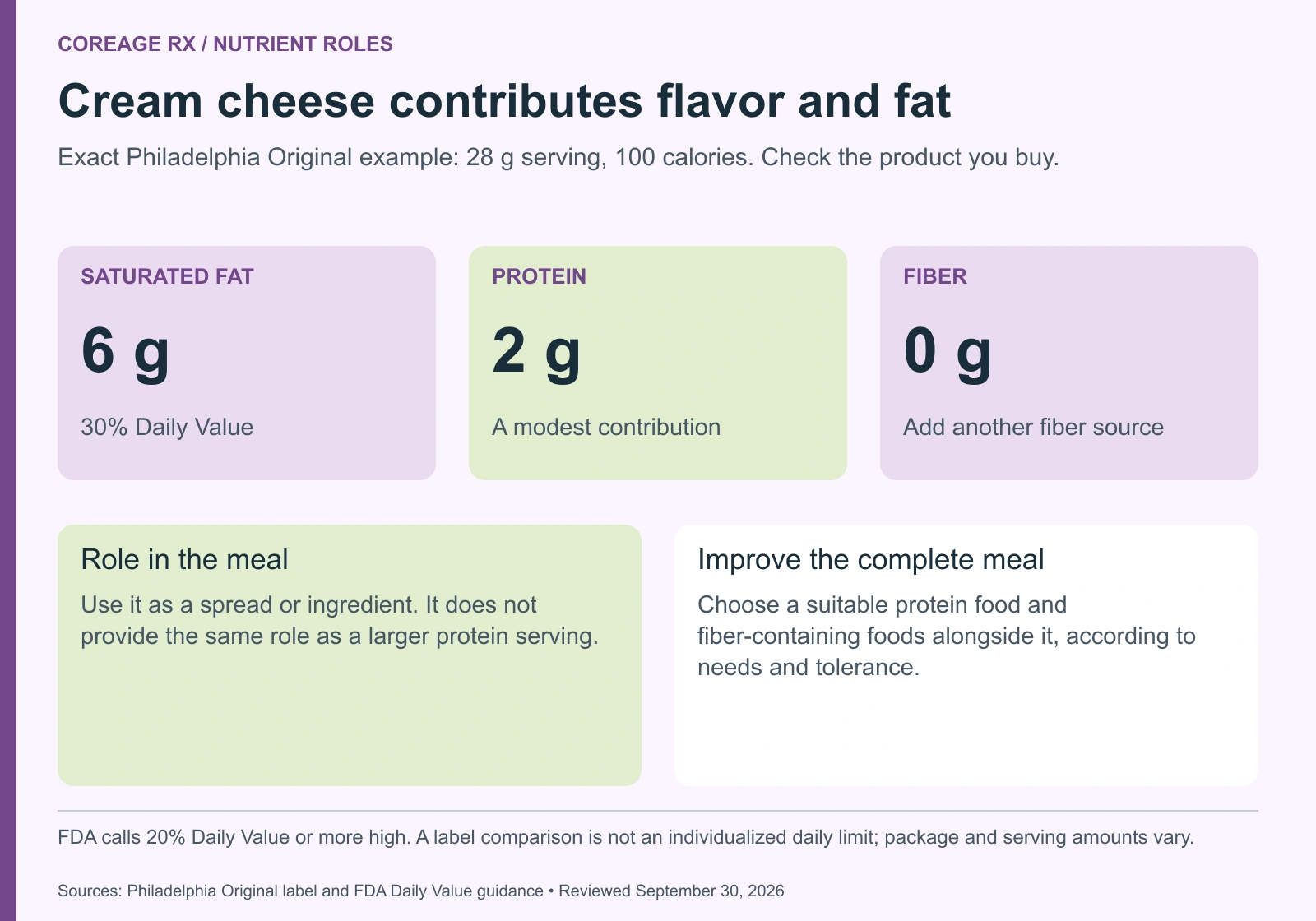
The example supplies 2 grams of protein per 28-gram serving. That is a contribution, but a modest one. It should not be treated as interchangeable with a meal built around a more substantial protein source.
This distinction matters when appetite is small. A slice of toast with a thin spread may be comfortable and enjoyable, but it may need another component if it is meant to be breakfast. Depending on your preferences and medical needs, that could be eggs, tofu, beans, yogurt, or another suitable food.
For practical ways to build the meal, see our protein breakfast ideas and balanced-meal guide. You do not have to replace cream cheese to improve breakfast; you can change what you serve alongside it.
Why does saturated fat matter in the comparison?
Saturated fat is one of the nutrients the FDA’s label guide recommends considering when comparing foods. The example’s 6 grams equals 30% of the standard 20-gram Daily Value. The FDA describes 20% Daily Value or more per serving as high. Source: Daily Value explanation.
That reference does not mean one serving is dangerous or that everyone should follow the same daily target. It helps you understand the contribution before combining it with butter, cheese, cream-based sauce, or other foods in the day. Your clinician or dietitian may recommend a particular approach based on your health history.
The amount used can change the comparison considerably. Doubling the listed serving doubles the labeled nutrient amounts, subject to ordinary label rounding. A thin spread and a thick layer are different eating experiences, even when both are described casually as “cream cheese on a bagel.”
Is cream cheese healthy for weight loss?
It can fit into a weight-management plan, but it does not have a special fat-burning effect. The more useful question is whether the amount and meal combination help you eat adequately and comfortably over time.
Enjoyment matters. A spread you like may make a simple breakfast practical. At the same time, because this example contains substantial fat and little protein or fiber, relying on it as the only addition to a refined-grain meal may not meet the purpose you have in mind.
Consider the complete breakfast rather than judging the spread in isolation. Whole-grain toast with a measured amount, a protein food, and fruit or vegetables is different from skipping breakfast and later eating whatever is available. Our food-noise and cravings guide explains why regular eating patterns can be worth examining when food thoughts feel persistent.
There is no requirement to remove a favorite spread before discussing weight-management care. Sustainable changes can be small, specific, and chosen around your routine.
Are reduced-fat, whipped, or Neufchâtel options better?
They may suit a particular goal, but compare the exact panels. A whipped product incorporates air, so a spoonful can weigh differently. A reduced-fat product may use another serving size or formulation. Neufchâtel products can differ in fat content, but the label still determines the amounts for the product you buy.
Do not assume equal tablespoons mean equal grams. For a fair comparison, first check the serving weights and whether you would use the same amount. Then look at the nutrients that matter to you: saturated fat, protein, sodium, added sugars, and the complete meal.
| Alternative | Why you might consider it | What still needs checking |
|---|---|---|
| Reduced-fat cream cheese | A different fat profile | Actual grams, saturated fat, ingredients, and taste |
| Whipped cream cheese | A lighter texture or easier spread | Weight per spoonful and the amount you use |
| Plain yogurt-based spread | A different protein contribution | Product protein, sodium, dairy tolerance, and preparation |
| Bean-based spread | Fiber and a nondairy option | Ingredients, sodium, allergies, and serving amount |
| Plant-based cream-cheese alternative | Avoiding dairy or following a preference | Protein and saturated fat; “plant-based” is not a complete nutrient claim |
This is a decision guide, not a numerical ranking. Values vary enough that a generic table claiming every alternative has a fixed calorie or protein amount would be misleading.

Does cream cheese contain sugar or carbohydrate?
The Original example lists 1 gram of total carbohydrate and 1 gram of total sugars, with 0 grams of added sugars per serving. Total sugars and added sugars describe different things. Dairy ingredients can contain naturally occurring sugar.
Flavored spreads, desserts, frosting, and cream-cheese dips may have very different recipes. The plain spread’s panel should not be used to estimate a sweetened cheesecake or a restaurant pastry. Consider the whole food and the portion actually served.
For people following a diabetes plan, the bread, crackers, fruit, or other ingredients in the meal also matter. A low-carbohydrate spread does not make an entire bagel breakfast carbohydrate-free. Use the plan and monitoring advice from your diabetes team rather than relying on one ingredient’s label.
Can you eat cream cheese if you are lactose intolerant?
Tolerance is individual, and lactose intolerance differs from milk allergy. A milk-containing product remains unsuitable for someone who must avoid milk because of allergy, even if a small amount is comfortable for a person with lactose intolerance.
The NIDDK’s lactose-intolerance nutrition guidance explains that some people tolerate smaller amounts of lactose and that avoiding all dairy can require attention to nutrients such as calcium and vitamin D. That guidance does not establish a universally tolerated serving of cream cheese.
Read the package and discuss persistent symptoms. A plant-based replacement may solve the dairy question but create another issue if it contains an allergen or has a different nutritional role. Choose it for the actual need, then check the rest of the meal.
What works well with cream cheese?
Think in terms of a meal role. Cream cheese can provide a flavor layer while other foods contribute more of the protein, fiber, or produce.
- Spread a modest amount on whole-grain toast and add a suitable protein food.
- Pair a cracker snack with vegetables and another component that fits your appetite.
- Use it in a recipe while reviewing the portion and the other ingredients.
- Choose a product you enjoy enough to use comfortably, rather than compensating for an unsatisfying substitute with a much larger portion.
These examples are flexible. They are not a prescribed meal plan or a reason to ignore kidney, allergy, glucose, or other individualized dietary advice. Our healthy-cracker guide explains how serving grams and toppings affect another common cream-cheese pairing.
What if cheese cravings are the main concern?
Craving cream cheese does not by itself diagnose a calcium deficiency, hormonal problem, or addiction. A craving can be connected with a familiar food, an expected texture or flavor, or a particular routine. The overall eating pattern and the distress it causes matter more than the name of the craved food.
Our cheese-craving guide discusses how to notice the context without inventing a nutrient explanation. If you regularly skip meals, feel unable to stop eating, or experience guilt and compensatory restriction, ask for appropriate support. Replacing one spread is unlikely to answer the whole problem.

How does this fit with GLP-1 treatment?
Semaglutide or tirzepatide can reduce appetite, so the nutritional role of smaller meals becomes more important. Cream cheese may be enjoyable, but its modest protein amount should not be counted as if it were a large protein serving.
The joint GLP-1 nutrition advisory recommends individualized attention to nutrition and physical function during treatment. If richer foods worsen nausea or fullness, discuss the pattern and consider a more comfortable amount or preparation. Do not respond to ongoing symptoms by repeatedly reducing intake until meals become inadequate.
Our GLP-1 food guide provides meal and symptom questions. CoreAge Rx’s semaglutide program describes its service; confirm the formulation, pharmacy product, and follow-up rather than assuming a food article determines treatment suitability.
Frequently asked questions
Is cream cheese healthier than butter?
That depends on the exact products, equal serving weights, and the nutrient or meal role you want to compare. Do not compare a large serving of one with a small serving of the other and call the result universal.
Is cream cheese the same nutritionally as cottage cheese?
No. Their formulations and protein contributions can differ substantially. Check both labels. A spread used for flavor may not serve the same purpose as a food chosen mainly for protein.
Can I eat it every day?
It can be a regular component if the amount and complete eating pattern fit your needs. Consider variety, saturated fat, and what the meal supplies alongside it.
What is the most useful first change?
Check your product’s serving grams and decide what the spread is doing in the meal. If you need more protein or fiber, add an appropriate component or compare a different spread using the actual label.
Educational information for adults; individual treatment decisions require a qualified clinician. Sources reviewed September 30, 2026. Original AI-generated article images depict fictional people and objects, not patient outcomes. Other editorial images are illustrative. Graphics summarize the cited sources.