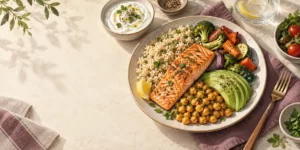
Halim seeds, also called garden-cress seeds, are a food ingredient from Lepidium sativum. They appear in traditional recipes and in online weight-loss advice, but a nutritious ingredient and a proven weight-loss treatment are different things. The studies discussed here do not establish that eating halim seeds causes clinically meaningful weight loss in people.
If you enjoy them, the practical question is how they fit into ordinary meals—not how to turn a spoonful into a medical dose. Start with a food-grade product, its preparation instructions, and a recipe you can realistically enjoy alongside the rest of your diet.
What exactly are halim seeds?
The name usually refers to the small seeds of garden cress. A bag of seeds is different from a tray of fresh cress leaves, sprouted seeds, a powder used in a recipe, or a concentrated extract sold as a supplement. Even when these products come from the same plant, their composition and intended use differ.
That distinction matters when looking up nutrition information. A database entry for leafy cress should not be used as the calorie count for dry seeds. Likewise, an experiment using a concentrated seed extract does not tell you what an ordinary culinary portion will do.
Check the ingredient name, whether the product is sold for eating, and whether preparation or storage directions are supplied. Seeds packaged for gardening may be treated or otherwise unsuitable for consumption. A recognizable food label is more useful than a social-media claim about an unnamed powder.
What does the research actually show?
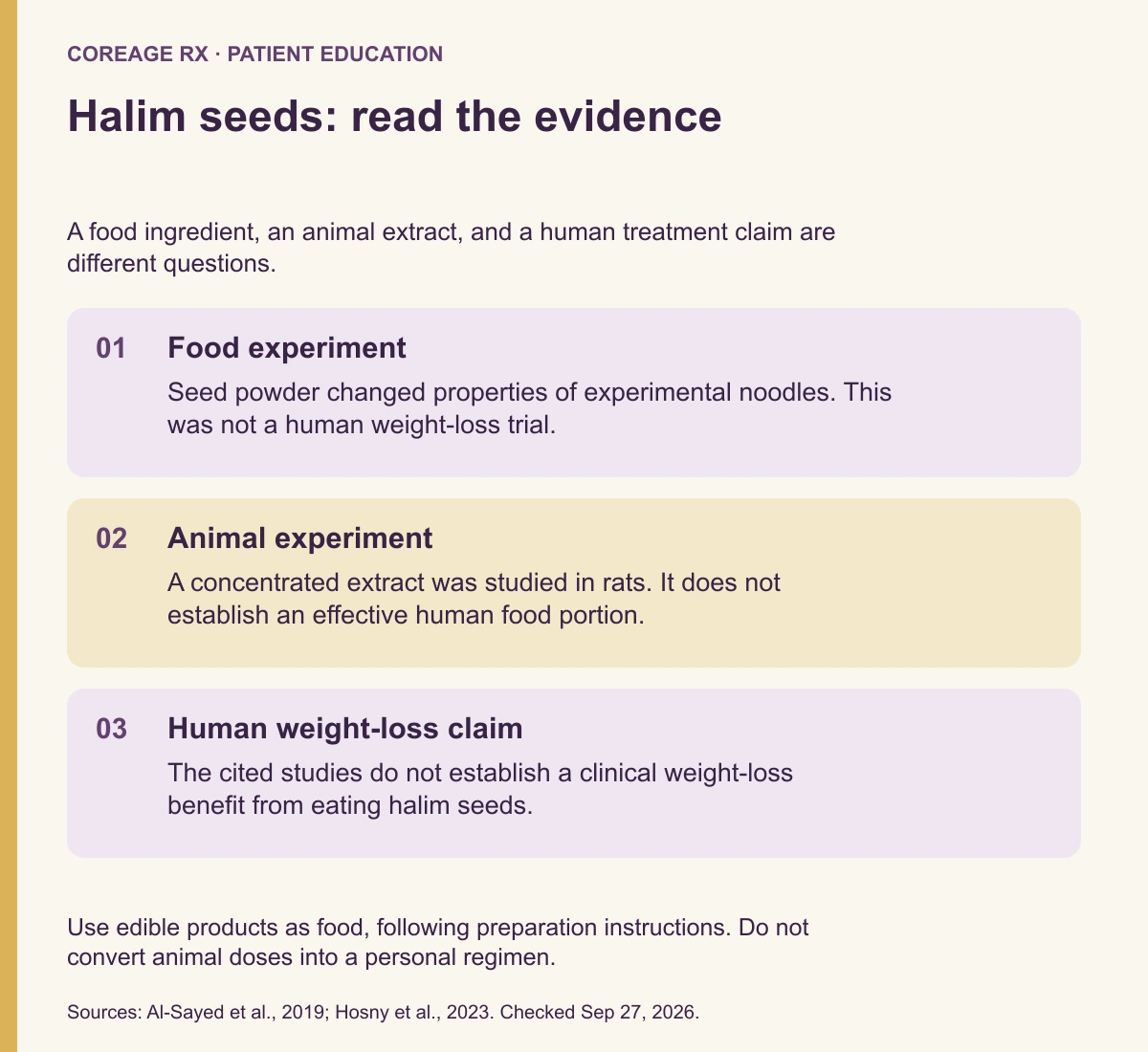
One original food study added garden-cress seed powder to semolina noodles at several experimental concentrations and measured properties such as nutrient composition, cooking behavior, and sensory acceptance. Some measured nutrient contents increased with the added powder. That helps researchers understand an ingredient’s role in a food product.
It was not a clinical trial in which people ate halim seeds and had their body weight, health outcomes, or long-term adherence measured. The experimental percentages were recipe-development variables, not a recommended daily dose for weight loss. Source: garden-cress noodle study.
A separate experiment studied a hydroalcoholic garden-cress seed extract in obese rats and investigated biological pathways alongside other outcomes. An extract prepared for an animal experiment is not equivalent to seeds stirred into breakfast. Its findings cannot establish a safe, effective human portion or a predictable effect on body fat. Source: garden-cress extract animal study.
These are useful distinctions to carry into any “superfood” claim. Ask whether a paper studied a food, an extract, an animal, or people—and whether it actually measured the outcome advertised in the headline.
Can halim seeds help with weight loss?
The cited studies do not establish a human weight-loss benefit from eating the seeds. They also do not establish that the seeds are a substitute for a balanced eating pattern, a prescribed medicine, or medical assessment when weight changes are unexplained.
An ingredient may still have a place in an enjoyable diet without needing to produce a special metabolic effect. Its practical value could be culinary variety, texture, or a way to make a familiar recipe more appealing. Those are different claims from “burns fat,” “detoxes the body,” or “balances hormones.”
For the broader picture, read our weight-loss basics guide and calorie-intake guide. They explain why evaluating the overall pattern is more useful than treating one ingredient as the missing solution.
How can you use them in food?
Choose a recipe designed for edible garden-cress seeds and follow the package’s preparation directions. Depending on the recipe and product, the ingredient may be incorporated into a cooked cereal, a prepared snack, or a baked food. Using a tested recipe helps you account for texture, moisture, and the rest of the ingredients.
There is no evidence-based universal soaking time or number of spoonfuls that can be prescribed for weight loss from the studies above. Instructions for one product or recipe should not be generalized to every seed preparation. If directions are unclear, ask the seller for food-use information before improvising.
Treat the seeds as an addition to food, rather than a replacement for a complete meal. A bowl still needs to make sense as a meal overall. If breakfast leaves you hungry or does not provide enough nourishment, adding a trendy ingredient may not address the reason.
Our protein breakfast ideas offer examples of building meals around familiar foods. Halim seeds are optional; you do not need to buy a specialty ingredient to begin improving a routine.
Does the rest of the recipe matter?
Yes. A seed-containing sweet, a bowl of cereal, and a beverage may have very different overall compositions. Added sweeteners, oils, flour, dairy ingredients, and portion size can matter more to the finished dish than the small amount of seed used.
This is not a reason to label a traditional food as forbidden. It is a reason to assess the actual recipe rather than assuming the word “halim” makes every version a weight-loss food. Taste, cultural preference, convenience, budget, and how the food fits with the rest of the day are all useful considerations.
When comparing packaged products, use the stated serving size and ingredients consistently. The FDA explains that a label serving size is a reference for the nutrition information, not a recommendation for how much a particular person should eat. Source: FDA Nutrition Facts guide.

What about fiber, fullness, and digestion?
Food-composition research can describe the presence of fiber or other nutrients, but it does not by itself prove that a seed preparation will suppress appetite, relieve constipation, or cause weight loss. Those outcomes require the appropriate human studies.
If your goal is to improve fiber intake, assess the whole eating pattern: foods you already enjoy, portions you can tolerate, and any digestive symptoms or medical restrictions. Our food fiber versus supplements guide explains why different sources can play different roles.
Do not respond to uncomfortable bloating or constipation by repeatedly increasing an unfamiliar ingredient. Persistent or significant symptoms deserve an assessment of the overall situation, including medicines and existing conditions. A food trend should not make it harder to identify what is causing a problem.
Is a halim supplement the same as the food?
No. A capsule, extract, or mixed “fat burner” can have a different concentration, additional ingredients, or preparation method. Evidence about one product cannot automatically support another, even if both labels include the same plant name.
In the United States, dietary supplements are regulated differently from drugs and generally are not approved by the FDA for safety and effectiveness before they are marketed. NCCIH also emphasizes that supplements can interact with medicines and that natural origin does not establish safety. Source: using dietary supplements wisely.
Those general cautions do not prove that a specific culinary use of halim seeds is harmful. They explain why concentrated products, especially those with medicinal claims, require their own review rather than borrowing reassurance from traditional food use.
Do the seeds treat anemia or hormone problems?
The food and animal studies cited here do not establish treatment for anemia, thyroid disease, infertility, menopause symptoms, or another hormone condition. Finding a nutrient in a food is not the same as showing that the food treats a diagnosed deficiency or disease.
If fatigue, hair changes, irregular periods, or other symptoms prompted the search, discuss the symptoms with a clinician. Several conditions can overlap in how they feel, and a supplement recommendation cannot replace the relevant history, examination, or testing.
Our natural GLP-1 foods and supplements article addresses a related problem: biological language can make ordinary food claims sound like evidence for a drug-like clinical effect. The actual formulation, dose, study population, and measured outcome still matter.
What if you are pregnant, breastfeeding, or taking medicine?
Do not assume a concentrated supplement is safe because an ingredient also appears in food. NCCIH notes that many supplements have not been adequately studied during pregnancy or breastfeeding and that interactions are possible. These are general evidence gaps, not proof of a particular halim-specific complication. Source: NCCIH supplement guidance.
Bring the exact package and ingredient list to a clinician or pharmacist if you are considering a supplement, especially when taking prescriptions or managing a medical condition. A product name alone may omit other active ingredients in a blend.
Traditional claims about milk supply or fertility should not be treated as established clinical benefits from the research summarized here. Those questions deserve condition-specific advice and evidence, rather than a weight-loss recipe being repurposed as treatment.
Common questions about eating halim seeds
Is there a best time of day?
The cited research does not establish a morning, evening, or empty-stomach schedule that produces weight loss. If using the seeds as food, choose a recipe and meal time that fit your routine and tolerance. A rigid timing rule is not a substitute for evidence of benefit.
Can you put them in a drink?
Follow the edible product’s directions and a suitable recipe. Do not assume that mixing an ingredient into water creates a detox drink or changes its evidence. Consider everything added to the beverage and whether it replaces or simply accompanies other food and drinks.
Are they better than other seeds?
A meaningful comparison needs the actual foods, comparable portions, relevant nutrition data, and the outcome being considered. The studies cited here do not establish that halim seeds are superior to all other seeds for human weight loss. Preference and how an ingredient fits a meal may be more useful starting points.
Should you stop another treatment to try them?
No food ingredient establishes a replacement for prescribed treatment. If you want to change a medication or have concerns about side effects, contact the prescribing team. You can discuss food preferences as part of that plan without assuming that the food performs the medicine’s job.
A practical way to decide
Ask three questions: Is this clearly an edible food product? Do I have reliable preparation directions and a recipe I enjoy? Am I expecting an ordinary ingredient to do something that the evidence has not established?
If the first two answers are yes and the expectations are realistic, halim seeds may be an optional culinary choice. For weight management, keep attention on the overall meal pattern, appropriate activity, health conditions, and support. Our macros guide offers another way to understand meals without assigning special powers to a single ingredient.
Educational information for adults; individual treatment decisions require a qualified clinician. Sources checked September 27, 2026. Original AI-generated article illustrations depict fictional people and objects, not patient outcomes. Other editorial images are illustrative. Graphics summarize the cited sources.