Eating while taking a GLP-1 medicine should help you stay nourished, manage digestive symptoms, and support the treatment goal. It does not require a universal list of foods that everyone using Ozempic, Wegovy, Mounjaro, or Zepbound must avoid. The useful choices depend on your appetite, tolerance, medical needs, and actual prescription.
Smaller appetite can make portions easier to manage, but it can also make adequate nutrition harder. This guide explains practical meal choices, common food questions, and when difficulty eating needs a review. It uses current U.S. labels, nutrition guidance, and the joint GLP-1 nutrition advisory checked September 30, 2026.
Does Ozempic have a forbidden-food list?
The current Ozempic injection label allows administration with or without meals. It does not prescribe a blanket list of foods prohibited simply because they contain carbohydrates, dairy, or fat. Its actual medicine warnings and precautions are different from a list of foods that may be uncomfortable for an individual.
Large or rich meals may be harder to tolerate when nausea or fullness is troublesome. That is a reason to adjust portions and review symptoms, not proof that every person must permanently eliminate the same foods. Record your own experience and discuss persistent problems with the care team.
Also identify the route. Some approved oral preparations have fasting administration instructions. For example, the Wegovy tablet label specifies morning use on an empty stomach with water and a wait before food, other drinks, or other oral medicines. A weekly-injection routine should not be copied to a daily tablet.
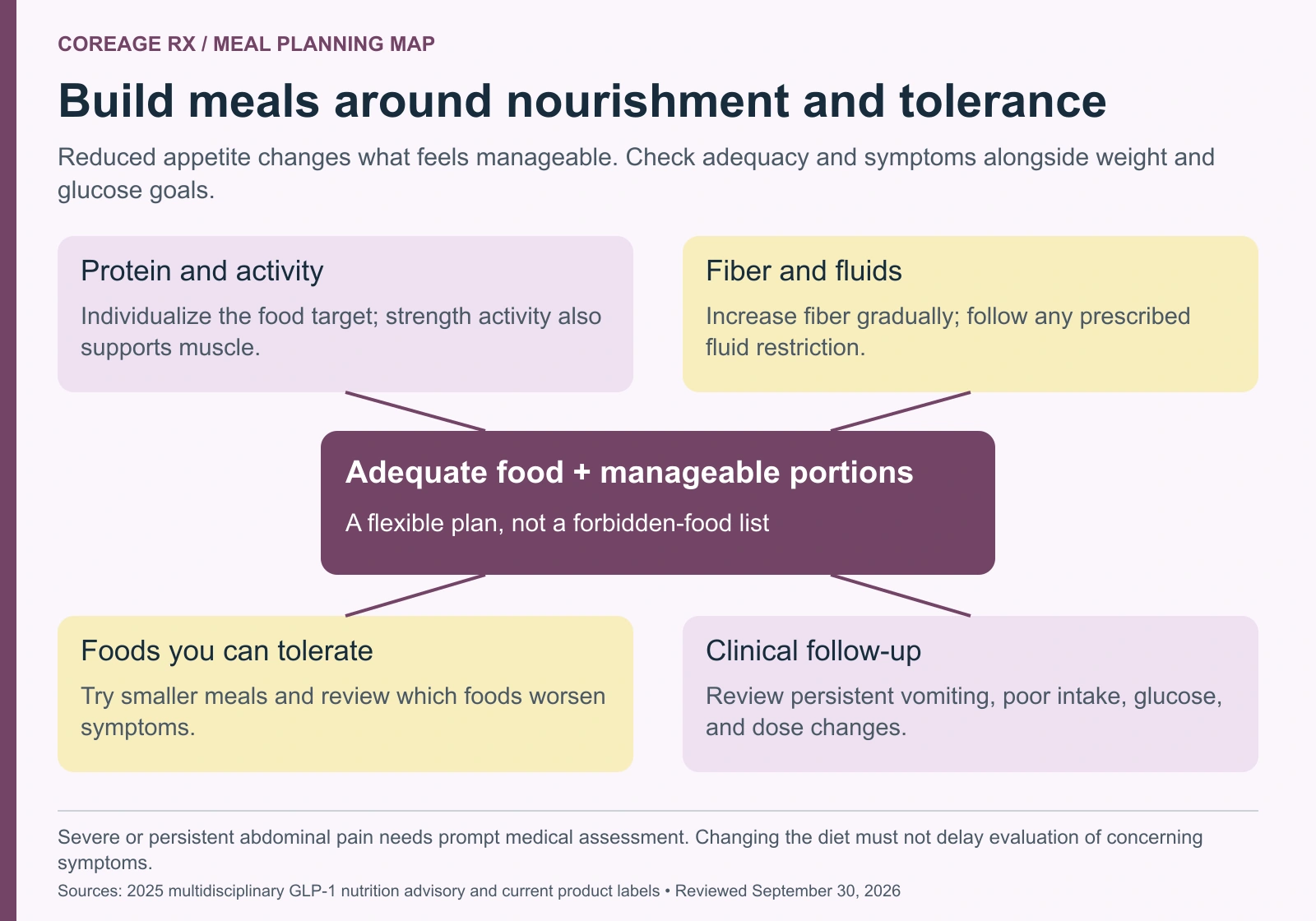
Aim for adequate nutrition as appetite changes
The joint nutrition advisory emphasizes nutrition assessment and support during GLP-1 treatment. Reduced interest in food can make it easier to miss meals or rely on a narrow set of tolerated foods. The goal is not the smallest amount you can manage; it is an eating pattern that supports health and function.
Tell the clinician about persistent food aversions, repeated vomiting, low intake, rapid changes, or difficulty maintaining normal activities. Review what you actually eat rather than assuming weight reduction proves the diet is adequate. A registered dietitian can help adapt the plan to appetite, preferences, budget, and medical conditions.
Our balanced-meal guide provides an everyday framework. It can be simplified or spread across smaller eating occasions when a large plate feels uncomfortable.
A flexible meal starts with a few useful components
Choose a protein food, a fruit or vegetable you tolerate, and a grain or other carbohydrate food as appropriate. Add fats, seasonings, and portions that fit your needs. This is a planning framework, not a fixed plate ratio or calorie prescription.
| Component | Examples | Useful adjustment |
|---|---|---|
| Protein | Eggs, yogurt, fish, poultry, tofu, beans, lentils | Choose manageable amounts and textures; vary sources. |
| Fruit or vegetables | Berries, fruit, cooked vegetables, soups | Cooked or softer options may be easier when symptoms limit intake. |
| Grain or other carbohydrate | Oats, rice, potatoes, whole-grain bread | Fit the portion to appetite and any diabetes nutrition plan. |
| Fats and flavor | Olive oil, nuts, seeds, avocado, sauces | Smaller amounts may suit you when rich meals worsen symptoms. |
These examples are not guaranteed to be comfortable for everyone. Allergies, swallowing concerns, kidney disease, and other conditions can require a different plan. Choose substitutions with the clinician or dietitian when needed.
Protein matters, but there is no single target for everyone
Include protein-containing foods regularly instead of leaving them until a large dinner you may not feel able to eat. Some people find yogurt, eggs, tofu, soft fish, or soups containing beans easier to manage than a large portion of meat.
The nutrition advisory discusses individualized protein planning and notes that the appropriate calculation during weight reduction is not settled for every person. Medical conditions and body composition can affect the discussion. Do not automatically multiply your body weight by an online target and assume the result fits.
Protein intake alone does not guarantee muscle preservation. Appropriate strength activity, sufficient overall nutrition, and follow-up also matter. Our semaglutide protein-and-muscle guide and tirzepatide companion explain the difference between scale weight, lean mass, and function.
Fiber and fluids need to fit tolerance
Whole grains, vegetables, fruit, beans, and lentils can contribute fiber and other nutrients. Current U.S. dietary guidance emphasizes nutrient-rich foods and whole grains. Increase changes gradually rather than adding several large high-fiber portions at once when your digestion is already uncomfortable.
Very bulky meals may be difficult when early fullness or nausea is pronounced. Temporary texture or portion adjustments can make nutrition easier while the team reviews symptoms. A recommendation to eat more fiber in general is not a reason to keep adding it during severe abdominal pain or vomiting.
Drink according to your individual fluid plan. Vomiting or diarrhea can lead to dehydration; a prescribed fluid restriction requires specific advice. Our constipation guide and food-fiber guide explain why one universal fiber amount, water volume, or waiting period is not appropriate for every situation.
Which foods may worsen nausea or reflux?
The nutrition advisory describes smaller meals and temporary adjustments to fatty or very high-fiber foods as possible strategies when gastrointestinal symptoms occur. Large meals can make vomiting more likely. Alcohol may also worsen nausea or reflux.
Observe the pattern rather than eliminating whole food groups immediately. If a rich sauce seems difficult, try a smaller amount or a simpler preparation. If raw vegetables feel bulky, consider cooked vegetables or another tolerated option. Choose changes that keep the diet varied enough to meet your needs.
Our tirzepatide nausea and reflux guide covers symptom review in more detail. Food changes should not become a way to delay medical assessment for repeated vomiting, dehydration, or persistent severe pain.

Can you eat bread, pasta, rice, or fruit?
Those foods are not automatically prohibited by an Ozempic injection prescription. Compare the portion, ingredients, meal combination, and your individual nutrition plan. A useful carbohydrate choice can look different during normal appetite, active nausea, or diabetes management.
Whole-grain options can provide fiber, but a whole-grain label does not establish the ideal portion or guarantee a specific glucose response. FDA’s label guidance helps interpret serving size and nutrients. Pair the information with what you will actually eat.
Avoid treating all carbohydrate foods as interchangeable. Whole fruit, a sweetened drink, bread, and beans differ in nutrients and eating context. The aim is a considered pattern, not a fear of a single ingredient category.
For a restaurant-meal example, our guide to chow mein portions and nutrition uses a current named serving and keeps recipe variation, protein, sodium, diabetes and tolerance questions visible.
What about sweets, fried foods, and restaurant meals?
Think about amount, frequency, tolerance, and the full meal. A smaller portion of a preferred food can fit differently from a large meal combining several rich foods and drinks. A snack or restaurant choice does not determine the entire treatment outcome.
If symptoms recur after a particular meal, keep a short record and try a practical adjustment. Note the portion, preparation, timing, symptoms, and any recent medicine change. A useful record helps the care team distinguish a likely food-tolerance issue from a problem needing another evaluation.
When eating out, consider a manageable portion, a tolerated protein food, and a preparation that feels comfortable. You can save part of a meal for later. No restaurant dish can promise to maximize the medicine’s effect, and discomfort is not a sign that you must restrict more aggressively.
Alcohol needs a separate health discussion
Alcohol adds another consideration beyond a food’s nutrient profile. The nutrition advisory notes that it may worsen nausea or reflux. Your medical history, diabetes treatment, other medicines, pregnancy, and liver or pancreatic concerns can change the appropriate advice.
Ask the clinician about your situation rather than assuming a general diet article establishes a safe amount. If you have been advised to avoid alcohol, that advice takes precedence. A smaller appetite also does not remove the need to review drinking patterns and overall intake.
Alcohol is not required for a meal or social routine. Choosing an alternative drink can simplify the plan, but a universal rule about its timing relative to an injection should not be invented from a food list.
If you have diabetes, follow the monitoring plan
Food intake and diabetes medicines need to be considered together. The current Ozempic label warns of increased hypoglycemia risk when used with insulin or medicines such as sulfonylureas. A major reduction in intake may require a clinician-directed review of the regimen.
Follow the glucose-monitoring and low-glucose treatment instructions you have been given. Tell the team about repeated low readings, difficulty eating, or unexpected symptoms. Do not independently change insulin or another medicine to match a new meal pattern.
Meal pairing and portion choices can be useful, but a label cannot predict your individual glucose result. Bring the actual foods, readings, and medicine schedule to the discussion rather than assuming a generic “Ozempic diet” replaces diabetes care.
Simple meal ideas for different appetite levels
For ordinary appetite, options might include yogurt with oats and fruit, a tofu or chicken rice bowl with vegetables, or fish with potatoes and cooked greens. Those are flexible examples; portions and substitutions should fit your needs.
When a large meal feels difficult, smaller combinations may be easier: a little soup containing beans or poultry, yogurt with soft fruit, or an egg with toast. If a drink is more manageable, discuss a nutritionally useful option rather than relying indefinitely on sugary drinks or water alone.
No example should be treated as a complete daily prescription. Review sustained low intake or a narrowing set of tolerated foods. Our pretzel nutrition guide illustrates how even a simple snack can be assessed by serving, nutrients, and the foods accompanying it.

Can supplements replace what you are not eating?
They cannot automatically replace adequate meals or a nutrition assessment. A powder, fiber product, or vitamin may serve a particular purpose, but the choice should respond to an actual need and the full medical plan. Review ingredients, dose, tolerance, and other medicines.
Our GLP-1 support supplement guide separates supplement claims from prescription treatment. The low-appetite greens guide explains why drinking a supplement does not establish that a limited diet meets all needs.
For a specific question about muscle and activity, see creatine during weight loss and the creatine monohydrate guide. Those discussions do not mean everyone taking a GLP-1 medicine needs creatine or any other supplement.
When should food difficulties prompt help?
Contact the care team when nausea, vomiting, constipation, or food aversion repeatedly interferes with eating or drinking. Review the symptom history, recent prescription changes, other medicines, and nutrition. Do not treat inability to eat as a desired weight-management result.
Persistent or severe abdominal pain, especially pain extending to the back, needs prompt medical attention. The Ozempic label describes pancreatitis warning symptoms and the need to stop the medicine and contact the clinician when pancreatitis is suspected. Our pancreatitis guide explains why a food adjustment cannot diagnose or resolve that concern.
For CoreAge Rx semaglutide or tirzepatide care information, ask how ongoing symptom and nutrition questions are handled. A useful plan supports adequate food, tolerable routines, physical function, and review when circumstances change.
Educational information for adults; individual treatment decisions require a qualified clinician. Sources reviewed September 30, 2026. Original AI-generated article images depict fictional people and objects, not patient outcomes. Other editorial images are illustrative. Graphics summarize the cited sources.