A “Costa Rican tea for weight loss” name does not tell you exactly what is in the drink or whether the finished recipe has been tested. Before evaluating a claim, identify the ingredients, amounts, sweeteners, and whether the product is an ordinary beverage, a concentrated extract, or a supplement.
An unsweetened tea can be an enjoyable part of your day. That is different from proving that a named blend burns fat, detoxifies the body, or produces a predictable weight-loss result. This guide separates the recipe question from the evidence and offers an ordinary culinary tea idea without presenting it as a traditional national slimming formula.
What does the name actually identify?
A recipe name can suggest a style or a marketing theme without defining a standardized product. If two instructions use different herbs, extracts, or amounts, they are not the same preparation simply because the headline uses the same country name.
For a homemade drink, write down what you plan to use. For a packaged product, read the ingredients and serving instructions on the actual package. A photograph of leaves or a description such as “natural metabolism support” is not a complete formula.
The same issue appears with other teas. The pomegranate green-tea guide explains why similar names can refer to different green and herbal products. Evidence for one ingredient or product cannot automatically establish a benefit for another.
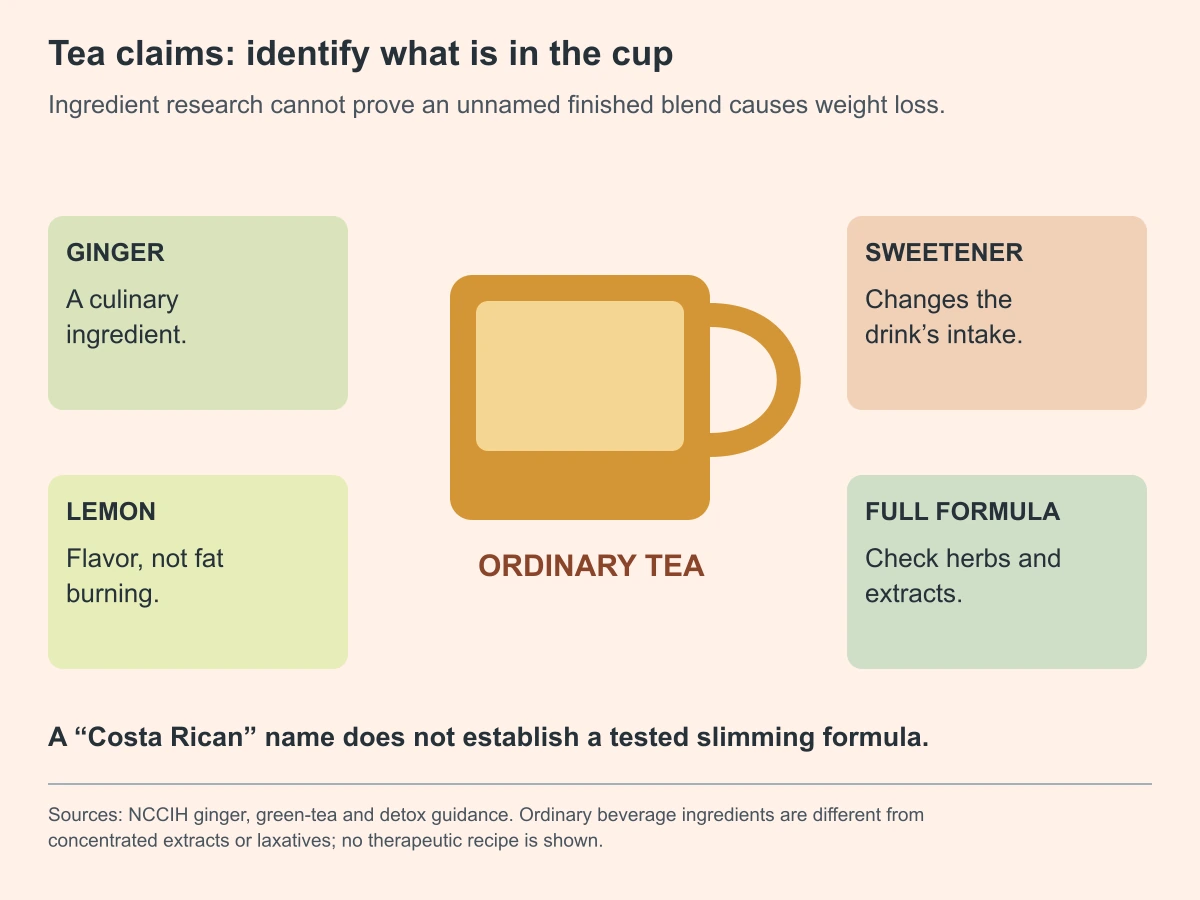
An ordinary ginger-lemon tea idea
If you want a simple homemade beverage, here is an optional culinary example for an adult who tolerates its ingredients:
- Put a few thin slices of washed fresh ginger into a heat-safe mug.
- Add about one cup of hot water and let it steep to a flavor you enjoy.
- Remove or strain the ginger, then add a small squeeze of lemon if desired.
- Let it cool to a comfortable drinking temperature before enjoying it.
You may adjust the strength for taste or leave out the lemon. This is a food-preparation idea, not a therapeutic dose, a daily fluid prescription, or an authenticated Costa Rican weight-loss recipe. It does not need to replace a meal.
If you add a commercial green-tea bag or another packaged ingredient, follow that product’s directions. You have changed the drink, including its possible caffeine and ingredient profile.
What can ginger evidence tell us?
NCCIH’s ginger guidance discusses research for several purposes, including nausea, while noting that many studies examined supplements rather than ordinary foods. That distinction matters when evaluating a few ginger slices in a mug.
A finding about a particular supplement does not establish the same dose, exposure, or result from a homemade beverage. Nor does a possible benefit for one symptom prove weight loss from a finished ginger-lemon tea.
Ginger can also cause gastrointestinal discomfort or irritation in some circumstances, and herbal products can interact with medicines. If the drink worsens heartburn or another symptom, do not assume a stronger preparation will solve the problem. Describe the ingredients and symptoms to your care team when appropriate.
What if the recipe contains green tea?
Green tea is made from Camellia sinensis and contains caffeine. Its profile differs from a caffeine-free ginger infusion or another herbal drink. The ingredient list must therefore be checked before using a general statement about “tea.”
NCCIH’s green-tea guidance describes a possible modest, variable effect on body weight from catechins and caffeine. It does not establish predictable weight loss from an unnamed finished blend. Composition and the study context matter.
A concentrated extract is a separate product. NCCIH describes safety concerns, including uncommon liver injury associated primarily with extract products. A beverage’s familiar appearance should not be used to assume that a capsule, extract powder, or concentrated shot has the same exposure.
Lemon, herbs, and flavor are not a fat-loss mechanism
Lemon can change the flavor of a drink. Mint, spices, or other culinary ingredients can also make it more appealing. The flavor choice does not establish that the beverage selectively reduces abdominal fat or creates a weight-loss effect independent of the rest of the eating pattern.
You do not need a clinical claim to enjoy a beverage. A drink may be useful because you like it, it fits your routine, or it replaces another choice. Those are practical benefits, and they can be discussed honestly without a detox or fat-burning promise.
If a recipe includes less familiar leaves, roots, peels, or concentrated powders, identify the actual ingredient before using it. “Herbal” does not mean all plants, preparations, or doses share the same safety profile.
Could replacing a sweetened drink make a difference?
Replacing a drink that contributes energy with an unsweetened beverage can reduce the energy contributed by that beverage choice. The amount depends on what you replace and whether the rest of your intake changes.
Adding the tea alongside the same usual drinks is a different situation. Adding honey, sugar, syrup, or sweetened juice also changes the finished beverage. There is no need to hide those ingredients behind the word “tea.”
The net-calories guide explains why a food-log change should not be converted into an exact prediction of pounds lost. A simple substitution may be practical, but the overall pattern and individual needs still matter.

Read the product category before the claims
| Preparation | What to check |
|---|---|
| Plain homemade infusion | Actual ingredients, tolerance, and ordinary food handling |
| Brewed green tea | Caffeine, ingredients, and the manufacturer’s directions |
| Sweetened bottled drink | Serving size, total and added sugars, and the amount consumed |
| Concentrated extract | Supplement amount, other ingredients, medicine interactions, and safety context |
| Laxative or “cleanse” tea | Active herbs, bowel effects, warnings, and the intended use |
| Multi-ingredient slimming product | The complete formula and evidence for that finished preparation |
A product that uses a tea name may still be sold as a supplement. Its claims, ingredients, and instructions should be evaluated in that category rather than assumed to be ordinary brewed tea.
Why detox and cleanse claims need scrutiny
NCCIH’s detox guidance describes limited and low-quality evidence for commercial detox approaches. Severe restriction, laxatives, and drinking large amounts of liquids while avoiding food can create health problems.
A bowel movement or a short-term scale change is not proof that a drink removed toxins or reduced body fat. If a tea causes diarrhea, the issue is tolerance and possible fluid loss, rather than a desirable sign that the preparation is working.
The bowel-content and weight guide discusses the difference between temporary scale changes and fat loss. A drink should not become a reason to ignore dehydration, persistent bowel symptoms, or inadequate food intake.
Does the drink fit your medicines and health history?
Identify all ingredients if you take prescription medicines, have a relevant medical condition, or use other supplements. A pharmacist can evaluate the actual products more usefully than a description such as “just herbal tea.”
Caffeine may matter to someone who notices sleep disruption, palpitations, or other sensitivity. A concentrated herbal product may raise a different question from a culinary amount in a drink. Pregnancy and breastfeeding also need the appropriate ingredient and caffeine review.
The dietary-supplement guidance explains why a botanical or natural label is not equivalent to premarket approval as a medicine. A quality certification may address product-content questions without proving a slimming claim.
What if you are taking a GLP-1 medicine?
A tea is not a substitute for the prescription or for adequate meals. If appetite is reduced, it is particularly useful to review whether drinks are displacing food you need or whether nausea and bowel symptoms make intake difficult.
The GLP-1 nutrition advisory emphasizes adequate nutrition and symptom management. If you repeatedly cannot eat or maintain fluids, contact the care team rather than replacing meals with a slimming drink or using a cleanse to speed the scale’s movement.
The protein shake meal guide offers another practical intake discussion, and the semaglutide symptom guide explains when treatment-related symptoms need attention. Ginger supplement research does not establish a home-tea treatment for prescription-related nausea.
How to evaluate a review or testimonial
Ask what else changed during the claimed result. Did the person alter meals, activity, medicines, or their starting treatment? Was the weight measured consistently, and did the account include people who saw no benefit or stopped using the product?
A personal account can describe an experience, but it cannot isolate the tea’s effect. A before-and-after photograph is especially incomplete when preparation, timeline, other treatment, and outcome measures are unknown.
If a seller cites research, check whether the study evaluated the exact finished product in people and measured the claimed outcome. Ingredient chemistry, animal findings, or a trial of a different extract do not answer that question directly.

Making the beverage a reasonable part of a routine
Choose a drink for its actual ingredients, flavor, practicality, and tolerance. If it replaces a sweetened drink you wanted to reduce, describe that as the change. If it is simply something you enjoy, it does not need a weight-loss promise.
Keep meals and other nutrition needs in the plan. The yogurt guide and overnight oats guide provide examples of practical foods that should also be evaluated by their ingredients and role in the day.
For service information, see CoreAge Rx’s semaglutide page. CoreAge Rx describes a compounded offering; compounded medicines are not FDA-approved. A product page or a tea recipe does not establish equivalent outcomes to branded medicine trials.
Frequently asked questions
Is there one proven Costa Rican slimming-tea formula?
The name alone does not identify a standardized, tested preparation. Ask for the actual ingredients and finished-product evidence instead of assuming the headline defines a therapy.
Does the ginger-lemon example burn belly fat?
No such effect is established here. It is an ordinary culinary drink, not a targeted fat-loss treatment or a meal replacement.
Is honey irrelevant because it is natural?
No. Honey changes the drink’s sugar and energy contribution. You can choose it for taste while describing the finished beverage accurately.
Are green-tea extracts equivalent to brewed tea?
No. Concentration, formulation, exposure, and safety context differ. Check the exact product before transferring evidence or advice.
Is diarrhea a sign a slimming tea is working?
It is a symptom to assess, not proof of fat loss or detoxification. Severe or persistent symptoms and difficulty maintaining fluids need appropriate care.
Can I use tea instead of breakfast while taking tirzepatide?
Do not assume that replacing meals with tea meets your nutrition needs. Discuss low appetite or difficulty eating with the care team and build a tolerable food plan.
Educational information for adults; individual treatment decisions require a qualified clinician. Sources reviewed October 1, 2026. Original AI-generated article images depict fictional people and objects, not patient outcomes. Other editorial images are illustrative. Graphics summarize the cited sources.