
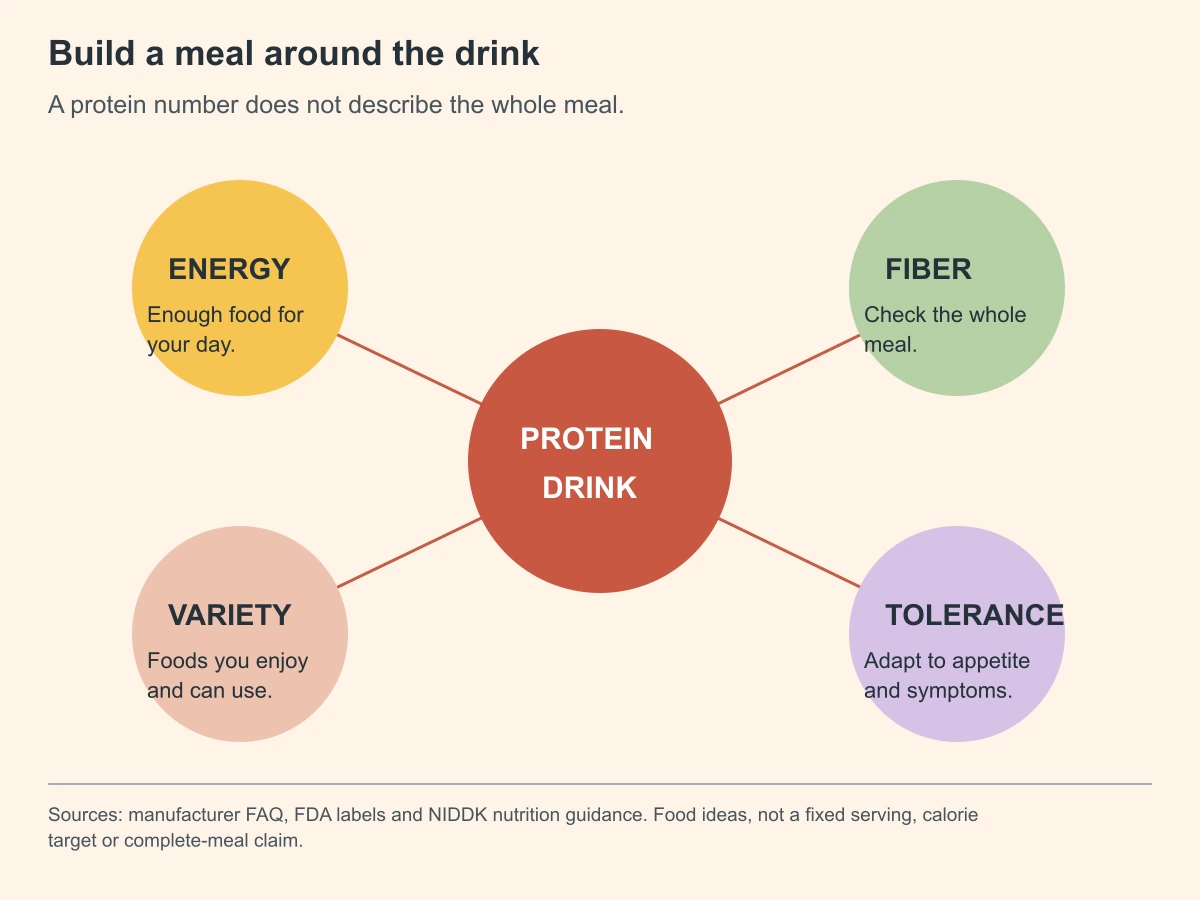
A protein shake can make eating more convenient, but what you eat alongside it depends on the drink, your appetite, and the rest of your day. Fruit, whole-grain toast, oats, vegetables, or a small sandwich can add things a protein drink may lack. The aim is a satisfying, varied meal that meets your needs, not the smallest possible combination of foods.
Start with the job you want the shake to do
Are you using the drink as an afternoon snack, after exercise, or because breakfast is difficult? Those are different situations. A drink that works between meals may leave you hungry if it replaces lunch. Conversely, you may not need a full second meal beside a drink when you have already eaten and simply want a convenient source of protein.
Read the actual bottle or powder label before choosing a pairing. Check the serving size, calories, protein, fiber, ingredients, and any nutrients added through fortification. A large protein number does not tell you how much energy or dietary variety the product supplies. Some powders also define a serving as more than one scoop. Milk, juice, fruit, nut butter, and other additions change the finished shake.
Manufacturer descriptions illustrate the distinction. Fairlife describes Core Power as a recovery drink rather than a meal replacement, and describes Nutrition Plan as a snack or convenient pick-me-up. That does not decide what every person should eat, but it shows why “protein shake” and “complete meal” are not interchangeable. Our Fairlife protein shake guide compares the named products more closely. Manufacturer FAQ
What can you add to a protein shake?
Think about what is missing, what sounds appealing, and what fits your available time. A shake may already contribute substantial protein. You can then consider a source of carbohydrate, fiber, produce, and fat rather than automatically adding more protein powder. The choices below are examples, not calorie-counted prescriptions or a requirement to include every item.
| Situation | Possible food alongside the shake | What to check |
|---|---|---|
| A rushed breakfast | Whole-grain toast and fruit | Whether the combination keeps you satisfied and fits your appetite |
| A portable lunch | A small sandwich or wrap with vegetables | Whether the drink plus food supplies enough energy for your afternoon |
| After activity | Oats, fruit, or a meal you were already planning | Your activity, next meal, and recovery needs |
| An afternoon snack | Fruit or a few crackers with a topping | Whether you want a snack or actually need a meal |
| A day with low appetite | A smaller, familiar food such as toast or soft oats | Tolerability, ongoing intake, and whether symptoms need review |
Nutrition guidance supports choosing varied foods and adapting intake to personal circumstances. Diabetes medications, kidney disease, allergies, and gastrointestinal symptoms can change what is suitable. There is no single shake-and-food combination that meets every adult’s needs. NIDDK eating and activity guidance
Breakfast combinations that require little preparation
Toast and fruit: A slice or another personally suitable amount of whole-grain toast, with a topping you enjoy, can make a drink feel more like breakfast. Fruit adds another food group and can be easier to pack than a cooked dish. Choose a combination that works for you rather than assuming a specific number of slices is necessary.
Oats and berries: Oats offer a different texture and a source of fiber. You can prepare them separately and drink the shake alongside, or use ingredients in a homemade smoothie if the resulting portion is comfortable. A very large blended drink may be less pleasant when you already feel full quickly. Blending does not erase the energy or ingredients you add.
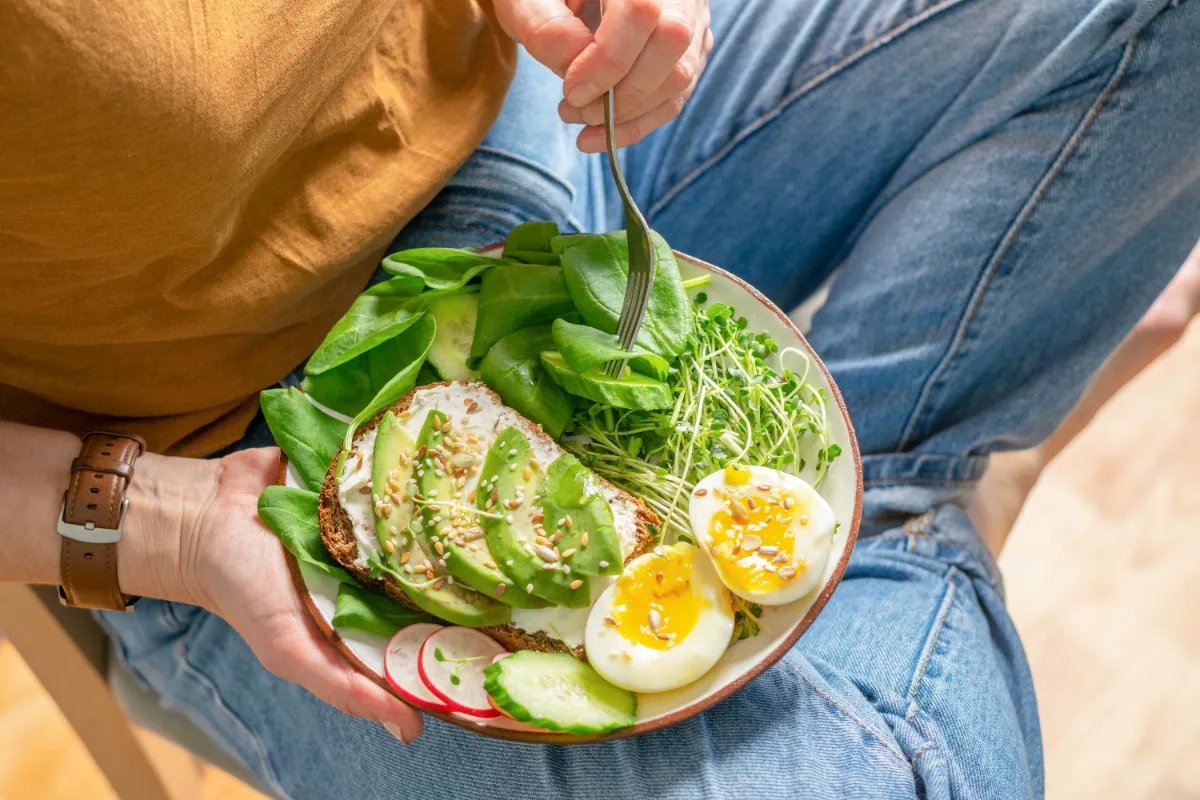
A savory option: There is no reason breakfast beside a sweet drink must also be sweet. Toast with avocado, a modest portion of leftovers, or vegetables in a simple sandwich may be more appealing. If you add eggs or cheese, remember that the drink already contributes protein; whether more is useful depends on the whole meal and your needs.
Our protein breakfast ideas discuss balancing convenience, appetite, and meal satisfaction. The practical question is whether you can eat the combination regularly and feel well afterward, not whether it looks like a particular fitness routine.
Lunch and dinner: use the shake as one component
A shake can accompany food when preparing a full meal is difficult. It does not have to become the centerpiece of every meal. A sandwich with vegetables, soup with bread, or a smaller portion of a familiar dinner may be a more workable foundation than searching for a special “weight-loss shake meal.”
For example, a person taking lunch to work might pack a drink, a sandwich, and fruit. Another person may prefer a grain bowl and save the drink for later. Neither arrangement is automatically better. Appetite, food access, medication effects, cultural preferences, and the rest of the day matter more than the order in which the items are eaten.
Avoid making a protein drink the reason to remove all carbohydrates or fats from the meal. Those foods have different roles. A balanced approach also leaves room for enjoyment and variety. If planning meals has become confusing, a registered dietitian can help make a short, realistic rotation rather than an increasingly restrictive list.

How much protein do you need with the shake?
You do not need to match the shake’s protein number with the same amount in food. Protein needs vary with age, health, activity, body size, and treatment. The useful starting point is the whole day, including foods you already eat, rather than one bottle in isolation.
If you use a protein powder, check whether you are counting the powder alone or the prepared drink. A scoop mixed with milk has different nutrition from a scoop mixed with water. “Complete protein” refers to the amino acids supplied; it does not mean the drink supplies a complete diet.
People with kidney disease may need individualized advice about protein and other nutrients. People with diabetes may also need to consider carbohydrate content and medication timing. An internet protein target can miss those details. NIDDK nutrition guidance
For related context, see creatine versus protein powder. These products serve different purposes, and using both is not a requirement for a useful meal or effective exercise.
Protein shakes when taking semaglutide or tirzepatide
A smaller appetite can make a drink convenient, but it can also hide how little someone is eating overall. Being able to finish a shake does not establish that total energy, fluid, micronutrient, or fiber intake is adequate. Persistent difficulty eating deserves follow-up rather than praise for restriction.
The joint nutrition advisory for GLP-1 therapy emphasizes assessment, adequate nutrition, and preserving physical function. It supports individualized care rather than a universal protein or calorie number. Notice whether you can manage your usual activities, whether meals are becoming progressively smaller, and whether nausea, vomiting, or diarrhea is preventing intake. Joint nutrition advisory
Our semaglutide protein and muscle guide and tirzepatide protein and muscle guide explain why food, resistance activity, symptoms, and follow-up belong in the same conversation. If you are exploring prescription care, the semaglutide and tirzepatide product pages are starting points for a clinician discussion. A shake is not a substitute for that assessment.
If the drink makes you feel bloated or nauseated
Check the ingredients, amount consumed, and what you ate with it. Dairy ingredients may matter for someone with lactose intolerance, while milk allergy is a separate problem. Some people also find certain sweeteners, rich additions, or a large volume uncomfortable. A symptom after a shake does not identify the cause by itself.
For GLP-1-related nausea, professional guidance discusses eating slowly and using smaller, tolerated portions. That does not mean reducing food indefinitely or repeatedly changing medication on your own. If symptoms persist, discuss the drink, other foods, medication, and bowel pattern with your care team. Gastrointestinal expert guidance
You can try a simpler meal arrangement when symptoms are mild: keep the foods familiar, avoid forcing a large drink, and make notes about what you tolerate. If vomiting, significant diarrhea, severe pain, or dehydration prevents eating and drinking, seek medical advice promptly. A product marketed as easy to digest cannot guarantee tolerability for you.
Will adding food stop the shake from helping with weight loss?
No food pairing determines weight change by itself. A shake can be useful when it makes a sustainable eating pattern easier. It can also be an unnecessary extra if someone drinks it automatically despite already meeting their needs. Its effect depends on the broader pattern, not a special property of the bottle.
Adding food may help you avoid replacing lunch with a drink and then becoming very hungry later. For someone else, a shake may be a convenient snack between balanced meals. Neither situation requires eating as little as possible. Our calorie intake guide explains why estimates and individual adequacy matter more than a universal low target.
A safe weight-management program considers habits, health, support, and realistic follow-up. It should not depend on an extreme liquid-only routine. NIDDK program guidance
Questions people ask about shake meals
Can I drink a shake with a banana?
Yes, that is one possible snack or meal component if you enjoy it and the ingredients suit you. Whether it is enough for a meal depends on the drink and your needs. A banana does not make a shake a weight-loss treatment, and you do not need to avoid it simply because it contains carbohydrate.
Should I drink the shake before or after eating?
There is no single required order for ordinary meal planning. Choose what is comfortable and fits any specific medication instructions. If drinking first makes you too full to eat needed food, discuss that pattern rather than treating suppressed appetite as the only goal.
Can a protein shake replace breakfast every day?
Some people use a drink regularly, but the label and total eating pattern matter. A protein drink is not automatically formulated as a complete meal replacement. Check whether you are getting enough food variety, energy, and fiber across the day, and seek individualized advice when meals are difficult.
Is fruit, oats, or nut butter the best addition?
They add different things. Fruit can add produce and flavor, oats can add a grain and fiber, and nut butter can add fat and energy. Allergies, preferences, digestion, and the drink’s existing nutrition determine what fits. There is no mandatory ingredient.
Do I need a shake if I already eat protein foods?
Possibly not. A shake is a convenience option, not an essential step. Meals containing foods such as dairy, eggs, beans, fish, tofu, or meat may already meet your needs. A dietitian can help decide whether the product solves a real problem or adds expense without much benefit.
What should I track if I am using shakes because I cannot eat much?
Track the reason eating is difficult, foods and drinks tolerated, symptoms, and changes in everyday function. Bring the actual product label to your appointment. The priority is understanding the low intake and finding a workable eating pattern, rather than relying on the protein number alone.
Educational information for adults; individual treatment decisions require a qualified clinician. Sources reviewed October 1, 2026. Original AI-generated article images depict fictional people and objects, not patient outcomes. Other editorial images are illustrative. Graphics summarize the cited sources.