Brown bread can fit a weight-management eating plan, but the color of the loaf does not tell you whether it is whole grain, high in fiber, or the right portion for you. The useful comparison starts with the ingredients, the Nutrition Facts label, and what you put on the bread.
You do not need a special “slimming” loaf to build a satisfying meal. A clearer label comparison and a few practical choices about toppings can make an ordinary sandwich or piece of toast work better within your routine.
Brown, whole wheat, and multigrain are different descriptions
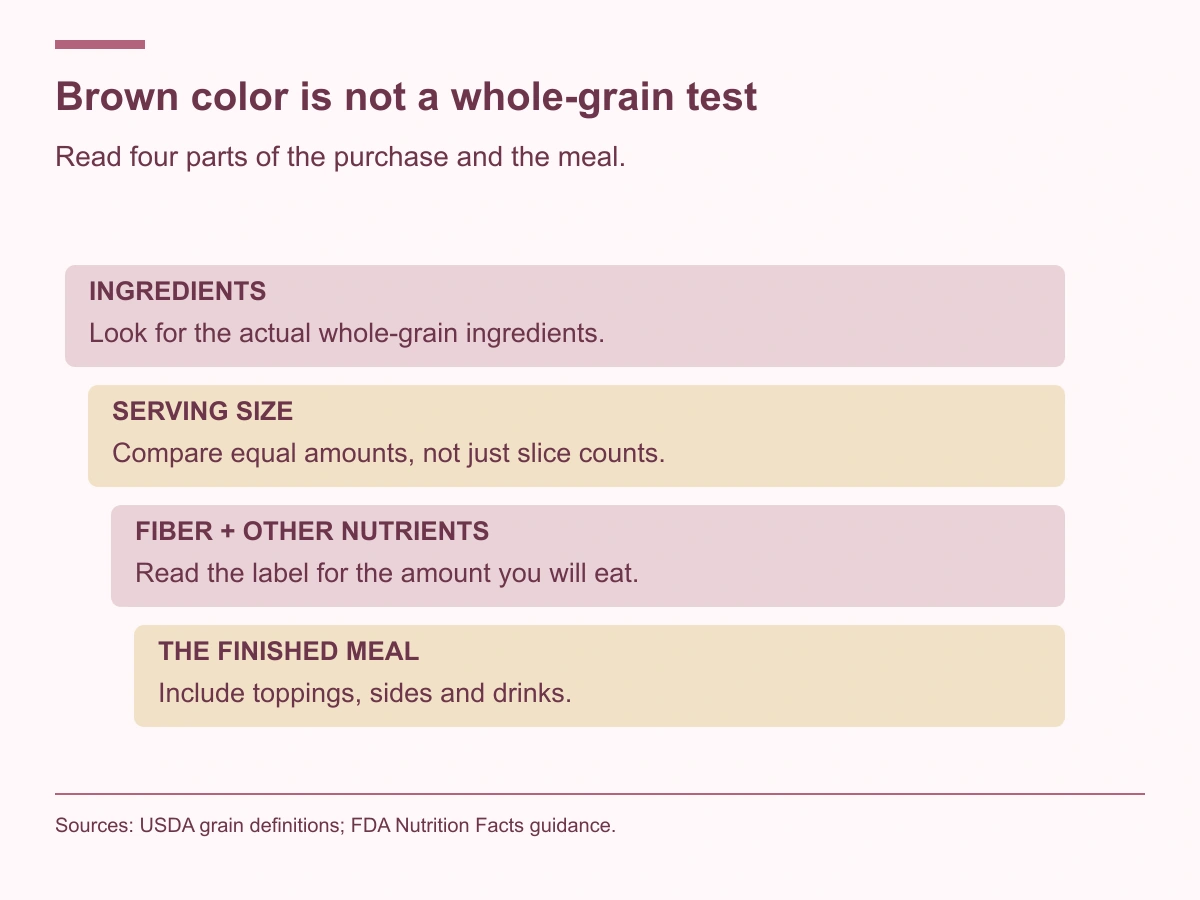
Whole grains contain the bran, germ, and endosperm of the grain kernel. Whole-wheat flour is one whole-grain ingredient. A bread’s brown appearance alone cannot establish that its grain ingredients meet that definition. Similarly, a loaf containing several grains is not necessarily made entirely from whole grains. USDA grain definitions
Read the ingredient list for the actual grain names. “Whole wheat” provides different information from “wheat flour,” and “enriched” means selected nutrients have been added rather than that the grain is whole. Seeds scattered on top also do not tell you the amount of whole grain or fiber in the loaf.
This distinction is useful without turning shopping into an all-or-nothing exercise. You may choose different breads for texture, cost, availability, or a particular meal. The goal is to understand the product rather than assume the front-of-package color or picture answers every nutrition question.
Does brown bread help you lose weight?
It can be part of a suitable eating pattern, but no bread independently guarantees weight loss. A whole-grain option may help you include more fiber and variety. Its usefulness still depends on the amount you eat, what accompanies it, your overall intake, and whether the routine is sustainable.
Replacing one loaf with another while changing nothing else may or may not produce a noticeable difference. A large sandwich with generous spreads, cheese, and a sweet drink is a different meal from toast paired with vegetables and an appropriate protein food, even if both use the same bread.
The FDA’s nutrition-label guide connects serving amounts with total calories and nutrients. The label can help with comparison; it cannot predict an individual weight outcome. Our balanced-meals guide explains how to evaluate the whole plate.
Compare the same amount before comparing the numbers
Two bread labels can use different slice sizes or different numbers of slices as a serving. Looking only at the calories printed in large type can therefore produce a false comparison. First check the serving description and weight, then compare an equivalent amount or the amount you would actually eat.
For example, if one hypothetical label describes one slice and another describes two slices, the larger-looking number may simply cover twice as many pieces. This is an illustration of label arithmetic, not the nutrition information for a specific brand. Thick bakery slices can also differ substantially from thin packaged slices.
FDA emphasizes that serving size describes an amount typically consumed and is not a recommendation of how much you personally should eat. Use the label as information alongside your needs, rather than treating its serving as a required meal size. FDA serving-size explanation
| What to check | Why it helps | What it cannot tell you alone |
|---|---|---|
| Grain ingredients | Distinguishes whole grains from refined or enriched ingredients | Whether the entire day meets your needs |
| Serving size and grams | Makes product comparisons more meaningful | Your personalized portion |
| Dietary fiber | Shows the amount in the stated serving | That a larger portion is automatically better |
| Sodium | Helps compare loaves and account for salty fillings | Your full daily intake without the other foods |
| Added sugars | Separates added sweeteners from the broader carbohydrate content | That a low-sugar loaf is carbohydrate-free |
| Toppings and sides | Describes the meal you actually eat | The bread’s contribution if everything is counted together vaguely |
A quick photograph of the label can help a dietitian review a product you regularly buy. There is no need to memorize every number before making a reasonable choice.
What should you put on brown bread?
Think about satisfaction, variety, and what the rest of your day is missing. Bread can provide the carbohydrate component of a meal; toppings and sides can add protein foods, vegetables, fruit, or fats in amounts that suit you.
A few adaptable combinations include egg with tomato, hummus with cucumber, tofu or bean spread with vegetables, or a sandwich with a suitable lean protein and salad. These are examples, not nutritionally identical recipes. Allergies, cultural preferences, food availability, and medical needs should shape the choice.
You can also enjoy peanut butter or another nut spread if it fits your needs, while noticing the amount used. A food does not need to be labeled “bad” for its portion to matter. Likewise, adding vegetables does not erase the contribution of every other ingredient.
For a busy morning, the meal-prep guide offers ways to prepare components ahead. Planning a filling you enjoy can make an ordinary loaf more useful than buying an expensive bread without a plan for eating it.
Is butter or jam forbidden?
No single topping decides the quality of an entire diet. Butter, jam, cheese, spreads, and sauces should be considered by ingredient and amount. The useful question is whether the combination fits your goals and keeps the meal enjoyable and adequate.
If toast with a sweet spread leaves you hungry soon afterward, consider the whole meal. A protein food or another nourishing component may be more useful than simply buying a darker loaf. If you use several rich toppings together, noticing their amounts may make the meal easier to assess.
Honey, syrups, and sugars added in preparation count as added sugars. “Natural” wording does not remove that contribution. FDA’s added-sugars guidance explains the difference between total sugars and added sugars on a label. You do not need to ban every sweet food to make an informed comparison.

How many slices should you eat?
There is no universal two-slice rule or single maximum that fits every adult. Slice size, the rest of the meal, appetite, activity, health conditions, and the purpose of your eating plan all matter. A sandwich and a small piece of toast are also different meal situations.
If you want more structure, start with your normal serving and observe whether the meal is satisfying, overly large, or too small. Consider whether you are skipping earlier meals and arriving unusually hungry. The hunger and cravings guide can help put those observations in context.
For people with diabetes, carbohydrate counting or a plate method may provide a useful framework. NIDDK recommends choosing an approach with the healthcare team. Do not use an internet slice limit as a substitute for the meal plan associated with insulin or another glucose-lowering medicine. NIDDK meal planning
Does toasting change the weight-loss answer?
Toasting changes texture and moisture, but it does not remove the need to consider the original bread, portion, and toppings. A browned or crisp surface is not evidence of a fat-burning effect. If you prefer toast, use that preference to make a meal you enjoy.
Similarly, a sandwich cut into small triangles still contains the ingredients used to make the sandwich. Presentation can make a meal more appealing, but the useful nutrition comparison remains the same. These simple distinctions help prevent small kitchen changes from acquiring claims they cannot support.
If the bread becomes easier to eat in large amounts when toasted or served with spreads, notice that pattern without turning it into a rule against toast. The goal is a routine that you can understand and repeat comfortably.
Brown bread and diabetes
Brown bread can contain substantial carbohydrate, even when it has little added sugar. Whole grain and low sugar are separate descriptions from carbohydrate-free. Read the total carbohydrate and serving amount if that information is part of your care plan.
Individual glucose responses can vary with the amount eaten, the rest of the meal, activity, and medication. Do not rely on a single generic glycemic-index number to predict every loaf or your personal response. Follow the monitoring method your care team recommends and bring repeated patterns to a review.
NIDDK notes that favorite foods can remain in a diabetes meal plan, sometimes with changes in portions or frequency. It also warns that skipping or delaying meals can create low-glucose concerns with insulin or sulfonylureas. NIDDK healthy-living guidance
What if you need to avoid wheat or gluten?
A brown color does not make a loaf suitable for someone with a wheat allergy or a medically required gluten-free diet. Read the actual ingredients and the relevant label information, and follow the advice given for your diagnosed condition. “Multigrain” can still include wheat or other ingredients you need to avoid.
Do not assume that a gluten-free loaf is automatically a weight-loss food either. It has its own ingredients, portion size, fiber, and nutrition information. Compare it on its actual merits and your needs rather than using one label claim as a complete health score.
If bread repeatedly causes symptoms, discuss the pattern before removing multiple food groups on your own. Bring the product label and describe the symptoms and timing. Persistent digestive problems deserve assessment; changing bread color does not diagnose their cause.
Fiber changes and digestive comfort
A higher-fiber bread may fit your goals, but the whole eating pattern matters. Consider other grains, vegetables, fruit, and pulses rather than relying on one loaf to provide all your fiber. If you are making several changes at once, pay attention to comfort and the advice given for any digestive condition.
A person with a specific medical condition may need a tailored approach to fiber and fluids. Do not assume that the highest number on the shelf is always the best choice for that person. A label comparison should support the clinical plan, not override it.
Our sourdough bread guide discusses another common bread question. For grain variety beyond bread, the basmati rice guide explains whole versus refined grain in a familiar meal context.

Bread while taking semaglutide or tirzepatide
Reduced appetite can make simple foods appealing, but a meal pattern made mainly of dry toast may leave important nutrients missing. Include suitable protein foods and variety as tolerated, and tell the care team if nausea or early fullness prevents adequate eating.
The GLP-1 nutrition advisory emphasizes nutrition adequacy, hydration, and preserving muscle and function during treatment. It does not prescribe a special brown-bread regimen. Persistent vomiting, pain, or inability to maintain fluids requires clinical attention.
For treatment-service information, CoreAge Rx tirzepatide care describes its offering. Confirm the exact preparation and clinical plan. Bread selection is one practical nutrition decision within a much broader assessment.
A useful shopping and meal routine
Choose a loaf whose ingredients you understand, compare equivalent servings, and decide how you will make it into a satisfying meal. Then consider cost, taste, storage, and convenience so the choice works in ordinary life.
Brown bread does not need to be a miracle food to be useful. A clear label and a well-composed meal give you more actionable information than the color of the crust or a promise printed on the package.
Educational information for adults; individual treatment decisions require a qualified clinician. Sources reviewed October 7, 2026. Original AI-generated article images depict fictional people and objects, not patient outcomes. Other editorial images are illustrative. Graphics summarize the cited sources.