Idli can be part of an evening meal while you work toward weight-management goals. Eating it after sunset does not automatically cause weight gain, and choosing a steamed food does not guarantee weight loss. The portion, recipe, accompaniments, overall eating pattern, and your medical needs matter more than a rule that labels one familiar food a good breakfast but a bad dinner.
A useful dinner question is: will this meal leave me comfortably satisfied and provide the nutrition I need? This guide looks at idli itself, practical ways to complete the plate, and when meal timing deserves an individual discussion.
Start with the idli you actually eat
Traditional idli is commonly made from a fermented rice-and-urad-dal batter and steamed. Recipes vary: rava idli uses a different grain base, and home cooks or packaged mixes may include other grains, vegetables, oil, yogurt, or additional ingredients. A restaurant serving and a small homemade idli need not have the same size or composition.
That is why an exact online statement such as “one idli has this many calories” can be misleading without a recipe and portion definition. For packaged products, read the serving amount and preparation instructions. For home cooking, look at the ingredients used for the batch and how many portions it produces. You do not need a perfect laboratory measurement to notice the difference between a small serving with several sides and an oversized plate of idli alone.
The FDA’s label-reading guide explains that listed calories and nutrients refer to the stated serving. That serving is a comparison unit, not a personalized recommendation for dinner.
Does eating idli at night make weight loss harder?
There is no evidence in the sources reviewed here that establishes a special evening cutoff for idli. Meal timing can affect eating habits, glucose management, sleep-related routines, and digestive comfort, but it does not act independently of the rest of your care and nutrition.
Consider two situations. Someone who eats a balanced dinner after a late shift may have a routine that works well. Someone who skips meals all day and then eats until uncomfortably full just before bed may need help with the pattern. The clock time alone does not describe either person’s nutritional needs or explain their weight trend.
NIDDK recommends considering what, how much, and when you eat together. For people with diabetes, the best timing may depend on medicines, activity, work schedules, and other conditions. NIDDK meal-planning guidance
If your main concern is the rice component, our basmati rice and meal-timing guide separates the grain choice from the whole meal. It also explains why a cooked-food measurement should not be confused with a dry-grain measurement.
What does meal-timing research actually show?
A small randomized crossover trial compared dinner at 6 p.m. with dinner at 10 p.m. in 20 healthy volunteers, with an 11 p.m. bedtime in a laboratory. The later dinner produced less favorable overnight glucose and fat-metabolism measurements. The participants received controlled meals on both visits. Original late-dinner trial
That study helps explain why researchers investigate timing. It did not test idli, prescribe a universal dinner time, or measure long-term weight loss from avoiding a particular food. A short laboratory experiment in healthy volunteers also cannot decide the best eating schedule for someone using insulin, working nights, or managing a digestive disorder.
The practical takeaway is to consider timing as part of the pattern. Avoid treating a single study as proof that all carbohydrate foods become harmful at night. If late meals consistently disrupt sleep or leave you uncomfortable, bring that observation to a dietitian or clinician and discuss a workable change.
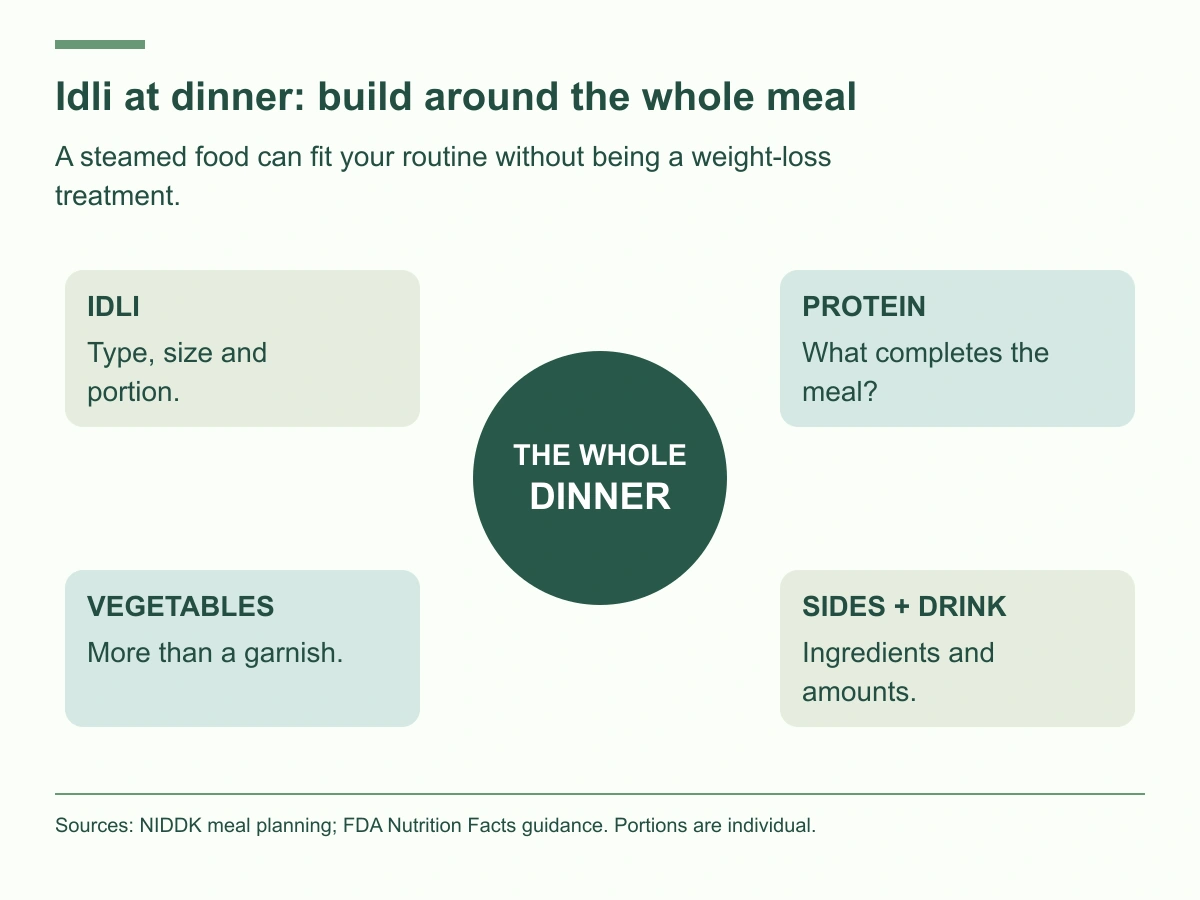
How can you make an idli dinner more balanced?
Idli can provide a carbohydrate base. Look at the foods beside it to understand the full meal. Sambar can contribute vegetables and pulses, but the amount of each depends on the recipe. A thin broth and a substantial lentil-and-vegetable serving should not be assumed nutritionally identical.
Other useful additions may include a vegetable dish and a protein food suited to your preferences, such as yogurt, tofu, eggs, or another familiar option. Pulses can contribute both carbohydrate and protein. The point is to build a meal that fits your needs rather than force every cuisine into the same rigid arrangement.
Our balanced-meals guide offers a broader framework. NIDDK also describes a plate approach that combines vegetables, a carbohydrate food, and protein; an individualized plan may adapt that framework to mixed dishes. NIDDK plate-method guidance
| Part of the dinner | A useful question | A practical adjustment |
|---|---|---|
| Idli | How large are they, and what is the recipe? | Use a serving you can describe consistently. |
| Sambar | Does it include a meaningful amount of pulses and vegetables? | Consider the whole recipe and the amount served. |
| Chutney | Which ingredients and how much are you using? | Enjoy it as part of the meal rather than assuming it is nutritionally invisible. |
| Additional protein | Is the meal satisfying and adequate for your needs? | Include an appropriate protein food if the rest of the meal is lacking. |
| Vegetables | Are they present beyond a small garnish? | Add a side or include them generously in a suitable dish. |
| Drink | Is this water, unsweetened tea, or a sweetened beverage? | Count the drink as part of the meal too. |
These are planning questions, not a prescribed number of idli or a fixed calorie target.
Is steamed food always better for weight loss?
Steaming does not require the same cooking method as deep-frying, but the finished meal still depends on ingredients and portions. A steamed food can be eaten in a very large amount, while added fats, sauces, snacks, and drinks can change the overall meal substantially.
Likewise, fermentation is not proof that a cooked food will produce a particular weight-loss or probiotic benefit. The batter process, finished food, and a clinical outcome are different questions. Do not interpret the word “fermented” as permission to ignore nutrition or as a treatment for digestive symptoms.
Choose foods you enjoy and can prepare reliably. A familiar meal with a useful adjustment is often easier to sustain than repeatedly switching to unfamiliar “diet foods.” Our meal-prep guide for busy schedules discusses how to make a workable routine easier to repeat.

How many idli should you eat?
There is no single number that fits every adult. Size alone makes a universal count unreliable. Your activity, appetite, body size, health conditions, other foods, and treatment goals all influence the appropriate amount.
Start by observing your usual dinner. Are you comfortably satisfied, still hungry, or overly full? Does the meal include enough variety? Are you restricting dinner because of a rule, then finding yourself hungry later? Those observations are more useful than copying another person’s plate without knowing their circumstances.
A dietitian can help translate your needs into portions if you want more structure. People who use carbohydrate counting should work with the actual recipe or label and their prescribed plan. Do not make insulin changes from a generic idli calorie chart. NIDDK carbohydrate guidance
What if you become hungry again before bed?
Hunger after dinner does not automatically mean a lack of discipline. The dinner may have been too small, the day’s intake may have been inadequate, or the meal may not have matched your activity and schedule. A small carbohydrate-only meal can also leave important foods missing from the day.
Look at the pattern before trying to suppress every hunger signal with tea or water. Consider whether meals have been skipped, whether protein foods are regularly included, and whether a planned snack fits your needs. Our guide to hunger, cravings, and food noise explains why these experiences deserve context.
If hunger comes with shakiness, sweating, confusion, or other possible low-glucose symptoms, follow your diabetes care plan and seek appropriate help. Symptoms alone should not be used to diagnose low glucose, but the possibility matters when glucose-lowering medicines are involved.
Diabetes changes the timing conversation
Rice-based idli contains carbohydrate even though it is steamed and may not taste sweet. The amount eaten and the complete meal matter for glucose planning. Other carbohydrate foods, drinks, and accompaniments belong in the same assessment.
NIDDK notes that insulin and sulfonylureas can cause low glucose if a meal is skipped or delayed. Do not postpone dinner simply to follow an internet fasting rule when your treatment plan requires a different routine. Ask the diabetes team whether meal timing or carbohydrate counting is relevant to your prescription. NIDDK guidance
If monitoring is part of your care, record the meal and follow the recommended timing for readings. One isolated result does not tell you that idli is permanently unsuitable. Bring repeated patterns to the clinician instead of independently changing medicines or eliminating entire food groups.
Reflux and uncomfortable late meals need a separate approach
If symptoms occur when you lie down after dinner, discuss the meal-to-bed interval. NIDDK notes that people with nighttime GERD symptoms may improve by eating at least three hours before lying down or going to bed. That is reflux guidance, not proof of a universal fat-loss cutoff. NIDDK reflux nutrition guidance
The amount eaten and individual triggers may also matter. A spicy or rich accompaniment may be more relevant to one person’s symptoms than the idli itself. Avoid unnecessarily removing every flavorful food based on another person’s trigger list.
Persistent pain, vomiting, difficulty swallowing, bleeding, or substantial unintended weight change needs medical assessment. A meal modification should not be used to explain away symptoms that deserve a diagnosis.

Eating idli during GLP-1 treatment
Semaglutide or tirzepatide treatment can change appetite and meal tolerance. If a smaller portion feels comfortable, make sure the broader eating pattern still supplies enough nourishment. Living on a few plain idli because they feel easy to eat is different from including them within varied meals.
A joint nutrition advisory emphasizes adequate intake, protein, hydration, and monitoring during GLP-1 care. It does not identify an idli-specific weight-loss regimen. Nutrition advisory
Persistent nausea, repeated vomiting, or difficulty maintaining fluids should be discussed with the prescribing team. Our semaglutide nausea and vomiting guide explains related questions. For information about assessment-based services, see CoreAge Rx semaglutide care. Confirm the exact preparation and plan with the care team; an article about dinner does not determine treatment eligibility.
A simple way to review your next dinner
Describe the meal you already enjoy: the idli size and type, the sides, the drink, and the time you usually lie down. Choose one useful adjustment, such as adding vegetables, including a suitable protein food, or preparing dinner earlier when reflux makes that helpful.
Then assess comfort, satisfaction, practicality, and any information your clinician asks you to track. You can keep a culturally familiar food while improving the overall pattern. There is no need to make a single evening meal carry the responsibility for your entire weight-management plan.
Educational information for adults; individual treatment decisions require a qualified clinician. Sources reviewed October 7, 2026. Original AI-generated article images depict fictional people and objects, not patient outcomes. Other editorial images are illustrative. Graphics summarize the cited sources.