
String cheese can be a convenient protein-containing snack. Whether it is a useful choice for you depends on the actual product, portion, sodium and saturated fat, any milk-related restrictions, and what you need from the snack. It is not automatically a complete meal, and its small package does not make the nutrition identical across brands.
This guide uses one current manufacturer label as a clear example, then shows how to apply the same questions to your own package. It covers weight management, protein, snack combinations, allergies and practical shopping decisions without prescribing a fixed number of cheese sticks for everyone.
What does one piece provide?
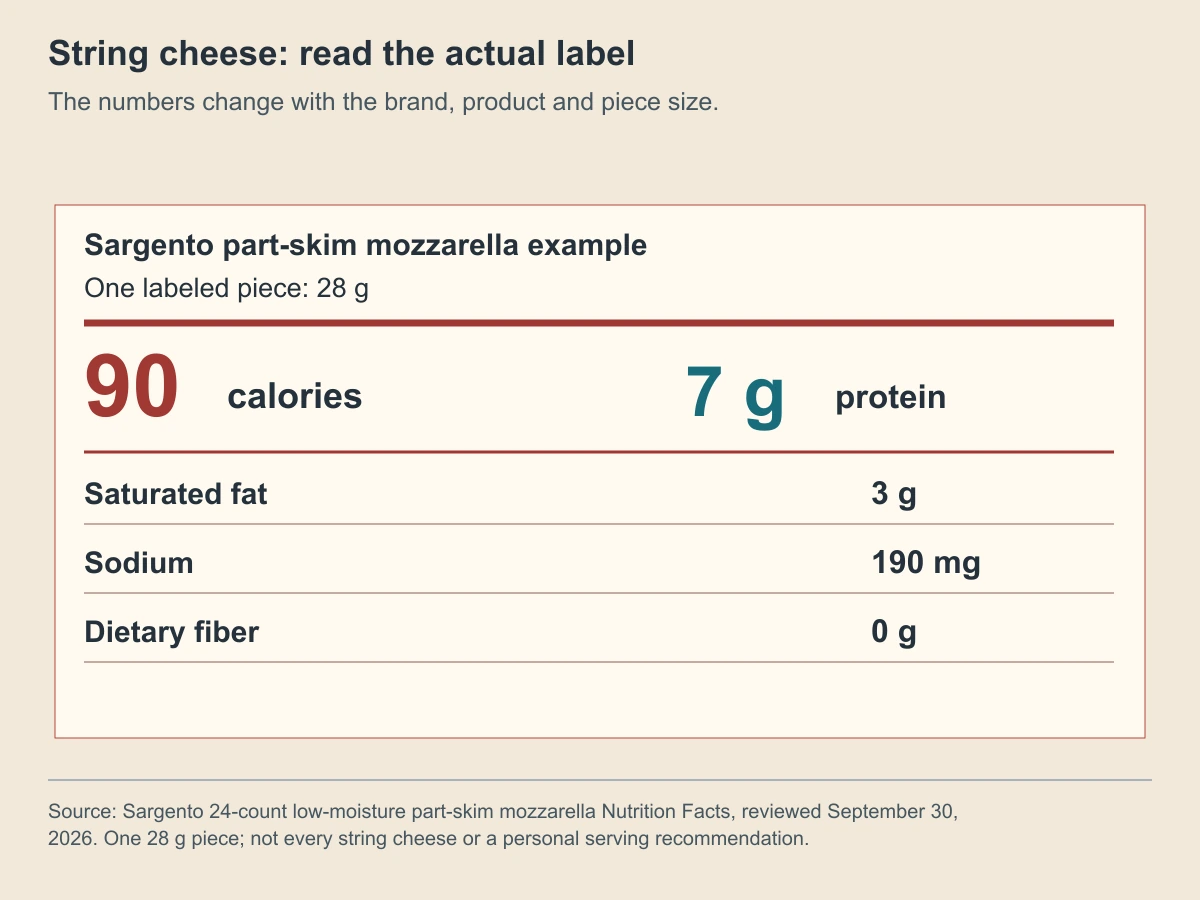
The reviewed Sargento low-moisture part-skim mozzarella string-cheese label, for the 24-count product, lists one 28-gram piece as a serving. That piece provides 90 calories, 7 grams of protein, 6 grams of total fat, 3 grams of saturated fat and 190 milligrams of sodium. It lists no dietary fiber and calcium at 15% of the Daily Value. Manufacturer’s current product label.
| Nutrient | One labeled 28-gram piece in this example |
|---|---|
| Calories | 90 |
| Protein | 7 grams |
| Total fat | 6 grams |
| Saturated fat | 3 grams |
| Sodium | 190 milligrams |
| Carbohydrate | 1 gram |
| Dietary fiber | 0 grams |
| Calcium | 15% Daily Value |
These are product-specific numbers. Other cheeses, piece sizes and reduced-fat options can differ. Read the package you actually buy rather than using this table as a label for every string cheese.
The reviewed page also contains generic marketing text with a different protein figure. This article uses the actual Nutrition Facts table for the named product. If packaging and online information disagree, check the current package and ask the manufacturer about the difference.
Why can it be a practical snack?
An individually packaged cheese is easy to portion and may suit a work break or planned snack. It can provide protein and calcium without requiring cooking. That convenience can help when the alternative is regularly skipping a snack you need or arriving at a meal extremely hungry.
Convenience is not the same as unlimited suitability. The same piece also contributes saturated fat and sodium, and it contains milk. Your preferences, other food choices and health needs determine how those features fit your day.
If you want more variety or a larger snack, add an appropriate food rather than expect cheese to supply everything. Our balanced-meals guide explains how different foods contribute different nutrients and practical benefits.
Is string cheese good for weight loss?
String cheese can fit into an eating pattern that supports weight management, but it does not cause a particular amount of fat loss. A portioned snack may help you plan what you eat. Its effect depends on the rest of the routine and whether the snack replaces, complements or simply adds to your usual intake.
For example, carrying a snack to avoid an unplanned long gap between meals is a different change from eating several pieces in addition to the snacks you already enjoy. Neither situation can be evaluated using the word “healthy” alone.
NIDDK’s weight-management guidance emphasizes a sustainable eating and activity pattern. The calorie-intake guide helps explain overall needs without assigning every adult the same snack allowance. NIDDK eating and activity guidance.
Is 7 grams of protein enough?
Enough for what? The 7 grams in the reviewed piece is a defined contribution to your intake. It does not establish that the piece meets your whole day’s protein needs, completes a meal or is the best choice for every person.
Consider the setting. A cheese piece with another food may be a convenient snack. A full lunch usually has a different job, especially if it needs to keep you comfortable through a long afternoon. If you are using several small snacks in place of meals, review whether that pattern meets your broader nutrition needs.
During weight-management treatment, lower appetite can make it useful to discuss nutrition deliberately. The semaglutide protein guide and tirzepatide protein guide cover related questions. They do not require everyone to choose the same cheese or protein target.
What about saturated fat and sodium?
The reviewed piece contains 3 grams of saturated fat and 190 milligrams of sodium. Those figures belong in the same assessment as the protein and calcium; a favorable nutrient does not cancel the others. Compare the amounts with the rest of your food choices and any instructions from your clinician. Product label.
FDA explains that the Nutrition Facts label and Daily Values can help you compare products. Use similar serving sizes when comparing nutrients, and remember that the label’s serving is not a recommendation for how much you personally should eat. FDA label guidance.
If you need to manage sodium or saturated fat for a medical reason, ask which products and portions fit your plan. A package labeled “part-skim” still has saturated fat in this example. A marketing term should not replace the actual numbers.
What happens if you eat two pieces?
Two pieces of the reviewed product would provide twice the labeled amounts: 180 calories, 14 grams of protein, 6 grams of saturated fat and 380 milligrams of sodium. That is straightforward label arithmetic, not a recommendation to eat two pieces or a statement that two are too many.
This is why the amount consumed matters. A small wrapper can make a serving easy to identify, but several wrappers still add together. The same principle applies to snack packs of nuts, crackers or other foods.
You do not need to keep a detailed log forever to learn from a label. Comparing your usual amount with the stated serving once may be enough to make the nutrition more understandable.

How can you make the snack more complete?
Because the reviewed cheese has no fiber, another food can add something it lacks. You might combine it with fruit, vegetables or suitable whole-grain crackers. These are illustrative combinations; their total nutrition depends on the actual foods and portions.
Think about the purpose of the snack. If you need something small before dinner, one combination may suit you. If lunch has been delayed for hours, a more substantial meal may be needed. A snack should respond to the situation rather than follow an arbitrary rule about package size.
The cantaloupe article discusses a fruit option with its own portion information. The pork-chop guide explores protein as part of a cooked meal. These foods need not compete for one “healthiest” title; they have different uses.
Is string cheese suitable if you have diabetes?
A low carbohydrate amount on one label does not determine the whole meal’s effect or make a food universally appropriate for diabetes. The other foods, medicines, timing and individual care plan matter. NIDDK recommends an individualized eating pattern and explains how carbohydrate-containing foods fit that plan. NIDDK diabetes nutrition guidance.
If you combine cheese with fruit or crackers, include those foods in the assessment rather than counting only the cheese. Ask the care team how snacks fit your medication and meal routine if that is unclear.
Do not replace a prescribed strategy for low blood glucose with a snack chosen only because it contains protein. Emergency and medication-related instructions need to come from your diabetes team. This article is about ordinary food selection, not treatment of a low-glucose episode.
Milk allergy and lactose questions are different
The reviewed cheese contains pasteurized part-skim milk, cheese culture, salt and enzymes. Milk is a major food allergen, and people with a milk allergy should use their clinical avoidance plan and read current ingredient and allergen information. Peeling the cheese or removing a wrapper does not remove the milk ingredient. Manufacturer ingredient list, FDA food-allergen information.
Lactose intolerance is a different issue involving difficulty digesting lactose. A “low carb” or “part-skim” description does not tell you how a product will affect you. If dairy causes symptoms, discuss the symptoms and suitable options with a clinician rather than diagnosing the problem from a snack label. NIDDK lactose-intolerance information.
If you need a dairy-free option, compare its actual ingredients and nutrients. An alternative may have a different protein amount, calcium fortification or allergen profile. Similar packaging does not make two foods nutritionally interchangeable.
What should you check while shopping?
Start with the current package, then ask:
- What is the piece size and labeled serving?
- How much protein does that serving provide?
- What are the saturated fat and sodium amounts?
- Does it contain an ingredient I need to avoid?
- Does the package give refrigeration or handling instructions?
- What would I eat alongside it if I need more than a small snack?
Compare products in similar amounts. A larger piece with more protein may also have more of other nutrients. A lower-fat version should be judged on its own label, taste and usefulness rather than assumed to be identical in every other respect.
Cost and practicality matter too. Choose a food you can store safely and actually enjoy. A nutrition plan is harder to maintain if every snack feels like a compromise you resent.
Storage and taking it with you
Follow the package’s refrigeration and handling instructions. An individual wrapper does not automatically make a refrigerated food shelf stable. If you need to carry it for a long period, use an appropriate food-storage plan rather than assume the wrapper protects it from every temperature condition.
Keep the snack accessible when you expect to need it, and consider where you can store it at work or during travel. If refrigeration is difficult, another suitable food may be more practical. The best snack on paper is not useful if the routine cannot support it safely.

What if appetite is lower on treatment?
An easy snack can be helpful, but avoid allowing a few cheese pieces to become the whole day’s eating pattern because larger meals feel difficult. Tell the supervising clinician if nausea, vomiting or loss of appetite is interfering with adequate food or fluids.
CoreAge Rx’s semaglutide service page describes assessment-based compounded treatment for eligible adults. A snack choice is separate from medication eligibility. Compounded GLP-1 products do not have the same FDA approval status as branded medicines, and food advice does not establish medication safety. FDA compounded GLP-1 information.
Common questions
Does string cheese have fiber?
The reviewed product lists 0 grams of fiber. If you want a snack with fiber, consider a suitable additional food or another snack with its own label information.
Are all brands 90 calories?
No. This figure belongs to the named 28-gram piece. Check your package’s size and current Nutrition Facts rather than applying the example to every brand.
Is it healthy every day?
There is no universal frequency rule in this article. Consider your overall pattern, variety and medical needs. A convenient food can be included without becoming the only snack you use.
What is the simplest answer?
String cheese can offer convenient protein and calcium, with product-specific saturated fat, sodium and milk ingredients to consider. Read the actual label, choose an amount that fits the occasion, and add other foods when the snack needs to do more.
Educational information for adults; individual treatment decisions require a qualified clinician. Sources reviewed September 30, 2026. Original AI-generated article images depict fictional people and objects, not patient outcomes. Other editorial images are illustrative. Graphics summarize the cited sources.