
Pork chops can fit into a balanced eating pattern, including a weight-management plan. The answer depends on the cut, portion, added ingredients, cooking method and the rest of the meal. A plain fresh chop and a cured, smoked chop can have very different nutrition; the word “pork” does not settle those details.
This guide explains how to compare a package, build a more complete meal and cook pork safely. It uses clearly identified manufacturer examples rather than assigning one calorie or protein number to every chop. You can enjoy a food without treating it as either a weight-loss treatment or something that must be forbidden.
Start with the exact cut and preparation
Look at what you are buying: bone-in or boneless, fresh or fully cooked, plain or marinated, and the cut named on the package. A large bone-in chop also includes weight you will not eat. A small boneless portion should not be assumed to have the same edible amount.
Check whether the nutrition table describes the product as sold or a specified prepared serving. Cooking changes water content, and sauces or breading add ingredients. An estimate for one product or serving should not silently become the number for a whole restaurant meal.
If you want a quick comparison, begin with serving size, protein, total and saturated fat, and sodium. Those items are more useful than a general “lean” or “healthy” claim. FDA’s label guidance explains that nutrient amounts refer to the stated serving and that serving size is not a personal portion prescription. FDA Nutrition Facts guidance.
What nutrition does a pork chop provide?
A specific fresh-pork example is Smithfield’s boneless pork loin, a product the manufacturer describes as suitable for slicing into chops. Its actual Nutrition Facts table lists a 4-ounce serving with 190 calories, 23 grams of protein, 10 grams of total fat, 3.5 grams of saturated fat and 60 milligrams of sodium. Those figures describe this labeled product, not every cooked pork chop. Manufacturer’s fresh pork loin label.
The page’s general marketing text mentions a different protein figure. For this article, the actual Nutrition Facts table is the source. When information seems inconsistent, the package you buy and clarification from the manufacturer are better than choosing whichever number sounds more appealing.
| Nutrient | Specific fresh boneless loin example: labeled 4-ounce serving |
|---|---|
| Calories | 190 |
| Protein | 23 grams |
| Total fat | 10 grams |
| Saturated fat | 3.5 grams |
| Sodium | 60 milligrams |
| Dietary fiber | 0 grams |
Protein is one reason a chop can be a useful meal component. It does not make the food a complete meal by itself. The zero-fiber figure also gives you a practical reason to include other foods, such as vegetables, beans or an appropriate grain, rather than expect the meat to provide every nutrient.
Fresh and smoked chops are different comparisons
For contrast, Smithfield’s fully cooked hickory-smoked boneless chops list 110 calories, 14 grams of protein and 780 milligrams of sodium for a 3-ounce serving. The product is cured and includes added ingredients. That is a different preparation and a different serving size from the fresh loin example. Manufacturer’s smoked-chop label.
Do not read the two calorie figures as proof that a smoked chop is always the better weight-management choice. The portions differ, and sodium and other characteristics matter too. The point is to inspect the actual product rather than borrow a generic pork-chop estimate.
If you are choosing for a medical sodium limit, discuss the package with your clinician or dietitian. A seasoning blend, marinade or sauce can also change the amount. “Fully cooked” describes preparation; it does not mean the product is nutritionally identical to a fresh chop.
Are pork chops suitable for weight loss?
A pork chop can be part of a meal within an eating pattern that supports weight management. It does not cause a particular amount of fat loss on its own. Portion, preparation and the rest of the day determine how the choice fits your needs.
For example, a meal with a chop, vegetables and beans is different from a large breaded chop with several rich sides and a sugary drink. Those examples are not a rule that one meal is always allowed and the other is forbidden. They show why the main ingredient’s name cannot tell you the meal’s total intake.
NIDDK emphasizes an eating and activity pattern that can be maintained. Our calorie-intake guide and balanced-meals guide explain how to review the broader pattern without selecting a universal chop size or copying another person’s calorie target. NIDDK weight-management guidance.
What is a practical portion?
The labeled serving is a reference for interpreting the nutrition table, not a requirement that everyone eat exactly that amount. Your hunger, meal composition, daily needs and any medical advice can affect the portion that works for you.
Notice the size you normally buy and the amount you actually eat. A package may contain several servings. If you need a clearer estimate, compare the edible portion with the label and note how it is prepared. You do not need to assume that every chop in a package equals one serving.
If meals regularly leave you uncomfortable or hungry soon afterward, review the complete meal. Adjusting the balance of foods and meal timing may be more useful than repeatedly making the main ingredient smaller. Sustainable changes should still allow you to eat enough.

What should you serve alongside a chop?
Think about what the rest of the plate contributes. Vegetables add variety; beans or an appropriate grain can add fiber and carbohydrate; sauces and cooking fats add flavor but also change the nutrition. Choose combinations that fit your preferences, budget and health needs.
Illustrative ideas include a chop with green vegetables and beans, a sliced chop in a meal with roasted vegetables and a grain, or a smaller portion alongside a substantial bean-based side. These are menu ideas, not measured calorie plans. The actual ingredients and amounts still matter.
The cantaloupe guide discusses a fruit option for a meal or dessert. The string-cheese article explores another protein-containing food in a different setting. Variety helps you avoid expecting one ingredient to do every nutritional job.
Does the cooking method matter?
Grilling, roasting and pan cooking can all produce a meal you enjoy. Nutrition changes when you add breading, large amounts of cooking fat, a sweet glaze or other ingredients. A plain-food estimate does not include those additions automatically.
If you want to change a familiar recipe, choose one adjustment at a time. You might compare a seasoning with a sauce, use a measured amount of cooking fat once to understand the recipe, or include a different side. A satisfying meal that you can repeat is more useful than a recipe stripped of everything you like.
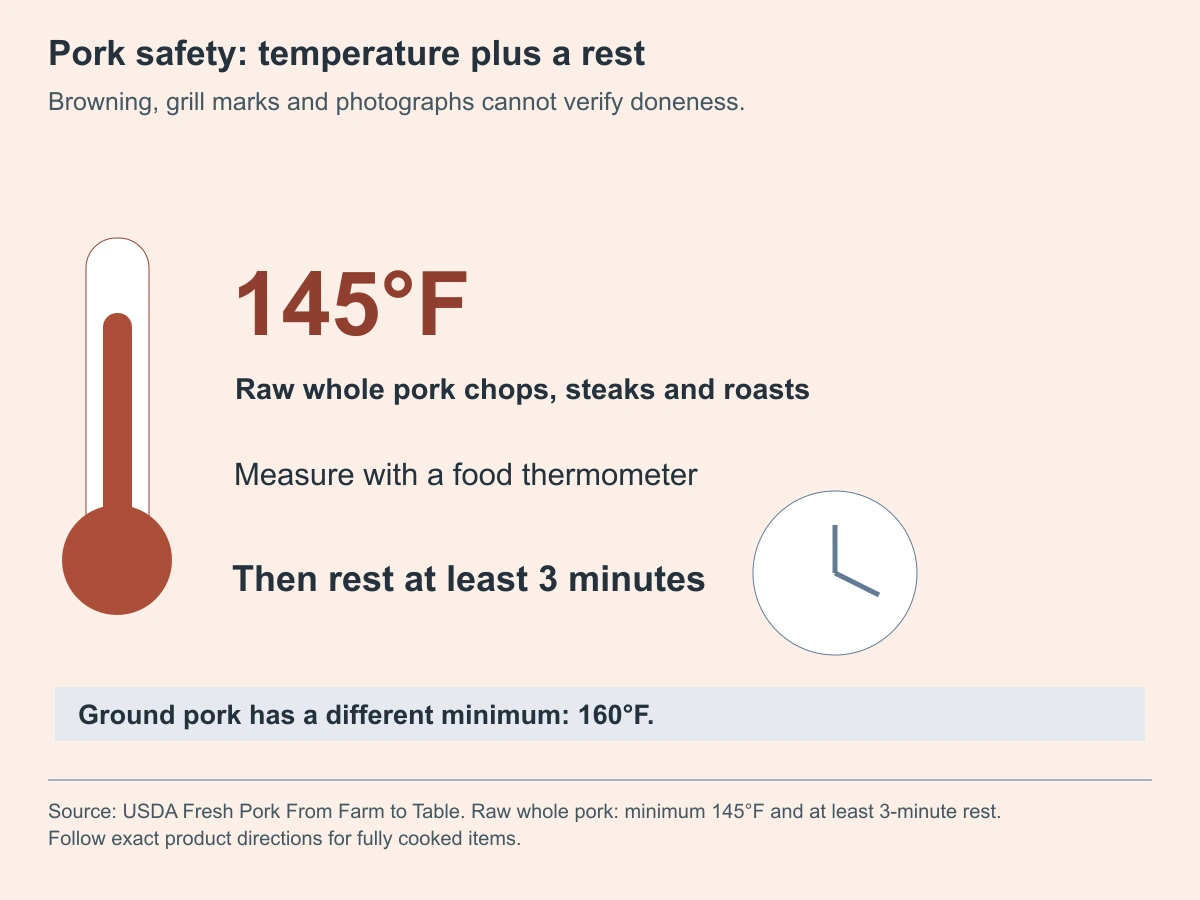
Safety is a separate issue. A chop is not proven safe because it has grill marks, appears browned, or resembles a photograph. Use a food thermometer and the guidance for the actual type of pork.
What temperature is safe for pork chops?
USDA advises cooking raw whole pork chops, steaks and roasts to a minimum internal temperature of 145°F, measured with a food thermometer, followed by a rest of at least three minutes before eating or carving. Ground pork has a different minimum: 160°F. USDA fresh-pork safety guidance.
Place the thermometer so it measures the appropriate thick part of the meat, and follow the thermometer’s directions. A fixed number of cooking minutes cannot account for every thickness, starting temperature, appliance or heat level. A photograph cannot confirm the internal temperature.
Fully cooked products need their own package heating and storage instructions. Do not treat reheating a specific ready-to-eat product as the same task as cooking a raw chop. The manufacturer may also recommend a longer rest for a particular product; the cited three-minute minimum is the USDA guidance for raw whole pork.
How should you store pork and leftovers?
USDA’s fresh-pork resource lists refrigerator storage of three to five days for fresh pork chops and three to four days for home-cooked pork, with the refrigerator at 40°F. Those are general safe-storage limits, and the package and handling history still matter. USDA storage guidance.
Keep raw meat away from foods that will be eaten without cooking. Use clean utensils and surfaces, and avoid carrying raw-meat juices onto salad or cut fruit. FDA’s produce-safety guidance explains why ready-to-eat produce should be separated from raw meat and utensils used for it. FDA produce handling.
Plan portions and leftovers in a way that makes refrigeration straightforward. A meal-prep plan is only useful if the cooked food is handled safely. Do not keep uncertain leftovers simply to avoid changing a diet plan.
What if you take semaglutide or tirzepatide?
Lower appetite can make a large or rich meal less appealing. You may prefer a smaller portion with other suitable foods, but continue to consider overall nutrition. Difficulty eating is a reason to review symptoms and the treatment plan, not to rely on a single food or keep reducing intake indefinitely.
The semaglutide protein guide and tirzepatide protein guide discuss nutrition during treatment. Report persistent vomiting, inability to keep fluids down or other concerning symptoms to the supervising clinician.
CoreAge Rx’s tirzepatide service page describes an assessment-based compounded option for eligible adults. A meal idea does not determine medication eligibility, and a compounded product should not be assumed to have a branded medicine’s FDA approval or trial results. FDA compounded GLP-1 information.
Common questions
Are boneless chops automatically healthier?
Removing a bone does not establish the meat’s fat, sodium or portion. Compare the cut and preparation, then read the actual label. Bone-in weight and edible weight are also different quantities.
Is a smoked chop the same as a fresh chop?
No. The reviewed examples have different ingredients, serving sizes and sodium amounts. Use the package you buy rather than a generic “pork chop” number.
Can a chop replace every other protein food?
You do not need to use one food at every meal. Different foods offer different nutrients and practical advantages. Variety can make a plan easier to enjoy and maintain.
What is the simplest useful change?
Identify the product, read its serving and ingredients, include other foods that complete the meal, and check cooking temperature properly. Those concrete steps offer more value than labeling all pork chops healthy or unhealthy.
Educational information for adults; individual treatment decisions require a qualified clinician. Sources reviewed September 30, 2026. Original AI-generated article images depict fictional people and objects, not patient outcomes. Other editorial images are illustrative. Graphics summarize the cited sources.