When appetite is low, a greens powder should not crowd out the foods you need for energy, protein, and other nutrients. A green drink can be convenient, but convenience alone does not make it a meal replacement. Persistent difficulty eating deserves attention.
Identify the problem you are trying to solve
Are vegetables hard to prepare, does food feel unappealing, or do you become full after a few bites? Those are different problems. A powder may simplify a drink, but it does not explain why eating has become difficult or supply every nutrient that meals normally provide.
If the change followed a new medication, dose adjustment, illness, or dental problem, tell your care team. Do not assume that adding a supplement is the complete solution.
What Green Scene contributes
The pictured label lists 20 calories and less than 1 g dietary fiber per scoop, with a 4.5 g plant blend. It does not present the product as a complete source of protein, energy, vitamins, and minerals for a meal.
That makes replacing breakfast or lunch with Green Scene and water a different nutritional choice from taking it alongside a meal. The NIH multivitamin guidance also explains why supplements cannot replace the range of benefits from a varied food pattern.

Build around tolerated foods
Work with your clinician or dietitian on portions, textures, and meal timing that suit you. A smaller familiar meal may be more practical than a very large smoothie with numerous powders. Keep track of foods that are comfortable rather than labeling entire food groups as impossible after one difficult meal.
USDA’s vegetable guidance includes cooked, frozen, canned, and other forms. You can consider a texture you tolerate without assuming that vegetables must always mean a large raw salad.
Questions for a nutrition check-in
- Am I getting enough energy and protein for my situation?
- Is the appetite change expected, or should it be evaluated?
- Would smaller meals or different textures help?
- Is there a reason to use a nutritionally complete drink?
- Does this specific greens product fit with my medicines and symptoms?
Bring a realistic account of your intake and the actual supplement label. A short food record can be more useful than a list of foods you intended to eat.
During GLP-1 treatment
Use our GLP-1 diet guide for the broader food discussion. Contact your prescriber for persistent vomiting, trouble keeping fluids down, severe abdominal pain, or significant ongoing weakness. Those problems should not be managed by substituting more powder for meals.
If Green Scene fits your plan, follow the current label and use it as an addition. The greens-versus-multivitamin comparison can help clarify which nutritional questions the label can actually answer.

Identify what is becoming difficult to eat
Low appetite can mean several things: food seems unappealing, small portions feel filling, nausea interrupts meals, or a busy schedule makes eating easy to postpone. Start by describing the specific barrier. Different problems require different practical solutions.
Write down a typical day, including foods that remain comfortable and meals that are frequently missed. Note whether the issue is recent, persistent, or linked to a medicine change or illness. This record can help a clinician or dietitian identify what needs attention.
A greens powder may feel like an easy way to accomplish something nutritional when eating is difficult. That feeling is understandable, but the label still matters. Green Scene mixed with water does not supply the full energy, protein, and range of nutrients that missing meals would have provided.
Put the product’s contribution next to the unmet need
The reviewed Green Scene serving supplies 20 calories and less than 1 g dietary fiber, with a 4.5 g proprietary plant blend. These amounts should be understood as the product’s disclosed contribution, not as a complete meal or a nutritional safety net for very low intake.
If the main difficulty is getting enough protein-containing food, a botanical blend does not directly solve it. If the difficulty is maintaining overall nourishment, a very low-calorie drink does not resolve that either. The product may accompany a food plan, but it should not obscure the specific need.
This comparison can help prioritize a limited appetite. Ask which foods or drinks provide the nutrients you most need in a form you can manage. A qualified nutrition professional can tailor that discussion to health conditions, preferences, and treatment goals.
Use smaller practical eating opportunities when appropriate
For some people, several manageable eating opportunities are easier than relying on a few large meals. The appropriate arrangement depends on the person and any clinical instructions. The principle is to create opportunities for nourishment that fit actual tolerance rather than repeatedly planning portions that remain unfinished.
Examples to discuss include a tolerated protein-containing food, a familiar carbohydrate food, and fruits or vegetables in portions and textures that work for you. Yogurt, eggs, tofu, soups, sandwiches, or other culturally familiar foods may be practical for different people. These are options to individualize, not a prescribed menu.
Keep preparation realistic. Ready-to-use foods, leftovers, or help from another person may address the barrier more effectively than a new supplement. The goal is food you can actually eat, not an elaborate plan that requires energy and appetite you do not currently have.
Consider whether the drink takes the place of food
A large beverage before a meal may leave less room for the meal for someone who already feels full quickly. Notice whether the timing and volume of a greens drink make eating easier, unchanged, or harder. This is a practical observation, not a reason to force a particular schedule.
If you use the powder in a smoothie, assess the complete recipe. A smoothie with suitable foods may have a different nutritional role from powder and water, but the role depends on the ingredients and amounts. The greens scoop does not automatically turn any recipe into a balanced meal replacement.
The mixing guide explains how to keep preparation simple. Bring the recipe to a dietitian when the drink is intended to address a significant nutrition problem.
During prescription weight-management treatment
Changes in appetite can be part of the treatment experience, but persistent poor intake, vomiting, or difficulty maintaining fluids deserves attention from the prescriber. Do not assume every symptom should be managed by replacing meals with supplements.
Tell the care team what you are actually eating and drinking, including supplements. A statement such as “I am taking greens every morning” does not show whether protein, energy, or fluids are adequate. A short meal record provides much more useful information.
Keep medication changes with the prescriber. A greens powder does not replace follow-up or establish a treatment for medication-related symptoms. The GLP-1 nutrition guide provides broader questions to discuss alongside this article.
Prepare for a nutrition check-in
| Information to bring | Why it helps |
|---|---|
| Typical meals and unfinished portions | Shows the actual intake pattern |
| Foods and textures that are tolerated | Provides practical starting options |
| Symptoms and their timing | Helps distinguish different barriers |
| Medicines and recent changes | Adds relevant treatment context |
| Supplement labels and drink recipes | Clarifies what the products contribute |
| Weight or function changes, if relevant | Helps assess the significance of low intake |
The record does not need to be perfect. A few representative days can be more helpful than trying to describe an entire month from memory. Seek prompt advice if symptoms are severe rather than waiting to finish tracking.
Frequently asked questions
Can greens powder replace a meal when I am not hungry?
Do not assume that it can. Green Scene mixed with water is not a complete meal. If eating is difficult, discuss practical nourishment options with a clinician or dietitian rather than relying on the plant blend to cover the missing food.
Would two scoops provide enough nutrition?
Do not exceed the label to pursue meal replacement. More powder changes the ingredient exposure without establishing a complete protein, energy, vitamin, and mineral profile. Address the unmet food need directly.
Is a smoothie always better than solid food?
The better option depends on tolerance, ingredients, portion, and the person’s needs. A smoothie can be convenient, but it can also become too large or lack important components. Evaluate the actual recipe rather than the format alone.
When should low appetite be reviewed medically?
Seek advice when it is persistent, worsening, associated with unintentional weight loss or significant weakness, or makes food and fluid intake difficult. Repeated vomiting or severe symptoms need prompt attention. A supplement should not delay that assessment.
Explore Green Scene™
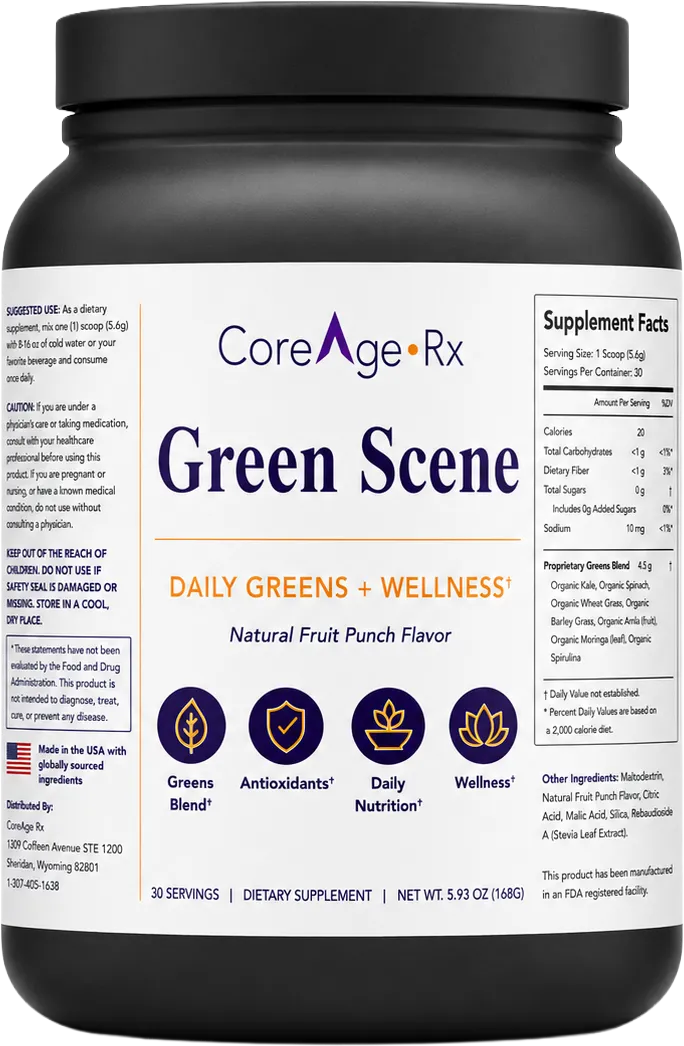
Green Scene is CoreAge Rx’s fruit punch greens powder. The pictured label lists a 4.5 g proprietary greens blend and less than 1 g of dietary fiber per scoop. See the current Green Scene™ page and check the bottle you receive before use.
Related reading
- Greens Powder: What It Can Add and What It Cannot Replace
- Greens Powder vs. Vegetables: Can a Scoop Replace a Serving?
- Greens Powder vs. a Multivitamin: How to Compare Them
- Fruit choices in a balanced weight-management plan
Educational information, not individualized medical advice. Product information and linked research checked September 15, 2026. Ingredient research does not establish identical effects for a finished supplement.