
A greens powder and a multivitamin are not automatically interchangeable. A multivitamin usually lists specific vitamins and minerals with their amounts. A greens blend may mainly list plant ingredients under one total weight. The right comparison starts with the nutritional need you are trying to address.
Look for a specific need
If a clinician has identified low iron, vitamin B12, vitamin D, or another deficiency, do not assume a greens powder provides the required nutrient or treatment amount. An ingredient such as spinach is not a substitute for a disclosed iron amount, and even a disclosed nutrient may not match an individualized treatment plan.
The NIH multivitamin overview explains that formulas vary and that supplements do not replace a varied diet. The word “multivitamin” itself does not establish that every product has the same ingredients or amounts.
A label-to-label comparison
| Check | Why it matters |
|---|---|
| Named vitamins and minerals | Identifies what is actually supplied |
| Amount and Daily Value | Allows comparison between servings |
| Botanical blend | May not disclose each plant’s quantity |
| Other supplements already used | Helps avoid unnecessary overlap |
| Intended purpose | Convenience differs from treating a deficiency |
Write down actual numbers instead of comparing the number of benefit icons on the containers. A large ingredient list can still leave you without the nutrient information needed for a decision.

What Green Scene tells you
The pictured Green Scene label lists a 4.5 g proprietary blend of seven plant ingredients. It also lists calories, carbohydrates, fiber, sugars, and sodium. It does not provide a complete quantified vitamin-and-mineral profile that would let you equate a scoop with a multivitamin.
That is a disclosure limit, not a claim that the plants contain no nutrients. It means the label does not support a numerical substitution. See the Green Scene ingredient guide for the actual listed information.
Can you take both?
Sometimes people use both, but “more products” is not a nutritional goal. Check for overlapping added vitamins, minerals, or botanicals and bring all labels to your clinician or pharmacist. This matters especially when a person also takes targeted nutrients, fortified shakes, or prescription medicines.
The FDA’s supplement questions and answers emphasize the importance of considering ingredients and potential interactions. Do not assume two products are compatible just because both are sold for everyday wellness.
Decide what each product would do
A greens powder might be chosen because you enjoy the drink. A specific nutrient supplement might be chosen to address a documented need. Keep those reasons clear, and keep food in the plan. Read greens versus vegetables and how to read the label before treating any one product as comprehensive nutrition.

Identify whether the question is about convenience or a nutrient gap
A person may choose a greens powder because they enjoy a quick plant-based drink. A multivitamin may be considered because of a broader nutrition concern or a clinician’s recommendation. Those motivations can overlap, but they are not the same job.
If the concern is a diagnosed deficiency, the relevant questions are the nutrient, the amount, the treatment plan, and follow-up. A product containing a plant associated with that nutrient does not automatically supply an adequate or known amount. Keep deficiency treatment with the clinician who identified the problem.
If the concern is simply that meals have become irregular, begin by reviewing the meal pattern. Neither category should be used as a reason to ignore inadequate food intake. The NIH multivitamin guidance explains why supplements do not replace the variety supplied by foods.
Compare two labels line by line
Place the panels side by side and identify the named vitamins and minerals, their amounts, and their Daily Values when listed. Then separately identify botanical blends and their disclosed weights. This prevents a long ingredient list from being mistaken for a complete nutrient profile.
For example, a multivitamin may explicitly list a nutrient amount, while a greens powder may list spinach within a proprietary blend. The spinach entry does not provide the same information. Without a stated nutrient amount, you cannot make a direct dose comparison for that nutrient.
Green Scene’s reviewed label discloses a 4.5 g greens blend and less than 1 g dietary fiber. It does not provide a complete vitamin-and-mineral profile that can be treated as interchangeable with a multivitamin panel. That is a limit of the available information, not an invitation to estimate the missing values.
Use a simple overlap worksheet
| Product in the routine | What to record | What to avoid assuming |
|---|---|---|
| Multivitamin | Named nutrients, amounts, and serving frequency | That every formulation has the same contents |
| Greens powder | Disclosed nutrients, blend details, and other ingredients | That plant names establish nutrient doses |
| Single-nutrient supplement | Exact amount and reason for use | That it can be ignored when counting totals |
| Fortified drink or other supplement | Nutrients listed on its panel | That a beverage cannot add to overlap |
This worksheet is especially useful when several products are taken for different reasons. The body does not separate the same nutrient into unrelated categories because one source is called a drink and another is called a vitamin.
More products can make a routine harder to interpret
Adding a greens powder, multivitamin, and several single-nutrient products at once creates multiple changes. If you feel better or develop discomfort, it becomes difficult to identify the relevant factor. The new routine may also contain overlapping nutrients or ingredients that deserve review.
Bring complete labels to a clinician or pharmacist when medicines or medical conditions are involved. Do not rely only on front-panel photographs. The other-ingredients list, directions, and actual serving frequency may matter to the assessment.
If you cannot explain what each product is intended to do, pause before adding another. A simpler plan with clear purposes is easier to follow and reassess. Simplifying does not mean every person should make the same choice; it means each item should have a reason to remain in the routine.
Do not use “natural” as a dose comparison
Words such as “whole food,” “plant based,” or “natural” do not tell you how much of a nutrient is present or whether the amount fits an identified need. Likewise, a conventional vitamin panel does not guarantee that every ingredient is necessary for a particular person.
Evaluate the amount, form, evidence, and purpose instead of treating a marketing category as the answer. A product can contain recognizable plants and still leave important nutrient amounts undisclosed. Another product can list precise amounts while providing more of a nutrient than you personally need.
The FDA supplement guidance also helps distinguish marketing language from regulatory approval. A dietary supplement being available for purchase does not establish that it treats a deficiency or medical condition in every user.
A practical decision sequence
First, write down the problem you want to address. Second, review the food pattern and any relevant clinical findings. Third, check whether the proposed product supplies a known amount of the relevant ingredient or nutrient. Fourth, review overlap with the existing routine. Finally, decide how you will know whether the product remains appropriate.
For a greens drink used for taste and convenience, the review may focus on comfort and whether it displaces meals. For a clinician-recommended nutrient plan, the review may involve specific follow-up instructions. Do not use the first type of personal observation as a substitute for the second type of clinical assessment.
Keep the current bottle information. Formulations can change, and a routine that was previously reviewed may need another look when a product changes. A clear record makes that conversation easier.
Frequently asked questions
Can Green Scene replace my prescribed nutrient supplement?
Do not make that substitution on the basis of its plant ingredients. The reviewed label does not establish equivalence to a prescribed nutrient amount. Discuss any change with the clinician managing the deficiency or treatment plan.
Is taking both always unnecessary?
The answer depends on the products and the purpose of each. Some routines may contain avoidable overlap, while others involve different intended roles. Review the complete panels and health context rather than applying a universal rule.
Does a greens powder contain zero vitamins if amounts are not listed?
An undisclosed amount is not the same as zero. It means the reviewed information does not support a precise comparison. Do not count an unknown amount as a confirmed dose or assume it supplies a complete daily requirement.
Should I choose whichever product has more ingredients?
Ingredient count is a poor substitute for matching a product to a need. Clear amounts, appropriate use, tolerance, and a defined purpose are more useful than the length of the panel.
Explore Green Scene™
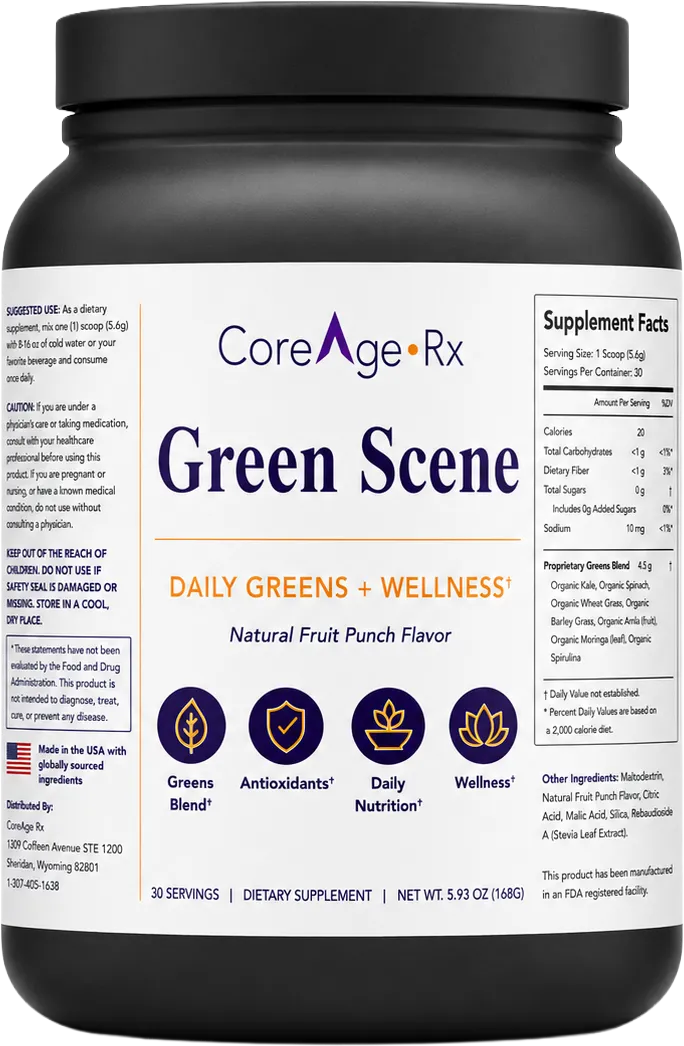
Green Scene is CoreAge Rx’s fruit punch greens powder. The pictured label lists a 4.5 g proprietary greens blend and less than 1 g of dietary fiber per scoop. See the current Green Scene™ page and check the bottle you receive before use.
Related reading
- Greens Powder: What It Can Add and What It Cannot Replace
- How to Read a Greens Powder Label
- Greens Powder With a Low Appetite: Keep Real Meals in the Plan
- Fruit choices in a balanced weight-management plan
Educational information, not individualized medical advice. Product information and linked research checked September 15, 2026. Ingredient research does not establish identical effects for a finished supplement.