
A greens powder can coincide with gas, fullness, or other digestive symptoms, but the cause is not always the greens themselves. The serving, the full ingredient list, the drink used for mixing, and other recent changes all deserve a look. Bloating is not proof of detoxification.
Review the whole drink
Write down the powder amount, the liquid, and any additions. Milk, protein powders, large fruit portions, sweeteners, or another supplement can change the finished drink. Starting several products together makes it difficult to identify which change matters.
The FDA’s supplement guidance encourages consideration of the complete formula. Green Scene’s pictured label includes the seven-plant blend plus maltodextrin, flavoring, citric and malic acids, silica, and stevia-derived rebaudioside A. Do not assume it is only dried leafy vegetables.
Do not assume every greens powder is high in fiber
Some formulas add substantial fiber or prebiotics; others do not. Green Scene’s pictured label lists less than 1 g dietary fiber per scoop. Its 4.5 g blend weight is a different number. That means a generic explanation about a large fiber dose may not fit this product.
Read do greens powders have fiber? before using blend weight to explain symptoms. Your overall diet may still have changed at the same time, especially if you also added beans, high-fiber bars, or a separate fiber supplement.

A practical symptom record
For a short record to discuss with your clinician, note:
- When the drink was taken and whether it accompanied food.
- The exact product and labeled serving used.
- Other new foods, medicines, or supplements.
- The type, duration, and severity of symptoms.
- Whether symptoms affect meals, sleep, or hydration.
This is more informative than repeatedly increasing or switching products in search of a quick fix. If a reaction was significant, do not keep taking the product just to confirm the connection.
When to stop treating it as routine discomfort
Pause the supplement and seek advice for persistent or worsening symptoms. Severe abdominal pain, repeated vomiting, blood in stool, or difficulty keeping fluids down needs prompt medical evaluation. Do not label these effects as a necessary “cleanse.” The NCCIH detox overview explains the weak basis for many such claims.
If you try the routine again
If your clinician considers it reasonable, use the current label and agree on what symptoms would make you stop. Keep preparation simple, as described in how to mix greens powder. Changing timing may help convenience, but it is not a guaranteed treatment for bloating. A product that repeatedly feels uncomfortable does not have to remain part of your day.

Describe the discomfort precisely
Abdominal fullness after a large drink, visible distension, gas, pain, and a change in bowel habits are different observations. Start by naming the symptom and when it occurs. This is more useful than placing every uncomfortable experience under the broad label “greens bloating.”
Also note the severity and whether it interferes with meals, fluids, sleep, or ordinary activity. Mild transient fullness and persistent worsening pain deserve different responses. A symptom record should make it easier to seek appropriate advice, not become a reason to delay it.
If the symptom began after starting a product, include that timing in the record. It makes the new product relevant, but it does not prove that a single ingredient is the cause. The beverage, meal pattern, medicines, and other recent changes may also need review.
Reconstruct the whole drink
Write down everything that went into the glass: the greens serving, liquid, protein powder, fruit, yogurt, sweeteners, fiber products, and other supplements. Include approximate quantities and whether the recipe was new. A drink described as “one scoop of greens” may actually contain several new ingredients and a large total volume.
For Green Scene, keep the actual serving clear. The reviewed directions specify one scoop daily. More scoops change all ingredients, not just the plant blend. If the scoop was heaping or borrowed from another container, that is relevant information rather than a minor preparation detail.
Check the other-ingredients panel as well as the botanical list. The reviewed formula includes acids, flavoring, maltodextrin, silica, and rebaudioside A. Those names can guide a specific review, but the list alone does not identify which ingredient, if any, caused a particular person’s symptoms.
Avoid the automatic “too much fiber” explanation
Some greens products contain added fibers, but the category name does not establish a high fiber amount. Green Scene’s reviewed label lists less than 1 g dietary fiber per scoop. Its 4.5 g greens blend is not a 4.5 g fiber disclosure.
If the drink also contains oats, fruit, a separate fiber powder, or other ingredients, the total beverage may still have a different fiber profile. That is why the recipe matters. Do not attribute the entire experience to the greens powder without considering what was added alongside it.
The fiber-label article explains the arithmetic. Understanding the amount helps narrow the discussion, but it still does not diagnose the cause of bloating.
Use a record that a clinician can review quickly
| Detail | What to include |
|---|---|
| Product information | Exact product, current label, and lot if relevant |
| Preparation | Actual scoop, liquid, and additional ingredients |
| Timing | With food, before a meal, or another clear event |
| Symptoms | Specific sensation, bowel changes, and severity |
| Other changes | New medicines, illness, foods, or supplements |
| Course | Whether symptoms resolve, recur, or worsen |
You do not need a complex scoring system. A few accurate entries are often easier to interpret than a long list of vague descriptions. Bring the complete labels if more than one supplement is involved.
Do not interpret symptoms as proof of detoxification
Gas, diarrhea, headache, or fatigue does not demonstrate that toxins are leaving the body. The NCCIH review of detoxes and cleanses explains the evidence limitations around such claims. A product should not be credited with a benefit simply because it produces an unpleasant reaction.
This matters because a detox explanation can encourage someone to continue through worsening symptoms. It can also distract from a preparation issue, intolerance, medicine-related problem, or unrelated illness. Keep the observation separate from the marketing story attached to it.
If a seller describes every symptom as expected cleansing, ask what evidence supports that interpretation and which symptoms require stopping. A credible response should leave room for ordinary medical assessment rather than making the claim impossible to question.
Know when further experimentation is not the right next step
Persistent or worsening abdominal pain, repeated vomiting, blood in stool, or an inability to maintain food and fluid intake needs medical advice. Severe symptoms, faintness, or signs of significant dehydration warrant prompt attention. Do not keep changing flavors or mixing ratios while assuming the problem must be minor.
People with medical conditions, pregnancy-related considerations, or relevant medicines should seek individualized guidance before retrying a product after a significant reaction. A general article cannot establish that a smaller serving or different brand will be appropriate.
If a clinician considers another trial reasonable, agree on a simple routine and a clear stopping point. Avoid adding several new products during that period. The aim is an interpretable, comfortable plan rather than proving that a particular supplement must work for everyone.
Frequently asked questions
Is a few days of bloating required before greens powder works?
No required adjustment period has been established for this product in the reviewed material. Do not use a fixed waiting period to dismiss persistent or significant symptoms. Comfort and appropriate assessment matter more than completing an advertised timeline.
Would another scoop help my digestion adjust?
Do not increase the serving in response to discomfort. More powder changes the exposure and may make the situation harder to interpret. Follow the current label and seek advice when symptoms continue.
Can the smoothie be responsible instead of the greens?
The full recipe is relevant, and several ingredients or the total volume may deserve review. Timing alone cannot identify the cause. Record what actually went into the drink rather than assuming the ingredient in its name explains everything.
Does bloating mean the product is unsafe for everyone?
One person’s experience does not establish a universal conclusion. It does establish a reason to assess that person’s symptoms and routine. Avoid both blanket reassurance and blanket claims based on a single reaction.
Explore Green Scene™
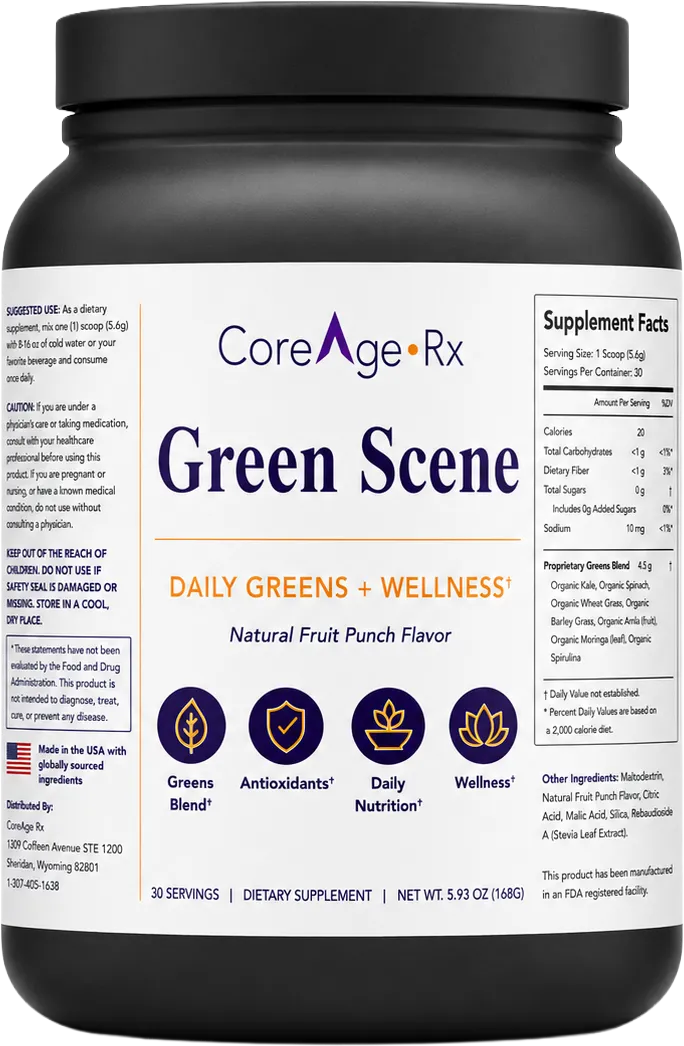
Green Scene is CoreAge Rx’s fruit punch greens powder. The pictured label lists a 4.5 g proprietary greens blend and less than 1 g of dietary fiber per scoop. See the current Green Scene™ page and check the bottle you receive before use.
Related reading
- Greens Powder: What It Can Add and What It Cannot Replace
- How to Read a Greens Powder Label
- Greens Powder Ingredients: What Those Plant Names Tell You
- Fruit choices in a balanced weight-management plan
Educational information, not individualized medical advice. Product information and linked research checked September 15, 2026. Ingredient research does not establish identical effects for a finished supplement.