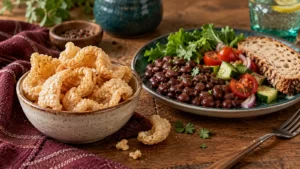
Jowar roti can fit a weight-management meal, including dinner. The useful questions are how much flour and added fat the recipe contains, how much you eat, what accompanies it, and whether the meal meets your needs. Eating a particular flatbread at night does not establish a special fat-burning effect.
Jowar is sorghum, a grain used to make flour and flatbreads. It can be an enjoyable alternative within familiar meals. You do not need to treat it as a remedy, eat a fixed number every day, or replace every other grain to benefit from a more workable eating pattern.
What does a sorghum nutrition reference actually describe?
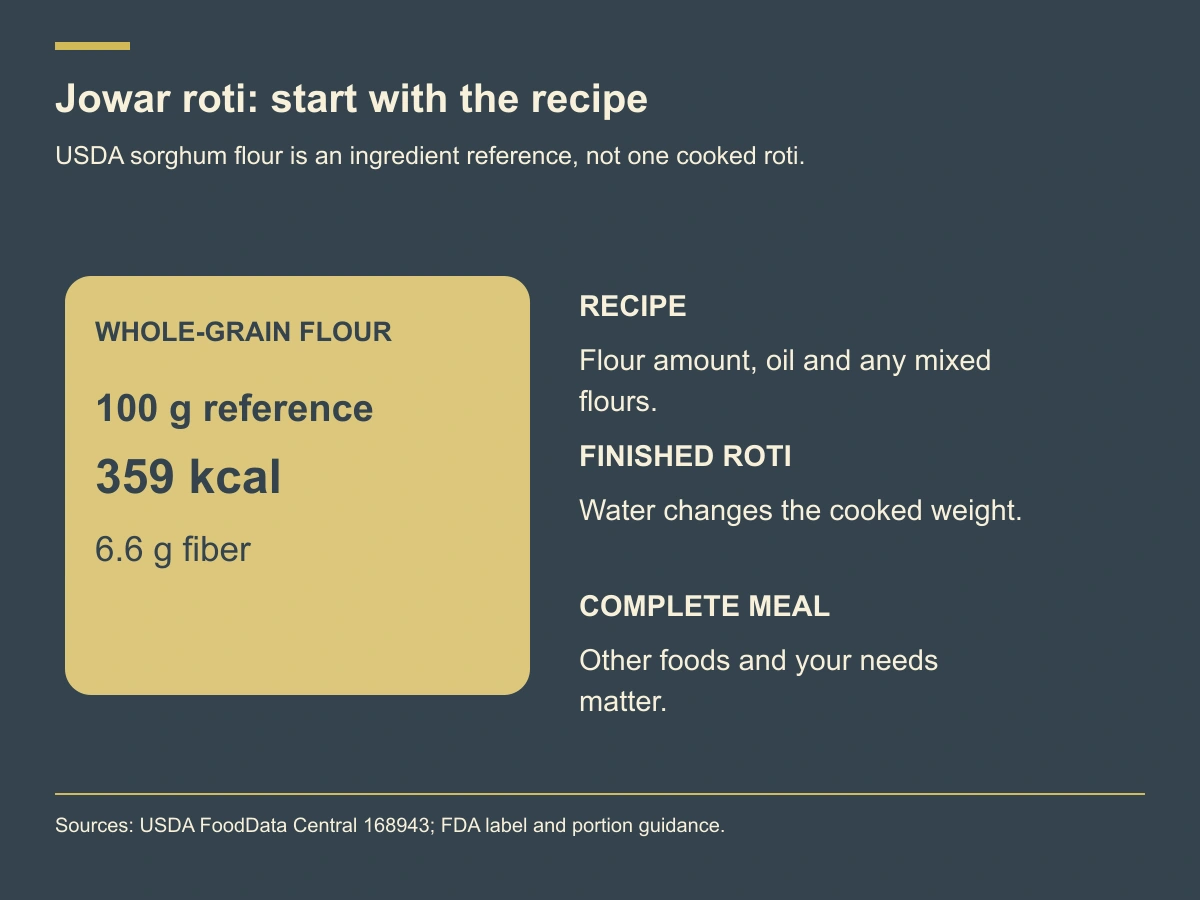
USDA FoodData Central has a record for whole-grain sorghum flour. The following amounts describe 100 grams of that dry flour. They do not describe one roti, a restaurant portion, or the photographed meal. USDA whole-grain sorghum flour.
| Nutrient | Per 100 g dry whole-grain sorghum flour |
|---|---|
| Energy | 359 calories |
| Protein | 8.43 g |
| Carbohydrate | 76.64 g |
| Dietary fiber | 6.6 g |
| Total fat | 3.34 g |
| Total sugars | 1.94 g |
Water added during preparation changes the weight of the finished bread. Oil, ghee, another flour or a topping changes the recipe’s nutrient totals. A roti made with a small amount of flour and water is not equivalent to a larger bread brushed generously with fat, even when both are called jowar roti.
The flour reference also contains carbohydrate. Choosing sorghum does not turn bread into a carbohydrate-free food. If you manage diabetes, discuss the finished meal and your monitoring plan with the treating team rather than assuming a grain’s name removes the need for that review.
How can I estimate the amount in my recipe?
For a home recipe, start with the total dry flour used in the batch and the other ingredients actually added. Then consider how the batch was divided. Equal-sized rotis from one batch make estimation easier; breads of noticeably different sizes require more judgment.
For example, 30 grams of the referenced flour would supply about 108 calories before additions. That is arithmetic using 359 calories per 100 grams, not a claim that your roti contains 30 grams or has 108 calories. Weighing the flour once while preparing a usual recipe can answer more than comparing several unrelated online “one roti” estimates.
If flour remains in the mixing bowl or is used for rolling, account for that uncertainty. A home estimate does not need to pretend to be a laboratory measurement. Its purpose is to help you understand the main ingredients and compare meaningful changes, such as bread size or the amount of added oil.
FDA explains that a food-label serving is a reference amount, not a recommendation for how much a person should eat. Your portion may be larger or smaller. FDA label guide. The same distinction is useful when a flour package supplies a serving in grams but your meal is described in pieces.
Is jowar roti better than wheat roti or rice?
There is no single winner for every person and meal. Compare the actual preparation, portions, price, enjoyment and medical needs. A plain whole-grain bread, a mixed-flour bread and an oil-rich bread should not be ranked only by the grain named in the recipe.
Ask what changing the food would solve. Perhaps you enjoy sorghum’s flavor, want more variety, or need a wheat-free option. Those are more concrete reasons than a claim that one grain automatically causes weight loss. If the replacement makes meals difficult to prepare or leaves you dissatisfied, it may be hard to maintain.
Our balanced-meals guide shows how to think about the entire plate. The plantain article and baked-potato guide apply a similar approach to other starches: define the food, account for preparation, and consider the foods served alongside it.
Build a complete meal around the roti
Start with foods you already cook and enjoy. A roti can accompany lentils, beans, yogurt, tofu, eggs, fish or another suitable protein food, plus vegetables. These are flexible examples, not a required plate or measured nutrient prescription.
Consider the amount of oil in the curry, the size of the bread, and any second helping. Also consider whether there is enough food overall. Trying to make dinner as small as possible can leave you hungry, fatigued or unable to follow the plan comfortably.
| Meal question | Practical adjustment to consider |
|---|---|
| Is roti the whole meal? | Add other foods that provide protein and variety. |
| Is the meal difficult to repeat? | Choose ingredients and preparation that fit time and budget. |
| Are toppings easy to overlook? | Include ghee, oil, sauces and accompaniments in the recipe description. |
| Do I remain hungry? | Review the complete meal and the rest of the day rather than blaming one grain. |
| Does treatment affect appetite or digestion? | Discuss intake, symptoms and individual needs with the care team. |
A meal does not have to look like an idealized food photograph. Frozen vegetables, leftovers prepared safely, or a simple lentil dish may be more practical than several elaborate sides. Our protein breakfast ideas can also help you distribute meals across the day when dinner is becoming the only substantial eating occasion.

Can we eat jowar roti at night for weight loss?
Yes, it can be part of an evening meal if it suits your needs and digestion. There is no special weight-loss timing effect established by the flour record reviewed here. The same flour does not become a different nutrition treatment after sunset.
The practical issue is the day’s eating pattern. A person who has missed meals may need an adequate dinner. Someone who eats a large dinner and then repeatedly snacks may want to review hunger, routine and the complete intake. Neither situation is explained by banning sorghum after a particular hour.
If late meals worsen a medical symptom, discuss that symptom specifically. A reflux plan, glucose-management plan or prescribed medicine schedule is a separate question from whether jowar “burns fat at night.” Keep those decisions attached to your own clinical advice.
Choose a dinner time and preparation you can manage consistently. If evening cooking is difficult, make the meal simpler. Changing the clock without understanding the amount or the recipe can create extra rules without resolving the original concern.
How many rotis should I eat?
There is no universal number. Rotis vary in diameter, thickness and dry flour content. People also differ in nutrition needs, activity, other meals and medical circumstances. A count of two small breads cannot be compared reliably with two much larger breads.
NIDDK distinguishes the amount you choose to eat from a manufacturer’s serving and explains that needs vary. Portion guidance. Use that distinction to describe your usual meal, then ask a registered dietitian or clinician for help if you need an individualized plan.
A useful starting record might say “two rotis from this batch, one bowl of lentils, vegetables, and the amount of oil used,” instead of “healthy dinner.” The extra detail helps identify a manageable adjustment without requiring every meal to be weighed indefinitely.
What about gluten-free claims?
Check the ingredients in the actual flour and recipe. A product or bread advertised as jowar may also contain wheat flour, and preparation can involve contact with other ingredients. For someone with celiac disease or another diagnosed need to avoid gluten, the complete product and preparation matter.
FDA defines criteria for packaged foods labeled gluten-free and advises asking manufacturers when ingredients or a product’s status are unclear. FDA gluten-free explanation. Do not assume a restaurant’s grain name verifies every ingredient or its handling practices.
A gluten-free label also does not establish a weight-loss advantage. It answers a different question about the food. If you have a medical reason to avoid gluten, focus on an appropriate, varied diet rather than treating the label as a calorie ranking.
Eating jowar while using semaglutide or tirzepatide
There is no mandatory “jowar diet” for these treatments. If appetite is lower, review whether meals remain adequate and manageable. Texture, meal size and preparation may affect what you tolerate, but a general food article cannot tell you which prescription dose or eating plan is appropriate.
Persistent vomiting, difficulty keeping fluids down or severe abdominal symptoms need medical assessment. Do not solve an ongoing treatment problem simply by removing more foods. Our semaglutide and protein guide discusses eating and function, while the water and drinks guide helps organize hydration questions.
If you are exploring adult care, the CoreAge Rx semaglutide page describes the service. Eligibility and the exact prescription require consultation. Enjoying roti, rice or another familiar food does not by itself establish a need for medication.
Frequently asked questions
Does jowar roti burn belly fat?
The sources reviewed do not establish a targeted belly-fat effect. Its nutrients can be part of a meal, but one food cannot promise where weight will change. Focus on an eating pattern you can maintain, adequate nutrition and relevant clinical care instead of expecting a special response from the grain.
Is adding ghee incompatible with weight management?
It is an ingredient to account for, not a reason to declare the entire meal a failure. The amount added changes the finished recipe. Describe how much you use and consider the rest of the meal. A small planned addition and repeated unmeasured additions are different situations.
Can I replace every meal with jowar roti?
That would leave the variety and adequacy of the whole diet unanswered. Include other suitable foods, and ask for nutrition advice if you have restricted many options. A grain swap does not replace protein foods, produce, or assessment of a medical concern.
What is the most useful first change?
Understand one usual recipe and build one repeatable, complete meal around it. You can then adjust a feature that matters in your actual routine. That approach gives you more usable information than adding several rigid rules about the number of rotis, the time of day and which other grains are forbidden.
Educational information for adults; individual treatment decisions require a qualified clinician. Sources reviewed October 3, 2026. Original AI-generated article images depict fictional people and objects, not patient outcomes. Other editorial images are illustrative. Graphics summarize the cited sources.