Plantains can fit into a nourishing eating pattern, including one used for weight management. Whether a plantain meal fits your needs depends on the amount, preparation, additions, and other foods on the plate. A raw nutrition reference cannot describe every fried side, baked slice, mashed dish, or packaged chip.
You do not need to treat a familiar cultural food as either forbidden or a weight-loss remedy. This guide explains a verified yellow-plantain reference and the practical decisions that change a meal. It does not promise fat burning from plantains, their ripeness, or the time of day you eat them.
Start with the actual food and preparation
Describe what you mean by “plantain”: a whole raw fruit, cooked slices, a restaurant side, or packaged chips. Note whether the recipe uses oil, sugar, salt, cheese, or a sauce. Those details matter more than a broad claim that plantains are good or bad for weight loss.
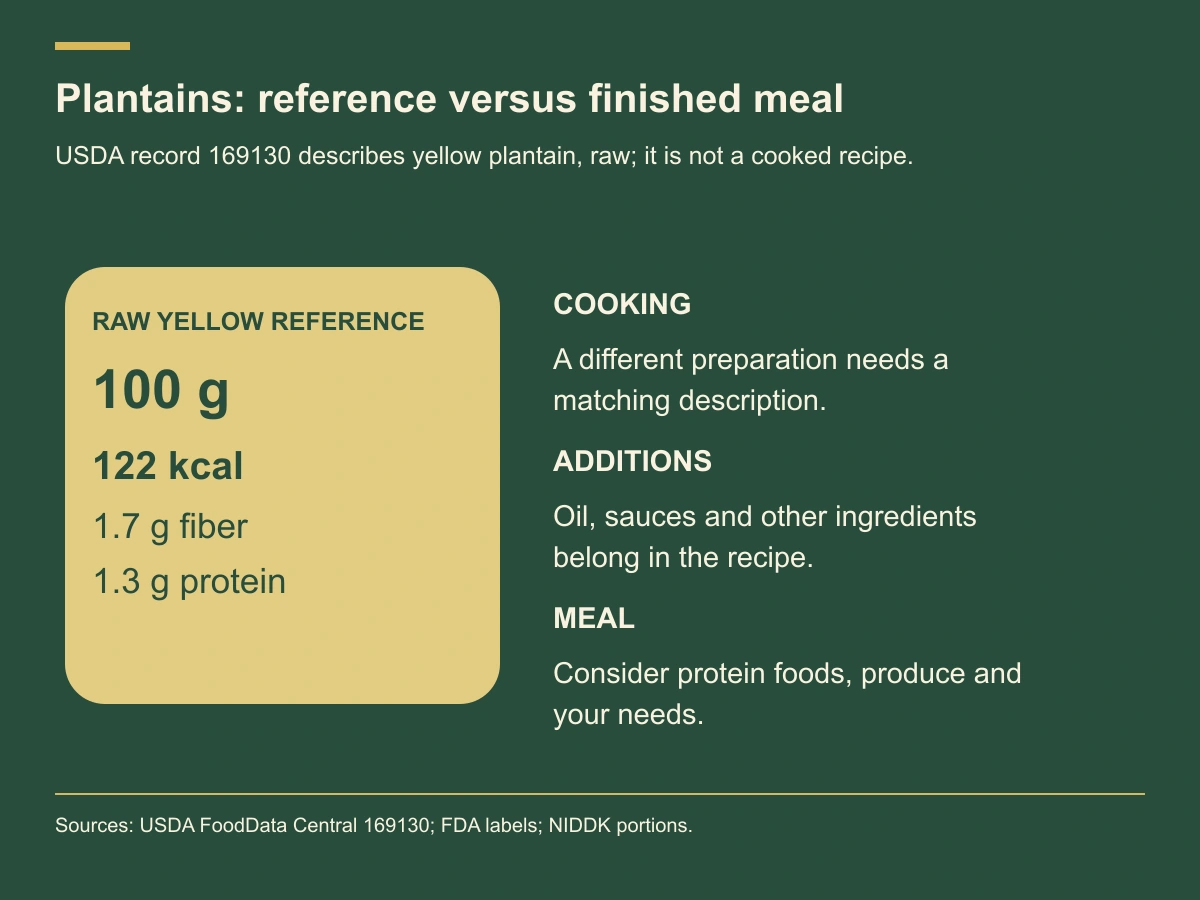
Green and yellow plantains are distinct entries in USDA FoodData Central. The reference used below is specifically Plantains, yellow, raw, SR Legacy record 169130. USDA record. It is not a banana record and is not a nutrient analysis of the finished meal in the cover image.
When comparing foods in an app or database, look for the preparation and amount as well as the name. A match for a raw plantain does not automatically fit a fried restaurant portion. Our food portions and calorie-intake guide explains why an estimate should remain separate from a personal prescription.
What does the verified nutrition reference show?
The following values are per 100 grams of the named raw yellow-plantain food. The database also lists a whole-plantain reference at 270 grams and a sliced-cup reference at 148 grams; those are defined database portions, not guarantees about the fruit in your kitchen or the amount you should eat.
| Nutrient | Per 100 g, yellow plantain, raw |
|---|---|
| Energy | 122 kcal |
| Carbohydrate | 31.89 g |
| Protein | 1.3 g |
| Total fat | 0.35 g |
| Dietary fiber | 1.7 g |
| Potassium | 487 mg |
Source: USDA FoodData Central, record 169130. A cooked dish may change the amount of water per gram and include additional ingredients. Do not copy this table into a recipe estimate without accounting for those differences.
These values are information, not a ranking of plantains against all other foods. The reference provides carbohydrates and some fiber, but it does not make plantain a complete meal by itself. If you want more protein, consider what other food accompanies it. Medical needs, appetite, preferences, and access determine the appropriate combination.
Does ripeness make plantains a fat-burning food?
No nutrition record establishes that claim. Ripeness affects the cooking experience and which preparation you enjoy, but choosing a particular skin color does not guarantee weight loss. Claims about resistant starch, metabolism, or appetite should not become a promise about the effect of one serving in a person.
The useful questions are simpler: which plantain do you have, how are you preparing it, how much are you eating, and what else is in the meal? If you prefer a familiar ripe preparation, you can review the recipe without replacing it solely because an online post calls green plantains a special diet food.
Avoid comparing raw plantain and banana numbers as though they describe identical portions or finished dishes. Our fruit and banana guide uses its own defined references. Similar-looking foods can have different database descriptions and customary preparations.
How do boiling, baking and frying change the question?
A preparation name gives you a starting point, not a complete nutrient count. Baked plantains may use little added oil or a generous coating. Fried slices vary in thickness, preparation, and amount eaten. Boiled plantain can become part of a dish with sauces or other additions. The recipe and portion still need consideration.
If you are estimating a homemade dish, use the ingredients you actually added and divide the finished recipe into the portions you actually serve. Do not assume every spoon of cooking oil was either fully absorbed or entirely left in the pan when you lack that information. A recipe estimate can be useful while still being an estimate.
For a restaurant dish, look for available nutrition information or describe the actual portion and accompaniments. If no detailed information exists, an honest estimate is better than presenting a precise count copied from a raw-food entry. You can make a practical meal decision without claiming laboratory accuracy.
What about plantain chips?
Read the particular package. Check the serving size, servings per container, ingredients, calories, fat, fiber, and sodium. “Plantain” in the product name does not mean the nutrition matches raw fruit, and a bag may contain more than one labeled serving. FDA Nutrition Facts guidance.
A portion is what you choose to eat; the labeled serving is the amount used to report the nutrition. NIDDK portion guidance. Consider whether the chips are a side, a snack, or the only food you have available at a meal. The same packet can play different roles in those situations.
You do not need to describe a food as a failure because it is packaged or fried. The practical question is how it fits the day, whether it satisfies you, and what other nutrients or foods you need. If grazing from the bag makes the amount hard to notice, a bowl can help you see the portion you selected.
Build a plantain meal with more than one component
Consider plantain alongside a protein food and vegetables or another suitable produce option. Examples include plantain with beans and vegetables; plantain with fish and a vegetable side; or a familiar stew that includes plantain and another protein source. These are flexible meal ideas, not standardized nutrition prescriptions.
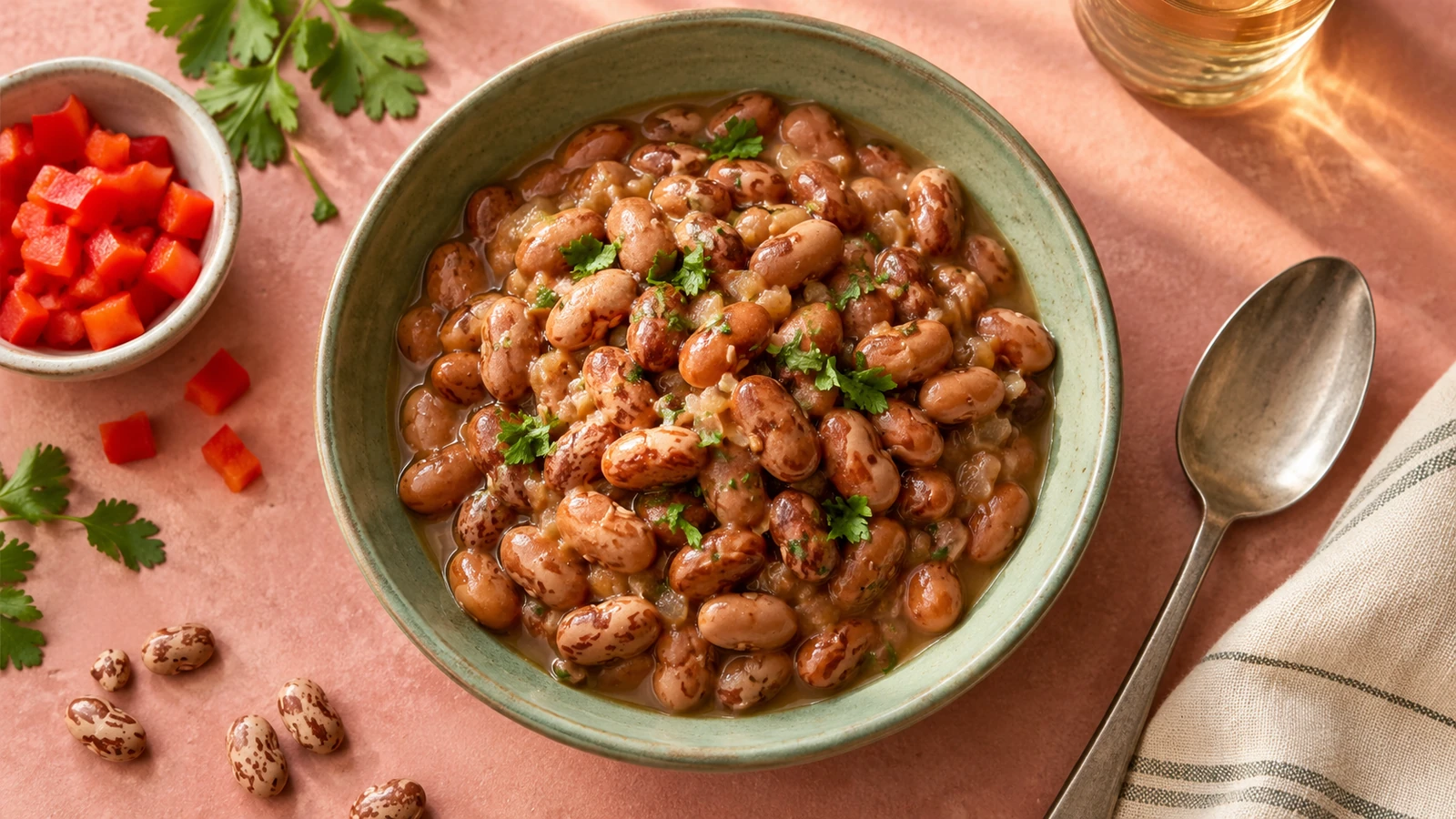
Our balanced-meal guide explains how to assemble components around preferences and access. The pinto-bean guide offers a related discussion of portions and preparation. For another starch-based meal, see chicken and rice or baked-potato questions.
If you are feeding a household, serve components in a way that allows different needs and appetites. One person may need a larger meal or another protein option. There is no universal rule that everyone should receive the same fraction of a plantain or the same plate size.
A useful way to compare two plantain meals
Imagine one meal with plantain, beans, and vegetables and another with a large plantain side plus several sauces. You cannot decide their exact nutrition from the food name alone. Compare the portions, additions, protein sources, vegetables, and whether the meal meets your needs.
Ask what change would help without making the food unrecognizable. You might serve sauce separately, add another component, or choose a portion that leaves room for the rest of dinner. The goal is a workable eating pattern, not turning every cultural recipe into a different cuisine.
If you track intake, record the actual preparation consistently. If tracking causes distress or repeated restriction, discuss another approach with a dietitian or clinician. A helpful estimate should support eating and planning, rather than become a reason to compensate for the meal with a fast or excessive exercise.
Can I eat plantains while using a GLP-1 medicine?
Food choices still depend on nutrition, tolerance, and individual care. Some people find large or rich meals difficult during semaglutide or tirzepatide treatment, but that does not create a universal ban on plantains. Review the amount and preparation you tolerate, while maintaining adequate food and fluids.
Persistent nausea, vomiting, or inability to eat deserves contact with the clinical team. Our semaglutide nausea guide explains warning signs. Do not interpret eating very little as a reason to tighten the diet further or independently change a prescribed dose.
If you have diabetes or a condition requiring a potassium or other nutrient restriction, ask how the complete meal fits your plan. The potassium number in the raw-food table is not a recommendation to increase or avoid plantains for everyone.
Store cooked meals safely
For perishable leftovers, USDA advises prompt refrigeration within two hours, or one hour when temperatures exceed 90°F. Use shallow containers where appropriate for cooling, keep cold food properly refrigerated, and reheat leftovers to 165°F. USDA leftovers guidance.
Apply safe handling to the complete meal, including beans, meat, sauces, and other ingredients. A weight-management goal does not make food left out too long safe. When planning lunches, include how the food will be kept cold or hot until it is eaten, rather than focusing only on the ingredient list.
Frequently asked questions
How much plantain should I eat for weight loss?
There is no universal portion. Consider your needs, the rest of the meal, appetite, preparation, and medical plan. The USDA reference amounts describe the database food; they do not prescribe a daily quantity.
Are fried plantains automatically unhealthy?
The preparation, portion, frequency, and overall eating pattern matter. Compare the actual recipe or restaurant information. You can review additions and meal composition without declaring a familiar dish universally harmful.
Do plantains cause weight gain at night?
A clock time alone does not establish that outcome. Review overall eating, comfort, and sleep. If eating near bedtime worsens reflux, discuss timing and symptoms; do not turn that concern into a rule that plantain automatically becomes fat at night.
Related care information
For broader questions, read balanced meals and calorie intake and individual needs. The CoreAge Rx semaglutide page describes one care option for eligible patients; a food choice does not establish medication eligibility or a guaranteed weight result.
Educational information for adults; individual treatment decisions require a qualified clinician. Sources reviewed October 3, 2026. Original AI-generated article images depict fictional people and objects, not patient outcomes. Other editorial images are illustrative. Graphics summarize the cited sources.