
A greens powder has not been established as a way to “detox” your body simply because it contains plants or antioxidants. A meaningful detox claim would need to identify the substance being removed, how removal is measured, and whether the process improves health.
Ask what the claim actually means
Words such as “reset,” “cleanse,” and “flush” can sound specific while leaving the proposed result undefined. Increased bowel movements, a lower scale reading, or a change in urine does not by itself show that a harmful substance has been removed.
The NCCIH review of detoxes and cleanses describes limited and low-quality evidence for many commercial detox regimens. That is a reason to ask for clear evidence rather than interpreting ordinary digestive changes as proof of a cleanse.
Antioxidant ingredients are a different question
A food or plant can contain compounds studied for antioxidant activity. Laboratory findings about a compound do not automatically establish a detox benefit from a commercial blend. The amount, form, and outcome tested matter.
Green Scene lists seven plant ingredients in a 4.5 g proprietary blend. Individual quantities are not disclosed. The pictured label does not establish a measured toxin-removal outcome, and the ingredient list should not be used to invent one.

What a normal routine can focus on
Instead of planning a cleanse, consider whether you are eating regularly, including a variety of foods, drinking an appropriate amount of fluid, and getting care for ongoing symptoms. These are practical health questions that do not require a detox narrative.
If you enjoy a greens drink, it can be an optional part of the day. It need not be paired with fasting, a laxative, or several additional supplements. Our main greens guide explains the role of convenience without treating the powder as comprehensive nutrition.
Symptoms are not evidence of toxins leaving
Do not interpret severe diarrhea, vomiting, pain, or weakness as a desirable adjustment period. Pause the product and seek appropriate medical advice. Persistent fatigue or digestive symptoms also deserve evaluation rather than repeated attempts to cleanse them away.
If you think you have had a toxic exposure or poisoning, obtain urgent professional help. A supplement drink is not a treatment for that situation.
Read benefit and manufacturing claims separately
The FDA’s supplement overview explains that supplements are not preapproved for safety and effectiveness like medicines. An FDA-registered facility or organic ingredient statement does not demonstrate detoxification.
Use how to read a greens label to compare the disclosed information. For Green Scene, a fair description starts with the actual serving and ingredients, and leaves unsupported detox promises out of the decision.

Ask for a named substance and a measurable outcome
“Detox” often sounds specific while leaving the key question unanswered: detoxification of what? A meaningful claim should identify the substance, explain how it is measured, and show that the intervention changes an outcome that matters. Without those details, the word can function mainly as a marketing impression.
This is different from ordinary medical care for a known poisoning or exposure. Those situations require specific assessment and treatment. A commercial greens powder should not be presented as a substitute for that care or as a way to diagnose an exposure from vague symptoms.
When evaluating a product, ask whether the claim concerns the finished formula or simply an ingredient associated with a laboratory process. A theoretical mechanism does not establish that a serving removes a harmful substance from a person or improves health.
Distinguish normal body processes from a product benefit
The body already has organs and processes that handle waste and many substances it encounters. Describing those processes does not demonstrate that a particular supplement enhances them in a clinically meaningful way. A product claim needs its own evidence.
For example, saying that a plant contains compounds discussed in antioxidant research does not answer whether a mixed greens powder produces a measurable detoxification benefit. Ingredient form, amount, the study model, and the outcome all matter.
The NCCIH overview explains the limited evidence behind commercial detox and cleanse approaches. Use it as a reason to ask more precise questions, rather than replacing one broad marketing claim with another broad promise about a different product.
Understand why symptoms do not prove cleansing
Diarrhea, headache, fatigue, nausea, or abdominal discomfort can occur for many reasons. They do not demonstrate that toxins are leaving the body. Interpreting every unpleasant reaction as success makes a claim difficult to question and can encourage people to continue through symptoms that deserve attention.
If a new greens routine causes discomfort, record the actual product, serving, beverage, and other changes. Review the full ingredient list. Significant or persistent symptoms should prompt appropriate advice rather than a larger serving or a longer cleanse.
The greens-bloating article offers a practical framework for describing symptoms. A symptom record supports assessment; it does not prove that the supplement caused the symptom or that the symptom reflects a benefit.
Watch for claims that cannot be disproved
Be cautious when a product explanation treats every possible result as evidence of effectiveness. Feeling better is called proof that toxins were removed; feeling worse is called proof that removal has begun; feeling nothing is said to mean more time or a larger amount is required. That structure does not provide a useful way to evaluate the claim.
A more informative explanation identifies what was studied, what changed, what did not change, and which uncertainties remain. It also acknowledges that a product may not be appropriate or useful for every person.
This standard applies to Green Scene and to competing products alike. The reviewed Green Scene label identifies ingredients and amounts, but it does not establish a clinical detoxification treatment. Its practical appeal should be evaluated without adding that unsupported promise.
Replace a cleanse checklist with ordinary, useful questions
| Instead of asking only… | Ask a more concrete question |
|---|---|
| Do I need to detox? | What symptom or concern am I actually trying to address? |
| Which powder removes toxins fastest? | Is there evidence of an exposure or condition requiring medical assessment? |
| Is discomfort part of the cleanse? | Does this symptom need a product review or clinical care? |
| Can I skip meals during the routine? | Am I maintaining adequate food and fluid intake? |
| Does an antioxidant ingredient prove the claim? | Was the relevant outcome tested in humans using this formula and amount? |
These questions move the decision toward something that can be assessed. They also keep a supplement from becoming an explanation for unrelated health concerns.
Keep food and product roles separate
A varied eating pattern, adequate fluids appropriate to your circumstances, and attention to symptoms are ordinary health practices. They do not need to be renamed as a detox program. A greens beverage can be an optional product within that routine if it fits the label and your needs.
Green Scene’s reviewed panel lists a 4.5 g plant blend, less than 1 g fiber, and 20 calories per scoop. Those facts are useful for understanding the serving. They do not establish that the drink replaces meals, corrects every nutrient gap, or removes a specific harmful substance.
If your concern is fatigue, digestive symptoms, or an unexplained change in health, describe that concern to a clinician directly. A more precise description is more likely to lead to useful assessment than assuming an undefined toxin burden is the cause.
Frequently asked questions
Does a greens powder cleanse the liver?
The reviewed information does not establish that Green Scene produces a clinically meaningful liver-cleansing effect. Broad references to plant ingredients or antioxidants do not prove that outcome. Discuss liver-related concerns with a clinician rather than using a supplement claim as a diagnosis.
Is diarrhea a sign that a cleanse is working?
No. Diarrhea is a symptom, not a validated measure of toxin removal. Persistent or severe diarrhea can interfere with hydration and needs appropriate attention. Do not continue a product solely because a seller describes the reaction as expected cleansing.
Does organic certification prove a detox benefit?
No. Organic labeling concerns applicable production and labeling standards. It does not establish a clinical effect. The organic-quality guide explains how to keep these different claims separate.
What if I still enjoy a greens drink?
Taste and convenience are valid practical considerations. You can evaluate those features without assigning the product a detoxification effect. Follow the current directions and keep adequate meals and appropriate medical care in the larger plan.
Explore Green Scene™
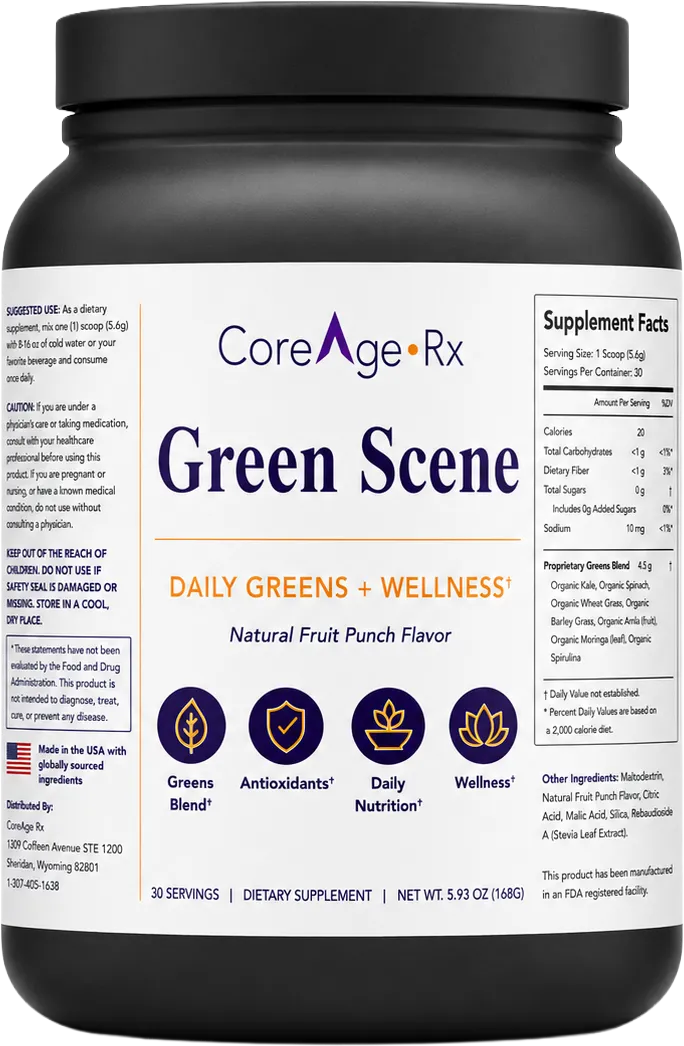
Green Scene is CoreAge Rx’s fruit punch greens powder. The pictured label lists a 4.5 g proprietary greens blend and less than 1 g of dietary fiber per scoop. See the current Green Scene™ page and check the bottle you receive before use.
Related reading
- Greens Powder: What It Can Add and What It Cannot Replace
- Can Greens Powder Help With Weight Loss?
- How to Read a Greens Powder Label
- Fruit choices in a balanced weight-management plan
Educational information, not individualized medical advice. Product information and linked research checked September 15, 2026. Ingredient research does not establish identical effects for a finished supplement.