A greens powder is not an established shortcut to weight loss. A low-calorie serving can fit within an eating plan, but the ingredient list alone does not prove that the product increases fat burning, suppresses appetite, or produces a particular change on the scale.
Separate a substitution from a product effect
If someone replaces a calorie-containing drink with water and a low-calorie powder, the overall intake may change. That is different from proving that the powder itself causes weight loss. Other changes in meals, activity, medication, or sleep can also affect results.
The NIH review of weight-loss supplements shows why ingredients and proposed mechanisms need clinical evidence. It does not establish a weight-loss benefit for Green Scene’s finished formula.
What the Green Scene label supports
The pictured panel lists 20 calories, 0 g added sugars, a 4.5 g proprietary greens blend, and less than 1 g dietary fiber per scoop. Those are label facts. They do not establish a fat-burning effect or a clinically meaningful fullness benefit.
Individual plant amounts are not disclosed, so a study of a specified amount of one botanical cannot simply be applied to a scoop of this blend. Our ingredient guide explains how to interpret the list.

Do not replace a meal with an incomplete drink
A drink can look nutritious because it is green while providing little protein or energy. Replacing meals without a suitable plan can make it harder to meet nutritional needs. This matters particularly when appetite is already low during medication treatment.
Keep a practical food pattern in the plan, including foods you enjoy and tolerate. The USDA vegetable guidance includes convenient options beyond fresh salads. Read greens with a low appetite if you are finding it hard to eat enough.
Use outcomes that match the reason for use
If you choose the product because you like the flavor and find it easy to remember, judge it on those terms. Do not turn a week of normal weight fluctuation into proof that it works or fails as a weight-loss treatment.
If you are following a medical weight-management plan, review progress with your care team using the measures they recommend. A supplement should not change prescribed medication decisions or replace follow-up.
Questions before buying
Ask whether the product adds a useful habit, whether the cost fits your budget, and whether buying it displaces foods that would help you more. Be cautious about before-and-after claims that do not explain what else changed.
The greens-versus-vegetables comparison and detox-claims article can help you separate a reasonable convenience choice from an unsupported outcome promise.

Separate a change in the routine from a tested product effect
If someone replaces a high-calorie beverage with a lower-calorie drink, their overall intake may change. That observation does not demonstrate that the new powder has a special fat-loss effect. The substitution and the ingredient claim are different explanations.
Likewise, a person may begin a greens routine at the same time they plan meals, walk more, sleep more regularly, and receive medical treatment. Any later weight change cannot automatically be assigned to the powder. Several parts of the routine changed together.
This distinction is useful when reading testimonials. A personal story can describe an experience, but it usually does not isolate the product’s contribution. Ask what else changed and whether suitable research on the finished formula supports the specific outcome being claimed.
Read calories and fiber without turning them into promises
Green Scene’s reviewed label lists 20 calories, 0 g added sugars, and less than 1 g dietary fiber per scoop. These are product facts. They do not establish appetite suppression, increased fat burning, or a predictable amount of weight loss.
The fiber amount is especially relevant to fullness claims. A 4.5 g proprietary greens blend is not a 4.5 g dietary-fiber amount. Do not transfer findings about a known amount of a particular fiber to this product merely because it contains plants.
The beverage used for mixing also changes the final drink. A scoop in water and a scoop in a large smoothie have different overall nutrition. Count the actual ingredients of the drink rather than treating the powder’s panel as the label for everything in the glass.
Use a substitution example honestly
Imagine someone chooses a greens drink with water instead of a usual sweetened beverage. They may prefer the new taste or find the routine helpful. If this changes their daily intake, that is a practical feature of the substitution, not proof that the botanical blend caused a unique metabolic effect.
Now imagine the same powder is added to a smoothie containing several calorie-dense ingredients. The powder does not cancel the energy supplied by those foods. The smoothie may still fit the person’s plan, but it should be assessed as the complete recipe.
Neither example establishes a recommendation for every reader. The useful lesson is to describe the actual change and avoid attributing all results to a product name. A dietitian can help evaluate substitutions in the context of adequate nutrition and personal goals.
Keep meal adequacy visible during appetite changes
A greens powder mixed with water should not be treated as a complete meal. If it replaces breakfast or lunch, the missing protein, energy, and other nutrients still need attention. A low-calorie drink is not automatically the best choice when the practical problem is already too little food.
This is particularly relevant during medical weight management, when appetite or meal size may change. Discuss persistent nausea, poor intake, or difficulty eating with the care team. A supplement should not become an unsupervised workaround for symptoms that deserve review.
The low-appetite article and GLP-1 nutrition guide keep the broader food plan in view. The goal is a sustainable routine that supports health, not simply the smallest possible intake.
Evaluate evidence for the actual claim
| Claim you encounter | A useful evidence question |
|---|---|
| “Burns fat” | Was that outcome measured in suitable human research? |
| “Controls appetite” | Which formula, amount, and population were studied? |
| “Supports metabolism” | What specific measure changed, and did it matter clinically? |
| “Detoxes for weight loss” | What substance was removed, and what evidence connects that to a benefit? |
| “Results in a week” | Is the change body fat, fluid, food intake, or another measure? |
The NIH weight-loss supplement review and NCCIH detox guidance are useful starting points for evaluating broad promises. A familiar plant name is not enough to answer these questions for an undisclosed blend.
Decide what would make the product useful to you
If you enjoy the drink, can use it comfortably, and understand its limited role, those are practical reasons to consider it. You can evaluate taste, convenience, and cost without claiming that the product independently produces weight loss.
Set expectations before purchase. If the only reason to buy is a promise of rapid fat loss, ask whether the evidence actually supports that promise. If the reason is a pleasant optional drink within an established meal plan, the evaluation is different.
Keep current pricing and subscription terms separate from health claims. A discount does not strengthen the research, and a premium price does not demonstrate a greater effect. Use the current product information when judging practical value.
Frequently asked questions
Will taking greens powder make the scale fall faster?
That outcome is not established for Green Scene by the reviewed label or cited ingredient information. Weight changes depend on the broader routine and health context. Do not use the product as a substitute for an appropriate weight-management plan.
Can I replace dinner with it to reduce calories?
A scoop mixed with water is not a complete dinner. If you need help structuring meals during weight management, work with a qualified professional. Reducing intake by removing a meal can also remove needed protein and other nutrients.
Does “0 g added sugars” mean the entire drink has no sugar?
The powder’s reviewed label describes the powder serving. Milk, fruit, juice, or other ingredients added during preparation change the final drink. Read the complete recipe and distinguish total sugars from added sugars when comparing labels.
Is more powder better on a day when I ate differently than planned?
No compensatory serving is established. Follow the current directions and return to the ordinary meal plan. A greens supplement is not a reset button for a day of eating and should not be used to justify excessive restriction afterward.
Explore Green Scene™
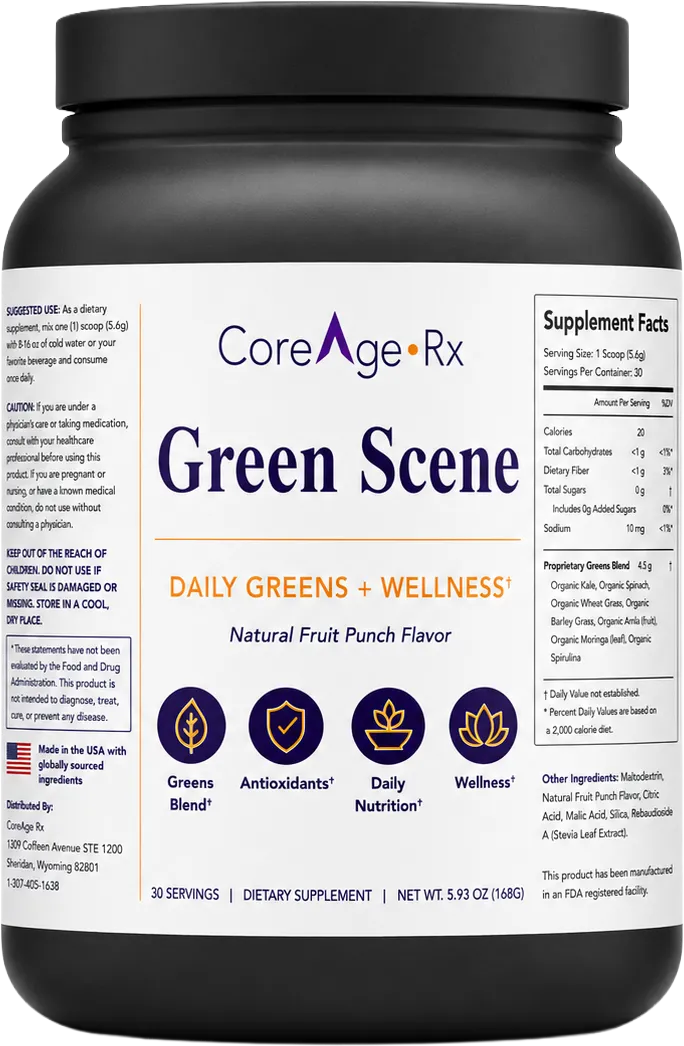
Green Scene is CoreAge Rx’s fruit punch greens powder. The pictured label lists a 4.5 g proprietary greens blend and less than 1 g of dietary fiber per scoop. See the current Green Scene™ page and check the bottle you receive before use.
Related reading
- Greens Powder: What It Can Add and What It Cannot Replace
- Greens Powder vs. Vegetables: Can a Scoop Replace a Serving?
- Do Greens Powders Detox Your Body?
- Fruit choices in a balanced weight-management plan
Educational information, not individualized medical advice. Product information and linked research checked September 15, 2026. Ingredient research does not establish identical effects for a finished supplement.