
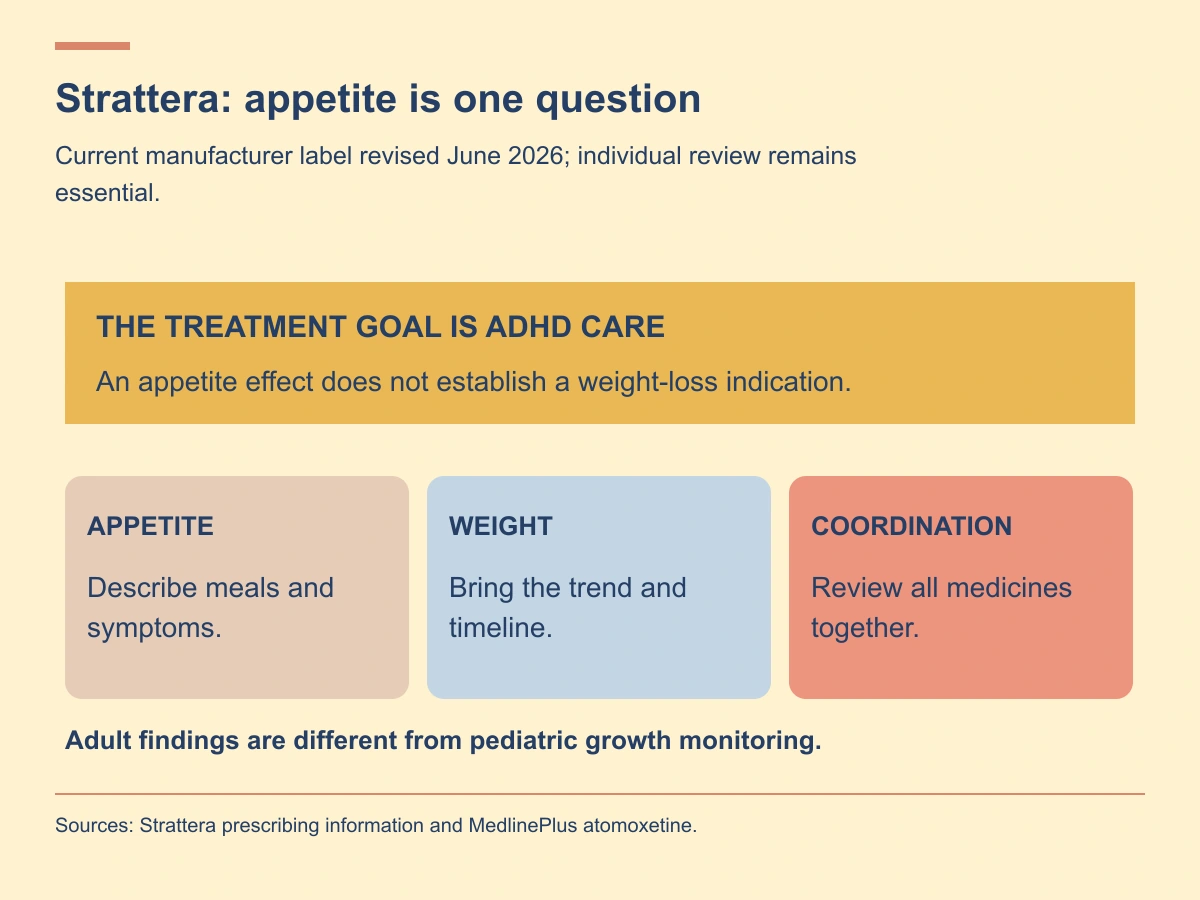
Strattera can be associated with decreased appetite and weight loss, but it is an ADHD medicine, not a weight-loss treatment. Weight gain or loss during treatment still needs context: the amount of change, meals, symptoms, other medicines, and the condition being treated.
The current manufacturer prescribing information lists decreased appetite and decreased weight among adult trial findings. It does not establish a predictable number of pounds lost or a reason to choose atomoxetine for weight management. Strattera prescribing information
This guide focuses on adult questions about appetite, weight changes, meal routines, and coordination with other treatment. Pediatric growth and safety issues have their own clinical requirements and should not be turned into adult weight-loss advice.
What is Strattera used for?
Strattera is a brand of atomoxetine. The prescribing information identifies it as a selective norepinephrine reuptake inhibitor used to treat ADHD in adults and in its specified pediatric age group.
MedlinePlus describes atomoxetine as part of a total ADHD treatment program. The treatment goal is ADHD symptom care, not suppressing appetite or producing a desired scale result. MedlinePlus atomoxetine information
If weight management is also a concern, discuss it as a separate goal. A clinician can assess the weight change while preserving attention to ADHD symptoms and daily functioning.
Our ADHD medicines and weight changes guide covers broader questions about different medications. Similar appetite concerns do not make the medicines interchangeable.
What do the adult trial findings show?
The manufacturer label’s adult adverse-reaction table describes acute studies lasting up to 25 weeks. It lists 1,697 Strattera-treated adults and 1,560 placebo-treated adults in that table.
| Selected adult trial finding | Strattera | Placebo |
|---|---|---|
| Decreased appetite | 16% | 3% |
| Decreased weight | 2% | 1% |
| Nausea | 26% | 6% |
Source: Strattera adult adverse-reaction table. These are selected reported events in a specific study setting. They are not a forecast for an individual, a direct comparison with another medicine’s trials, or an average amount of weight lost.
The appetite and weight entries are also different findings. Reporting less appetite does not necessarily mean a clinically important weight change occurred. A weight change can happen for reasons other than appetite alone.
Does Strattera cause weight loss?
Weight loss is among the effects described in MedlinePlus, and decreased weight appears in the selected adult label table. If you notice a change, bring the amount and timeline to the prescribing team. MedlinePlus side-effect discussion
Do not assume that weight loss is desirable simply because you previously wanted to lose weight. Unintended loss, difficulty eating, or loss accompanied by weakness or other symptoms deserves review.
It is also not appropriate to increase a dose, skip meals, or use the medicine differently to amplify an appetite effect. Take the medication as prescribed and discuss problems with the clinician or pharmacist.
The right question is not only “Did my weight go down?” It is also “Am I able to eat, function, and manage the condition this medicine treats?”
What if you gain weight while taking it?
The selected adult table does not establish weight gain as a predictable treatment effect. That does not rule out a person gaining weight during the period they take atomoxetine.
Consider the actual trend and what else changed: meals, activity, sleep, other medicines, life circumstances, or a health condition. The care team may need more information before deciding whether treatment is relevant.
Avoid interpreting one scale reading as a lasting change. If monitoring weight is part of your plan, use a consistent approach recommended by the care team and discuss a sustained trend or concerning symptoms.
Do not stop a helpful ADHD treatment solely because an online article says everyone should lose weight on it. A clinician can review the concern and treatment benefits together.
Appetite changes deserve practical support
Low appetite can make regular meals harder even when you know you need to eat. Tell the care team whether you forget meals, feel nauseated, become full quickly, or find usual foods unappealing.
Practical options to discuss include making food easier to access, planning a routine, choosing tolerable foods, and using reminders when they are helpful. These are flexible ideas rather than a prescribed schedule or a promise that they will resolve a medication effect.
You might prepare a lunch in advance, keep simple ingredients available, or choose a meal format you can comfortably eat. A dietitian can help when symptoms or nutritional needs make the task more complicated.
Balanced meals for weight management and protein breakfast ideas offer starting points. They do not establish that every adult on atomoxetine should follow the same calorie or protein target.

Nausea and other symptoms can affect the picture
The label lists nausea among common adult trial events. MedlinePlus also describes digestive symptoms, dry mouth, dizziness, fatigue, and other potential effects that should be discussed if severe or persistent. Strattera label, MedlinePlus
Explain which symptom prevents eating rather than reporting only that your appetite is “bad.” Difficulty swallowing, ongoing vomiting, significant pain, or feeling faint changes the assessment.
Do not try to manage a concerning symptom indefinitely with additional supplements or over-the-counter medicines without review. The pharmacist needs to know about those products too.
If a clinician suggests a change in how medication is taken, ask for clear instructions. This article does not provide a dose, a timing change, or a strategy to intensify appetite suppression.
Other medicines can change the evaluation
Atomoxetine has medication precautions, including important interactions. The current label describes higher atomoxetine exposure with strong CYP2D6 inhibitors such as fluoxetine and paroxetine in the reviewed studies. Strattera interaction information
This does not mean a person should stop an antidepressant or adjust atomoxetine at home. It means the prescriber and pharmacist need the full medication list when reviewing symptoms and treatment.
Include prescriptions, over-the-counter products, supplements, and recent changes. Tell both clinicians if separate teams prescribe ADHD, mental-health, and weight-management medicines.
Do not add an appetite suppressant, stimulant supplement, or another person’s prescription to manage weight. A shared goal does not establish that a combination is suitable.
What if you also take a GLP-1 medicine?
Describe the actual medicines and treatment timelines to both teams. Appetite, food intake, digestive symptoms, and weight trends should be assessed in the context of the full plan.
This article does not establish a universal atomoxetine-and-GLP-1 pairing rule. A clinician needs to consider your conditions, other medications, symptoms, and formulation before making a recommendation.
Our Ozempic and ADHD medicines guide covers related coordination questions. Semaglutide, protein, and muscle discusses nutrition and function during a different treatment context.
If appetite becomes so limited that regular eating is difficult, seek help rather than assuming two appetite effects are beneficial. Weight-management care should still support nutrition, safety, and daily life.
Warning symptoms need attention beyond weight
MedlinePlus lists serious symptoms such as chest pain, shortness of breath, faintness, fast or pounding heartbeat, signs of liver problems, severe allergic symptoms, and abnormal thoughts. These need prompt medical attention according to the symptom and severity. MedlinePlus serious side effects
Seek emergency help for immediately dangerous symptoms such as breathing trouble, collapse, or stroke-like symptoms. Do not wait for a routine appointment because the original question was about appetite.
New suicidal thoughts or an inability to stay safe also require immediate help. In the U.S., call or text 988 for a mental-health crisis and call 911 for immediate danger.
Keep the distinction between the pediatric boxed warning and adult evidence clear. The manufacturer warning addresses suicidal thoughts and behaviors in pediatric patients. That context is not a reason to ignore concerning mental-health symptoms in any individual.
Why children’s weight questions are different
MedlinePlus notes that atomoxetine may slow children’s growth or weight gain and that clinicians monitor these measures. The manufacturer label also has pediatric safety requirements. MedlinePlus growth discussion
A child’s growth pattern is not an adult weight-loss outcome. Do not apply a dieting article, an adult appetite strategy, or an adult calorie calculator to a child.
Questions about pediatric treatment belong with the clinician managing the child’s ADHD and growth. This guide does not provide pediatric dosing or a pediatric weight-management plan.

What to bring to a follow-up visit
Prepare a short note with the medicine name, when treatment started or changed, the weight trend if known, and the meals or symptoms that changed. Include daily function and ADHD symptom control so the conversation covers the treatment’s purpose.
Ask what should be monitored, whether nutrition support would help, and when to follow up. If a change is recommended, request written directions and clarify which team will coordinate it.
For energy-planning questions, calorie intake for weight loss explains why a universal intake target cannot replace an individualized assessment.
Frequently asked questions
How much weight will I lose on Strattera?
The selected evidence does not establish a predictable amount. Adult adverse-reaction percentages are not average pounds lost or an individual forecast.
Is atomoxetine prescribed for weight loss?
Its reviewed indication is ADHD. Discuss weight management separately rather than using an appetite effect as the treatment goal.
Can I gain weight even if appetite loss is listed?
A person can gain weight during treatment. The care team should review the actual trend and other factors rather than assuming the label predicts every outcome.
Should I stop it if meals become difficult?
Contact the prescriber promptly and take the medicine as directed while obtaining individualized instructions. Severe or urgent symptoms require appropriate immediate care.
Can I use a weight-loss supplement with it?
Have the pharmacist review the exact ingredients and medicines first. A “natural” label does not establish a safe combination.
Where can I learn about medical weight management?
CoreAge Rx’s semaglutide information page provides a topic to discuss with a qualified clinician. ADHD and weight-management care should be coordinated around the actual prescriptions and needs.
Educational information for adults; individual treatment decisions require a qualified clinician. Sources reviewed October 3, 2026. Original AI-generated article images depict fictional people and objects, not patient outcomes. Other editorial images are illustrative. Graphics summarize the cited sources.