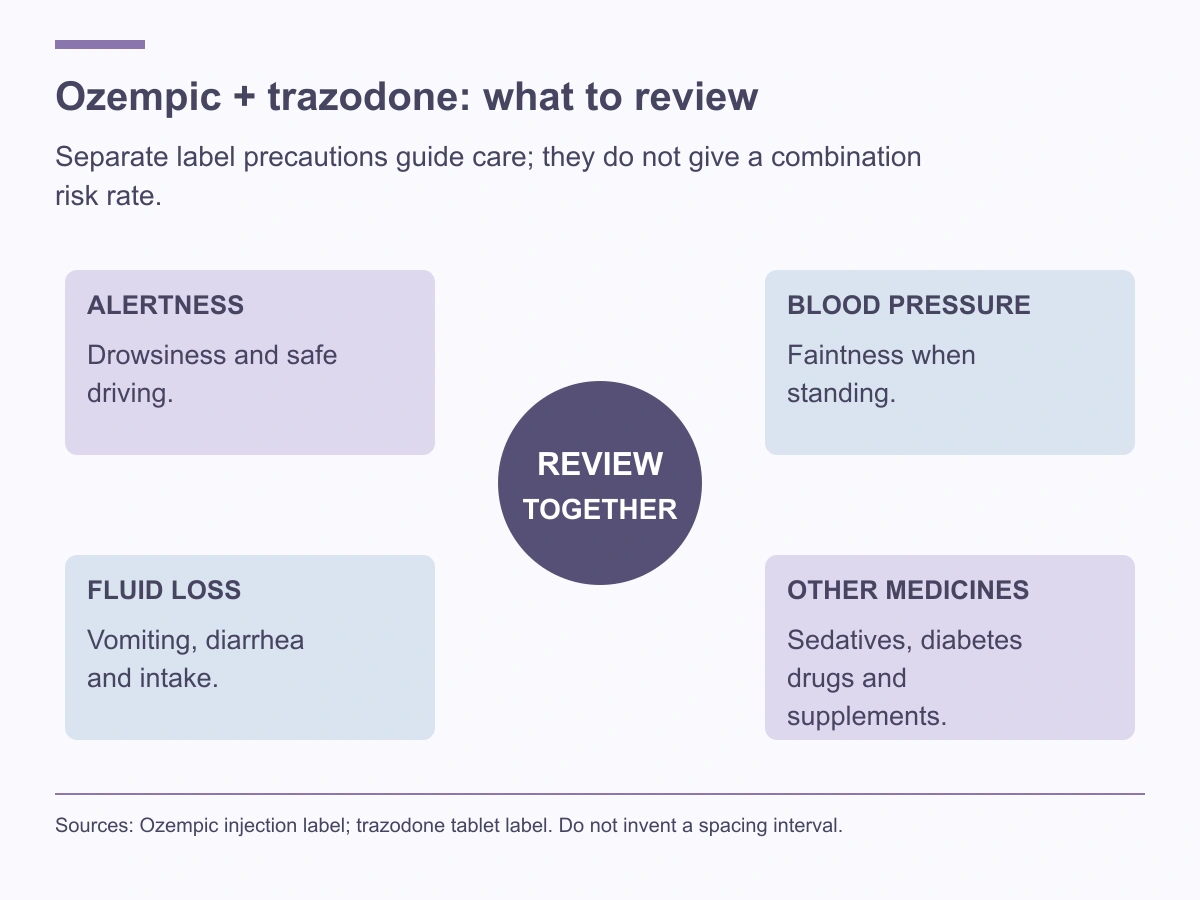
Taking Ozempic injection and trazodone together is a medication-review question for the prescriber and pharmacist. The reviewed labels do not provide a special dosing interval for this pair or a study proving that every person can use it without problems. The useful discussion includes why each medicine is prescribed, the exact products, other medicines, daytime alertness, blood-pressure symptoms, and whether vomiting or poor intake has developed.
Do not abruptly stop trazodone or change an Ozempic dose to test an online interaction theory. If both are already prescribed, make sure both clinicians have the same current medicine list. New symptoms deserve attention even when a website reports “no interaction found.”
Start with the actual medicines and treatment goals
Ozempic injection contains semaglutide and has labeled uses in adults with type 2 diabetes, including specified cardiovascular and kidney-risk indications. Trazodone tablets are an antidepressant approved for major depressive disorder. A clinician may prescribe trazodone for another purpose, including sleep, but that purpose should be made explicit rather than assumed from the tablet amount. Ozempic label; trazodone label.
This article addresses the injectable Ozempic label. Oral semaglutide products have their own administration requirements. A rule about taking a tablet on an empty stomach does not automatically apply to a weekly injection. Our oral semaglutide versus injections guide explains why formulation matters.
Record the trazodone formulation, strength, prescribed schedule, and reason for use. Include any recent change. “A sleep tablet at night” is not enough information for a pharmacist to assess the whole plan, especially if another antidepressant, pain medicine, or supplement is involved.
Does Ozempic change how trazodone is absorbed?
Ozempic delays gastric emptying, meaning the movement of stomach contents into the intestine. Its label says this may affect absorption of oral medicines. It also explains that the oral medicines studied in clinical pharmacology trials were not affected to a clinically relevant degree, while still advising caution with concurrent oral treatment. Ozempic section 7.2.
Those statements belong together. They do not establish that trazodone always becomes stronger, weaker, or slower when used with Ozempic. Nor do they prove that every oral medicine, dose, and clinical circumstance has been tested.
If a familiar trazodone routine seems different after a medication change, describe the actual observation: more morning grogginess, less benefit, missed tablets, vomiting, a new work schedule, or another newly added medicine. The clinician can assess several explanations instead of assigning the change to absorption alone.
Should you separate the injection and tablet by a few hours?
The reviewed labels do not establish a universal hour-based separation for this combination. Ozempic is a weekly medicine with an approximately one-week elimination half-life. Moving a tablet a few hours away from an injection is not a demonstrated way to remove all overlapping treatment effects. Ozempic pharmacokinetics.
Follow the actual trazodone directions. The reviewed tablet label instructs taking it shortly after a meal or light snack. If reduced appetite or nausea makes that difficult, ask the pharmacist how to manage the prescribed routine. Do not skip nourishment or invent a new schedule based on a rule for a different semaglutide formulation. Trazodone administration.
Our Ozempic device guide addresses injection questions. Medication timing should be written clearly enough that you know what to do on both injection days and ordinary days.
Why drowsiness and driving deserve a separate discussion
Trazodone can cause sedation and impair judgment, thinking, or physical coordination. The label cautions about driving and hazardous machinery until the person knows treatment does not adversely affect those abilities. This warning exists independently of Ozempic. Trazodone precautions.
Do not treat severe morning grogginess as proof that the medicines are interacting, but do not dismiss it either. Record when it starts, how long it lasts, whether it follows a dose change, and whether it affects walking, work, caregiving, or driving. Avoid driving while impaired and contact the prescribing team about new or troublesome sedation.
Alcohol and other medicines that depress the central nervous system can enhance trazodone’s effects. Include sleep aids, opioid pain medicines, sedating allergy products, and any other relevant products in the review. Adding an OTC sleep aid because sleep remains poor creates another question; it does not automatically solve the first one.
Dizziness can mean several different things
Feeling faint when standing, feeling the room spin, and feeling sleepy are different experiences. Trazodone labeling describes orthostatic hypotension, a blood-pressure drop on standing, and syncope, or fainting. Blood-pressure medicines and the broader health history may matter. Trazodone label.
Ozempic also requires attention to fluid loss and low blood glucose in the appropriate context. Nausea, vomiting, or diarrhea can contribute to dehydration, while insulin or a sulfonylurea increases the relevance of a hypoglycemia plan. Symptoms such as weakness or shakiness do not identify the cause by themselves. Ozempic warnings.
Our Ozempic dizziness guide explains what to report. If monitoring glucose is part of your established plan, follow that plan rather than assuming every episode is from trazodone. Fainting, chest pain, severe confusion, or significant breathing difficulty needs urgent assessment.

Vomiting, poor intake, and sodium are not just comfort issues
Ozempic labeling warns about acute kidney injury associated with gastrointestinal reactions that lead to dehydration. Persistent vomiting, difficulty keeping fluids down, very little urine, or substantial dizziness calls for prompt clinical advice. A routine medication appointment may be too far away when symptoms are significant. Ozempic renal warning.
Trazodone carries a separate warning about hyponatremia, meaning low blood sodium. Older people, people taking diuretics, and those who are volume-depleted may be at greater risk. Symptoms can include headache, confusion, weakness, and unsteadiness; severe cases can involve seizures or loss of consciousness. Trazodone sodium warning.
These separate warnings support coordinated review. They do not establish a measured rate of sodium problems from this specific combination. Do not self-treat possible low sodium with salt tablets, electrolyte products, or a large fluid target. The cause and appropriate treatment need assessment. Our semaglutide nausea and vomiting guide provides related symptom questions.
What about palpitations or an abnormal heart rhythm?
Trazodone labeling warns about cardiac arrhythmias and QT prolongation, an electrical timing change in the heart. It identifies relevant conditions and interacting medicines, including other QT-prolonging drugs and certain medicines that affect trazodone metabolism. Low potassium or magnesium is also part of the label’s risk discussion. Trazodone cardiac precautions.
This does not mean every palpitation is a dangerous rhythm or that Ozempic directly creates a trazodone interaction. It means the symptom and complete medication list should be reviewed, particularly when there is heart disease, fainting, prolonged vomiting, or a new prescription.
Seek emergency help for chest pain, collapse, or palpitations accompanied by marked breathlessness or fainting. Do not wait to see whether moving the weekly injection changes those symptoms. A clinician can decide whether examination, an electrocardiogram, laboratory testing, or another assessment is needed.
Serotonin syndrome is a trazodone warning, not a label for ordinary nausea
Trazodone can cause serotonin syndrome, especially with other serotonergic medicines, though it can also occur alone. The reviewed label lists examples such as other antidepressants, tramadol, certain migraine drugs, lithium, and St. John’s wort. Ozempic is a GLP-1 receptor agonist; its presence should not automatically turn a common digestive symptom into a serotonin-syndrome diagnosis. Trazodone label.
A concerning cluster can include agitation or confusion, fever, sweating, a fast heartbeat, muscle rigidity or tremor, and gastrointestinal symptoms. Suspected serotonin syndrome needs immediate medical attention. Do not try to distinguish it from an infection or another serious condition through an online symptom checklist.
For people also taking an SSRI, our Ozempic with Lexapro or Zoloft guide provides a related discussion. The pharmacist needs the entire combination, including nonprescription products, rather than a series of isolated two-drug searches.
Keep mental-health follow-up in the plan
Trazodone has an antidepressant warning about increased suicidal thoughts and behaviors in pediatric and young adult patients, and its label calls for monitoring all treated patients for clinical worsening, particularly early in treatment and around dose changes. A weight-management or diabetes visit should not replace mental-health follow-up. Trazodone monitoring.
Report worsening depression, unusual agitation, marked changes in sleep or behavior, or thoughts of self-harm promptly. If there is immediate danger, use emergency services. Changes in mood should be evaluated on their own merits instead of attributed automatically to either medicine.
Abrupt trazodone discontinuation can cause symptoms such as dizziness, nausea, anxiety, and insomnia. Those symptoms can further confuse the picture if several changes happen together. Have the prescriber direct any reduction or switch; this article does not provide a taper schedule.

A useful medication-review note
A concise record makes the discussion more specific. Bring packaging or a current pharmacy list so the professional can verify the exact formulations.
| Record | Useful detail |
|---|---|
| Prescriptions | Names, strengths, directions, and reasons for treatment |
| Recent changes | Start dates, increases, interruptions, and new OTC products |
| Alertness | Morning grogginess, falls, driving or work impact |
| Symptoms | Faintness, vomiting, intake, palpitations, and their timing |
| Existing monitoring | Glucose or blood-pressure records if your care plan requests them |
| Follow-up | Who manages each medicine and whom to contact after hours |
The point is to help the team identify a pattern, not to delay care while building a perfect diary. Our supplement review guide for GLP-1 treatment can help you remember products that are easy to leave off a medicine list.
Frequently asked questions
Can I skip trazodone on injection day?
Do not create an intermittent schedule on your own. The reviewed labels do not direct a routine injection-day omission, and trazodone changes can affect the condition being treated or cause discontinuation symptoms. Ask the prescriber for a clear plan if tolerability is a problem.
What if I vomit after taking the tablet?
Ask the pharmacist or prescriber whether any action is needed. The amount absorbed may be uncertain, so do not automatically repeat a tablet. Report repeated vomiting or inability to keep medicines and fluids down promptly, especially when trazodone is only one part of a larger regimen.
Are there other trazodone symptoms that need immediate help?
Yes. An erection lasting longer than four hours, whether painful or not, requires stopping trazodone and emergency medical attention according to the label. Serious allergic symptoms, seizures, or collapse also require immediate care. This article is not an exhaustive list of either medicine’s warnings. Trazodone patient information.
Is compounded semaglutide the same as Ozempic?
No. Compounded preparations are not FDA-approved and should not be described as branded Ozempic. The exact formulation, concentration, pharmacy, and clinical reason for compounding need review. FDA GLP-1 guidance.
CoreAge Rx semaglutide information is a starting point for questions about assessment and the actual preparation offered. Tell the care team about trazodone and your other treatments before a prescription decision, and confirm how the clinicians will coordinate follow-up.
Educational information for adults; individual treatment decisions require a qualified clinician. Sources reviewed October 6, 2026. Original AI-generated article images depict fictional people and objects, not patient outcomes. Other editorial images are illustrative. Graphics summarize the cited sources.