A hiatal hernia is not listed as a specific contraindication in the reviewed Wegovy label. That does not make Wegovy automatically suitable for every person with one. The decision should consider the hernia history, reflux or swallowing symptoms, prior surgery, possible stomach-emptying problems, other medicines, and the reason treatment is being considered.
Wegovy can cause gastrointestinal symptoms and delays gastric emptying. It does not repair the anatomical opening involved in a hiatal hernia. If you already use it and symptoms have changed, contact the prescribing team rather than assuming that worsening discomfort is a necessary part of treatment. Wegovy prescribing information.
What is a hiatal hernia, and how does it relate to reflux?
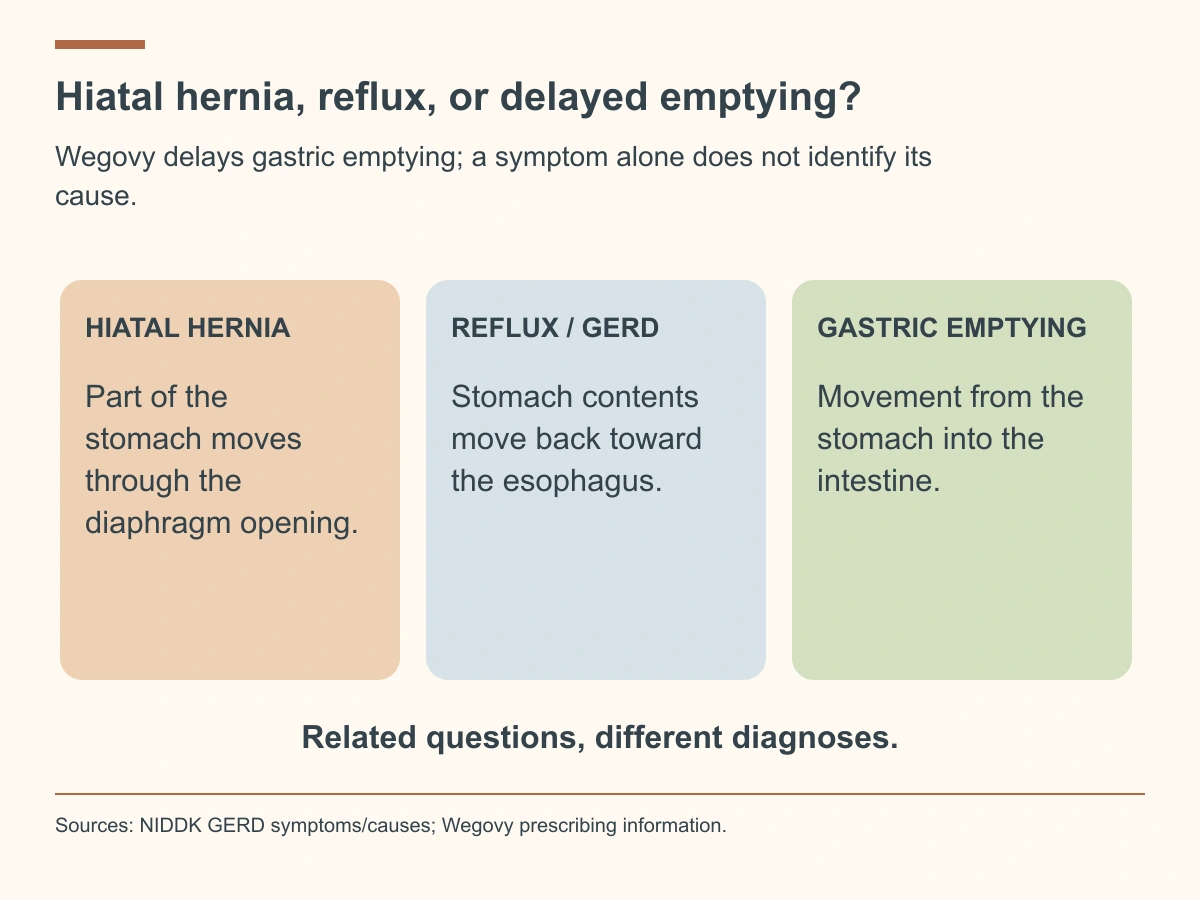
A hiatal hernia occurs when the opening in the diaphragm allows the upper part of the stomach to move into the chest. The diaphragm is the muscle separating the chest and abdomen. NIDDK explains that a hiatal hernia can increase the likelihood of gastroesophageal reflux disease, or GERD, or make its symptoms worse. NIDDK symptoms and causes.
Reflux is the backward movement of stomach contents into the esophagus. Heartburn is a common symptom, but reflux can also involve regurgitation, a sour taste, cough, hoarseness or swallowing problems. Having a symptom does not establish the exact anatomical problem, and having a diagnosed hernia does not prove that it explains every new symptom.
Keep the diagnosis separate from the experience. “I was told I have a hiatal hernia” and “I now have chest pressure and trouble swallowing” are different pieces of information. The second may need prompt assessment even when the first has been known for years.
Is delayed gastric emptying the same problem?
No. Gastric emptying describes movement from the stomach into the intestine. Wegovy slows that process. A hiatal hernia concerns stomach position relative to the diaphragm, while reflux concerns movement back toward the esophagus. These mechanisms can be relevant to the same person, but the terms are not interchangeable. Wegovy label; NIDDK GERD guidance.
The Wegovy label lists gastroesophageal reflux disease among reported adverse reactions and warns about severe gastrointestinal reactions. It also states that Wegovy is not recommended in people with severe gastroparesis, a condition involving markedly delayed stomach emptying. A hiatal hernia alone is not a diagnosis of gastroparesis.
Our Wegovy heartburn and reflux guide covers the broader symptom question. The dumping-syndrome comparison explains a different mechanism—rapid stomach emptying—that should not be inferred simply from diarrhea or symptoms after meals.
Can someone with a hiatal hernia be considered for Wegovy?
The reviewed label’s contraindications include a personal or family history of medullary thyroid carcinoma, MEN2, and prior serious hypersensitivity to semaglutide or the product’s ingredients. Hiatal hernia is not named as a separate contraindication. However, checking that list is only one part of assessing suitability. Wegovy contraindications.
Tell the clinician how the hernia was diagnosed, whether you have a gastroenterologist or surgeon, what treatment has been recommended, and whether there has been a change in symptoms. Bring any available procedure report rather than relying only on a remembered description such as “a small hernia.”
Also explain nausea, vomiting, early fullness, painful swallowing, nighttime symptoms and difficulty maintaining food or fluid intake. The clinician may need to assess those issues before deciding whether to begin treatment, proceed with a planned increase, or seek additional evaluation. No general article can clear an individual patient solely from the name of the condition.
Could weight loss help reflux or make the hernia disappear?
NIDDK notes that clinicians may recommend weight loss for some people with overweight or obesity to help manage GERD. That recommendation concerns symptom management and overall care; it is not evidence that a particular medication repairs a hiatal hernia. NIDDK GERD treatment.
A person may have a reasonable weight-management indication and still experience digestive side effects that require attention. Expected long-term benefit does not make current swallowing problems, persistent vomiting or severe pain unimportant. Treatment goals and tolerability need to be evaluated together.
Avoid judging success only by the scale. Ask how the team will assess reflux control, nutrition, daily function and the original treatment goal. Our semaglutide follow-up and plateau guide explains why treatment review includes more than whether hunger is fully suppressed.
Which symptom changes should you record?
Start with what was present before Wegovy and what is new. Describe the sensation, timing and effect on daily life. A short record can help the prescriber and gastroenterologist work from the same information.
| Area | Details that help |
|---|---|
| Established history | Hernia diagnosis, prior testing, surgery and existing reflux plan |
| Actual treatment | Wegovy injection or tablet, dose, start date, changes and interruptions |
| Symptoms | Burning, regurgitation, chest discomfort, painful swallowing, nausea or vomiting |
| Timing | Relation to meals, lying down, nighttime and dose changes |
| Intake | Foods and fluids tolerated, missed meals and difficulty taking oral medicines |
| Other products | Reflux treatments, prescriptions, pain medicines and supplements |
Do not delay urgent care while collecting entries. The purpose is to support a routine review when symptoms are stable enough for one. Our semaglutide nausea and vomiting article discusses the point at which poor intake and fluid loss need prompt attention.

What meal and daily-routine questions are useful?
Review your eating pattern with the care team rather than removing every food associated with reflux in someone else’s story. Explain whether symptoms occur after a large meal, interrupt sleep, or make you reluctant to eat. The goal is a tolerable routine that still provides adequate nutrition.
NIDDK describes lifestyle measures and changes in eating habits as part of GERD care. It also discusses head elevation during sleep and smoking cessation when relevant. These measures should fit the person’s symptoms and clinical plan; they do not replace assessment of a hernia or another cause of discomfort. NIDDK treatment guidance.
If your current plan leaves you frequently skipping meals or unable to meet nutritional needs, tell the clinician. A restrictive “hernia diet” found online may not fit your diagnosis or medicines. The GLP-1 nutrition advisory emphasizes adequate intake and clinical support for gastrointestinal symptoms during treatment.
Our balanced-meal guide offers a general meal-building framework. Use individualized advice when swallowing, a previous operation, another digestive condition or persistent symptoms changes what you can comfortably eat.
Can an antacid or acid-reducing medicine solve it?
Antacids, H2 blockers and proton pump inhibitors have different roles in reflux treatment. NIDDK describes these options and advises medical review for symptoms that do not improve with OTC treatment. Medicines that reduce acid do not by themselves demonstrate that the anatomical hernia has been corrected. NIDDK medicine guidance.
Have the pharmacist review what you already take before adding a new reflux product. Explain the exact Wegovy formulation and any other oral medicines. The label notes the potential effect of delayed gastric emptying on oral treatment and recommends monitoring relevant medicines. Wegovy oral-medication guidance.
Do not assume that a fixed interval between Wegovy and every tablet will resolve reflux. Oral semaglutide has its own administration routine, while weekly injection instructions differ. Our oral-versus-injection comparison helps clarify that question.
What should happen before a dose increase?
Report ongoing reflux, vomiting, difficulty swallowing or poor intake before a planned increase. Tell the team what you can manage and how often symptoms occur. A calendar-based escalation plan still needs the prescriber’s assessment of tolerability and the actual indication.
Do not split a preset pen, take a partial injection, move doses closer together, or switch to another semaglutide product to experiment with symptoms. Ask for a clear written plan if treatment needs to change. The Wegovy dosage guide and device guide distinguish prescribed adjustments from improvised dosing.
If symptoms are severe, the priority is assessment rather than waiting for a routine escalation discussion. Wegovy’s label warns about pancreatitis, gallbladder disease, severe gastrointestinal reactions and kidney injury with fluid loss. A known hernia should not become a reason to dismiss symptoms that may have another cause. Wegovy warnings.
When should you seek urgent or emergency care?
New or severe chest pressure, especially with breathlessness, sweating, faintness or discomfort spreading to the arm, jaw or back, requires emergency assessment. Do not assume it is reflux because you have a hiatal hernia or symptoms occurred after eating.
Seek prompt medical care for persistent vomiting, difficult or painful swallowing, blood or coffee-ground-like material in vomit, black tarry stools, or unexplained weight loss. These are among the warning features discussed in NIDDK’s GERD guidance. Severe bleeding symptoms or collapse require emergency help. NIDDK alarm symptoms.
Severe persistent abdominal pain, sometimes extending to the back, can be a pancreatitis warning. Wegovy patient information directs stopping the medicine and contacting a healthcare provider right away for that pattern. Repeated vomiting with inability to keep fluids down or very little urine also needs prompt assessment. Wegovy patient information.
These examples do not cover every urgent condition. Seek care when symptoms are severe or feel unsafe, rather than relying on an online explanation of the hernia.

What if you are planning an endoscopy or hernia operation?
Tell the procedural and anesthesia teams about Wegovy, the exact formulation, recent increases and gastrointestinal symptoms. Delayed gastric emptying matters during general anesthesia or deep sedation, and the Wegovy label describes reports of pulmonary aspiration. Wegovy procedural warning.
The team should provide instructions for preparation, medication management and resumption. Do not apply a universal internet “hold for one week” rule or decide on your own when to restart after an operation. The procedure, symptoms, intake and overall treatment plan can affect the decision.
Our semaglutide surgery and anesthesia guide explains the planning conversation. If several clinicians are involved, ask who will communicate the final instructions so you do not receive conflicting schedules.
Frequently asked questions
Does new heartburn prove Wegovy caused my hernia?
No. A reflux symptom appearing during treatment does not establish a new anatomical hernia or prove causation. Discuss what changed and whether further assessment is needed. The medicine’s gastric-emptying effect and the hernia’s anatomy are separate facts.
Can I use Wegovy instead of a recommended hernia treatment?
Do not substitute it for care recommended by your gastroenterologist or surgeon. Wegovy is not a hernia-repair treatment. Ask how weight management, reflux treatment and any procedural plan fit together.
Is a different GLP-1 product automatically easier on reflux?
No universal switch guarantees better tolerance. The alternative has its own label, indication and precautions. Review the reason for switching and the complete treatment plan rather than assuming a different brand removes the digestive concern.
Where does CoreAge Rx fit?
CoreAge Rx semaglutide information is a starting point for assessment and product questions. Tell the clinician about your hernia, symptoms and existing specialists. Confirm the actual preparation: a compounded medicine is not FDA-approved and should not be presented as branded Wegovy. FDA GLP-1 guidance.
Educational information for adults; individual treatment decisions require a qualified clinician. Sources reviewed October 6, 2026. Original AI-generated article images depict fictional people and objects, not patient outcomes. Other editorial images are illustrative. Graphics summarize the cited sources.