
Mango can fit a weight-management eating pattern. It provides carbohydrate, naturally occurring sugars, fiber, and other nutrients, but it does not burn fat because it is eaten at a particular time. Portion and the complete meal matter more than a rule that one fruit is automatically good or bad.
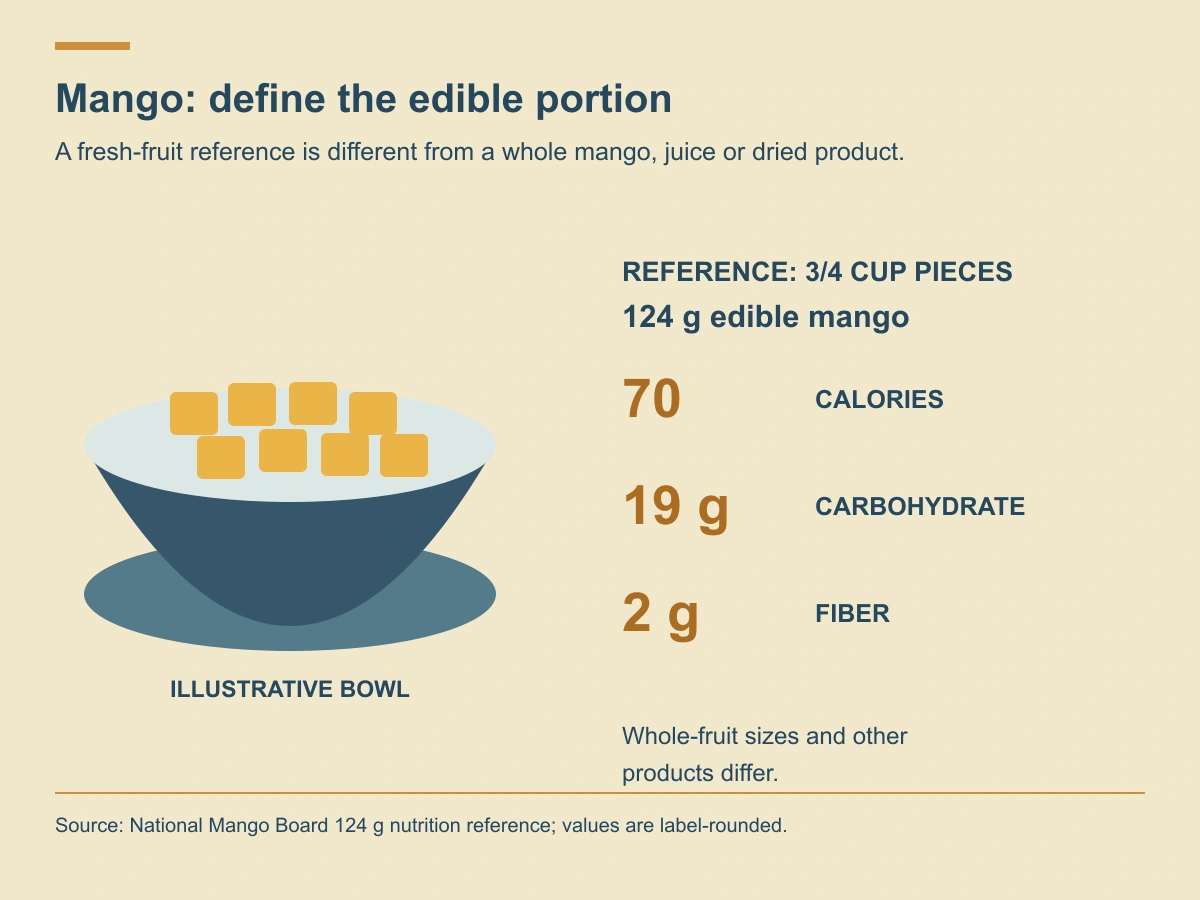
Use a defined reference when reading nutrition information. The National Mango Board’s label describes three-quarter cup of mango pieces, 124 grams, as 70 calories with 19 grams of carbohydrate and 2 grams of fiber. USDA’s separate one-cup reference uses 165 grams. Those examples should not be treated as the weight or nutrition of every whole mango. Mango Board nutrition reference, USDA mango reference.
What is in a defined serving of mango?
The Mango Board reference provides these values for fresh mango pieces:
| Nutrient | Reference: three-quarter cup pieces, 124 g |
|---|---|
| Calories | 70 |
| Total carbohydrate | 19 g |
| Dietary fiber | 2 g |
| Total sugars | 17 g |
| Added sugars | 0 g |
| Protein | 1 g |
This is a reference label with rounded values, not a prescription to eat exactly three-quarter cup. The listed sugars occur within the fresh-fruit reference; they should not be confused with a claim that every mango-flavored drink or dried product contains no added sugar. Defined mango nutrition label.
The separate USDA SNAP-Ed display lists one cup of pieces, 165 grams, at 99 calories, 25 grams of carbohydrate, 3 grams of fiber, and 23 grams of total sugars. Use one clearly defined reference when estimating a quantity rather than combine numbers from different portions. USDA one-cup example.
Why “one mango” is not a reliable portion measurement
Whole fruit varies in size, and the skin and large flat seed are not the same as the edible pieces. USDA describes mango’s central flat seed and cutting the cheeks away from it. A whole-fruit count therefore does not directly match a label for a measured quantity of cut fruit. USDA mango description.
If you want to understand your usual amount, notice the cut pieces you actually eat. A cup measure or kitchen scale can help establish a reference when useful, but it does not create a requirement to weigh every snack. The goal is clearer context, not a rigid ritual.
The same principle applies to a large fruit shared between people or a bowl made from several small fruits. Describe the edible portion and how it fits the meal rather than assume that every fruit count represents the same energy intake.
Is mango good for weight loss?
It can be part of a suitable pattern when the amount and surrounding foods fit your needs. A fruit’s nutrient profile cannot predict an individual’s weight change, and adding mango does not automatically create a calorie deficit.
For example, using mango in a meal is different from adding a large smoothie on top of an unchanged routine. Both may be enjoyable, but the complete eating pattern answers the weight-management question. Consider what the fruit accompanies or replaces and whether the meal is adequate and satisfying for you.
Our balanced-meals guide explains flexible food components, and the calorie-intake guide discusses individual daily needs. NIDDK’s adult Body Weight Planner uses personal starting information and goals; it does not assign a universal mango allowance. NIDDK planner overview.
Does its sugar mean mango should be avoided?
The fresh-fruit reference contains total sugars and no added sugars. Those label facts are useful, but they do not settle every person’s dietary needs. A general weight-management plan and a diabetes eating plan may require different kinds of attention to portion, total carbohydrate, medicines, and glucose monitoring.
Avoid treating total sugar as the only characteristic of a food. The defined mango reference also includes fiber and other nutrients. Conversely, avoid treating the word fruit as permission to ignore the amount eaten or the other ingredients in a recipe.
If you need a medical nutrition plan, bring the actual portion and usual meal to a dietitian or clinician. They can consider the whole context rather than impose a blanket ban or an unlimited allowance based on the fruit’s name.
Whole pieces, smoothies, juice, and dried mango need different checks
The fresh reference above should not be transferred to every mango product. A drink can contain several ingredients, a dried product uses a different quantity reference, and a packaged snack may include added sweeteners. Read the exact label or recipe.
| Form | Practical information to check | Important distinction |
|---|---|---|
| Fresh or plain frozen pieces | The edible quantity and any added ingredients. | Use a matching fresh-fruit reference when appropriate. |
| Homemade smoothie | Mango quantity, other fruit, milk or yogurt, sweeteners, and total yield. | The complete drink is not described by mango alone. |
| Mango juice or juice drink | Serving size, ingredients, sugars, and the exact product. | A fresh-fruit panel does not define the drink. |
| Dried mango | Actual serving weight and the package’s nutrition and ingredient lists. | Do not reuse the cup-of-fresh-fruit values. |
| A mixed snack or dessert | All ingredients and the finished portion. | A mango ingredient does not establish the whole food’s profile. |
The table does not declare one form appropriate for every person. It shows why the product and portion need to be identified before making a comparison.
How can mango fit into breakfast or a snack?
Consider what else the meal needs. Mango pieces can accompany yogurt, a breakfast bowl, or another ordinary protein food. They can also provide flavor in a savory salad or salsa. These are practical meal ideas, not measured menus or a clinical prescription.
If a fruit-only snack leaves you hungry, you can review the amount, timing, and whether another food would make it more useful. Do not assume that hunger means mango is a bad fruit. It may simply mean the snack did not provide what you needed in that situation.
Our breakfast calories and protein guide discusses daily context. The yogurt guide offers another food-label example, and the protein-shake meal guide explains why a drink and a complete meal need separate consideration.
How should you think about a mango smoothie?
Write down the actual recipe and how many portions it makes. Include the quantity of mango, other fruit, milk or yogurt, powders, nut butter, sweeteners, and any other additions. A large blender jug may produce more than one intended serving.
Use the finished quantity rather than borrowing a calorie number from a different online recipe. You can choose ingredients for taste, convenience, and nourishment without labeling the drink a fat-burning formula. A smoothie recipe is also not automatically suitable for every allergy or medical condition.
If the recipe includes almond flour or another almond ingredient, the tree-nut question comes before a weight-loss comparison. Our almond-flour nutrition and allergy guide explains why specialty ingredients still require an exact ingredient check.
Is there a best time to eat mango for fat loss?
The nutrition references do not establish a special morning, nighttime, or empty-stomach fat-loss effect. Choose a time that fits your meals, appetite, schedule, and any clinical advice. A serving after dinner does not acquire a different weight-loss mechanism simply because of the clock.
Likewise, do not use fruit timing to compensate for skipping meals or eating inadequately earlier in the day. The complete pattern matters. If late hunger is a recurring issue, review the day’s meals, access to food, and other relevant factors rather than blame one fruit.
Our lunch-calorie guide uses ordinary meal context rather than a universal quota. Its approach can help when a timing question is really a question about whether meals are meeting your needs.
What if you have diabetes?
Use the total-carbohydrate amount for the actual portion as part of your individualized eating plan. The label’s total sugar is not a substitute for the broader carbohydrate and medication discussion. Ask the diabetes team how your usual fruit portion fits meals and monitoring.
If you use insulin or a sulfonylurea alongside Mounjaro or Ozempic, the labels identify increased low-blood-glucose risk and the need for coordinated care. Changes in food intake should therefore be discussed in the whole treatment plan rather than answered by a fruit restriction alone. Mounjaro interaction information, Ozempic hypoglycemia warning.
Follow your established low-glucose response instructions if a low occurs. This article’s fruit portion is not a hypoglycemia treatment protocol. If glucose patterns change, share readings and meal details with the treating team.
What if GLP-1 treatment makes eating difficult?
Low appetite, nausea, or vomiting can make a food question more complicated. A fruit you usually enjoy may fit well on one day and be difficult to eat on another. The important issue is whether you can maintain adequate overall food and fluid intake and whether symptoms need review.
Do not rely on a bowl of mango to replace every meal or assume that very little intake is desirable because treatment suppresses appetite. Our semaglutide protein and muscle guide and tirzepatide nutrition discussion explain why function and nutritional adequacy deserve attention.
Persistent symptoms that interfere with eating or drinking should be discussed with the prescribing team. If you cannot keep fluids down or become severely unwell, seek appropriate medical care rather than focus on finding one supposedly ideal fruit.
Can a greens powder replace the fruit?
A greens powder and a measured portion of mango are different products. The current CoreAge Green Scene page describes a daily greens supplement with its own ingredient blend. Its scoop should not be assigned the fresh-mango nutrition values or treated as an automatic substitute for the complete food pattern. Green Scene product description.
Our greens powder versus vegetables guide discusses why supplement and food questions should remain clear. If you use a powder in a smoothie, include its actual label and ingredients in the recipe review, and consider suitability with your other medicines and needs.

A simple planning exercise
Notice three ordinary ways you might eat mango: pieces with a meal, a snack, and part of a drink or recipe. Identify the amount and other ingredients in each. You may find that a portion suits one use better than another without needing a rule that bans the fruit.
Choose the form you enjoy and can access. USDA notes that mango continues ripening after harvest and suggests checking for slight softness. Follow appropriate handling and storage guidance for the product you buy, especially once fruit is cut. USDA selection information.
Frequently asked questions
Can I eat a whole mango every day?
There is no universal whole-fruit allowance. Size and edible quantity vary, and individual needs differ. Consider the actual amount and the complete pattern rather than treat one fruit count as a fixed serving.
Is frozen mango worse than fresh mango?
Check the exact product and added ingredients. Plain frozen pieces and a sweetened packaged product are different label questions. Choose a form that fits your routine without assuming that the word frozen determines its entire nutrition profile.
Does mango burn belly fat?
The cited nutrition references do not establish a belly-fat treatment or special timing effect. Mango can fit meals, but body-composition changes depend on the broader situation and cannot be predicted from one fruit.
Where can I discuss a broader weight-management plan?
If you are considering CoreAge care, the semaglutide and tirzepatide pages can help organize a provider conversation. Food preferences, symptoms, nutritional adequacy, actual formulation, and follow-up should be considered together.
Educational information for adults; individual treatment decisions require a qualified clinician. Sources reviewed October 2, 2026. Original AI-generated article images depict fictional people and objects, not patient outcomes. Other editorial images are illustrative. Graphics summarize the cited sources.