
Ibuprofen, alcohol, and tirzepatide can raise several different safety questions. The important issues include stomach bleeding from an NSAID, dehydration during stomach side effects, kidney health, and the other medicines you take. A lack of a named drug interaction does not settle all of those questions. Before treating a headache or other pain, check the actual pain-reliever label and ask a pharmacist or your prescriber how it fits your situation.
Can you take ibuprofen while drinking alcohol?
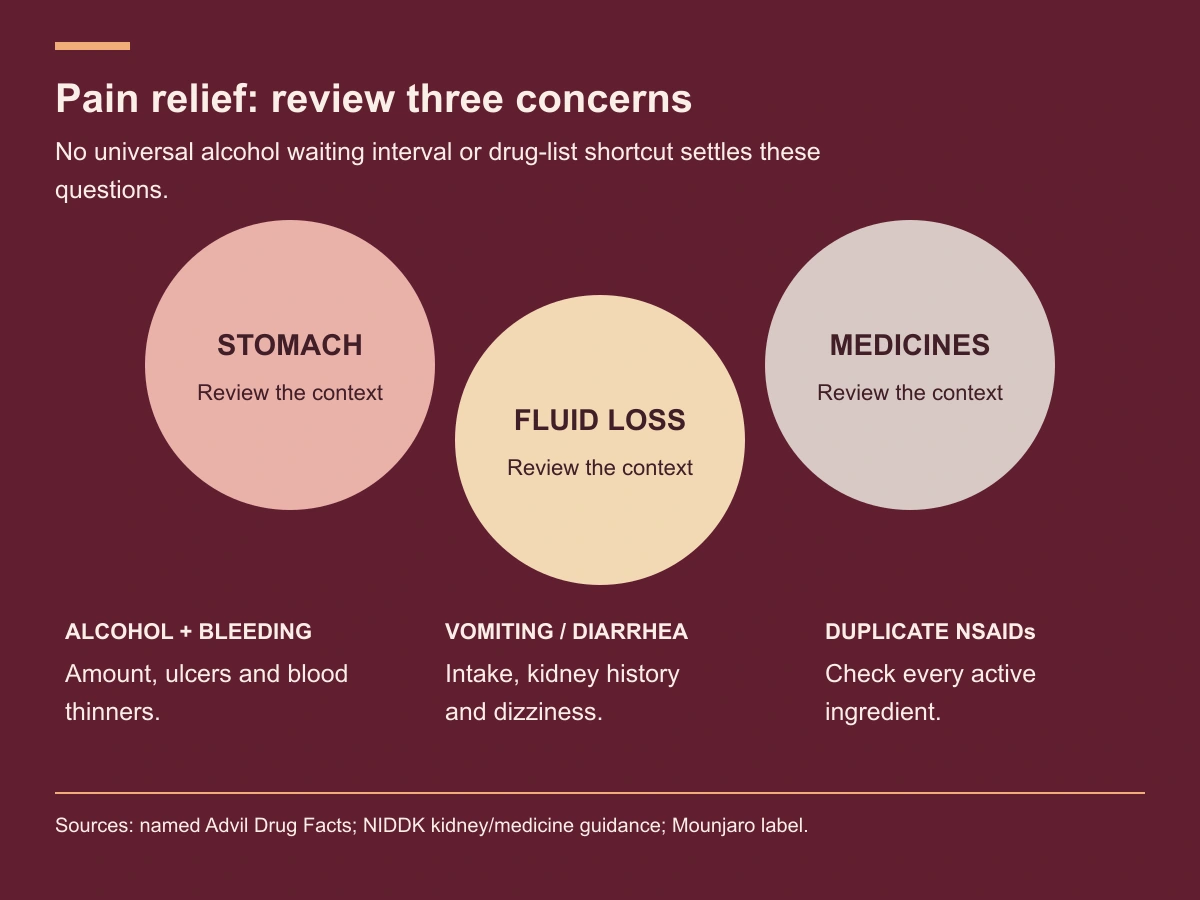
The reviewed 200 mg Advil Drug Facts label warns that ibuprofen can cause serious stomach bleeding. It identifies having three or more alcoholic drinks every day as one factor that increases that risk. Other factors include a previous stomach ulcer or bleeding problem, older age, certain medicines, and using more ibuprofen or using it longer than directed. That warning does not establish that fewer drinks are safe for every person. Read the named product label.
There is also no universal number of hours between a drink and an ibuprofen dose that this label establishes as safe. Counting hours cannot account for an ulcer history, another NSAID in a cold medicine, or a blood thinner. Give the pharmacist the amount and timing of alcohol, the exact product, and the reason you need pain relief. A useful answer depends on those details.
If your question concerns drinking during a tirzepatide prescription, our Zepbound and alcohol guide discusses the broader treatment context. The alcohol question and the pain-reliever question deserve separate attention, even when they occur on the same evening.
Why tirzepatide treatment changes the conversation
Tirzepatide is the active ingredient in Mounjaro and Zepbound, which have different labeled purposes. During treatment, nausea, vomiting, or diarrhea may make it harder to keep fluids down. The Mounjaro label warns about acute kidney injury associated with volume depletion, and calls for renal monitoring when adverse effects could cause fluid loss, particularly around initiation or dose increases. Mounjaro prescribing information.
Ibuprofen belongs to the nonsteroidal anti-inflammatory drug class, often shortened to NSAIDs. NIDDK explains that these medicines can cause kidney injury when a person is dehydrated or has low blood pressure. That creates a practical concern: a pain reliever you previously tolerated may need a fresh review during a week of repeated vomiting or diarrhea. NIDDK medicine and kidney safety guidance.
This is a review of overlapping risks, not proof that every person taking tirzepatide will have a problem with ibuprofen. It also does not mean a different over-the-counter product is automatically appropriate. The cause of the pain and your health history still matter.
Three questions to answer before choosing pain relief
| Question | Why it matters | Information to bring |
|---|---|---|
| Could this be a stomach-bleeding risk? | Alcohol, ulcer history, and certain medicines can change the ibuprofen decision. | Previous bleeding, alcohol use, blood thinners, steroids, and other pain relievers. |
| Am I keeping fluids down? | Vomiting, diarrhea, and reduced intake can make NSAID kidney concerns more important. | How long symptoms have lasted, fluid intake, urine changes, dizziness, and kidney history. |
| What exactly is causing the pain? | A headache, injury, and severe persistent abdominal pain require different assessment. | Location, severity, onset, associated symptoms, and what you have already taken. |
These questions can guide a conversation with a pharmacist. They are not a home test that can rule out bleeding, kidney injury, or a serious cause of abdominal pain.
Check for duplicate ingredients
A single brand name may sell several formulations. One product may contain only ibuprofen, while another contains additional ingredients. Cold, flu, sleep, and combination pain products can make a medicine list harder to interpret. Check the active-ingredient panel rather than relying on the front of the package.
The Advil label specifically flags use with another prescription or nonprescription NSAID. Do not assume that changing from one brand to another avoids duplication. Take photographs of the ingredient panels, or bring the packages to the pharmacist. Include aspirin and naproxen in the discussion, as well as any prescription anti-inflammatory medicine.
Also list supplements and medicines you take only occasionally. A medication review is more useful when it includes the actual last doses and your current symptoms. “I take a weight-loss medicine and something for pain” leaves too much uncertainty to resolve safely.
What if the pain is a headache after drinking?
Start by describing the headache rather than assuming a painkiller is the only relevant decision. Tell the clinician or pharmacist whether you have vomited, eaten very little, fainted, or noticed reduced urination. Mention how much alcohol you drank and whether you took any other medicines. Those details can change the advice.
Tirzepatide treatment can coincide with reduced food intake, and some people also use insulin or medicines that can cause low blood sugar. NIDDK notes that alcohol can lower glucose in people using certain diabetes medicines. If you have diabetes, follow the glucose-monitoring and low-glucose plan your care team gave you. Healthy living with diabetes.
A severe or unusual headache, confusion, collapse, or other concerning symptoms needs medical assessment. An internet recommendation about a familiar pain reliever cannot evaluate a new symptom. For the related semaglutide question, see Ozempic and alcohol.

What if the pain is in your stomach?
Do not treat new severe stomach pain as an ordinary consequence of taking a GLP-1 medicine. Describe the location, whether the pain persists, and whether vomiting, blood, or faintness is present. Taking a pain reliever before understanding the symptom can leave the underlying problem unresolved.
The ibuprofen label tells users to stop and seek medical advice for signs that can suggest stomach bleeding, including vomiting blood, bloody or black stools, faintness, or stomach pain that does not improve. Severe symptoms, collapse, or significant bleeding warrant urgent care. The appropriate response depends on the severity; waiting for the next routine refill appointment is not a useful plan.
For a broader overview of tolerability questions, our compounded tirzepatide side-effect guide explains why the precise prescription and dispensing instructions matter. A compounded preparation is not the same product as the branded medicine used to generate a manufacturer’s clinical trial results.
Kidney disease, blood-pressure medicines, and fluid limits
If you have chronic kidney disease, tell the pharmacist before taking an NSAID. The discussion should also include blood-pressure treatment, diuretics, and any existing instructions about fluid intake. NIDDK recommends planning ahead with the care team for illness that causes dehydration or low blood pressure.
“Drink more water” is not an adequate universal answer. Some people have clinician-set fluid limits, and repeated vomiting can prevent oral hydration from solving the problem. Do not independently stop prescribed kidney, diabetes, or blood-pressure medicines because of a general online suggestion. Ask for instructions specific to your medicines and symptoms.
Our Mounjaro and kidney disease article separates the manufacturer’s renal dose-adjustment guidance from the need to assess dehydration and monitor kidney function. Those are different clinical questions.
Is acetaminophen a safer alternative?
A pharmacist can help compare options, but a different active ingredient does not automatically mean it suits your situation. Provide the same alcohol history, medication list, liver and kidney history, and description of the pain when asking about an alternative. Check combination products so you do not accidentally repeat an ingredient.
This article does not prescribe an acetaminophen dose or a schedule for alternating medicines. If the pain is persistent, recurrent, or severe, identifying its cause matters more than building an unsupervised rotation of over-the-counter products. Keep the advice with the actual package and prescription instructions so that everyone involved sees the same plan.
Pregnancy needs a separate medicine review
Pregnancy is another reason to ask before taking ibuprofen. FDA advises avoiding NSAIDs at about 20 weeks of pregnancy or later unless a health professional specifically directs their use, because of risks involving fetal kidneys and amniotic fluid. Clinician-directed exceptions exist. An older package’s reference to the last three months should not be your only source of pregnancy guidance. FDA safety communication.
Tell the clinician about pregnancy, possible pregnancy, or pregnancy planning, along with the exact tirzepatide prescription. Do not build a pregnancy pain-treatment plan from advice intended for other adults.

A practical message to send your care team
You can make the conversation more efficient with a short, specific message: “I use this prescription, my last dose was on this date, and I have this pain. I have had these stomach symptoms and this amount of alcohol. These are my other medicines. Is this exact pain-reliever product appropriate, and what symptoms should change the plan?”
Ask whom to contact if symptoms worsen and whether you need a review before the next treatment dose. A written answer is particularly helpful when several clinicians manage diabetes, kidney health, and pain. Keep the complete medication list updated after any change.
If you are considering treatment rather than already using it, the CoreAge tirzepatide service page describes the intake process. A prescription depends on an appropriate clinical assessment; the product page cannot clear an individual pain-reliever combination.
Frequently asked questions
Does tirzepatide make ibuprofen stop working?
The immediate concern is whether the pain reliever is appropriate for your symptoms and health history. Tirzepatide’s effect on stomach emptying also makes oral-medicine questions worth discussing. Do not repeat doses early because you think an oral medicine has been delayed; ask the pharmacist about the exact product and instructions.
Can I take ibuprofen if I am vomiting on tirzepatide?
Repeated vomiting raises a dehydration concern. NSAIDs deserve a fresh review in that setting, especially with kidney disease or blood-pressure medicines. Contact your care team rather than assuming your usual routine remains appropriate. Inability to keep fluids down or worsening symptoms can need prompt assessment.
Does taking ibuprofen with food remove the alcohol risk?
Food does not cancel the label’s stomach-bleeding warnings. Discuss alcohol, ulcer history, other medicines, and the actual product with a pharmacist. Do not use a meal as proof that the combination is safe.
How many hours after alcohol should I wait?
The reviewed label does not provide a universal safe waiting interval. The amount of alcohol, bleeding risks, kidney health, dehydration, and other medicines matter. Ask for advice based on those factors rather than relying on a fixed hour count.
What should I do if I already took both?
Tell a pharmacist or clinician what you took, how much, when, and whether you have symptoms. Seek urgent help for significant bleeding, collapse, severe persistent pain, or other serious symptoms. Do not add more medicines to compensate without advice.
Educational information for adults; individual treatment decisions require a qualified clinician. Sources reviewed October 2, 2026. Original AI-generated article images depict fictional people and objects, not patient outcomes. Other editorial images are illustrative. Graphics summarize the cited sources.