
Almond flour can fit an eating pattern for weight management, but it is not automatically a lower-calorie choice because it is gluten-free or marketed for low-carbohydrate baking. The amount used, the other ingredients, the finished recipe, and the portion you eat all matter.
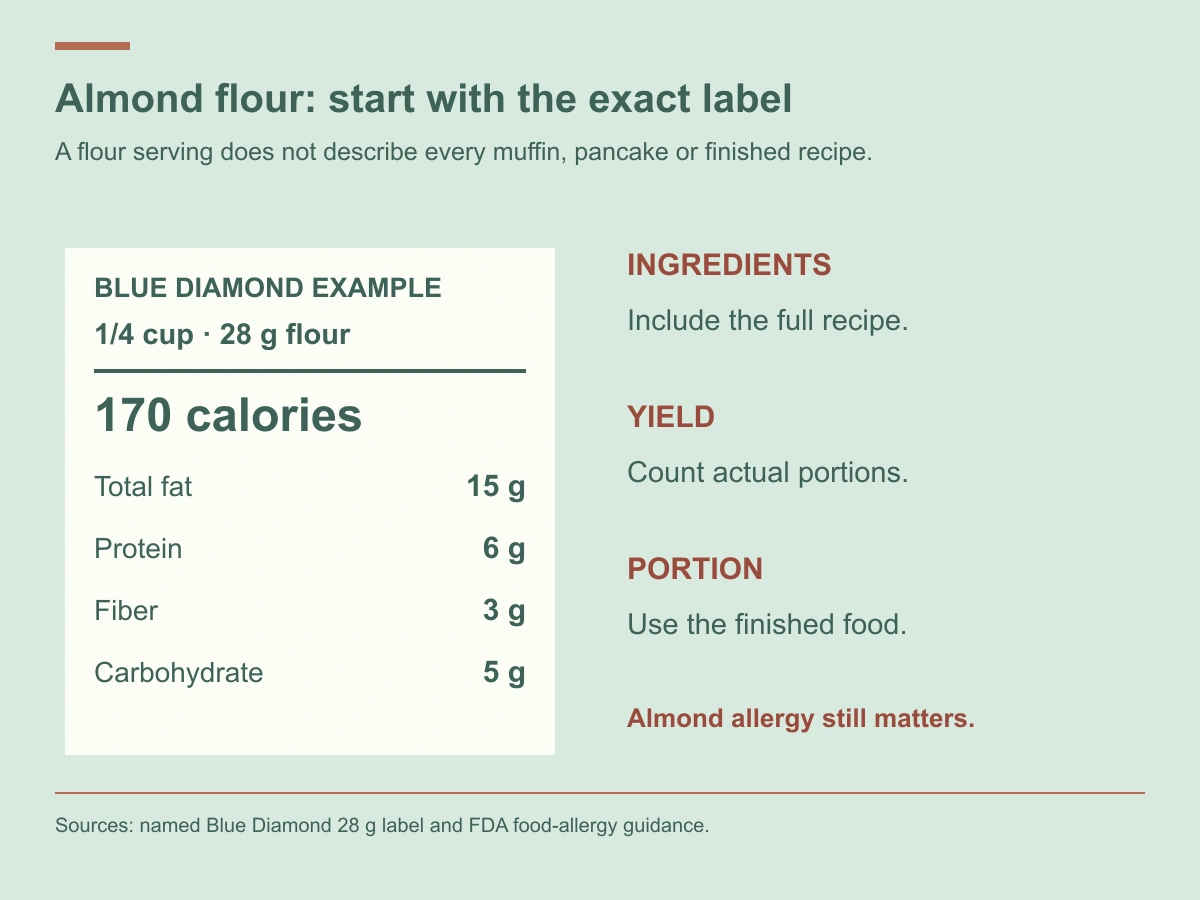
A useful starting point is the actual nutrition label. The reviewed Blue Diamond almond-flour panel lists 170 calories for one quarter cup, or 28 grams, with 15 grams of fat, 6 grams of protein, and 3 grams of fiber. These are values for that named flour and serving, not for every almond-flour muffin, bread, or pancake. Blue Diamond almond-flour label.
What is almond flour?
The named product reviewed here is finely sifted flour made from blanched almonds. Its ingredient list is simply blanched almonds. Other products may use different processing, particle sizes, or descriptions, so check the package when a recipe specifies a particular type. Manufacturer ingredient information.
Do not assume that every bag called almond meal will behave identically to a fine blanched flour. The exact ingredient and texture can matter to a finished recipe. A recipe developed for one type provides a more useful starting point than a universal substitution instruction.
Almond flour is also still an almond food. Grinding the nuts does not remove the tree-nut allergy concern. Its place in a gluten-free recipe is a separate question from whether it is safe for someone with an almond allergy.
What does a defined label serving contain?
The Blue Diamond panel provides a concrete example:
| Nutrient | Named reference: one quarter cup, 28 g |
|---|---|
| Calories | 170 |
| Total fat | 15 g |
| Saturated fat | 1 g |
| Total carbohydrate | 5 g |
| Dietary fiber | 3 g |
| Total sugars | 1 g |
| Added sugars | 0 g |
| Protein | 6 g |
The panel also lists vitamin E, magnesium, and other nutrients. The values above describe the flour before it becomes part of a finished food. A labeled serving is a reference for reading the panel, rather than a personal instruction to eat exactly that amount. Full named nutrition panel.
Check the bag you purchase because brands, serving references, and products can differ. If a recipe uses grams and the package gives a volume measure as well, keep the units clear. A loosely filled cup and a packed cup may not represent the same quantity, so use the recipe’s intended measurement rather than switching units casually.
Is it good for weight loss?
It can be one ingredient in a suitable eating pattern. The more useful question is whether the food you make fits your needs and is practical to eat regularly. A flour label cannot predict the effect of the complete diet, and a single ingredient does not provide a personal calorie target.
The example contains meaningful fat, protein, and fiber as well as calories. Those facts can help compare foods, but they do not establish that every almond-flour recipe is more filling or produces more weight loss than another recipe. The total food, portion, and individual response matter.
Our balanced-meals guide explains how food components fit together. If you need help estimating overall intake, the calorie-intake guide discusses why daily needs differ. NIDDK’s adult Body Weight Planner similarly uses individual starting information rather than a universal allowance for a particular flour. NIDDK planner overview.
Why gluten-free does not mean low calorie
Gluten-free describes a different property from calorie content. The reviewed almond-flour product is marketed as gluten-free, while its panel still lists 170 calories in the defined 28-gram serving. Both descriptions can be true at the same time. Blue Diamond product information.
Likewise, “keto-friendly,” “paleo,” or “natural” on a product description does not tell you how many portions the finished recipe contains. A recipe can use almond flour and still contain substantial butter, oil, sweeteners, chocolate, or other ingredients.
Choose gluten-free ingredients because they match a genuine dietary need or preference, and evaluate nutrition separately. If you have celiac disease or another medical reason to avoid gluten, use suitable ingredients and food-handling practices for that condition. Do not assume that substituting one flour confirms the safety of the entire recipe.
Count the finished recipe rather than only the flour
Imagine two foods that use the same flour: a small savory pancake and a large sweet muffin with frosting. The flour’s label has not changed, but the other ingredients, finished size, and way the food is eaten may be very different. There is no single “almond-flour calories” number that describes both.
If you estimate recipe nutrition, include every ingredient and divide by the number of actual portions produced. Use information from the exact packages or suitable food references. A recipe’s stated yield is useful only if your finished portions are reasonably similar to that yield.
You do not need to track every homemade meal indefinitely to make this distinction. Simply noticing recipe ingredients and portion size can correct the assumption that a specialty flour makes a food unlimited. Our guide to lunch calories and complete meals applies the same principle to a different part of the day.

Can you replace wheat flour one for one?
Do not assume a universal one-for-one substitution. Almond flour and wheat flour have different ingredient characteristics, and the finished result depends on the recipe. A tested almond-flour recipe is a more reliable starting point than improvising a replacement in every bread or pastry.
Look for instructions that specify the flour type, the amount, and the intended yield. Notice whether the recipe includes additional binding ingredients and whether it describes a different baking method. Follow that recipe before deciding that a larger amount of flour will fix an unsatisfactory result.
This is a practical cooking question, separate from a weight-loss claim. A recipe that works well can still have a calorie or nutrient profile that differs from what you expected. Successful texture does not establish a particular health outcome.
How can almond-flour foods fit into a meal?
Consider the food’s role. Is it the main part of breakfast, a snack, a dessert, or an accompaniment? What else are you eating with it? The same baked item can fit differently depending on the rest of the meal and your appetite.
For example, an almond-flour pancake might be eaten with fruit and yogurt, while a savory almond-flour item might accompany vegetables and another protein food. These are meal-structure ideas, not tested calorie menus or a prescription for any medical condition.
Our breakfast calorie and protein guide discusses daily context, and the mango portions guide offers a fruit example. Choose foods that match your preferences, allergies, access, and clinical needs rather than treating a single ingredient as the center of every meal.
Does its protein make it a complete protein meal?
The named 28-gram label serving contains 6 grams of protein. That is useful information, but it does not mean a baked food automatically meets your needs for a whole meal or day. The recipe may contain a different flour quantity, and your eating pattern includes other foods. Named protein value.
If appetite is low during treatment, review the complete meal rather than rely on a label word such as “protein.” Our guides to semaglutide, protein, and muscle and tirzepatide and muscle-related nutrition explain why adequate intake and function deserve attention during weight management.
A supplement also needs its own identity check. A greens powder or creatine powder is not automatically a protein powder, and none should be assumed to replace the nutrients in a meal. Read the actual product rather than choosing it because it appears alongside fitness or wellness content.
Tree-nut allergy comes before a nutrition comparison
FDA identifies almonds as a tree nut among the major food allergens. An almond-flour food is therefore unsuitable for someone who needs to avoid almonds unless their qualified allergy care team has specifically advised otherwise. Gluten-free marketing does not remove this concern. FDA food-allergy guidance.
Read ingredient and allergen information for the complete recipe, including toppings and mixed products. If food is prepared by someone else, explain the allergy clearly. An unfamiliar baked food should not be used as a home test of whether an allergy has changed.
Food-allergic reactions can be serious. Follow your established emergency plan, and seek emergency help for breathing difficulty, throat swelling, collapse, or other signs of a severe reaction. A mild previous reaction does not guarantee that a later reaction will remain mild. FDA anaphylaxis discussion.
What if you have diabetes or a digestive condition?
Bring the exact label and finished-recipe information to a registered dietitian or clinician if you need a tailored eating plan. The flour’s total carbohydrate, fiber, fat, and the other recipe ingredients can matter, but a low-carbohydrate marketing description cannot predict your individual glucose response.
Likewise, a food containing fiber is not automatically the best choice during every digestive episode. If nausea, pain, or constipation makes eating difficult, address the symptoms with your care team. Avoid imposing a more restrictive diet simply because a specialty ingredient has been promoted as a better weight-loss choice.
For related bowel questions, our GLP-1 constipation guide discusses why symptoms and treatment context matter. A dietary change and a medicine decision should fit the complete situation.

A simple way to compare a bag or recipe
Start with three checks: the exact ingredient, the nutrition reference quantity, and the finished portion. Then consider whether the recipe provides the taste, texture, convenience, and nourishment you want.
If a packaged baked food uses almond flour, read that food’s own panel rather than borrow the flour bag’s values. Ask about serving size and servings per package. Compare similar finished amounts when deciding between products, and include allergy suitability before making a choice.
Frequently asked questions
Can I eat unlimited almond-flour foods because they are low carb?
No ingredient label creates an unlimited allowance. The complete food still contains energy, and portions and dietary needs vary. Use the actual recipe or finished-product information rather than assume that a low-carb description overrides the rest of the panel.
Is almond flour automatically healthier than every other flour?
There is no universal winner for every person or recipe. Compare the actual ingredient, finished food, medical needs, allergy situation, and practical use. Almond flour’s nutrient profile is useful, but it does not settle all of those questions.
Does baking remove the almond allergy concern?
Do not assume that it does. Almond flour remains an almond ingredient, and food-allergy precautions apply to the finished food. Follow the allergy care team’s advice rather than use baking as a way to test tolerance.
Is this enough to decide whether I need weight-management treatment?
A flour choice cannot determine eligibility or treatment fit. If you are considering CoreAge care, the semaglutide and tirzepatide pages can help organize questions for a clinical assessment. Food preferences, nutritional adequacy, medicines, and ongoing follow-up should be discussed together.
Educational information for adults; individual treatment decisions require a qualified clinician. Sources reviewed October 2, 2026. Original AI-generated article images depict fictional people and objects, not patient outcomes. Other editorial images are illustrative. Graphics summarize the cited sources.