
Smooth Move tea is a senna-containing product marketed for occasional constipation. It should not be treated as a fat-loss tea, a daily detox, or a way to compensate for eating. A bowel movement can change what is in the digestive tract; it does not demonstrate that body fat has been lost.
This article discusses Traditional Medicinals’ U.S. Smooth Move Original tea. Different blends, capsules, and products with a similar name need their own ingredient and usage checks. The current manufacturer page describes occasional constipation relief and advises using its Organic Smooth Move products for less than a week unless a physician directs otherwise. Traditional Medicinals product information.
What is Smooth Move tea intended to do?
The original tea contains senna leaf along with supporting herbal ingredients. Senna is a stimulant laxative: it increases intestinal activity to produce a bowel movement. MedlinePlus describes senna as a short-term constipation treatment, with some medically directed uses for bowel emptying before procedures. That purpose is different from treating obesity or providing nutrition. MedlinePlus senna information.
The manufacturer’s page describes overnight occasional-constipation relief, generally within six to twelve hours. This is an expected bowel-response description, not a promise that a person will lose weight overnight. Individual response, symptoms, medical history, and other medicines still matter.
Do not turn a marketing word such as “move” into a claim about metabolism. The ingredient’s laxative role explains why it can affect bowel movements. It does not establish a fat-burning effect or a clinically validated weight-loss routine for the finished tea.
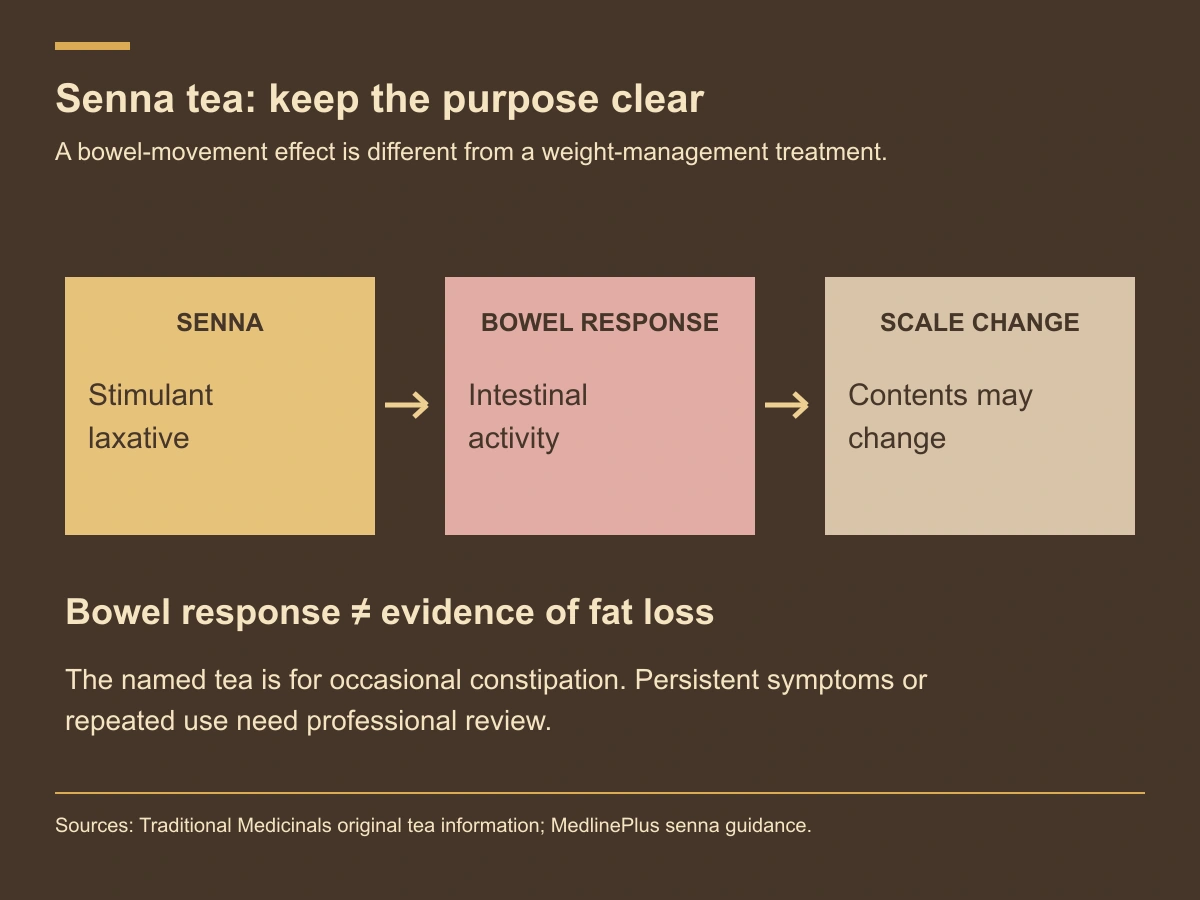
Why a lower scale reading is not proof of fat loss
Body weight includes water, tissue, food, and bowel contents. If a bowel movement occurs after constipation, the scale may reflect a change in digestive contents. If a laxative causes diarrhea or poor fluid balance, a change may also involve fluid. Those observations do not identify a reduction in body fat.
This is why comparing your weight immediately before and after a laxative is a poor test of weight-management success. A temporary change can distract from whether you are eating adequately, maintaining hydration, and addressing the reason constipation developed.
Our guide to water weight versus fat loss explains the components behind short-term scale changes. A lower number after tea should not become a reason to repeat a laxative, steep it more strongly, or restrict food further.
Which ingredients are in the original blend?
The reviewed manufacturer page lists organic senna leaf, licorice root, fennel fruit, orange peel, cinnamon bark, coriander fruit, ginger rhizome, and orange-peel oil on gum arabic. That is a description of this named original blend, not every Smooth Move product or every herbal constipation tea. Original product ingredient list.
Check the actual box because blends and labels can change. A peppermint or chamomile version can contain different supporting ingredients. A capsule has different directions from a tea bag. Products sold in another country may also have different labeling, so use instructions that match the package you have.
“Herbal” does not mean that the ingredients are irrelevant to a medicine review. Tell a pharmacist about the complete blend, including licorice, rather than saying only that you drink tea. The NHS senna page discusses interaction questions involving other medicines and licorice products; its UK treatment directions should not be transferred to a U.S. tea package. NHS senna safety discussion.
How is this different from ordinary herbal tea?
An everyday caffeine-free tea may be chosen for taste or a drinking routine. A senna-containing tea has a laxative ingredient and a specific bowel-related purpose. The fact that it is prepared in a cup does not remove the need to check precautions or duration of use.
| Product description | Question to ask | Why it matters |
|---|---|---|
| Original senna tea | What ingredients and warnings are on this box? | The complete blend matters. |
| Another Smooth Move blend | Are supporting ingredients and directions different? | A familiar name is not an identical formulation. |
| Senna capsules or tablets | Do instructions match this exact presentation? | Tea instructions do not define a tablet dose. |
| A “detox” or slimming tea | Does it contain a laxative or other active ingredients? | A weight-loss slogan does not establish benefit or safety. |
| A regular non-laxative tea | What is its actual purpose and ingredient list? | Drinking tea and using a laxative are different choices. |
Avoid combining products simply because their names sound gentle. A second constipation remedy may add to an existing effect, and the right choice depends on what has already been taken and the underlying symptoms.
How long should senna be used?
MedlinePlus advises not taking senna for more than one week without talking to a doctor. The reviewed Smooth Move page advises less than a week for occasional use unless directed by a physician. Follow the actual package and obtain professional advice if constipation continues or repeated use seems necessary. MedlinePlus duration advice, Manufacturer duration caution.
The one-week boundary is not a recommendation to use the tea every night for a full week. Nor does it establish that every person can safely use it for that length of time. Symptoms, medical conditions, age, pregnancy, and other medicines may change what is appropriate.
A clinician may sometimes direct a particular laxative plan for a defined condition. That is different from adopting a long-term senna routine to lower the scale. Ask what response to expect, how long the recommended treatment should continue, and when a lack of improvement needs reassessment.

What side effects or warning signs matter?
MedlinePlus lists stomach discomfort, cramps, nausea, faintness, and brown urine discoloration among possible senna effects. It advises stopping senna and contacting a doctor immediately for rectal bleeding. The NHS page also discusses diarrhea and serious concerns such as low potassium with frequent diarrhea during prolonged use. MedlinePlus senna precautions, NHS senna adverse effects.
Persistent or worsening abdominal pain, repeated vomiting, marked abdominal swelling, bleeding, or inability to maintain intake should not be managed by making a stronger cup or adding another laxative. Seek appropriate assessment. Our separate guide to blood in stool during Ozempic treatment explains digestive-bleeding warning signs.
Do not assume that a new urinary color change is harmless simply because discoloration appears on a senna information page. Explain the product and the symptom to a clinician, particularly if there is pain, visible blood, fever, or urinary urgency. The Ozempic, Mounjaro, and UTI guide covers those different questions.
What if you already take a GLP-1 medicine?
Constipation can occur during GLP-1 treatment, but that does not make senna tea the right choice for every episode. The clinician or pharmacist may consider the bowel pattern, severity, other medicines, fluid intake, and what you have already tried. The choice of a stimulant, fiber product, osmotic laxative, or another approach is individual.
Our constipation on GLP-1 medications guide explains why treatment should be connected to symptoms and follow-up. Persistent pain, vomiting, bleeding, or significant swelling needs assessment before an improvised laxative regimen.
Also review the reason food or fluid intake changed. If nausea or very low appetite makes it difficult to eat, adding a tea does not address the whole situation. A prescribing team can consider tolerability and nutritional adequacy as part of the treatment plan, rather than treating every bowel change as an isolated problem.
Can it be taken alongside other medicines or supplements?
Bring the exact box and a complete medication list to the pharmacist. MedlinePlus advises discussing prescriptions, nonprescription medicines, supplements, and herbal products before taking senna. Some named senna presentations have specific medicine-spacing instructions; those directions should not be converted into one rule for every tea or tablet. MedlinePlus medication precautions.
Mention heart or kidney conditions, diuretics, other laxatives, and any medicines that make the clinical consequences of diarrhea more important. Ask whether the full original blend is suitable and whether a different constipation approach would fit better.
Do not rely on a generic “natural products do not interact” statement. A complete ingredient review is more useful than a broad reassurance based on the product being plant-derived.
Pregnancy, older age, and ongoing bowel conditions
MedlinePlus advises discussing pregnancy and breastfeeding and notes additional concerns with long-term senna use in older adults. Existing bowel conditions and persistent changes in bowel habits also belong in the assessment. A product available without a prescription is not automatically appropriate for every situation. MedlinePlus special precautions.
If constipation is new, recurrent, or accompanied by other symptoms, explain that history before starting a routine. Do not give an adult tea regimen to a child based on this article. The clinician or pharmacist should use the actual product, age, and medical situation to advise.

What information helps resolve persistent constipation?
Describe your usual bowel pattern and how it changed. Include stool consistency, straining, pain, and whether you feel that the bowel emptied completely. Mention what you have tried, how often, and what happened afterward.
Review food, fluid, movement, schedule, and medicines with the care team. A single factor is not always responsible. If a treatment is recommended, ask how to judge response and what should happen if the problem returns. An ongoing plan is more useful than repeatedly switching between products without understanding the pattern.
For ordinary meal planning after concerning symptoms are assessed, our balanced-meal guide offers flexible food components. It should not be turned into a prescription to suddenly add large amounts of fiber during a painful or unexplained digestive episode.
Frequently asked questions
Can Smooth Move tea help you lose belly fat?
Its documented purpose is occasional constipation relief. A bowel response or a smaller scale reading does not establish loss of abdominal fat. Do not use the tea as a weight-loss regimen or increase its strength to pursue that goal.
Is one cup every night a good long-term habit?
The reviewed manufacturer information describes occasional use and a short duration unless a physician directs otherwise. If you need it repeatedly, ask why constipation persists and what ongoing plan is appropriate. The label’s short-term limit is not an instruction to use it nightly.
Does stronger steeping mean better results?
Do not create a stronger preparation or combine bags to chase a bowel response or weight change. Use the actual package instructions when a professional has advised that the product is suitable. A lack of improvement is a reason to obtain advice, not automatically escalate.
Is this the same as CoreAge Smooth Move cream?
No. This article concerns the Traditional Medicinals senna tea. A prescription skincare cream with a similar name is a different product category with different ingredients and instructions. Directions for tea, tablets, and topical skincare are not interchangeable.
What if I want clinical help with weight management instead?
Weight-management assessment should consider the eating pattern, health conditions, medicines, and follow-up needs. If you are exploring CoreAge services, review the semaglutide and tirzepatide pages with a provider. A laxative tea is not an alternative to that assessment or a way to compensate for meals.
Educational information for adults; individual treatment decisions require a qualified clinician. Sources reviewed October 2, 2026. Original AI-generated article images depict fictional people and objects, not patient outcomes. Other editorial images are illustrative. Graphics summarize the cited sources.